
































Founder-led video works for B2B software companies when the founder records once a month and a team turns that session into long-form YouTube episodes, a podcast feed and LinkedIn clips. The founder owns the opinions and the topics; a strategist owns the plan and a senior editor owns the finish. Record the questions buyers ask before they buy, publish on a fixed rhythm, and measure pipeline signals instead of views. Skip the weekly on-camera grind, the feature tours and the one-platform bet.
- Why founder-led video fits complex B2B
- The record-once workflow
- What a founder should record
- How often to publish and how much founder time it takes
- YouTube, podcast and LinkedIn: one session, three jobs
- Who does what
- A minimum recording setup for a busy CEO
- Mistakes that stall founder-led programs
- How this played out
- Measure pipeline, not views
- FAQ
- Verdict
Founder-led video for a B2B software company means the CEO or founder is the voice on camera, recorded in one batch session a month, while a team plans the topics, edits the footage and publishes it across YouTube, a podcast feed and LinkedIn. The founder gives the expertise and perspective. The team gives the system. That split is what makes the program survivable for someone whose calendar is already full.
This playbook is for founders, CEOs and marketing leads at B2B tech companies selling a complex product to a buying group, where trust has to be built before a sales conversation starts. It is a how-to: the workflow, the topics, the cadence and the roles. It differs from three nearby pieces on our site. Our founder LinkedIn video guide covers one platform, LinkedIn, in depth. Our video editing for personal brands and thought leaders page is written for individual creators and personal brands. And our founder-led content agency guide is about what to buy if you outsource the whole thing. This post sits in between: a multi-channel operating system that you can run yourself or hand to a partner.
Why founder-led video fits complex B2B
A complex product rarely sells on a feature list. Buyers are trying to work out whether the company understands their problem, whether the people behind it are credible, and whether the risk of choosing it is acceptable. In many B2B tech companies the person who answers those questions best is the founder, and the sales team cannot be in every conversation that happens before a demo.
Video carries that conversation at scale. A founder explaining how a category works, where teams go wrong and what a good decision looks like gives a buyer something to watch before they ever reach out. The LinkedIn B2B Institute publishes research on how B2B marketing works, including the role of long-term brand building alongside demand capture, which is useful background if you need to justify a content program to a board or a CFO.
Founder time is the scarce resource. Every design decision in a founder-led program should protect it. If the founder is booked, scripted, coached, reviewed and re-recorded every week, the program will stall by month three. Design for one calm session a month.
The point is not to turn a CEO into a media personality. The point is to capture what they already say in customer calls, investor updates and conference hallways, and give it a repeatable shape. A video editing company that works with B2B software teams should be treating the founder’s hours as a budget to be spent carefully, not a free input.
The record-once workflow
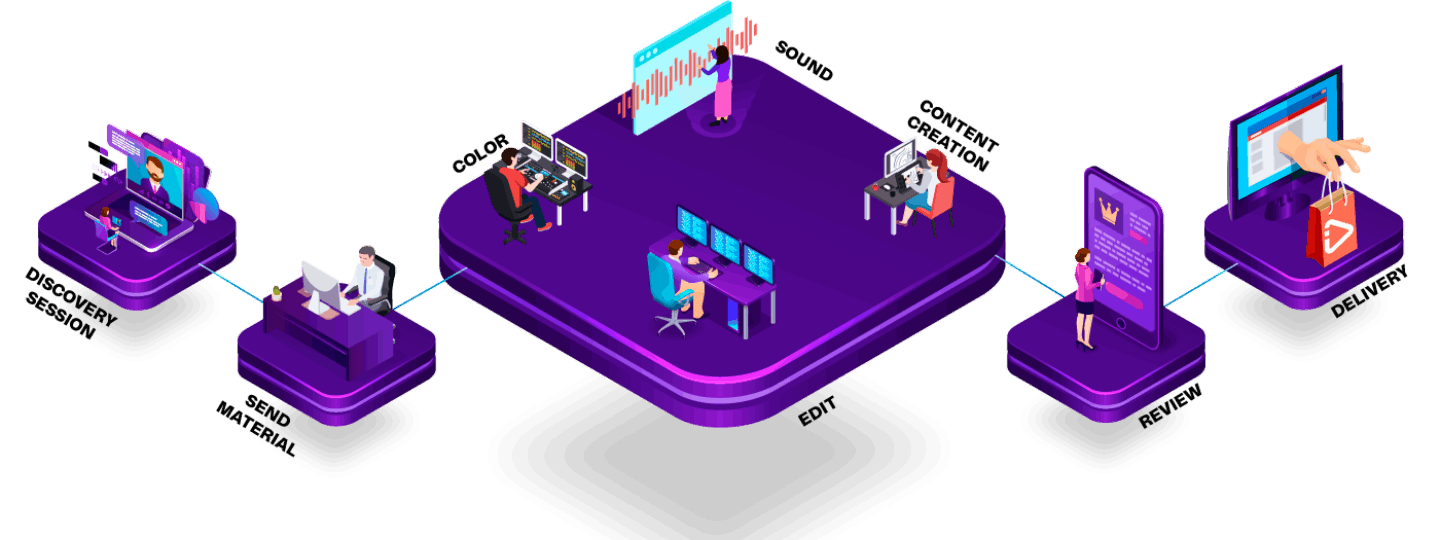
The workflow below is the core of the playbook. One planning conversation, one recording session, then a production line that turns that session into a month of publishable assets.
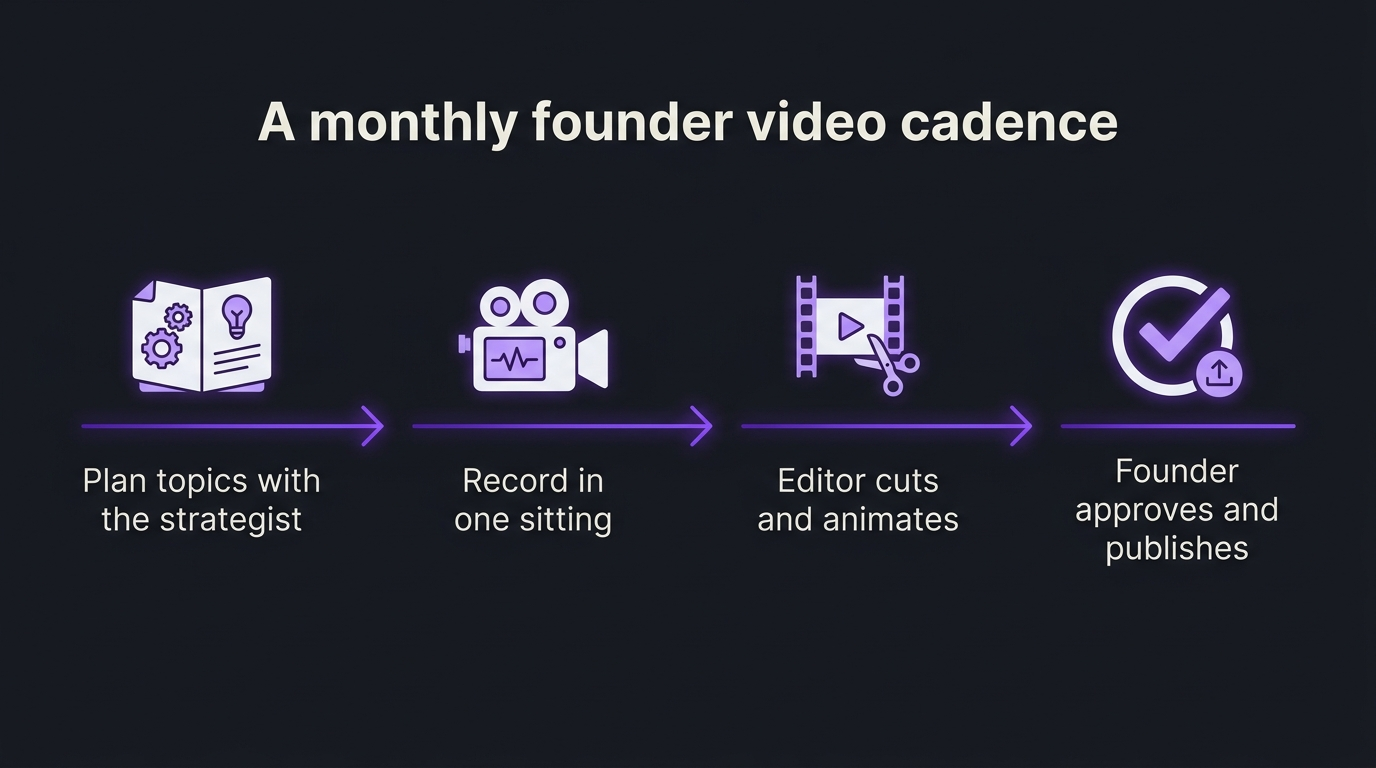
Step 1: plan the month in a short strategy call
A strategist and the founder pick the topics for the month from three sources: questions sales hears most, objections that stall deals, and what the founder is currently thinking about in the market. The output is a short list of episode topics with a rough talking structure for each, not a word-for-word script. Scripts read stiffly in the mouths of founders; talking points keep the opinion alive.
Step 2: record everything in one sitting
The founder records the month’s episodes back to back, ideally with a host or interviewer asking the questions. Interview format is easier than monologue for most executives, and it produces the natural pauses and follow-ups that make a long-form episode watchable. Our podcast-to-YouTube agency guide goes deeper on turning conversation formats into YouTube and podcast output.
Step 3: the team edits, animates and packages
A senior editor cuts each episode, adds chapters, captions and any motion graphics needed to clarify a concept, and produces a set of short clips for LinkedIn. This is where a complicated idea gets made clear: a diagram that builds on screen, a chart that animates, a b-roll cutaway that shows the concept. It is also where a team that knows B2B software earns its fee.
Step 4: the founder approves, the team publishes
Review should take minutes, not hours. Send the founder a link to a rough cut with timestamped notes enabled, agree on a short turnaround window, and use a clear video approval workflows process so feedback does not scatter across email and chat. Once approved, the team schedules and publishes everything to a fixed calendar.
What a founder should record
The best founder-led topics sit where buyer questions meet the founder’s genuine expertise. Six reliable categories:
Avoid using the founder for feature walkthroughs. A walkthrough is better served by a screen recording or an animated explainer, which our team can produce without taking more of the founder’s time. If you need that format, see our guide on SaaS explainer video agencies.
How often to publish and how much founder time it takes
Cadence matters more than any single episode. Buyers in a long sales cycle come back to a company’s content many times, and a steady rhythm signals that the company is still active and thinking. The table shows three common program shapes. These are planning assumptions we use to frame the conversation, not benchmarks from a study; adjust them to your market and your founder’s availability.
Whatever shape you choose, resist the temptation to start heavy. It is easier to add a recording slot than to explain a gap in the schedule. Our shorts versus long-form data and B2B YouTube benchmarks posts give context on how format and length affect performance on each platform.
Pro tip: Put the recording session in the founder’s calendar as a recurring monthly block before the program starts. Programs that depend on finding a free afternoon each time are the ones that quietly stop.
YouTube, podcast and LinkedIn: one session, three jobs
A good founder-led system treats each channel as a different job rather than a copy of the same file.
YouTube: the searchable home for long-form
YouTube is where a buyer finds an explanation when they search for a problem. Long episodes with clear titles, chapters and captions work as a library. YouTube’s help pages explain how to add chapters to a video, which helps viewers jump to the part that answers their question. Google also documents how its search results treat video in its video best practices, which matters if you also embed episodes on your own site. Our YouTube for B2B lead generation post covers how this connects to pipeline, and our B2B YouTube channel strategy lays out a 90-day plan.
Podcast: the audio feed for people on the move
The same recording can feed an audio podcast with little extra work. Many busy buyers listen during commutes or workouts rather than watching. Publishing the audio from the same session adds a channel without adding founder hours.
LinkedIn: the clips that carry the opinion to peers
Short clips cut from the long-form episodes put the founder’s sharpest points in front of peers and prospects. Pick moments with a clear claim or story, add captions, and link back to the full episode. This is video repurposing done with intent: every clip points to a longer piece. Our podcast clip strategy post shows how to select moments, and our founder LinkedIn video guide goes deeper on LinkedIn-specific formats.
Captions and transcripts do double duty: they make the content accessible and they make it skimmable. The W3C’s guidance on captions and subtitles is a useful reference for what good captioning looks like.
Who does what
A founder-led program fails when the founder ends up doing production work, or when nobody owns the plan. Make the roles explicit.
If you have all four people in-house, you can run this yourself. Most B2B teams have one or two of them, and the gap is usually strategy and senior editing. That is the gap a video editing company with a strategy layer or a strategy-led partner fills. Our what professional video editing costs guide explains how retainer models are typically priced and what they include.
A minimum recording setup for a busy CEO
You do not need a studio. You need clean audio, steady framing and a consistent look, so that episodes feel like one series instead of a pile of calls.
- Audio first. A decent microphone matters more than the camera. Viewers forgive soft focus; they leave over bad audio.
- One fixed location. A quiet room with a plain, uncluttered background, used every month, builds a recognisable look.
- An interviewer. A host asking real questions brings out better answers than a monologue and takes pressure off the founder.
- Remote option. If the founder travels, a high-quality remote recording with local capture on each end keeps the schedule intact.
- A checklist. A one-page list for lighting, mic position and framing that anyone on the team can run.
When the founder wants to step up production later, a shoot day or a studio session can be added without changing the system around it.
Mistakes that stall founder-led programs
- Treating it as a campaign. A burst of episodes followed by silence is worse than a modest, steady rhythm.
- Scripting every word. Founders sound stiff when reading. Use talking points and a strong interviewer.
- Recording feature tours. Use animation or screen recordings for product demos and keep the founder on judgement and opinion.
- Picking one channel only. A single recording can serve three channels. Splitting effort across separate sessions multiplies the founder’s time.
- Reviewing by committee. One approver, one turnaround window and one place for feedback.
- Measuring views alone. A small audience of the right buyers beats a large audience of the wrong ones.
How this played out
Stratabeat, a B2B marketing agency, is an example of the recurring-system shape this playbook describes. The company started with a trial month and then moved to a monthly retainer with Increditors for YouTube videos and LinkedIn clips. Its feedback was that the videos are helping with a complex, considered sale. That is the realistic outcome to aim for: steady content that supports a long buying process, not an overnight spike. To be clear about what this is and is not, Stratabeat is not presented here as a founder-on-camera case; it shows the retainer structure and the considered-sale logic that a founder-led program relies on. See more on our case studies page.
Measure pipeline, not views
The question to answer every quarter is whether the content is helping deals, not how many people watched. Useful signals for a B2B software company include:
- Prospects who mention an episode or a clip in discovery calls
- Sales using episodes as follow-up material for stalled deals
- Inbound requests that reference the founder’s point of view
- Branded search and direct traffic trends after consistent publishing
- Watch time on the longest episodes, as a proxy for real interest
Ask sales to tag where leads first heard of you, and add a short “how did you hear about us” field to demo requests. Review the numbers monthly with the strategist and adjust topics accordingly. Do not expect a straight line; considered sales are slow, and the content works over many touches.
Frequently asked questions
What is founder-led video?
Founder-led video is a content system in which the founder or CEO is the on-camera voice for a B2B company, while a team handles planning, editing, publishing and measurement around them. The founder supplies the expertise and the opinions; everyone else supplies the production. For a complex product, it is a way to put the person who best understands the problem in front of buyers without taking that person out of the business.
How much time does a founder need to give?
Plan around one recorded session a month, plus short review windows for rough cuts. The exact length depends on how many episodes you batch, but the principle is the same: the founder records in one sitting and the team carries everything before and after. If a program needs the founder every week to be present for edits, scheduling or approvals, it has been designed wrongly.
Which platform should a B2B founder start with?
Start with the platform where your buyers already look for answers. For most B2B tech companies that means YouTube for searchable long-form explanation, LinkedIn for reach among peers and prospects, and a podcast feed for people who listen rather than watch. A good system records once and feeds all three, so you do not have to choose one channel and abandon the others.
What should a CEO talk about on camera?
Talk about the questions buyers ask before they are ready to buy: the problem you solve, the mistakes you see in your category, how a decision gets made, and what you have learned from customers. Avoid recording product feature tours as the founder; those work better as animated or screen-based explainers. The founder’s value is judgement and a point of view.
Is founder-led video worth it for a complex, considered sale?
It tends to be, because a considered sale involves many stakeholders who each need to trust the company before a conversation starts. Video that explains the problem clearly and shows the person behind the product can do that groundwork at scale. It is not a guaranteed result, and it takes a steady cadence over months, so judge it on pipeline signals rather than view counts.
Should we hire an agency or build this in-house?
If you have a marketing lead with spare capacity and a good editor, in-house can work. Many B2B teams find that the planning, editing and publishing load outgrows one person quickly. A strategy-led partner such as Increditors or VideoEditingCompany.com takes that load as a monthly system. Our founder-led content agency guide explains what that scope typically includes.
Verdict
Founder-led video is one of the more credible ways for a B2B software company to build trust ahead of a complex sale, provided it is designed around the founder’s limited time. Record once a month, let a strategist and a senior editor carry the rest, publish to YouTube, a podcast feed and LinkedIn from the same session, and judge the results by pipeline. If you want help setting that system up, book a call and we will walk through what it would look like for your product and your buyer.
Want a founder-led video system that fits your calendar?
Tell us about your product and your buyer and we will map out how the monthly session, the edits and the publishing could work.