








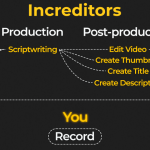
![3D Explainer Video - ScribbleLive.mp4_snapshot_00.12_[2022.03.09_03.14.16]](https://increditors.com/wp-content/uploads/elementor/thumbs/3D-Explainer-Video-ScribbleLive.mp4_snapshot_00.12_2022.03.09_03.14.16-r7wb53mx72rxst3qcqyrfxdmeyzb5r9jbl0wbjujh4.png "3D Explainer Video – ScribbleLive.mp4_snapshot_00.12_[2022.03.09_03.14.16]")
























A podcast to YouTube agency converts your recorded episodes into a managed YouTube channel: full-length video, packaging, chapters, captions, clips and reporting. B2B tech teams should expect a defined workflow with a named owner, clear deliverables per episode, quality control before anything is published, and monthly reporting tied to pipeline rather than views. Budget by deliverable tier, not by runtime, and make sure you keep ownership of the channel and the files.
A podcast to YouTube agency is a service that takes the audio or video recordings of your show and runs them as a YouTube program: editing, packaging, clips, publishing and reporting. For a B2B software or tech company, the aim is not a bigger download count. It is a searchable library of long-form video that explains a hard product to the people who buy it, and clips that carry those ideas into LinkedIn, email and sales conversations.
How this differs from our other podcast guides. Our podcast-to-YouTube strategy guide explains how to design the system, and our podcast video editing service guide covers what an editing service does for a podcast. This post is about a different decision: hiring an agency to run the whole thing. It covers what to expect from the workflow, the deliverables, the cost drivers and how to tell a strong partner from a vendor that just trims audio.
What a podcast to YouTube agency does
Uploading an episode to YouTube takes ten minutes. Turning it into an asset that earns attention from the right buyers takes a process. An agency owns that process so your founder or host can show up, record and move on.
In practice the work splits into four jobs. Production turns the recording into a watchable video. Packaging gives each episode a title, thumbnail, description and chapters that match how people search. Distribution cuts and schedules clips for other channels. Reporting tells you what is working and feeds the next recording. A vendor that only does the first one is an editor. An agency does all four.
What B2B tech teams are actually buying
Most B2B podcasts are interview or conversation formats where the guest is a customer, an analyst or a domain expert. The commercial value sits in the explanations: how a data pipeline fails, why a model drifts, what a buyer should ask a vendor. Strong editing makes those moments visible with captions, on-screen graphics and short clips. This matters most for complex products in AI, data and deep tech, where a plain talking-head upload leaves the most useful content buried at minute 34. If you want the strategy behind that, our YouTube for B2B lead generation playbook covers how long-form video supports pipeline.
When to hire one
An agency makes sense when the show matters commercially but nobody on your team has the capacity or the craft to run a video channel. It is the wrong choice if you publish rarely, have not settled on a format, or only want light audio cleanup. Use the table to place yourself.
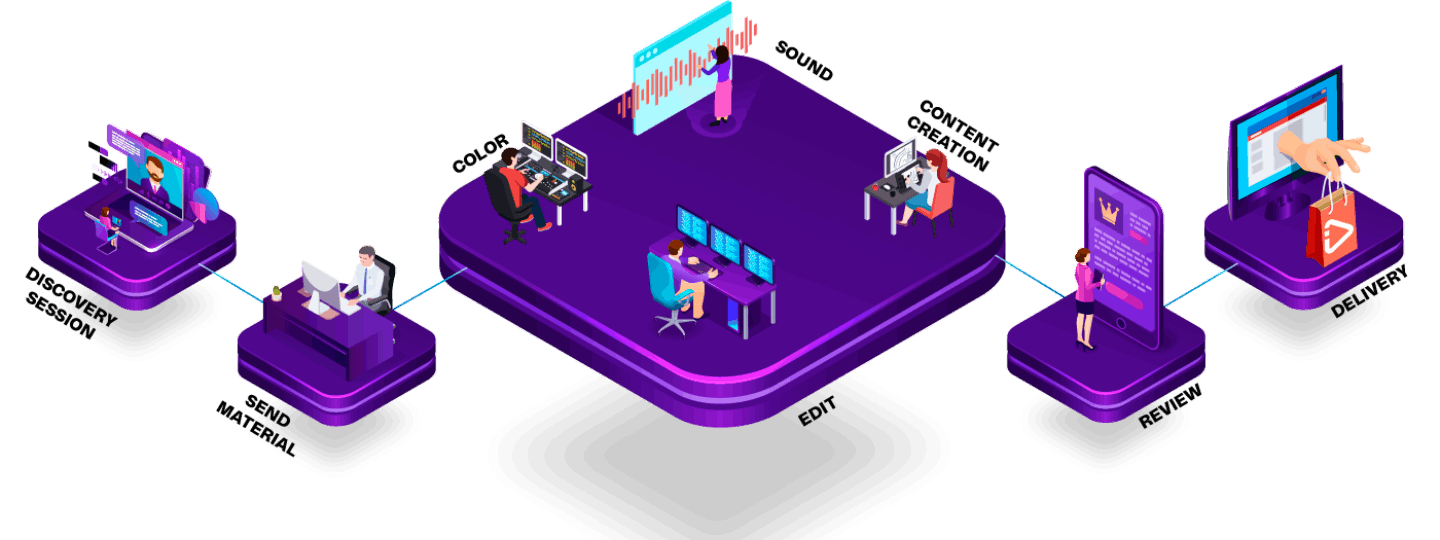
The workflow, step by step
Whatever the vendor calls it, a credible agency follows a repeatable sequence. The checkpoints are where your approval is needed, and they are where timelines slip. YouTube’s guidance on delivering podcasts via RSS is worth reading before the kickoff call, because it explains how YouTube treats audio-first feeds and why a native video upload is usually the stronger route for a B2B show.
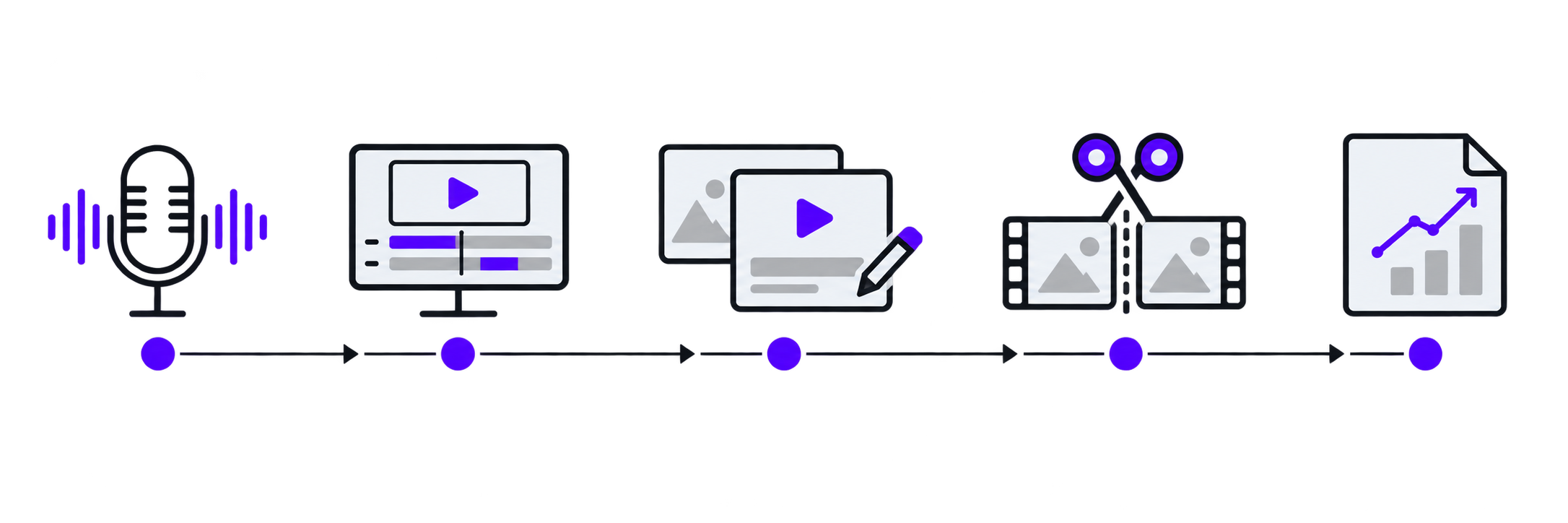
💡 Pro Tip: name one person on your side who consolidates feedback. In our experience, several reviewers commenting separately causes more delay than any production step.
Deliverables to expect
Write the deliverables into the agreement per episode, not as a vague promise of content. A typical B2B package contains the following:
- Full episode video: edited for retention, with branded intro, lower thirds and on-screen graphics where a concept needs support.
- Packaging set: title options, thumbnail, description, chapters and tags aligned to search intent.
- Captions and transcript: burned-in captions for clips and a clean caption file for the long video.
- Clips: a defined number of short cuts per episode. See our Shorts versus long-form performance data for how short and long formats play different roles.
- Repurposing: quote graphics, an article draft or a newsletter snippet, as part of broader video repurposing.
- Reporting: a monthly summary of retention, subscribers, search traffic and any pipeline influence you can track.
Accessibility belongs here too. Captions help comprehension for every viewer and are routine in enterprise procurement; the W3C guidance on captions is a useful checklist. If the episodes are also embedded on your own site, Google’s video SEO best practices explain how to make that page indexable with the video attached.
What it costs and what drives price
Agency pricing for this kind of work varies enormously, so be wary of any single number without scope. As a market orientation, our podcast video editing cost guide shows per-episode ranges from roughly $50 at the entry freelance level to $3,000 or more for premium agencies, with most professional two-camera shows landing between about $150 and $600 per episode. Treat these as directional benchmarks as of 2026, not quotes. A full podcast to YouTube program with strategy, packaging and reporting sits toward the upper part of the range, because you are buying management as well as editing.
Normalise quotes against the same scope before comparing. A low per-episode price that excludes thumbnails, captions and reporting is not actually lower. Pricing models also differ: per-episode, monthly retainer or subscription. A monthly rhythm usually suits a recurring show better, because the agency learns your product and voice instead of restarting each time. We do not publish our own pricing in articles, but we are happy to scope it on a call.
How to choose: the scorecard
Score each shortlisted agency from 1 to 5 on the criteria below. Weigh domain literacy and quality control most heavily; both are hard to fix after you have signed.
If you want a video editing company that treats the podcast as one input in a wider B2B video system, that is how we work at Increditors: strategy first, then a monthly production rhythm with quality control built in.
Red flags
- The pitch is about view counts and subscribers, with no mention of buyers or pipeline.
- No named person is responsible for quality control.
- Every sample is a generic waveform or a lightly trimmed full episode.
- Pricing is a single number with no deliverables list.
- The agency wants to own the YouTube channel or hold your files.
- They cannot discuss your category without reading from your website.
How this played out
Emerj, an AI research media company and an Increditors client, publishes long-form educational video on a technical subject where accuracy is the whole product. The team has praised the quality control on the work, which is the part a B2B publisher most needs from an agency. You can see more in our case studies.
FAQ
What does a podcast to YouTube agency actually do?
It takes your recorded episodes and turns them into a managed YouTube program. That typically covers editing the full episode for video, packaging titles, thumbnails and descriptions, adding chapters and captions, cutting short clips, publishing, and reporting on what the channel is doing for pipeline. The best ones also tell you what to change in the next recording.
How much does it cost to turn a podcast into YouTube video?
Published market ranges vary widely. Our own podcast video editing cost guide shows per-episode figures from roughly $50 at the low freelance end to $3,000 or more for premium agency work, with most professional two-camera shows landing between about $150 and $600 per episode. Scope, number of clips and strategy involvement move the number more than runtime does.
Do we need to record video, or can an agency work from audio only?
An agency can work from audio, but results are usually weaker. Audio-only episodes are typically published as a static image or waveform, which gives viewers little reason to stay. If you can record even a simple two-camera or remote video setup, the editing has far more to work with and the clips look like real video.
How long does onboarding take?
Plan for a few weeks to set up the channel, agree on a format, build templates and publish a first episode. After that, a defined turnaround per episode is normal. Agree the turnaround and the number of revision rounds in writing before you start.
Should a B2B company hire an agency or an in-house editor?
An in-house editor is strong on volume and speed once the format is settled. An agency adds strategy, quality control and a bench when the editor is sick or leaves. Many B2B teams with one or two shows a month start with an agency and bring a coordinator in-house later.
Who owns the files, the channel and the clips?
You should. Insist that the YouTube channel sits in your Google account, that you receive project and source files on request, and that clips and thumbnails are yours to reuse. Confirm this in the contract before the first invoice.
Verdict
Hire a podcast to YouTube agency when the show matters commercially and your team lacks the time or craft to run it as a channel. Insist on a defined workflow, per-episode deliverables, a named quality owner, reporting beyond views and full ownership of the channel and files. Compare quotes against the same scope, and pick the partner that understands your category. If you want a strategy-led team for B2B video, that is the work Increditors does for software and AI companies.
Want Your Podcast Working as a YouTube Channel?
Tell us about your show and we will talk through the right approach.