








![3D Explainer Video - ScribbleLive.mp4_snapshot_00.12_[2022.03.09_03.14.16]](https://increditors.com/wp-content/uploads/elementor/thumbs/3D-Explainer-Video-ScribbleLive.mp4_snapshot_00.12_2022.03.09_03.14.16-r7wb53mx72rxst3qcqyrfxdmeyzb5r9jbl0wbjujh4.png "3D Explainer Video – ScribbleLive.mp4_snapshot_00.12_[2022.03.09_03.14.16]")

























A strong podcast-to-YouTube strategy is not just uploading the full episode with a static waveform. The best results come from designing a repeatable video system: package each episode around a clear viewer promise, record or create visual layers, edit for YouTube pacing, extract short-form clips, optimize titles and thumbnails, and measure performance by retention, subscribers, and qualified leads. Audio is the source material. Video is the distribution product.
Podcasts used to be an audio-first channel. A listener found the show in Apple Podcasts, Spotify, or a niche directory, then listened during a commute, workout, or work session. That behavior still exists, but discovery has changed. Audiences now find ideas through YouTube search, suggested videos, Shorts, LinkedIn clips, TikTok edits, newsletters, and embedded videos on websites. If your podcast only lives as an audio feed, you are leaving a large part of the discovery engine untouched.
That does not mean every podcast should become a giant studio production. It means audio content needs a video operating system. A good podcast-to-YouTube strategy turns one conversation into multiple viewer-friendly assets: a full episode, a searchable evergreen video, short clips, quote-led moments, visual explainers, newsletter embeds, and sales enablement material. The episode is not the final asset. It is the raw material.
For premium B2B brands, creators, coaches, educators, and founder-led companies, this shift matters because YouTube is not just a content platform. It is a trust-building platform. People can see the host, judge the guest’s credibility, watch reactions, follow visual examples, and binge related videos before ever booking a call or joining a community. Audio builds intimacy. Video builds familiarity faster.
Why Podcasts Need a YouTube Strategy
Audio Platforms Reward Subscribers, YouTube Rewards Discovery
Traditional podcast platforms are excellent for serving existing listeners. They make it easy for loyal subscribers to receive new episodes automatically. The challenge is discovery. Unless a show ranks in a category, gets featured, or benefits from guest cross-promotion, new listeners usually need to hear about it somewhere else first. The platform is a library, not always a powerful recommendation engine for new shows.
YouTube behaves differently. It combines search intent, recommendation data, watch history, session behavior, thumbnails, titles, chapters, comments, and retention signals. A two-year-old video can still bring in viewers if the topic stays relevant and the packaging matches demand. That makes YouTube especially useful for podcasts with educational, business, health, finance, technology, leadership, creator economy, and niche hobby content.
The mistake is assuming YouTube will reward a podcast episode simply because the conversation is good. YouTube viewers need a reason to click, a reason to stay, and a reason to watch another video. A podcast that is edited and packaged like an audio archive will usually underperform. A podcast that is edited and packaged like a YouTube show has a much better chance.
Video Adds Context That Audio Cannot Carry
Many conversations contain visual opportunities that are lost in audio-only form. A guest references a framework. A founder explains a dashboard. A coach breaks down a funnel. A researcher compares before-and-after results. A creator reacts to a trend. In audio, the listener has to imagine the missing context. On YouTube, the editor can show it.
This does not require turning every episode into a documentary. It can be as simple as cutting to a screen recording, adding a clean diagram, showing a headline, highlighting a quote, animating a simple framework, or using subtle motion graphics to orient the viewer. The goal is not decoration. The goal is comprehension and momentum.
When the visual layer helps the viewer understand faster, the content feels more valuable. When it only fills empty space, it becomes noise. That distinction is central to a strong podcast-to-video workflow.
YouTube Converts Attention Into Trust
A podcast listener may love a show, but a YouTube viewer can build a stronger mental picture of the brand behind it. They see the set, the host’s energy, the guest’s body language, the editing taste, the thumbnail system, the comment quality, and the consistency of publishing. Those details create trust signals before a sales conversation happens.
For service businesses, this matters. A YouTube podcast can become a soft sales engine without turning into a sales pitch. A buyer may watch a founder interview, a client story, a tactical breakdown, and three short clips before contacting the company. By then, the sales call starts warmer because the buyer already understands the team’s point of view.
💡 Pro Tip: Treat YouTube as the public version of your best sales conversation. The job is not to publish everything you recorded. The job is to package the parts that help a specific viewer understand, trust, and act.
Choose the Right Video Format
Full Video Podcast
The full video podcast is the most obvious format: record the host and guest on camera, edit the full conversation, and upload the episode to YouTube. This works best when the show has strong personalities, recognizable guests, a loyal audience, or a topic where real conversation is part of the value. It is also the easiest format to operationalize once recording standards are in place.
However, the full episode cannot be treated as a direct dump from Riverside, Zoom, or the studio timeline. You still need a strong opening, dead-air removal, camera switching, audio polish, branded graphics, chapters, and a thumbnail that sells the specific episode. The viewer should feel that the episode was prepared for YouTube, not merely exported there.
Enhanced Audio Episode
Some podcasts do not have camera footage. That is not a dealbreaker, but it changes the strategy. An enhanced audio episode uses the audio track as the foundation and builds a visual layer around it: waveform design, guest images, animated chapter cards, b-roll, screenshots, text highlights, diagrams, article references, and simple branded motion. This format is useful for existing audio libraries, remote interviews where video quality is poor, or shows that want to test YouTube before changing the recording process.
The risk is creating a boring video. A static cover image with a waveform is technically video, but it rarely behaves like video. Viewers on YouTube expect visual change, context, and pacing. If you use enhanced audio, the edit needs enough visual movement to justify the viewer staying on a visual platform.
YouTube-Native Segment
A YouTube-native segment is a shorter, more focused video built from one part of the podcast. Instead of uploading the entire 60-minute conversation as the main asset, you extract a 7 to 15 minute segment with a clear promise: “How this founder scaled to $10M without paid ads,” “The biggest mistake new creators make,” or “Why retention beats upload frequency.” This format often performs better for discovery because it gives YouTube a sharper topic and gives viewers a clearer reason to click.
This approach requires more editorial judgment. You need to find the strongest segment, restructure the opening, remove context that slows the piece down, add visual support, and package it like a standalone video. The upside is that one podcast episode can produce several YouTube-native videos over time.
Build the Podcast-to-Video Workflow
Start With the Episode Brief
The best podcast videos are shaped before the recording starts. An episode brief gives the host, guest, producer, and editor the same target. It should include the main viewer promise, target audience, guest credibility points, likely title angles, key questions, expected moments, visual references, and any business objective behind the episode. This brief does not need to be complicated. It needs to exist.
Without a brief, the editor has to guess what matters. They may polish the conversation beautifully while missing the strategic point. With a brief, the editor knows which moments deserve emphasis, which tangents can be removed, which visuals need to be sourced, and what kind of viewer the video is trying to win.
Record for the Edit, Not Just the Conversation
Recording quality determines how much the edit can do. Clean audio, stable camera angles, consistent lighting, separate tracks, and backup files make a major difference. If the show is remote, record locally when possible. If the show is in-person, capture at least two camera angles and a clean room tone sample. If the guest will reference screens, dashboards, products, articles, or slides, capture those assets separately.
A simple production checklist prevents painful fixes later. Confirm microphones, camera framing, lighting, storage space, internet stability, guest display names, release permissions, and file naming before the episode begins. A few minutes of discipline before recording can save hours in post-production.
Create an Asset Map for Visual Support
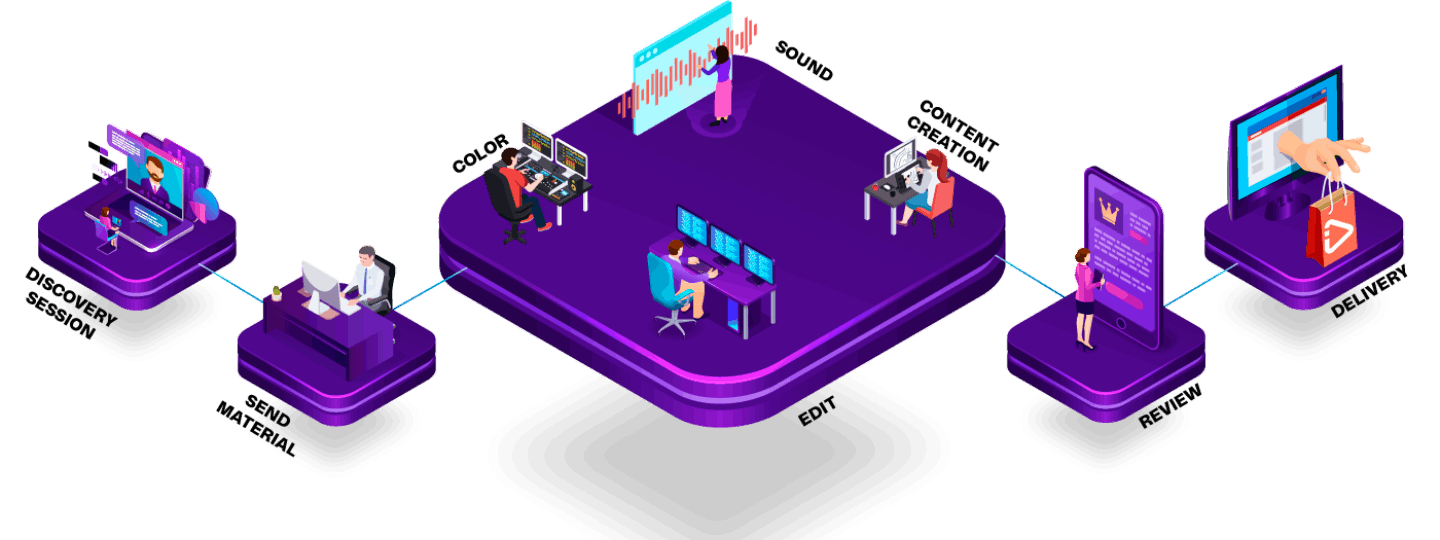
Once the episode is recorded, the team should create an asset map. This is a simple list of moments that need visual support: timestamps, topic summaries, screenshots, charts, b-roll, guest logos, article references, product footage, social posts, or motion graphics. The asset map turns editing from guesswork into a structured production process.
For B2B content, this step is especially valuable. If a guest explains a complex operational idea, a clean diagram can make the content far more understandable. If a founder mentions a measurable result, a stat card can help viewers remember it. If a host references a mistake, a chapter card can reset attention and prepare the viewer for the lesson.
💡 Pro Tip: Build a reusable visual library for the show: lower thirds, name cards, chapter cards, quote cards, transition animations, diagram styles, social crop templates, and thumbnail treatments. Consistency makes production faster and makes the channel feel premium.
Edit Audio Content for YouTube Retention
Open With the Viewer Promise
The first 30 seconds are critical. A podcast can spend time warming up. A YouTube video usually cannot. The viewer clicked because the title and thumbnail promised something. The opening needs to confirm that promise quickly. This can be done through a strong cold open, a sharp host intro, a compelling guest quote, a problem statement, or a preview of the most valuable moment.
Avoid long theme music, vague introductions, over-explaining the guest’s biography, and inside jokes before the viewer understands the value. Those can work later, once trust is built. At the start, clarity beats ceremony. The viewer should know what they are about to get and why it matters.
Remove Friction Without Killing Personality
Podcast editing for YouTube is not about cutting every breath until the conversation feels artificial. It is about removing friction. Long pauses, repeated setup, technical confusion, low-value tangents, guest connection issues, and unclear transitions can all weaken retention. The editor’s job is to preserve the natural voice of the show while respecting the viewer’s time.
For premium brands, over-editing can be as damaging as under-editing. If every sentence is chopped into hyperactive fragments, the show can lose credibility. A thoughtful edit keeps the conversation human but purposeful. It lets meaningful moments breathe and tightens the parts that slow the viewer down.
Use Visual Pattern Changes Strategically
YouTube viewers need visual variation, especially during long-form conversations. This does not mean adding random zooms every few seconds. Pattern changes should support attention and meaning. Camera switches, push-ins, split screens, b-roll, text emphasis, diagrams, headline overlays, and chapter cards can all help when used deliberately.
The strongest edits often use a rhythm: clean conversation, visual support when the idea becomes concrete, chapter reset when the topic shifts, and a subtle pace lift before a key point. That rhythm keeps the video watchable without making it feel cheap or chaotic.
Package Episodes for Search and Clicks
Titles Should Sell the Outcome, Not the Recording
Many podcast titles are written like archive labels: “Episode 84 with Jane Smith.” That may work for existing fans who already know the guest, but it gives new viewers little reason to click. YouTube titles need to sell the outcome, tension, curiosity, or practical value of the episode. The guest name can still matter, but the idea should usually lead.
A stronger title might focus on the transformation, mistake, lesson, belief shift, or specific result: “How a Solo Founder Built a 7-Figure Newsletter,” “The Retention Mistake Killing Most YouTube Channels,” or “Why This SaaS Team Stopped Publishing Daily Content.” These titles tell viewers what they will get, not just who appeared.
Thumbnails Need One Clear Job
A podcast thumbnail should not try to show everything. Too many faces, logos, words, and icons make the design harder to read. The thumbnail’s job is to create a fast visual reason to stop scrolling. That may mean a strong guest expression, a clear contrast, a provocative phrase, a visual metaphor, or a simple before-and-after setup.
The best thumbnail systems are recognizable but flexible. They maintain brand consistency through typography, colors, framing, and composition, while still allowing each episode to feel specific. A channel full of identical thumbnails is easy to ignore. A channel with no visual system feels amateur. The middle ground is a branded framework with episode-level variation.
Descriptions, Chapters, and Playlists Improve the Viewing Path
YouTube metadata should help viewers and the algorithm understand the content. Descriptions should summarize the episode, include the main topics, link to the guest, add relevant resources, and guide viewers to the next step. Chapters should make the video easier to navigate and can also reveal the structure of the conversation. Playlists should group episodes by theme, audience, or problem.
For a business podcast, the description can also support conversion without feeling heavy. Include a soft CTA, a useful resource, a newsletter link, or a booking link if the episode naturally connects to a service. The key is relevance. A generic sales CTA under every episode is easy to ignore. A specific next step tied to the topic is more useful.
Repurpose Every Episode Into Clips
Shorts Are Discovery Assets, Not Just Leftovers
Short clips should not be random leftovers from the full episode. Each clip needs a hook, a self-contained point, a clean payoff, and a reason to make viewers curious about the larger show. The best clips often come from moments of tension: a surprising opinion, a concise framework, a mistake, a story, a measurable result, or a disagreement.
A 60-minute episode may contain ten possible clips, but not all of them deserve publishing. Quality control matters. A weak clip can dilute the show. A strong clip can introduce a new audience to the host, guest, and topic in under a minute. The editor should score clips by hook strength, clarity, standalone value, visual potential, and relevance to the channel’s positioning.
Adapt Clips for Each Platform
A YouTube Short, LinkedIn clip, TikTok edit, Instagram Reel, and X video may use the same core moment, but they should not always use the exact same package. LinkedIn may need a more direct business angle and cleaner captions. TikTok may reward a stronger opening line and faster visual changes. YouTube Shorts may connect more clearly to the full episode. Instagram may benefit from a more polished visual style.
The workflow should define exports by platform: aspect ratio, caption style, safe margins, hook text, CTA, length, and file naming. This prevents chaos when publishing volume increases. Repurposing becomes a production system instead of a last-minute scramble.
Use Clips to Test Future Long-Form Ideas
Short clips are also research. If a clip about pricing, retention, hiring, product strategy, or creator burnout performs unusually well, that signal can guide future episodes and standalone YouTube videos. Instead of guessing what the audience wants, the team can use clip performance to identify topics worth deeper coverage.
This is where podcast-to-YouTube strategy becomes more than distribution. The content loop starts feeding itself. Episodes create clips. Clips reveal demand. Demand shapes future episodes. Future episodes create stronger full videos and more relevant clips. Over time, the channel becomes sharper because the audience data informs the editorial calendar.
Measure What Actually Matters
Separate Audience Metrics From Business Metrics
Views matter, but they are not the whole scorecard. A podcast channel can generate modest views and still produce valuable leads, partnerships, recruiting opportunities, or client trust. It can also generate large short-form views that do almost nothing for the business. You need both audience metrics and business metrics.
Audience metrics include click-through rate, average view duration, retention curve, returning viewers, subscribers gained, comments, shares, and playlist starts. Business metrics include newsletter signups, booked calls, inbound messages, demo requests, sales cycle influence, partner introductions, and content used by the sales team. The right mix depends on the goal of the show.
Read Retention Like Editorial Feedback
Retention graphs are not just analytics reports. They are feedback from the audience. A steep drop in the first minute may mean the opening failed to deliver the promise. A dip during a long setup may show where context became excessive. A spike may reveal a moment worth clipping. A strong hold through a technical section may prove the audience wants deeper tactical content.
Every month, review the top and bottom performers. Compare title angles, thumbnail styles, guest types, episode lengths, openings, topics, and clip performance. Look for patterns, not isolated wins. One viral clip is interesting. A repeated pattern across ten videos is strategy.
Build a Monthly Optimization Rhythm
A podcast-to-YouTube system should improve over time. Set a monthly review where the team looks at the channel, identifies what worked, updates the thumbnail system, adjusts the episode brief, improves clip selection, and chooses future topics. Small improvements compound because podcasts are recurring shows. If each month improves the system by a few percent, the channel becomes significantly stronger over a year.
The review should also include production efficiency. How long did each episode take to edit Where did files get delayed Which assets were missing Which recurring graphics slowed the team down What can be templated Growth is not only about more creative ideas. It is also about reducing operational drag so the team can publish consistently without burning out.
FAQ
Should every podcast episode go on YouTubea
Not always. If the recording quality is poor, the topic is too internal, or the conversation has no clear viewer promise, it may be better to publish audio only and extract one or two strong clips. YouTube should receive the version of the content that can compete on a visual discovery platform.
Can an audio-only podcast succeed on YouTubea
Yes, but it needs visual support. A static image with a waveform is usually the weakest option. Add chapter cards, b-roll, diagrams, quotes, screenshots, guest photos, and motion design so the upload feels like a real YouTube experience.
How long should podcast videos be on YouTubea
The right length depends on the value density. A strong 70-minute interview can work if the guest, topic, and pacing justify it. For discovery, many teams also create focused 8 to 15 minute segments from the same recording because those are easier to package around a specific promise.
How many clips should we create from one episodea
A practical starting point is three to eight clips per strong episode. The exact number should depend on quality, not quota. It is better to publish four sharp clips with clear hooks than twelve forgettable clips that feel like filler.
What is the biggest mistake in podcast-to-YouTube repurposinga
The biggest mistake is treating YouTube as a storage location for podcast recordings. YouTube is a viewing platform with its own behavior. The content needs stronger packaging, visual support, tighter pacing, and a clear reason for a new viewer to click.
Verdict
A podcast-to-YouTube strategy works when the team stops thinking in terms of simple republishing. The podcast is the source. YouTube is the product. That product needs a clear viewer promise, intentional recording standards, editorial selection, visual design, retention-focused editing, strong packaging, and a repurposing system that turns each episode into multiple distribution assets.
The brands that win will not necessarily be the ones with the most expensive studio. They will be the ones that understand the difference between content capture and content strategy. They will record with the edit in mind, package ideas around viewer demand, use clips to test topics, and continuously improve based on performance data.
If your podcast already has strong conversations, you may be much closer to a YouTube engine than you think. The opportunity is not to create more content from scratch. It is to extract more value from the conversations you are already having and present them in a format YouTube viewers actually want to watch.
Ready for Video That Actually Convertsa
Tell us about your project and we will put together a custom plan.