









































Last checked: October 2026 · external sources read on 24 Oct 2026
A B2B podcast produces pipeline when each episode starts from a buyer objection, is recorded on video, becomes YouTube and LinkedIn assets that each point to one next step, and is reported monthly against leads and deals, not downloads.
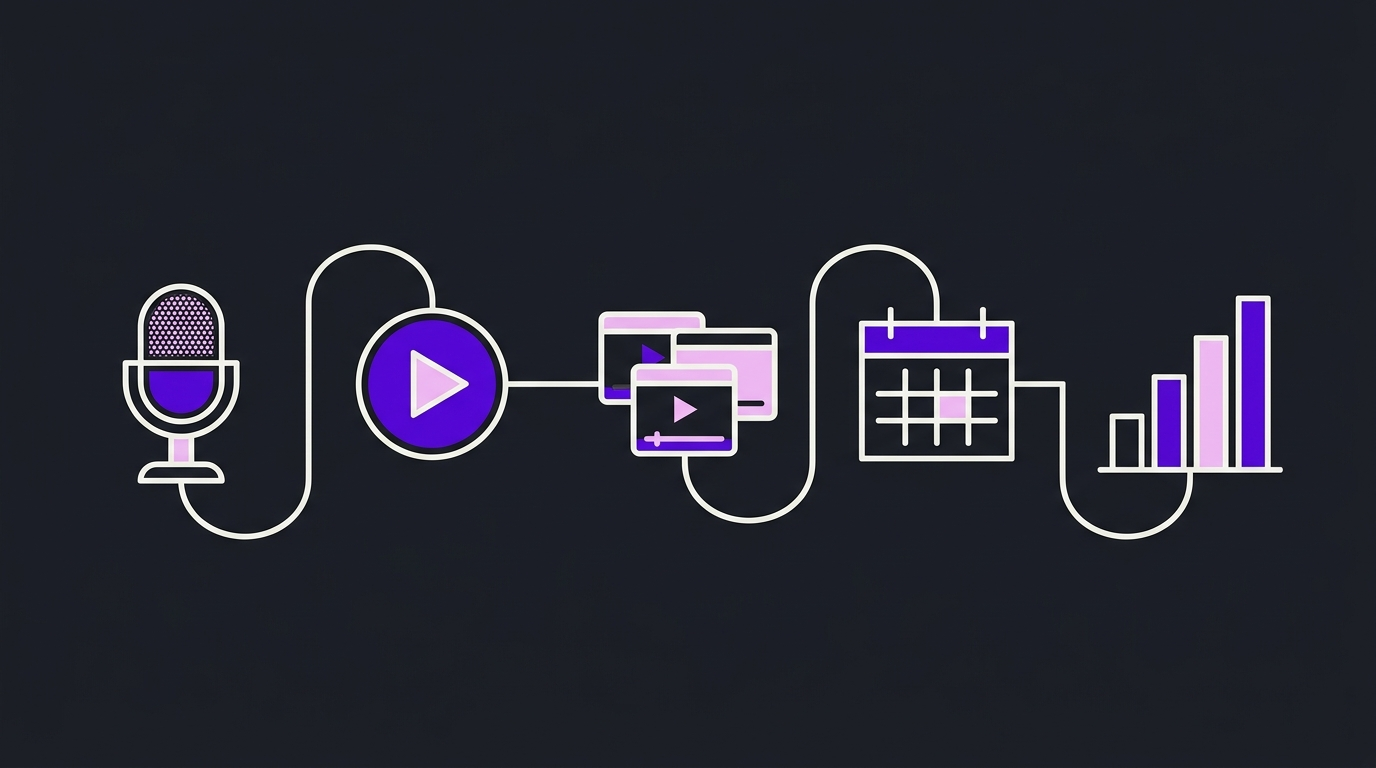
Most B2B podcasts stall because they are planned around the show, not the sale. This playbook runs in seven steps: pick one pipeline job, plan from sales objections, record for reuse, package for YouTube, cut clips, route every viewer to one next step, and measure honestly. It ends with a 90-day plan and a note on who should not run a podcast this way.
- Why most B2B podcasts never reach pipeline
- The playbook at a glance
- Step 1: Pick one pipeline job
- Step 2: Plan episodes from sales objections
- Step 3: Record once, for reuse
- Step 4: Package for YouTube and search
- Step 5: Cut clips for LinkedIn
- Step 6: Give every asset one next step
- Step 7: Measure pipeline honestly
- Who this playbook fits and who it does not
- Build, buy a subscription, or hire a studio
- How Increditors runs it
- A 90-day plan
- FAQ
- Verdict
This guide is for B2B founders and marketing leads who already have a podcast, or have decided to start one, and want it to feed the sales pipeline. It differs from two earlier guides: our podcast-to-YouTube strategy covers formats, retention and optimisation of the video itself, and our podcast to YouTube agency guide covers what to expect when you hire help. This one covers the commercial system around the show: what to plan, publish and measure.
We wrote it as a video editing agency that edits educational video for B2B technology companies, so examples lean toward software, AI and data companies with a considered sale. External numbers carry a source and the date we read it; our own practice is labelled as such.
Why Most B2B Podcasts Never Reach Pipeline
A podcast stalls when it is treated as a media property instead of a sales asset. The signs: episodes planned around whoever agreed to be a guest, titles that are the guest’s name, no page the listener is sent to, and a monthly report that is a chart of downloads. Nobody in sales has been asked whether a prospect mentioned the show.
In a considered sale, the buyer’s real pain is pipeline, not production. The founder or head of marketing has usually decided that YouTube, a podcast and LinkedIn are a channel worth running, but has no system behind it. Recording is the easy part. What is missing is the planning that decides what to say, and the packaging and reporting that connect it to a conversation with a buyer.
📌 What we see in our own client history: The long-running accounts we have worked with were small, profitable, founder- or marketing-lead-run companies that kept publishing long-form educational video, and the usual way those accounts ended was not poor results but that the projects ran out because every piece of work was a one-off. That is our observation from our own records, not an industry statistic, but it is the argument for running a podcast as a monthly system.
There is also a market reason to do this now. According to Hootsuite’s LinkedIn statistics roundup (read 24 Oct 2026), citing LinkedIn’s internal data, CEO posting on LinkedIn has increased 52% over the past two years, and video views rose 36% while video creation increased 27% in 2025.
The Playbook at a Glance
Seven steps, in order. Each ends in one thing you can check.
Step 1: Pick One Pipeline Job
Before the first episode is planned, write down the one thing the podcast has to do for the business. A show that tries to build brand, recruit, support customers and generate demos will be measured on none of them. For a B2B company with a considered sale, the useful jobs are few:
- Answer objections before the sales call. Buyers arrive knowing how you think.
- Win search and video discovery for the problem you solve. Episodes titled around the buyer’s question get found.
- Open doors to named accounts. Guest episodes create a reason to follow up that is not a cold pitch.
- Give the founder a public point of view. A founder who has said what they believe on video is easier to buy from.
Pick one primary job and one secondary. The primary job sets which metric you report first.
💡 Pro Tip: Ask your sales lead to read the sentence out loud. If sales cannot say how it would change a call they had last week, the job is too vague. “Raise awareness” fails this test. “Cut the time we spend explaining why our approach differs from the incumbent” passes.
Step 2: Plan Episodes From Sales Objections
The planning step is where most of the value is created, and it is the step that editing-only vendors do not own. A content plan for pipeline is built from three inputs, not from “what should we film”:
- Sales objections. What prospects ask in the first two calls, and why deals stall. Each becomes an episode.
- Product launches and changes. Anything the market needs explained.
- Search and video demand. The phrases your buyers type into Google and YouTube. Our guide to a YouTube channel audit for B2B companies shows how to check what already exists.
Decide the hook before you record
The title, the opening line and the promise to the viewer should be decided before the recording, not invented in the edit. For guest episodes, send the guest an interview question sheet built around the buyer question, so the conversation produces answers you can use rather than a pleasant chat. For a founder who is not a natural presenter, key points written to be read in one take often beat an open conversation.
Step 3: Record Once, for Reuse
Every asset comes from the recording, so habits here make later steps cheaper:
- Record on video, even if you publish audio first. A video master gives you a YouTube episode, chapters and clips. An audio-only master gives you one of those.
- Mark clip moments as you go. The producer notes the timecode of each strong answer, so the editor starts from a shortlist instead of scrubbing a full recording.
- Ask the host to state the question in the answer. A clip that opens with the buyer’s question and answers it in the same breath works without context.
If you want the mechanics of how one recording turns into many assets, our podcast clip strategy guide and the B2B video content engine post go through the workflow in detail.
Step 4: Package for YouTube and Search
Packaging is the work between a finished edit and a published episode that a stranger can find. For a pipeline show it has four parts.
Title and thumbnail
Lead the title with the buyer’s problem or question, not the guest’s name or the episode number. The thumbnail should have one clear job.
Description with tracked links
Put the one next step in the first lines of the description, where viewers see it before the “show more” fold. Use UTM parameters on every link. Google’s Analytics Help page on URL builders (read 24 Oct 2026) lists the parameters, including utm_source, utm_medium and utm_campaign, and explains that the values appear in the Traffic acquisition report. Agree a naming convention once, for example one source for YouTube descriptions and another for LinkedIn clips, and keep to it.
Chapters
Chapters turn a long episode into something a viewer can scan. According to YouTube Help on video chapters (read 24 Oct 2026), to add your own you list timestamps and titles in the description, the first timestamp must start at 00:00, you need at least three timestamps in ascending order, and the minimum chapter length is 10 seconds. Write chapter titles in the buyer’s language. If you also distribute audio, YouTube Help (read 24 Oct 2026) says audio-first podcasts can be delivered to YouTube by RSS feed in select countries and regions, which complements but does not replace a video episode.
Step 5: Cut Clips for LinkedIn
Clips do two jobs. They carry the point of view to people who will never open a full-length episode, and they give the founder a reason to appear in the LinkedIn feed with something specific to say. Given the CEO-posting and video-view trends above, a short captioned clip is a natural format for a founder whose buyers are on LinkedIn.
- One idea per clip. If the clip needs context to make sense, cut a different moment.
- Open on the answer or the question, not on “welcome back to the show”.
- Burn in captions. Captions keep the point readable with the sound off.
- Point the clip to the full episode, with a tracked link, and write the post copy yourself in the founder’s voice, not the clip’s transcript.
Consistency beats a burst after launch. See also our founder-led video playbook.
Step 6: Give Every Asset One Next Step
A viewer who enjoys an episode and has nowhere to go has produced no pipeline. The fix is a link map: for every asset type, one destination.
If you want a conversation about the system rather than the show, book a Podcast to Pipeline call and we will look at your show, your channel and your sales process and tell you which step in this list is missing.
Step 7: Measure Pipeline Honestly
Attribution for a podcast is imperfect, and a report that pretends otherwise will lose credibility with the first sceptical CFO. The honest approach is to report two groups of numbers side by side: signals that the content is reaching the right people, and signals that those people are entering the pipeline.
Put the answers on one page in plain language: what was published, what pulled, which leads and deals the client or sales team says the content touched, and what you will change next month. Do not present self-reported answers as proof of causation; present them as the evidence you have.
Who This Playbook Fits and Who It Does Not
This system fits a specific kind of company. It is built for B2B software and tech-enabled companies in the US and Canada, with a sale that needs explaining, where the founder or head of marketing has decided educational video is a pipeline channel. The company usually has a podcast, a YouTube channel with a handful to a few dozen videos, or a founder posting video on LinkedIn. The sharpest fit is AI, data and deep-tech software, where the product is hard to explain.
It is the wrong approach for some buyers, and it is better to say so:
- Creators paid by ad revenue. Their economics reward volume, not a sales-linked plan.
- Pre-revenue startups. No sale yet means no objections to plan from.
- Direct-to-consumer brands that need ad creative volume. That is a different job.
- Anyone who needs a one-off video. A system needs a publishing cadence.
If you are weighing the buy-side options for your show, our B2B podcast agency guide and our ranking of the top podcast production companies for B2B teams compare vendors in detail.
Build, Buy a Subscription, or Hire a Studio
Four ways to run this system differ mainly in who owns the thinking. This guide is published by Increditors, a video editing agency, and includes our own services; read the table with that in mind.
If your need is premium retainer editing for a B2B or SaaS team that already has the strategy, our sister business videoeditingcompany.com runs dedicated editing teams and is an Increditors division. We list it here for completeness, and because it is the other half of what we do.
📌 Note: The test for any option is simple: ask who will tell you which episode to record next, and who will tell you, a month later, which deals it touched. If the answer is “you”, you are buying hands, not a system.
How Increditors Runs It
Increditors is a video content studio that helps B2B tech founders turn complex products into a YouTube and podcast engine that feeds pipeline. We have delivered 1,700+ videos for 340+ clients, and hold a 5.0 rating from 12 reviews on Clutch. One team owns the strategy, scripts, edit, packaging and report.
A typical monthly system includes:
- A monthly planning call, a content plan built from sales objections, launches and search demand, and scripts or interview question sheets.
- Long-form episodes with full edit, motion graphics or 2D animation where a concept needs it, short clips for LinkedIn, Shorts and Reels, and captions checked by a native English reviewer.
- Packaging: thumbnails, titles, descriptions, chapters, end screens and publishing.
- A one-page monthly report in plain language: what was published, watch time, subscriber movement, which topics pulled, and every lead or deal the client tells us the content touched.
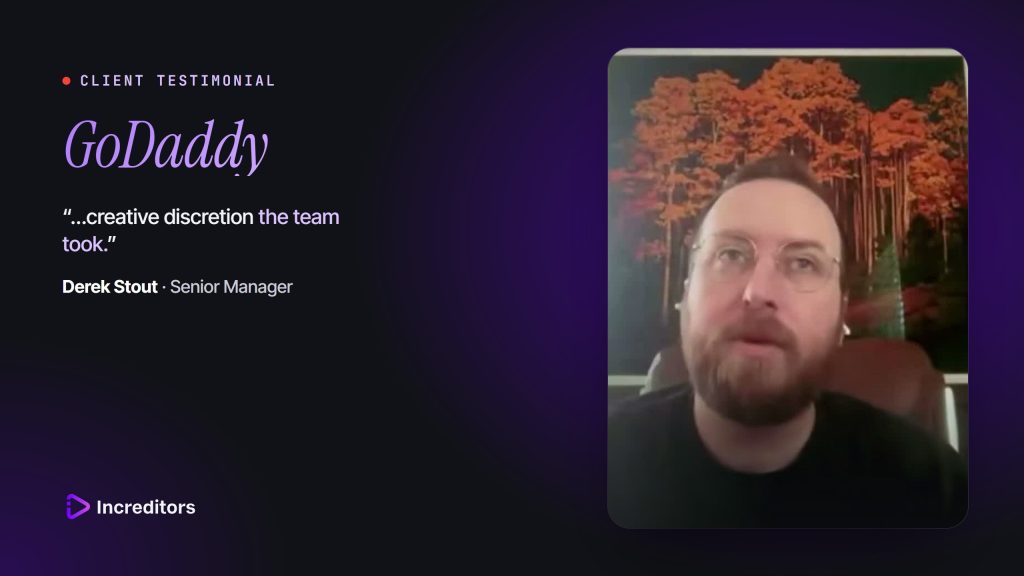
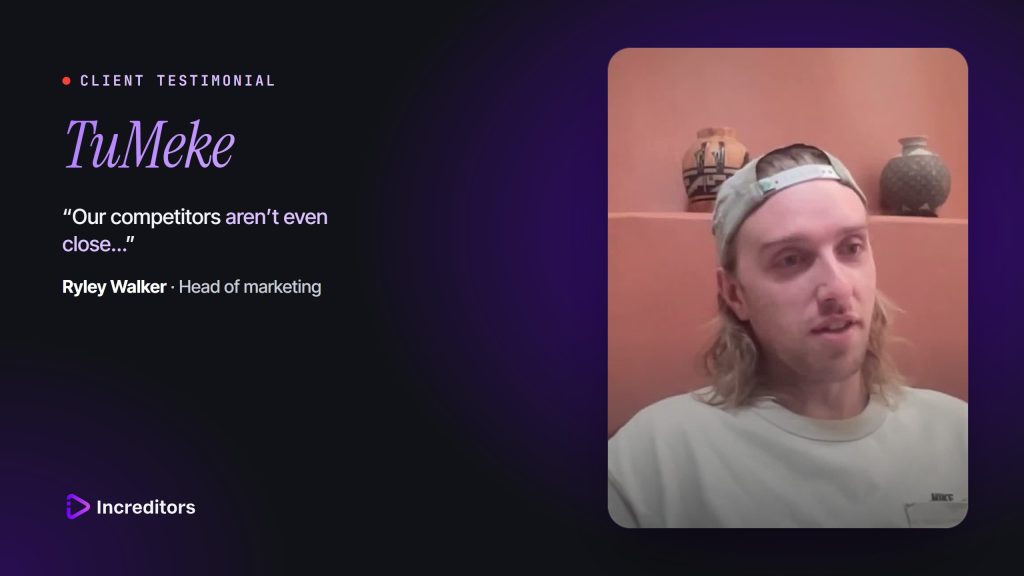
Two of the clients behind that approach are worth looking at. TuMeke, an AI ergonomics software company, is a multi-year client where animation does the work of explaining a technical product. For Emerj, an AI research company, we have regularly produced founder Dan Faggella’s YouTube interviews with AI thought leaders on The Trajectory since 2023, as described on the project page. The full list is in our case studies.
For companies that want to start smaller, we begin with a paid look at the channel and the podcast: an audit, a content plan and a sample edit from existing footage, so you can see the thinking before committing to a monthly system. Ask about it on our Podcast to Pipeline call.
A 90-Day Plan
Our recommendation for a team starting with no commercial system around the show. The order matters more than the dates.
Judge the quality of the work early and the commercial result over a full quarter. In our own client history, one B2B marketing agency started with a trial month of four YouTube videos and four LinkedIn clips and told us the videos were helping with a considered sale; in our records, the engagements that grew began with a small paid trial or pilot rather than a large upfront commitment.
To go deeper on lead generation from the channel itself, read our guide to YouTube B2B lead generation.
FAQ: Podcast to Pipeline
Can a B2B podcast actually generate pipeline?
Yes, when it is built as a pipeline channel rather than a broadcast: each episode is planned from a question buyers ask before they sign, recorded so it can become clips, and every asset points to one next step. Without those, a podcast builds goodwill but rarely produces conversations you can trace to a deal.
How do we track pipeline from a podcast?
Use three layers: UTM parameters (utm_source, utm_medium, utm_campaign) on every link so Google Analytics can report by campaign; a required ‘How did you hear about us?’ field on your demo form; and a question to every new opportunity about what they watched or listened to. Each is imperfect, but together they give you a report you can defend.
Do we need video, or is audio enough?
Audio-only can work as a distribution layer, but this playbook assumes video, because one video recording gives you a searchable YouTube episode, chapters and clips for LinkedIn. If you are not recording video yet, run a camera while you record the audio and decide later.
How long before we judge whether the podcast is working?
Judge production quality after the first few episodes and pipeline after a full quarter. Sales cycles in a considered sale are long, and one episode rarely closes anything alone. Set the review date up front and decide which numbers you will read: opportunities that mention the content, demo requests from content links, and calls where the prospect already knew your point of view.
What should the call to action at the end of an episode be?
One action, matched to the asset: a long episode points to one resource or a booking page, a LinkedIn clip points back to the full episode, and an episode on a specific objection points to the page that answers it. Avoid stacking four asks; viewers act on one and ignore the rest.
Verdict
A B2B podcast is a pipeline channel only if it is run like one: a written job, episodes planned from sales objections, a recording made for reuse, packaging that can be found, clips that point somewhere, and a monthly report that names the leads and deals the content touched. Skip the planning or the reporting and you have a good show and no way to prove it. Do the seven steps in order and review after a full quarter.
Changelog: 24 Oct 2026 – first published. External sources (Hootsuite, Google Analytics Help, YouTube Help) read on this date; internal practices are described as our own.
About the author
Increditors Team
The Increditors editorial team is made up of working video editors and producers at a video editing agency that has delivered 1,700+ videos for 340+ clients. We write buyer guides from live sources and say when our own services are included.
Want Your Podcast to Feed Pipeline?
Book a discovery call and we will look at your podcast, your channel and your sales process, then tell you which step is missing.
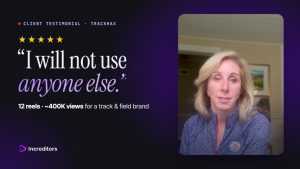
Clients, on camera