



































A SaaS product demo video from an agency typically costs about $2,500 to $25,000 per video in published 2026 guides, with a quality one-minute demo for a B2B product commonly quoted at $6,000 to $15,000. What you pay depends on animation style, how much of the interface is rebuilt, and how much scripting the agency does. The fastest way to lower cost and raise quality is a tight brief: one viewer, one job, three points, one call to action. A copy-paste brief template is below.
A SaaS product demo video agency typically charges about $2,500 to $25,000 per video, and a polished one-minute demo for a B2B software product most often lands between $6,000 and $15,000. The low end buys a screen recording with voiceover and clean editing. The high end buys scripting, rebuilt interface animation, sound design and several review rounds. Prices below carry the source and the date we saw them: October 9, 2026.
This guide is about hiring and briefing a demo video agency, which is a different question from our earlier pieces on editing product demos and explainers and video for tech companies and app demos. Those cover the edit itself: pacing, cursor treatment, callouts. This one covers what comes before the edit: which type of demo you need, what it should cost, what to ask an agency, and exactly what to put in the brief so the first cut is close. It is written for founders, CEOs and marketing leads at B2B software and tech companies selling a product that takes some explaining.
The short answer
Three numbers are worth carrying into your first agency call. Published guides place a finished product demo between roughly $2,500 and $25,000 per video. They place a good SaaS-focused agency at roughly $6,000 to $15,000 for a one-minute demo with scripting and animation. And they place the biggest swing factor not in the camera or the software but in the script: the work of understanding your product well enough to explain it in 60 to 90 seconds.
For a deeper look at animated formats see our explainer video cost guide, and for the retainer view of the same spend see our B2B video agency cost breakdown. If you are choosing between demo and explainer specifically, our guide to hiring a SaaS explainer video agency covers that decision.
The four demo video types and what each costs
“Product demo video” is used for at least four different assets. Buying the wrong one is the most common and most expensive mistake, because each answers a different buyer question. The ranges below combine three published sources, all seen on October 9, 2026: ContentBeta (a SaaS demo producer’s buyer guide), Retainable (a B2B video production cost guide) and Vidico (a production company’s cost guide). Treat them as market ranges, not quotes.
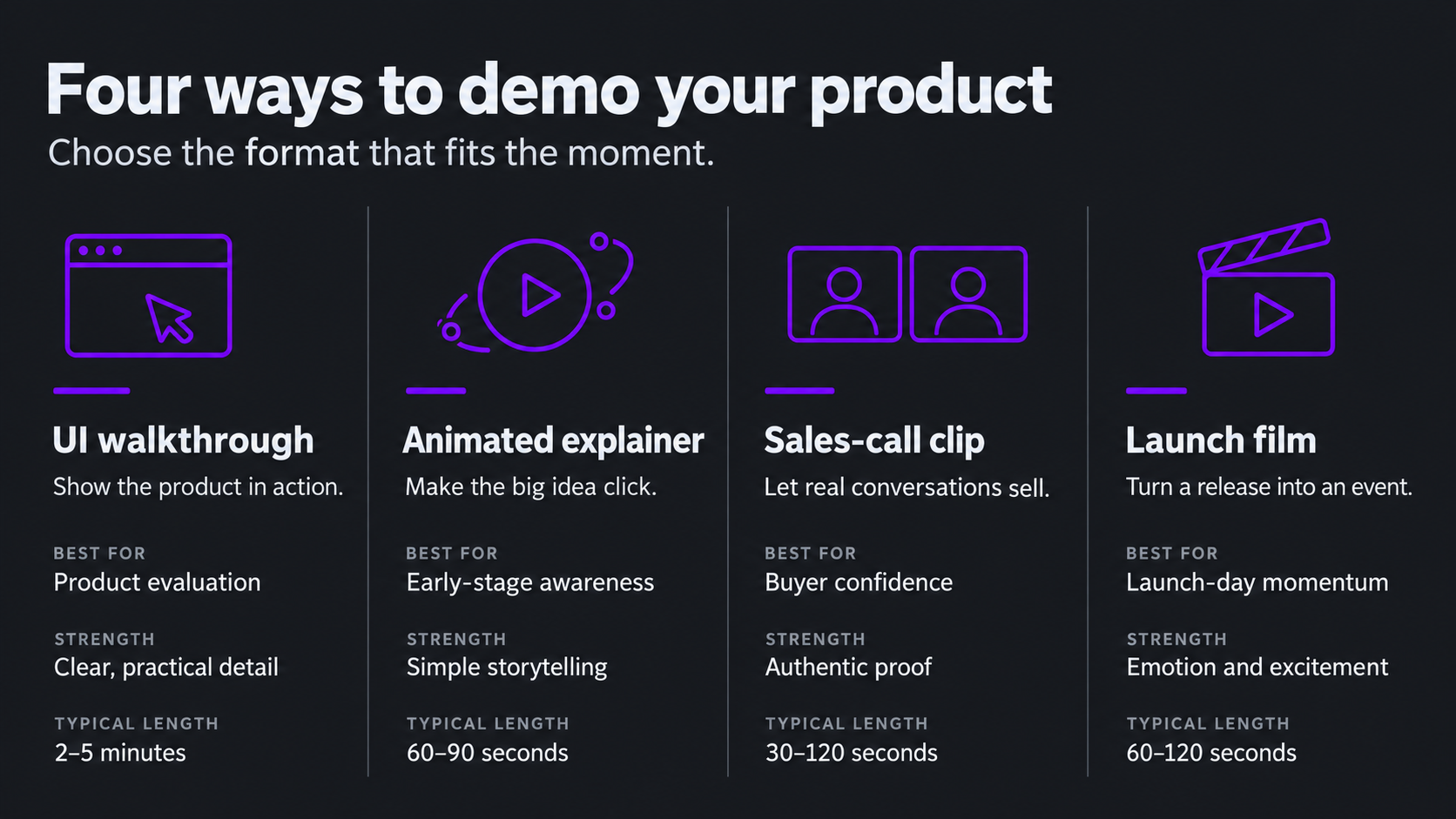
Two things stand out. First, the interface walkthrough is the cheapest to make and the cheapest to break: every product release can date it. Second, for AI, data and infrastructure products, where the underlying problem needs explaining before the interface makes any sense, the animated explainer tends to earn more than a screen recording, because the viewer needs the concept before they need the buttons.
💡 Pro Tip: Buy a system, not a single video. A flagship animated piece for the homepage plus a handful of short feature clips cut from the same visual language costs less per asset than five unrelated projects, and your team can update the clips without redoing the hero.
What actually moves the price
Agencies price the same hour of work very differently, but the cost drivers are consistent. In rough order of impact for a B2B software product:
- Scripting and product understanding. A script that starts from a real conversation with your product lead takes longer and costs more than one you write yourself. It is also the part that decides whether the video works. Vidico’s guide puts pre-production, which includes scripting and storyboarding, at roughly 15 to 25 percent of a typical budget.
- Interface rebuild vs raw capture. Recreating your UI as clean, animated frames costs more than recording the live product, and holds up longer.
- Animation style. Two-dimensional motion graphics sit well below three-dimensional or live-action work.
- Number of deliverables. Cutdowns, vertical versions and captioned versions each add editing time.
- Review rounds and stakeholders. Quotes commonly include one to two rounds; extra rounds are usually billed. Enterprise review with legal, product and sales adds calendar time and cost. See our guide to managing revision rounds.
- Turnaround. Rush schedules cost more.
Agency, studio, subscription or in-house
There are four ways to buy demo video, and the right one depends on how many videos you need in a year and how technical the product is. Retainable’s guide cites a rule of thumb from a subscription provider that subscription rarely pays back below roughly 10 to 12 videos a year; at that volume the math starts to favor a recurring relationship.
If you already shoot or record your own screens and mainly need the polish, motion and pacing, an editing-led partner can be the better fit, and our complete guide to video for SaaS companies walks through that split. If you need someone to work out the story from scratch, hire for scripting first and editing second. Our what professional video editing costs guide covers the editing side of the budget.
How to choose a demo video agency
Showreels tell you the agency can animate. They do not tell you whether it can explain a data pipeline or a model-monitoring tool to a skeptical VP of Engineering. Use these six checks.
1. Ask how they learn your product
A good answer is a short working session with your product lead, a read of your docs and a few recorded sales calls. A weak answer is “send us a brief and we’ll take it from there.” The first produces a script that sounds like your best seller. The second produces a script that sounds like your homepage.
2. Look for work on products as hard as yours
Ask for two examples with a comparable level of technical depth and the one sentence each client said about it. Praise for clarity and for domain literacy are the signals that matter.
3. Get the scope in writing
Who writes the script, who storyboards, how many rounds are included, what a round costs beyond that, what formats you receive and who owns the source files. The same discipline applies to video editing SLAs for any ongoing editing relationship.
4. Ask who actually makes it
Find out whether the person you meet in the sales call is the person who will write and edit, and whether the same team returns for the second video. Continuity is what makes video number five cheaper and better than video number one.
5. Confirm accessibility is included
Captions and transcripts are part of a professional delivery, not an add-on. The W3C Web Accessibility Initiative guidance on captions and the broader W3C guidance on audio and video media explain what good practice looks like, and your enterprise buyers’ procurement teams increasingly ask.
6. Ask how the video will be maintained
Products change. Ask how a feature update gets folded into the video, how fast, and at what price. The best answer is a modular file structure that lets the agency swap one scene rather than rebuild the whole piece.
💡 Pro Tip: Ask every agency the same question before you discuss price: “How will you understand our product well enough to script it?” The answers sort the field faster than any portfolio. If you want to compare the field, see our best explainer video companies list.
The brief template
A good brief is a page, not a deck. It makes the agency’s first draft close to final, which is where most of the saved money comes from. Copy this into a document and fill it in before the first call.
Keep points 3 and 4 short. If your three points need a paragraph each, you have a series of videos, not one. If the agency also shoots or records footage, add a shot list so everyone agrees what gets captured before anyone starts.
💡 Pro Tip: Write the call to action first. If you cannot say what the viewer should do next in one sentence, the video will not make them do it, however polished it is.
Process, timeline and review rounds
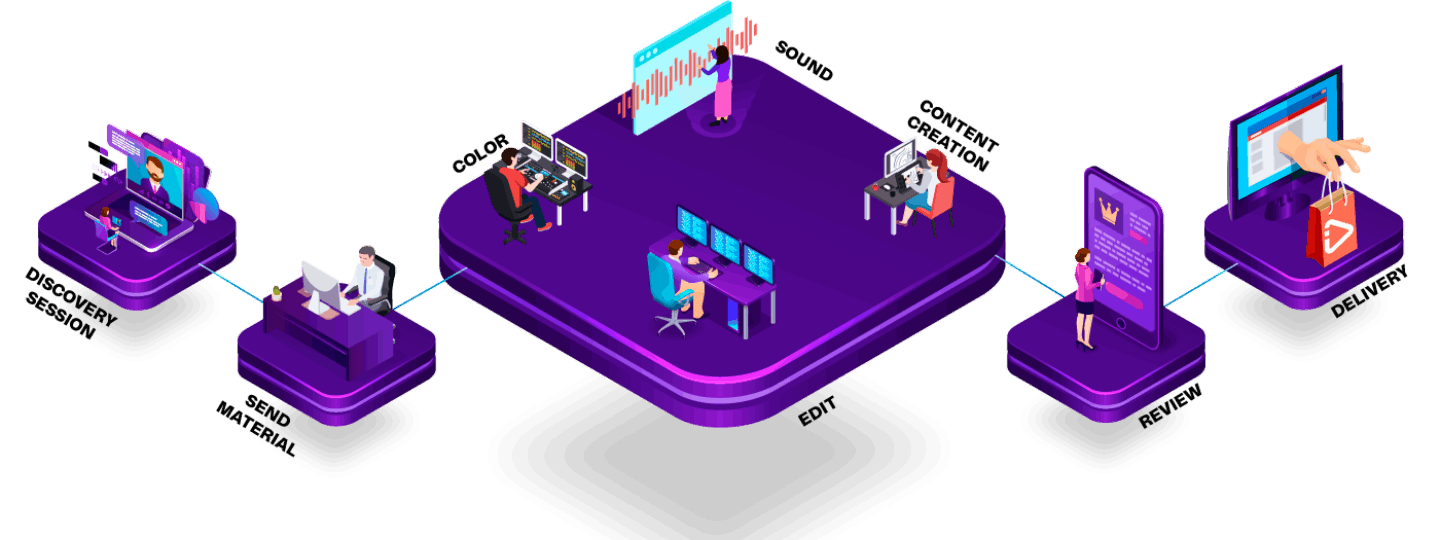
A scripted, animated demo usually moves through six stages. Calendar time depends more on your review speed than on the agency’s production speed.
- Discovery call and brief. The agency learns the product and the buyer.
- Script. Written, then reviewed by product and marketing. This is the stage where most delays happen.
- Storyboard and style frames. You approve the look before animation begins.
- Production and animation. Interface scenes, motion graphics, voiceover.
- Edit, sound and captions. Pacing, music, mix, captions and cutdowns.
- Review and delivery. One or two consolidated rounds, then final files and source files.
Plan on roughly four to eight weeks from kickoff to delivery for a scripted animated demo, and less for a straightforward screen-recorded walkthrough. Collect all feedback into one document per round. Contradictory comments from five reviewers is the single most reliable way to add a week and a charge.
How this played out
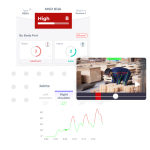
TuMeke, an AI ergonomics software company, has been an Increditors client for four years. Its verdict on the work: the animations are “making everything clear.” That is the practical test for a demo video in a complex sale. It is not whether the video looks good, but whether a prospect who has never seen the product understands it after one viewing. See the TuMeke project page and our other case studies.
Five briefing mistakes that inflate cost
- Starting with the feature list. Start with the buyer’s problem; the features follow naturally.
- Two jobs in one video. A video that must both explain the category and walk through setup will do neither well.
- Locking the script after animation starts. Changes after storyboard approval are the most expensive edits in the project.
- Unclear owner. One person with the authority to say “approved” saves more time than any tool.
- No plan for updates. Ask for modular files and a price for a feature refresh at the start, not after the release.
None of these require a bigger budget. They require an hour with the template above. When you are ready for a conversation, a video editing company with a strategy layer can pressure-test the brief before you commit to production.
FAQ
How much does a SaaS product demo video cost from an agency?
Published guides put a finished product demo anywhere from about $2,500 to $25,000 per video, and a good SaaS agency one-minute demo at roughly $6,000 to $15,000, as of October 9, 2026. The spread comes from animation style, how much of the interface must be rebuilt, scripting depth and turnaround.
What should a product demo video brief include?
Name the viewer and the decision they are making, the one job the video does, the three points that must land, the proof you can show (customer, metric, screen), the call to action, where the video will live, the length and formats, the access you will give the team, and who approves what. The template in this guide covers each of these in order.
How long should a SaaS product demo video be?
Match length to the job. A 15 to 30 second clip suits ads and feature launches, a 60 to 120 second video suits the homepage and sales follow-up, and a 2 to 3 minute walkthrough suits evaluators who are already interested. Several short videos usually beat one long one for complex products.
Should we hire a product demo video agency or use an interactive demo tool?
They solve different problems. Interactive demo tools let a prospect click through the product at their own pace; video explains why the product matters, in a controlled order, with motion and voice. Many B2B teams use both: video to frame the problem, an interactive tour to let the buyer explore.
How long does a product demo video take to produce?
Plan on roughly four to eight weeks for a scripted, animated demo from kickoff to final delivery, and less for a straightforward screen-recorded walkthrough. Most of the calendar time sits in script approval and stakeholder review, not in editing.
What makes a demo video agency right for a complex or technical product?
Look for proof that the team can understand your product without you writing every line: a scripting process that starts from a call with your product lead, work for other technical companies, and a fixed review process. A generalist studio can make a beautiful video that explains the wrong thing.
Verdict
For a B2B software product that takes some explaining, budget roughly $6,000 to $15,000 for a flagship one-minute animated demo, and treat the script as the line item to protect. Cheaper formats work when the interface speaks for itself. Spend more only when the video must carry a launch or a new category.
Hire on how the agency learns your product, not on the showreel. Brief on one viewer, one job and three points. Collect feedback once per round. All figures here are public ranges as of October 9, 2026 and may change.
Want a Second Opinion on Your Demo Video Brief?
Tell us what you sell and who has to understand it, and we will walk through what a strategy-led demo video would involve.