













































Last checked: October 2026 (every price read on the provider’s own site on 25 Oct 2026).
Short answer
Podcast post-production is everything after you stop recording. Specialists charge $45 to $550 per episode for the edit, $25 to $175 for each add-on (transcript, show notes, clips), and $1,990 to $7,500 a month for managed plans. Pay for the edit first; add only what your funnel uses.
TL;DR
Post-production has nine steps: ingest and sync, dialogue edit, clean-up and mix, master and export, video edit, written assets, clips, publishing and revisions. Vendors price the edit per episode (by the length of your raw recording) and sell the rest as add-ons or bundle it into a monthly plan. Video costs roughly 1.3 to 2.1 times the audio edit at the same vendor. Decide which of the nine steps your pipeline actually needs, then compare quotes line by line.
This guide is for a founder or marketing lead who already records a podcast and needs to know what happens to the files next, and what it should cost. It is the step-by-step, price-per-stage view for podcasts. For the generic video version see what is video post-production; for edit styles, the best type of editing for podcasts; for choosing a company, top podcast production companies for B2B teams and how to choose a B2B podcast agency. We are a video editing agency, so our own service appears below, labelled as ours.
What podcast post-production covers
Post-production starts when the recording stops and ends when the episode is live and promoted. Before it comes pre-production (guest, topic, questions) and recording; after it comes distribution and measurement. In practice vendors split the work into a core edit and a set of add-ons, which is why two quotes for the “same” podcast can differ by a factor of ten.
The nine steps, in order
1-2. Ingest, sync and dialogue edit
Editing starts by lining up every track, so each speaker sits on their own channel. We Edit Podcasts lists “syncing multi-track channels” as a priced variable: basic covers up to 3 speakers, premium 6 and custom 12. The dialogue edit that follows removes mistakes and dead air while keeping the speaker sounding like themselves.
3-4. Clean-up, mix, master and export
Mixing balances voices and music; mastering sets final loudness and prepares the files. ScrubCast lists broadcast compression, limiting, normalising and EQ, then an ID3-tagged MP3. Delivery has rules too. Apple Podcasts’ audio requirements recommend AAC over MP3 for RSS feeds and do not accept single-channel WAV or FLAC files in Apple Podcasts Connect, so check the formats your vendor delivers against your host before episode one.
5. Video edit
A video episode is a different product from an audio one. PodEdit.com states it plainly: audio and video podcasts, even from the same recording, are separate products with their own editing session. If your audience finds you on YouTube or LinkedIn, this is where most of the extra budget goes.
6. Written assets: show notes, chapters, transcript
Show notes summarise the episode and link to what was mentioned; a transcript makes it searchable and accessible. Chapters also have a rulebook. YouTube’s help page on video chapters says the first timestamp must be 00:00, there must be at least three timestamps in ascending order, and each chapter must run at least 10 seconds. A time-stamped outline in your show notes doubles as your chapter list.
7-8. Clips and publishing
Clips turn one 45-minute conversation into several short videos; see our guide to podcast clip strategy for which moments to cut. Publishing fails quietly (wrong metadata, a missed schedule), so check whether it is included: Podcast Fast Track lists scheduling to your host and website inside its audio edit.
9. Revisions
Ask how many rounds are included. Next Day Podcast says each additional revision request takes another 24 hours; We Edit Podcasts’ video tiers include 10 (basic) or 25 (premium) client content-edit notes.
💡 Pro Tip: Send one written brief per episode: the three moments to keep, the two to cut, how to spell every name and product. It cuts revision rounds more than any pricing negotiation will.
What each step costs: 24 published prices
Every row below was read on the vendor’s own page on 25 Oct 2026. Click the vendor name for the source. Rates are the published or starting rates; a vendor may quote differently for long, noisy or multi-guest episodes.
What the numbers say. Audio edits cluster at $90 to $180 per episode for a 30 to 60 minute recording (PodEdit.com $90, ScrubCast $120 for 35 minutes, Next Day Podcast $160, Podcast Fast Track $165, We Edit Podcasts from $180), with a floor of $45 for a recording under 30 minutes and a ceiling of $320 or more where premium editing and more speakers are included. Video edits start at $135 and reach $550. Add-ons are priced very differently: Next Day Podcast charges $70 for show notes, Podcast Fast Track $165 for a 600-word version with a time-stamped outline; transcripts range from $25 per episode to Rev’s $1.99 a minute, which is $89.55 for a 45-minute episode.
💡 Watch for: Rates are priced on different bases. PodEdit.com and Next Day Podcast price by the length of the raw recording, ScrubCast on a 35-minute episode, The Podcast Editor by the hour. Convert every quote to “per finished episode, with the add-ons I need” before comparing.
How long post-production takes
Two numbers matter: calendar turnaround (what you wait) and hands-on time (what you pay for). The best public evidence for the second is We Edit Podcasts, which shows an editor timelapse and states that an 18-minute single-track episode took 75 minutes to edit and polish, roughly four minutes of work per minute of finished audio. That is one vendor’s demonstration of a single-track show, not a benchmark, but it explains why price scales with raw length and speaker count.
Three ways to buy podcast post-production
Plans bundle several steps and differ in what they leave out, so line them up step by step, not by headline price. The wider vendor field is in best podcast video editing services, and per-episode editing economics are in podcast video editing cost.
Per-episode figures divide the fee by the episode quota where one is stated. They overstate the edit price, because the fee also buys clips, guest booking and strategy.
Worked example: one 45-minute interview, four a month
Take a B2B show that records four 45-minute interviews a month and wants audio, video, show notes, a transcript and three clips per episode. Here is the bill three ways, using only the published rates above (our arithmetic).
The specialist stack and the cheaper managed plan land within about $630 a month of each other ($2,618.20 against $1,990), but only one of them has a single point of contact. Managed plans also bundle strategy, guest booking and promotion in some cases, so the right comparison is whether you would otherwise buy those separately. If cost is the only issue, the cheapest cell is the tools row. The real cost there is your time: at the We Edit Podcasts ratio of about 4.2 minutes of work per finished minute, a 45-minute episode would take about three hours to edit, though we cannot verify that for your show.
💡 Pro Tip: Ask each vendor to price the same sheet: one 45-minute, two-guest episode with video, show notes, a transcript, three clips and two revision rounds. Quotes that look 40% apart often differ in clips and revisions, not in the edit.
What moves the price
Five variables explain most of the spread between quotes.
- Raw recording length. PodEdit.com bills its audio edit at $45, $90 and $135 for recordings up to 30, 60 and 90 minutes; Next Day Podcast says it prices “by the recording you send, not the final cut”.
- Audio versus video. At the same vendor the video edit costs more than the audio one, as the table below shows.
- Speakers and tracks. We Edit Podcasts steps from 3 to 6 to 12 synced speakers across its basic, premium and custom audio tiers ($180, $320, $550+).
- Turnaround. Next Day Podcast promises 24 hours; most others sell 72 hours to 7 days.
- Add-ons and revisions. Show notes, transcripts, clips and re-edits are where a $90 edit turns into a $400 episode.
Across these five pairs the multiple runs from 1.28x to 2.12x. Podcast Fast Track’s video price includes B-roll, graphics, colour grading and custom music, so it is a richer deliverable, not a like-for-like premium.
What a B2B show needs on top of the basics
A hobby podcast is finished when the episode is live. A B2B podcast is finished when it has produced something a salesperson can use. That shifts the weight to steps 6 and 7: written assets that rank, and clips that put the guest in front of buyers on LinkedIn and YouTube. See the B2B video content engine and what to expect from a podcast-to-YouTube agency.
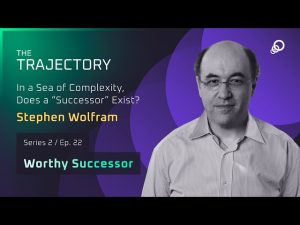
Increditors is a video editing company with 1,700+ videos delivered for 340+ clients and a Clutch rating of 5.0 across 12 reviews. Long-form interview editing is a core part of that: the video above is an episode of The Trajectory with Dan Faggella, a show Increditors edits for Emerj, and our TuMeke case study and other case studies show the same approach on B2B video. We run podcast post-production as managed pilots from $1,500, scoped on a short call, so you can test the workflow before committing to a retainer. For higher volume, our sister business Video Editing Company runs dedicated retainer teams for B2B and SaaS clients.
What to ask a vendor before you pay
- Which of the nine steps does the quoted price include, and which are add-ons?
- Is the price set by raw recording length or finished length? What happens at 61 minutes?
- How many speakers and tracks are included, and what is the surcharge beyond that?
- What is the turnaround for the first draft, and for each revision? Do weekends count?
- How many revision rounds are included, and what counts as a revision versus a new request?
- Who chooses the clip moments and writes the hooks: you or the vendor?
- Can we run one paid episode first?
For the video version of this list, see our video post-production checklist. To have us scope your show, book a short call and bring one raw episode.
How we picked these prices, and our disclosure
Criteria. We included post-production services and tools that publish a price for at least one of the nine steps on a page anyone can read, plus plans from B2B-focused podcast services. Data date: 25 Oct 2026. For each, we opened the vendor’s own page and found the price string in the page text; the dataset (n = 35 rows: 24 step prices, 8 plans and 3 tools) is listed above with a source link per row.
Disclosure. This guide is published by Increditors, a video editing agency, and includes our own services. Video Editing Company is a division of Increditors, so neither mention is independent. We have no commercial relationship with the other vendors named, and nobody paid for a place in this guide.
Limitations. Published prices are starting rates and change often, and many pages do not define a “clip” or a “revision”. The 75-minute editing figure is one vendor’s demonstration. The worked example is arithmetic on public rates, not a quote.
FAQ
What is podcast post-production?
It is everything between the end of the recording and the episode going live: syncing tracks, editing the dialogue, cleaning and mixing the sound, mastering and exporting, editing video if you publish it, writing show notes and a transcript, cutting clips and scheduling the release. Recording and hosting sit either side of it.
How much does podcast post-production cost per episode?
On the public price pages we read on 25 Oct 2026, the audio or video edit alone runs from $45 (PodEdit.com, audio up to 30 minutes of raw recording) to $550 (We Edit Podcasts premium video, starting rate). Add-ons are separate: a transcript from $25 (The Podcast Editor) to $89.55 for a 45-minute episode at Rev’s $1.99 a minute, show notes $70 to $165, and three clips $175 at Podcast Fast Track.
How long does podcast post-production take?
Published turnarounds run from 24 hours (Next Day Podcast, audio) to 72 hours (We Edit Podcasts basic), 96 hours (premium video) and 7 days (Podcast Fast Track audio and video). The hands-on time is shorter than the calendar: We Edit Podcasts shows an 18-minute single-track episode taking 75 minutes to edit and polish.
Should I buy audio-only or audio plus video editing?
If you publish on YouTube or cut video clips, you need the video edit. At the same vendor it costs about 1.28 to 2.12 times the audio price in our five comparisons (for example PodEdit.com $90 audio against $135 video for a 30-60 minute recording). Audio-only suits a show whose audience listens in a podcast app and never meets you on LinkedIn.
Can I do podcast post-production myself with AI tools?
For a first pass, yes. Descript Creator is $24 a month billed annually and Auphonic gives 2 hours of processed audio free each month. What the tools do not do is decide what to cut, check that a guest’s claim is accurate or brand the output. Treat the tools as the first draft and budget review time for every episode.
What should a B2B podcast budget for post-production?
For four 45-minute episodes a month, our arithmetic puts a specialist-by-specialist stack at $2,618.20 a month and managed plans at $1,990 (We Edit Podcasts Essentials) to $4,500 (Fame Weekly or Podigy Authority). Our own managed pilots start from $1,500, scoped on a short call, because the right scope depends on how much of the work you want off your plate.
Changelog: 25 Oct 2026 – first published: 24 step prices, 8 plans and 3 tool prices read on vendor sites; worked example added.
About the author
Increditors Team
The Increditors editorial team is made up of working video editors and producers at a video editing agency that has delivered 1,700+ videos for 340+ clients. We publish buyer guides from live vendor pages and say clearly when our own services are included.
Want Your Podcast Post-Production Scoped?
Tell us about your show and we will scope a pilot.
Clients, on camera