












































Last checked: October 2026 · prices read on vendor sites, 24 Oct 2026.
Hire a podcast production agency by testing it, not by trusting the pitch: write a one-page scope, shortlist three, pay each for a pilot episode from the same recording, and sign only a contract that leaves you the RSS feed, raw files and an exit. Published prices run from $120 per audio episode to $7,500 per month.
A good hire follows five steps: scope, shortlist, call, paid pilot, contract. Budget by model (per episode, monthly retainer or project), insist on a signed assignment of ownership, keep the hosting account and RSS feed in your name, score the pilot on a weighted card, and watch for the red flags in the proposal and the contract. The full process fits in four to six weeks.
This guide is for B2B founders and marketing leads who already have a show, or are about to launch one, and need to pick the team that will produce it. It is written by a video editing agency that edits podcast episodes and video podcasts for B2B companies, so we say where our own services fit and where they do not.
How this differs from our other podcast pages. The B2B podcast agency guide explains which type of partner to buy and gives a 10-point vetting checklist. Our ranked list of podcast production companies compares vendors side by side. This post covers the part neither one does: the hiring process itself, the contract terms to negotiate, how to score a pilot episode, and the red flags that show up in proposals and paperwork. Read it when you have decided to hire and want to avoid a bad contract.
Decide What You Are Buying First
Most bad agency hires start with a vague brief. “We need someone to handle our podcast” can mean five different jobs, and agencies will quote for whichever one is easiest to sell. Before you contact anyone, decide which of these you are buying:
- Audio editing only: noise reduction, leveling, intro and outro, and a finished file for your host.
- Video editing: multi-camera or split-screen edits, captions and a full-length episode for YouTube.
- Clips and repurposing: short videos, audiograms, quotes and show notes cut from each episode. Our podcast clip strategy guide shows what a realistic output looks like.
- Strategy and guest work: topic planning, guest research and outreach, and reporting tied to pipeline.
- Hosting and distribution: the RSS host, show artwork, publishing and analytics.
Then write down the volume (episodes per month and average raw length), who on your side approves each episode, and the one business outcome the show serves. Competition for attention is real: Listen Notes, which indexes public RSS podcasts, reported at least 3,827,574 podcasts and 196,247,662 episodes on its stats page when we read it on 24 Oct 2026. A B2B show does not need a mass audience, but it does need a clear job, and the agency should be quoting against that job.
💡 Pro Tip: Name one internal owner before the first call. Agencies stall on feedback from three stakeholders at once, and a named approver is the cheapest way to protect turnaround.
If you are still deciding between a studio, an audio editor, a full agency or a video-first partner, start with the B2B podcast agency guide. If your main goal is a YouTube channel built from the show, the podcast to YouTube agency guide covers that decision.
What a Podcast Production Agency Costs in 2026
Agencies price in three ways: per episode, by monthly retainer, or by project. The table below shows one published figure per model from each vendor, read on its own pricing page on 24 Oct 2026. These are list prices in US dollars, they change, and the scope behind each is different, so read them as anchors for your budget, not as quotes. We keep a larger dataset in our Podcast Editing Price Index 2026.
The arithmetic behind the comparisons, so you can check it:
- Audio versus video per episode: Next Day Podcast lists $160 for audio and $300 for video, so video costs $140 more per episode, or about 1.9 times the audio price.
- Per-episode cost on retainers: Fame states roughly $2,750 per episode on its monthly plan and $4,500 for four episodes, which is $1,125 per episode (4,500 ÷ 4). Podigy’s Growth tier at $2,500 per month includes one full episode.
- Price per episode versus retainer break-even: at We Edit Podcasts, six Premium episodes at $550 would cost $3,300, which is below the $3,800 Growth retainer; the retainer adds clips, so compare deliverables, not totals.
⚠️ Warning: A low price per episode is not a low cost. Audio-only vendors usually do not include clips, show notes, strategy or video, and every add-on bills separately. Ask for the total monthly cost of the deliverables you actually need.
For a related price view see our guide to what professional video editing costs, and for a video-led shortlist see the best podcast video editing services.
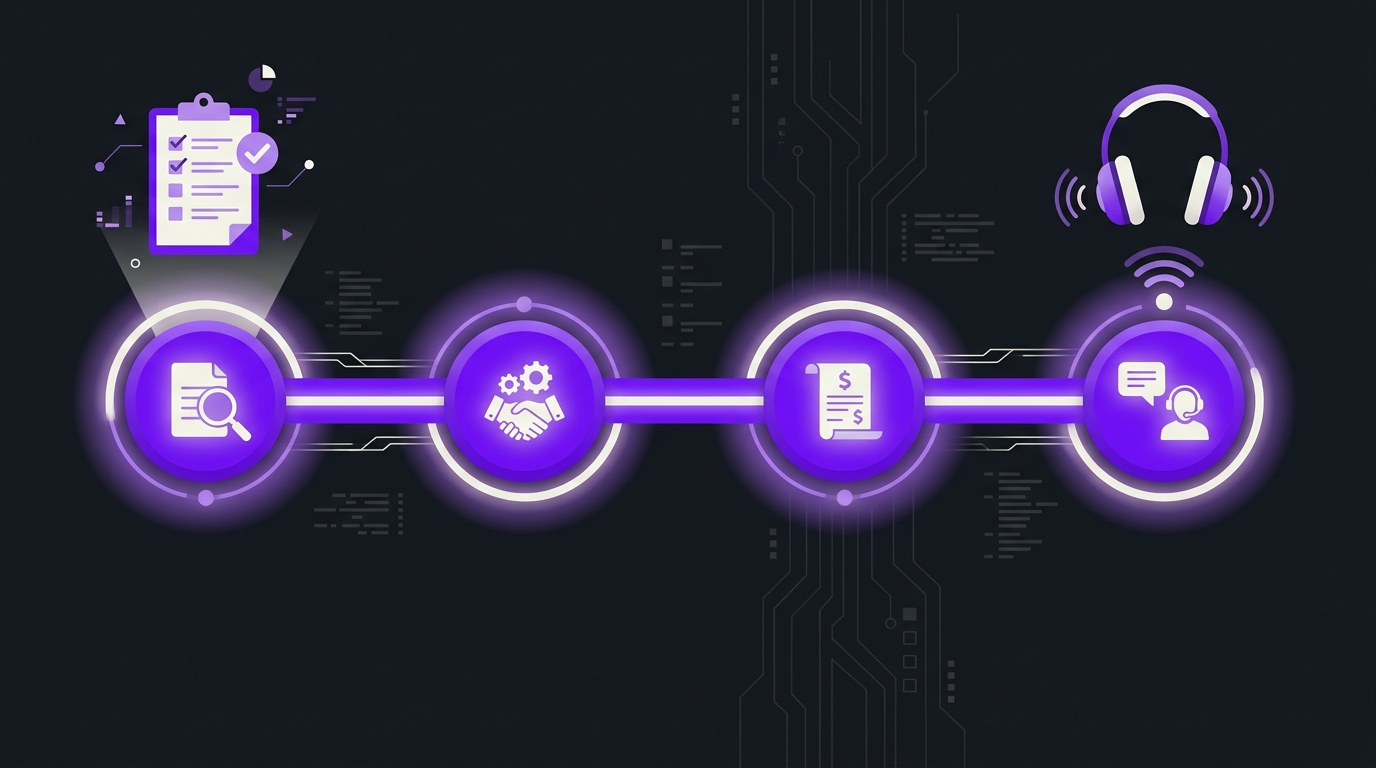
The Five-Step Hiring Process
Step 1: Write a one-page brief (week 1)
Cover the show format, episode length and cadence, who is on camera, the deliverables you want per episode, where the show is published, the owner on your side and the outcome you will judge it by. Send the same brief to every agency so their quotes are comparable.
Step 2: Shortlist three, not ten (week 1 to 2)
Use proof you can check: named B2B clients, a Clutch or G2 profile with a review count, and sample episodes in your category. Three finalists is enough to see a real spread without exhausting your team. Discard anyone who cannot show work for a company that sells a considered, complex product.
Step 3: Hold one structured call each (week 2)
Ask the same questions of every agency: who actually edits, who reviews quality, how revisions work, what they do when a guest recording is poor, what happens if the lead editor leaves, and how they report. Our how to hire a B2B video editing agency guide has a longer question bank that works for podcast vendors too.
Step 4: Run a paid pilot on the same recording (weeks 2 to 4)
Give each finalist the same raw file, an identical written scope and the same deadline. Pay for it. A paid pilot gets you a fair effort and a real turnaround time, and it shows how each agency handles a correction, which a polished sample reel never will. The pilot price is a fraction of the retainer, and we price ours from $1,500.
Step 5: Score, call references, then sign (weeks 4 to 6)
Score the pilots with the card below, speak to two references who are B2B buyers, then negotiate the contract using the terms in the next section. Do not sign a twelve-month term before the pilot is scored.
Want to talk through your own scope? You can book a call with our team and we will tell you honestly whether an editing partner or a full-service producer is the better first hire.
Contract Terms to Get in Writing
Most disputes between podcasters and agencies are not about quality. They are about who owns what, how to leave, and what “unlimited” actually covers. This is a negotiating checklist, not legal advice; have your counsel read the final contract.
Ownership: why a signed assignment matters
Do not assume that paying an agency means you own the result. The US Copyright Office explains in Circular 30 on works made for hire that a commissioned work can be a work made for hire only if it falls within nine listed categories, one of which is “as a part of a motion picture or other audiovisual work”, and only if both parties agree in a signed written instrument. Sound recordings are not on that list. In practice, an audio-only episode may need an explicit written assignment from the agency rather than a work-for-hire label. Ask counsel to confirm the wording for your jurisdiction.
The RSS feed: the exit you will need
If an agency sets up your hosting account, the feed belongs in an account you control. Apple’s guide to changing hosting providers says most hosts can migrate a feed with a 301 redirect, that each episode’s GUID must never change, and that duplicate episodes or a drastic change in analytics after a move can mean the GUID was altered. It also notes a fallback in Apple Podcasts Connect if you lose access to the old feed. The simplest protection is to avoid needing it: own the host account from day one.
💡 Pro Tip: Ask for one sentence in the contract: “On termination, the agency will deliver all raw files, project files and finished episodes within 14 days at no charge.” It costs a good agency nothing and it tells you a lot about a bad one.
How to Score the Pilot Episode
Score each pilot out of five on each criterion, multiply by the weight, and add up. These weights are our suggestion for a B2B show where the episode is a sales and trust asset; change them if your priorities differ, but set them before you open the files so you do not rationalise a favourite.
Add a pass/fail line for the contract: any agency that will not assign ownership, put the RSS feed in your name or give a defined revision limit fails regardless of its score.
Red Flags in Proposals and Contracts
- No pilot, or an unpaid “sample” cut from their own footage. You learn nothing about how they handle your recording or your corrections.
- A price with no scope. “Podcast production, $3,000 per month” cannot be compared with anything.
- Case studies with no named client. Ask who the reference is and whether you can speak to them.
- Download-count promises. No agency controls how many people listen. Be wary of anyone who guarantees it.
- The agency owns the feed, host account or analytics. It puts them in control of your exit.
- Long auto-renewals with long notice periods. A twelve-month term signed before any pilot is a lock-in, not a vote of confidence.
- Everything done by one person with no backup. Ask what happens when the lead editor is ill or leaves.
- Vague AI claims. If AI tools touch your files, you should know which ones and what happens to the recordings.
📌 Note: A red flag is a reason to ask a question, not always a reason to walk away. A vendor that says “we use one editor, and here is our backup process” is more trustworthy than one that hides it.
For more on picking the partner type and a 10-point checklist, see the B2B podcast agency guide.
The First 90 Days After You Sign
Hiring is the start of the work. Treat the first quarter as an extended pilot with explicit checkpoints:
- Days 1 to 30: onboarding call, a shared folder structure, a style sheet (fonts, colours, caption style, intro and outro), and a feedback format everyone follows. Judge turnaround against the contract.
- Days 31 to 60: review the first month’s output against your scorecard, check that revision rounds are being used sensibly, and confirm that clips are being cut from each episode.
- Days 61 to 90: hold a results review that uses your business outcome, such as sales conversations that referenced an episode, guest introductions, or inbound from clips. Decide whether to renew, change scope or end the term.
If the show is feeding a YouTube program, make sure the channel, chapters and metadata sit with you too; the podcast to YouTube agency guide and our podcast video editing service guide explain what to expect in that workflow.
Where Increditors Fits
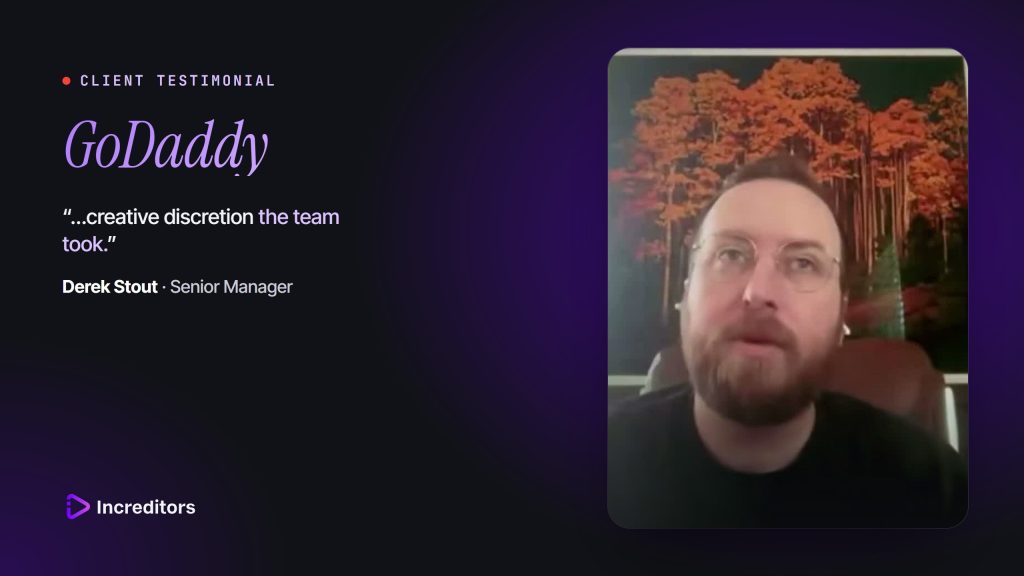
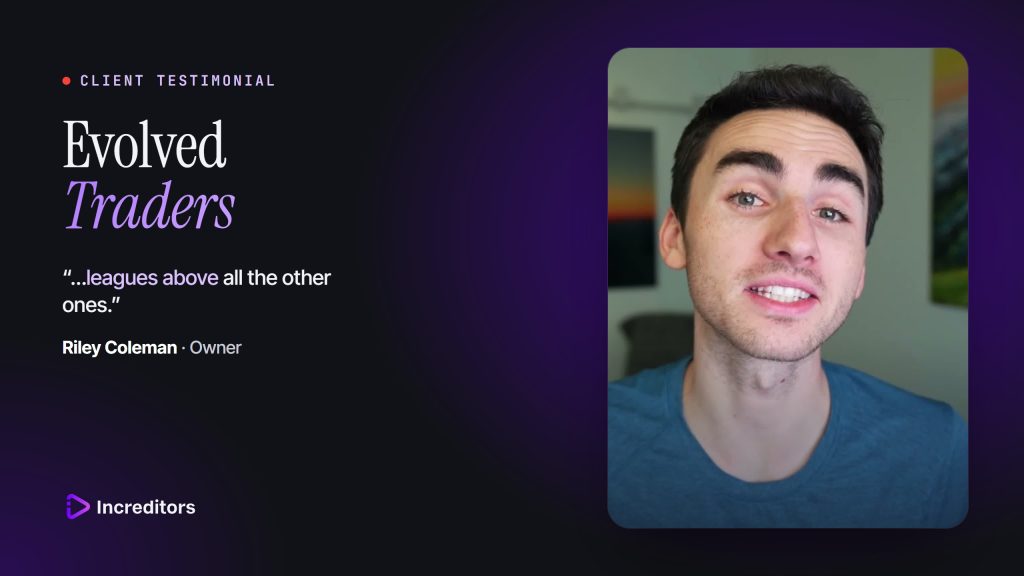
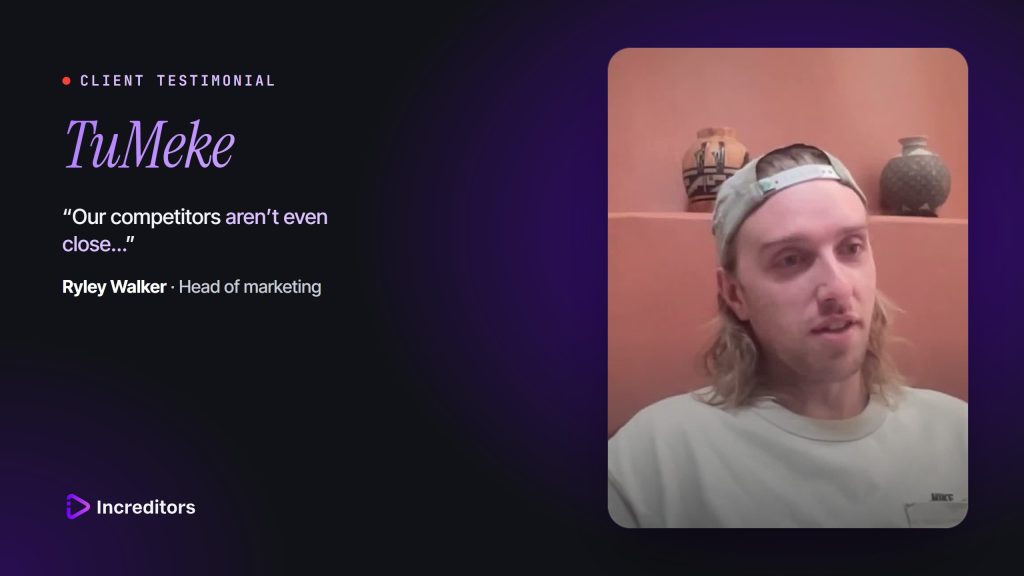
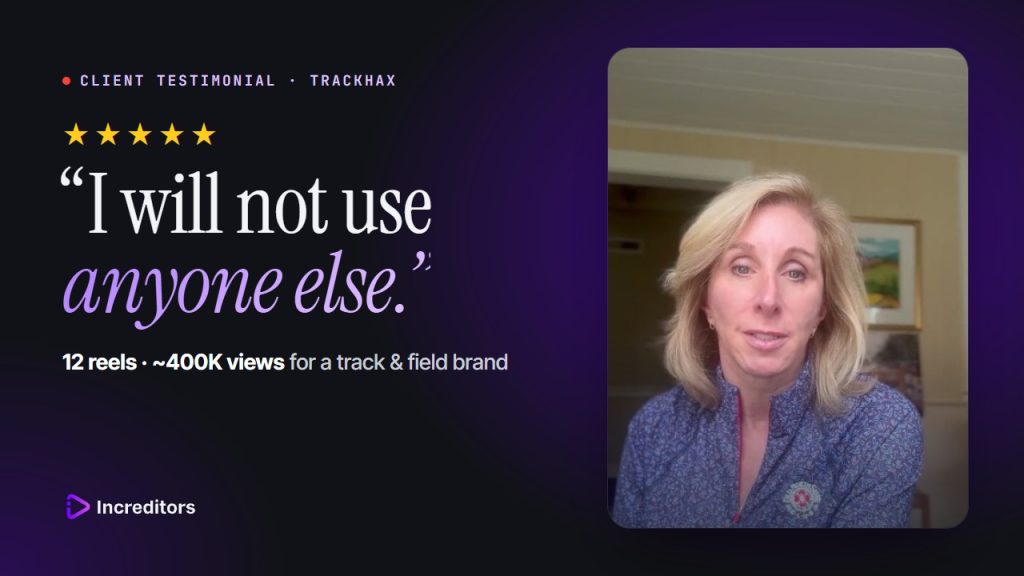
Increditors is a video editing agency working with B2B software, AI and data companies. We hold a 5.0 rating on Clutch from 12 reviews, have delivered 1,700+ videos for 340+ clients, and our named clients include Emerj (The Trajectory podcast), TuMeke, Riley Coleman, Trade with Pat, VYVE Wellness, Dr. Jonathan Tam, a GoDaddy pilot, eSafetyFirst and Rhythm Monster.
For podcasts, we are strongest on the post-production and repurposing side: long-form episode edits, captions, clips and motion graphics on a monthly rhythm. We do not run guest booking at scale or ad sales, and we will say so on the first call if a specialist is the better first hire. Many teams pair a producer with a video-first editor. If you want to see how a managed team handles quality control for a technical audience, read the TuMeke project and our other case studies.
⚖️ Disclosure: This guide is published by Increditors, a video editing agency, and includes our own services. We list our pilot price from $1,500 and no other Increditors prices. Vendor prices were read on their own pages on 24 Oct 2026; each is linked in the table above.
FAQ: Hiring a Podcast Production Agency
How do I choose a podcast production agency?
Write a one-page scope, shortlist three agencies, ask each to produce a paid pilot episode from the same raw recording, and score the results against a weighted checklist before signing. Choose on the pilot, the references and the contract terms, not on the sales call or the headline price.
How much does a podcast production agency cost in 2026?
On the vendor pages we read on 24 Oct 2026, audio-only editing started at $120 per episode (ScrubCast) and video editing at $230 to $550 per episode (We Edit Podcasts). Monthly full-service retainers started at $1,990 (We Edit Podcasts Essentials) and reached $7,500 per month (Podigy Dominance). Scope behind each price differs, so compare written scope sheets.
Should I pay for a pilot episode before signing a retainer?
Yes. A paid pilot is the cheapest way to test editing quality, turnaround, communication and how an agency handles your corrections. Use the same raw recording for every finalist, agree the deliverables in writing, and treat the pilot fee as the price of a better decision. Increditors pilots start from $1,500.
Who should own the RSS feed and the raw files?
You should. The show, the RSS feed, the hosting account and every raw and project file should sit in accounts you control, with the agency added as a user. Apple’s documentation for creators notes that episode GUIDs must stay the same when a show changes hosting provider, which is why ownership of the feed matters on exit.
What contract terms should I insist on?
Written deliverables and turnaround per episode, a stated number of revision rounds, ownership of all outputs and source files by assignment, access to hosting and analytics in your name, a notice period of 30 days or less after the initial term, a named point of contact, disclosure of subcontractors and AI tools, and confidentiality for unreleased guest material.
How long does it take to hire a podcast production agency?
Plan on four to six weeks from brief to signed contract: about a week to write the scope, a week to shortlist and hold calls, one to two weeks for the pilot, and a week for scoring, references and contract review. Rushing the pilot is the most common way teams end up locked into a poor fit.
Verdict
The agencies that deserve a retainer are the ones that will let you test them first and let you leave cleanly. Write the scope, shortlist three, pay for a pilot on the same recording, score it before you read the pitch deck again, and put ownership of the feed, the files and the outputs in the contract. Do that and the choice between agencies becomes a matter of evidence, not charm.
Changelog: 24 Oct 2026 – first published: five-step hiring process, contract checklist, pilot scorecard and red flags; 16 published prices from five vendors read on their own pricing pages.
About the author
Increditors Team
The Increditors editorial team is made up of working video editors and producers at a video editing agency that has delivered 1,700+ videos for 340+ clients. We write buyer guides from live vendor pages and say when our own services are included.
Ready to Turn Your Podcast Into Pipeline?
Tell us about your show and we will map a pilot episode and a plan. Pilots from $1,500.
Clients, on camera