








![3D Explainer Video - ScribbleLive.mp4_snapshot_00.12_[2022.03.09_03.14.16]](https://increditors.com/wp-content/uploads/elementor/thumbs/3D-Explainer-Video-ScribbleLive.mp4_snapshot_00.12_2022.03.09_03.14.16-r7wb53mx72rxst3qcqyrfxdmeyzb5r9jbl0wbjujh4.png "3D Explainer Video – ScribbleLive.mp4_snapshot_00.12_[2022.03.09_03.14.16]")























Demo Duck is a premium Chicago-based explainer video studio that delivers genuinely polished one-off productions, typically priced from $10,000 to $30,000+ per project. The quality is real — but so is the scope limitation. They are best suited for established brands needing a single flagship explainer video, not for marketing teams requiring consistent, high-volume video output across multiple channels.
What Is Demo Duck?
Demo Duck is a Chicago-based explainer video production company that has been operating since 2011. Founded during the early boom of animated explainer video demand — when SaaS companies were scrambling to explain complex products in 90-second clips — Demo Duck positioned itself as a boutique studio that competes on craft rather than volume. Over the years, their client list has grown to include well-known brands across SaaS, healthcare, finance, and education, and they have built a reputation for delivering polished, story-driven videos that genuinely hold viewer attention.
What sets Demo Duck apart from the sea of explainer video vendors is their emphasis on conceptual storytelling. Many production studios treat a script as a checkbox — write something, animate it, deliver it. Demo Duck tends to invest more heavily in the discovery and scripting phase, working with clients to surface the real emotional hook before a single frame is drawn. This approach has earned them a loyal client base among brands that care deeply about narrative quality, not just output velocity.
That said, Demo Duck operates as a project-based studio. Each engagement is scoped, priced, and executed as a standalone production. This model works exceptionally well for a single hero explainer that needs to live on a homepage for three to five years. It works less well for marketing teams that need a steady stream of videos — product demos, social cuts, onboarding walkthroughs, customer stories — across a rolling content calendar.
A Brief History and Positioning
Demo Duck was founded by brothers Ben and Chris Consoli, who built the studio around a simple idea: most explainer videos at the time were visually forgettable and narratively weak. Their early work differentiated on both axes — distinctive illustration styles and scripts that treated viewers as intelligent adults rather than passive recipients of bullet points. This reputation carried them from startup-land into enterprise territory, where clients were willing to pay meaningfully more for videos that reflected their brand at a premium level.
By 2026, Demo Duck operates as a mid-sized boutique, not a mass-market video factory. They are selective about clients, work on a project-by-project basis, and maintain a relatively small internal team supplemented by a network of specialized animators and voice talent. This keeps quality tight but also limits how many projects they can run simultaneously, which is one reason lead times tend to run longer than you might expect.
Types of Videos They Produce
Demo Duck’s primary output is 2D animated explainer videos, typically running between 60 and 180 seconds. They also produce motion graphics videos, product demo animations, and internal training videos. Live action work is less central to their offering but has appeared in certain client engagements. Their sweet spot is the animated brand explainer — the kind of video you put on a homepage hero section or a Series A pitch deck to explain what your company actually does.
They are less equipped for ongoing editorial work: social media video series, YouTube content, podcast video recordings, short-form cuts, or the kind of high-frequency output that modern content marketing demands. That gap is where a dedicated video editing agency with a retainer-based model adds significantly more value.
Demo Duck Pricing: The Real Numbers
Demo Duck does not publish pricing on their website, which is standard practice for custom production studios at this tier. Every project is quoted individually based on scope, complexity, animation style, voice talent, and timeline. However, based on industry benchmarks and publicly available client discussions, a realistic picture of their pricing looks like this:
Project-Based Pricing Model
Entry-level projects at Demo Duck typically start somewhere in the $10,000 to $15,000 range for a short (60–90 second) 2D animated explainer with a more straightforward illustration style. Mid-tier projects — those requiring custom character design, more complex motion, or 120–150 seconds of animation — commonly fall in the $15,000 to $25,000 range. Complex, feature-length (180+ second) animations with bespoke illustration systems, multiple scene styles, or high-end voice talent often push into the $25,000 to $40,000+ territory.
These figures are estimates based on comparable boutique studio pricing patterns and should be treated as rough guides rather than confirmed rate cards. Demo Duck’s actual quotes will depend heavily on specifics they discuss during discovery. The important point is that Demo Duck is not competing on price — they are competing on craft, and their pricing reflects that positioning clearly.
For context on what professional video production actually costs at different tiers and service models, the Increditors guide on how much professional video editing costs breaks down pricing across production types and service models in detail.
What Drives Costs Up
Several factors routinely push Demo Duck projects toward the higher end of the range. Custom character design is one of the biggest cost drivers — if your brand needs a recurring illustrated mascot or cast of characters, the initial design system takes significant time and specialized illustration work. Complex data visualization or infographic animation adds cost. Scripts that require original music composition rather than licensed tracks add another layer. And rush timelines — anything under six weeks for a full production — typically trigger premium pricing.
Revision rounds are another variable worth understanding before you engage. Most studios at this level include two to three structured revision rounds per phase in their base price. Additional revisions beyond those rounds are typically billed at an hourly or day rate. Teams that come in with unclear briefs or that cycle through strategic changes mid-production often find their final invoice considerably higher than their initial quote.
The Production Process Explained
Understanding how Demo Duck runs a project helps you evaluate whether their process aligns with how your team actually works. This matters more than most buyers realize — a great studio with a production process that conflicts with your internal review cycle can turn a six-week project into a four-month ordeal.
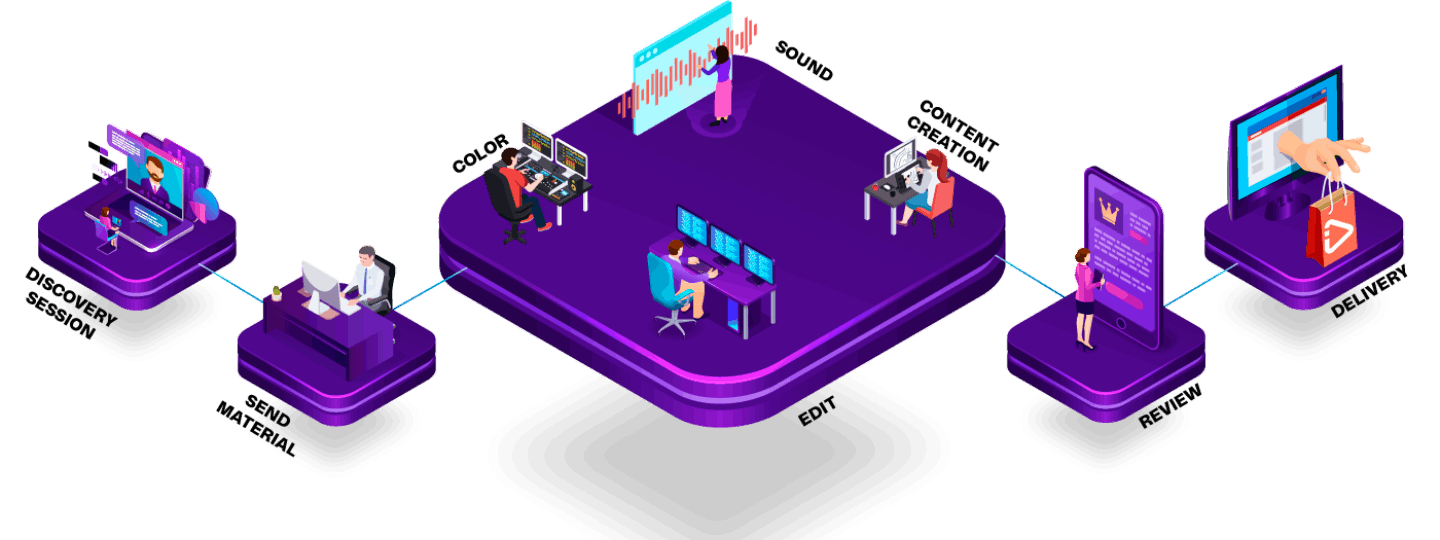
Discovery and Script Development
Demo Duck typically begins with a structured discovery call or questionnaire to understand your audience, core message, and desired viewer response. This phase is more substantive than what you’d get from a budget-tier vendor — they are genuinely trying to understand the narrative problem before proposing a solution. From discovery, they develop a script, which is often the phase where their real value shows. The scripts they produce tend to be conversational, tight, and audience-focused, avoiding the jargon-heavy, feature-list approach that plagues so many explainer videos.
Script approval is a gate before any visual work begins. This is standard practice for quality studios because script changes after animation begins are expensive and time-consuming. Teams that tend to evolve their messaging mid-project — a common challenge in fast-moving startups — can find this structure frustrating.
Storyboarding and Visual Style Development
Once the script is locked, the team develops style frames — static illustrations that establish the visual language of the video before any animation begins. This phase is where Demo Duck’s illustration quality becomes apparent. The style frames they produce are typically finished to a high level, giving clients a clear picture of what the final product will look like. This reduces surprises during animation review but also means any style direction changes at this phase require rework.
Storyboard approval follows style frame approval, mapping the script to visual sequences. Only after both are signed off does animation begin. This sequential gate structure is methodical and quality-focused, but it adds calendar time compared to studios that run phases in parallel.
Animation, Voice Over, and Delivery
Animation at Demo Duck is done primarily in After Effects, with character animation often handled by specialized animators within their network. Voice over talent is cast based on brand personality and audience demographic — they typically present a handful of options for client approval before recording. Music and sound design are the final layer added before delivery.
Final deliverables typically include the master video file, web-optimized exports (usually H.264 and sometimes ProRes), and often a version without the voiceover for international adaptation. Some engagements include source files; others do not without a separate license fee — worth confirming before you sign.
Video Quality: An Honest Assessment
Quality is where Demo Duck genuinely earns its premium positioning. Reviewing their portfolio across multiple years shows a consistent level of visual craft that places them comfortably in the upper tier of boutique explainer studios. Character animation is fluid, not mechanical. Color palettes are thoughtfully constructed. Illustration styles show genuine design sensibility rather than the flat-icon templating that characterizes cheaper vendors.
Animation Standards
The motion quality in Demo Duck’s work stands above what you typically get in the $5,000–$8,000 explainer video market. Timing and easing on their character movements shows attention to animation principles — anticipation, follow-through, secondary motion — that most offshore studios and budget vendors skip. This matters because it is precisely the difference between a video that feels alive and one that feels like a slideshow with movement.
That said, Demo Duck is not at the Pixar end of the quality spectrum — which would require ten times the budget and timeline. They occupy the premium-boutique tier: noticeably better than mid-market, clearly not the same as a full animation house. For a homepage explainer or conference booth loop, that level is entirely appropriate. For a broadcast commercial or feature-length brand film, you’d need a different partner.
Script Quality and Messaging
Demo Duck’s scripts consistently avoid two of the most common explainer video failure modes: feature-listing and abstract corporate language. Their writers understand that a 90-second video can only hold one idea, and they structure scripts around a single, clear viewer action. This sounds obvious but is genuinely rare — most brands try to cram six product benefits into 60 seconds and end up communicating nothing effectively.
The strategic layer of their script work is one of their strongest differentiators at this price point. Where some studios treat scripting as a transcription service — you tell them what you want to say, they type it up — Demo Duck brings genuine perspective on what will and won’t land with a viewer. This is valuable, particularly for brands that are still in the process of clarifying their own messaging.
💡 Pro Tip: Before approaching any premium explainer studio, nail down your one-sentence positioning statement — who you help, what problem you solve, and what life looks like after. Studios like Demo Duck can refine your messaging, but they can’t invent your core value proposition for you. Coming in with clarity cuts weeks off the discovery phase and reduces expensive revision rounds.
Strategic Limitations
Where Demo Duck’s strategy layer falls short is in distribution thinking. They produce excellent videos, but their scope ends at delivery. They are not thinking about how your video integrates with your landing page conversion rate, how it gets cut for paid social, what your organic video content calendar looks like, or how this hero explainer connects to your broader content strategy. For an isolated project, that’s fine. For a marketing team trying to build a video ecosystem, it means you need to solve those problems yourself — or find a partner who works at that level.
Demo Duck vs Increditors: Side-by-Side Comparison
The honest framing here: Demo Duck and Increditors are not direct competitors in most buyer scenarios. They serve meaningfully different needs. Understanding where those needs diverge helps you route your budget and expectations correctly — rather than finding yourself mid-project wishing you’d made a different call.
Demo Duck is a one-off production studio. You come to them with a project, they build the video, they deliver it, the engagement ends. Increditors is a video editing agency designed for ongoing content operations — dedicated senior editing teams, a strategy layer, and a retainer model built for brands that need consistent, high-quality video output week over week. The comparison matters when a marketing team is trying to decide how to allocate a video production budget for the year.
Pricing and Output Comparison
The pricing model difference is worth examining closely because the per-video cost comparison can be misleading. When you pay $20,000 for a single Demo Duck video, that cost covers one video that takes 10–14 weeks to produce. When teams invest in a monthly retainer with Increditors, that budget produces a continuous stream of videos — product demos, social content, edited webinar recordings, YouTube episodes, customer testimonials — across the same time window, all with a team that develops deep familiarity with the brand over time.
💡 Pro Tip: The right question is not “which is better?” but “what problem am I actually solving?” If you need one landmark video that will anchor your brand presence for the next few years, Demo Duck’s project model makes sense. If you need consistent video output to feed your content marketing engine, a retainer model with a dedicated team delivers far more value over time. Many brands benefit from both at different stages — a flagship explainer early on, and an ongoing content partner as they scale.
Pros and Cons of Demo Duck
No vendor review is complete without a clear-eyed look at where the offering genuinely excels and where it falls short. Demo Duck is a quality operation — but quality alone does not mean “right for every buyer.”
The Genuine Strengths
Illustration and animation quality — consistently above-market for their price tier. The visual output is polished, intentional, and reflects genuine craft. This is not template animation with stock character rigs — it is custom work built for each project.
Script and narrative thinking — their writers bring real strategic perspective to the scripting phase, not just execution of your brief. For brands still working out their messaging, this is meaningful support.
Process structure — the phased gate approach (script → style → storyboard → animation → delivery) creates clear review checkpoints and reduces the likelihood of major surprises late in production. Clients who follow the process and resist scope creep generally report positive experiences.
Established track record — Demo Duck has been operating since 2011 and has a long portfolio of real client work across diverse industries. This is a stable, experienced studio — not a fly-by-night shop that will disappear mid-project.
Tone and brand fit — their work demonstrates an ability to adapt visual and tonal style across different brand personalities, from playful consumer brands to serious enterprise clients. This flexibility is important for buyers who want something genuinely distinctive rather than a generic explainer look.
The Genuine Limitations
Long lead times — a typical Demo Duck project runs 8–14 weeks from kickoff to final delivery. For teams with urgent launch needs or rolling content calendars, this timeline is genuinely challenging. Rush options exist but come at a premium and are not always available.
High cost per video — the $10,000–$30,000+ price range makes Demo Duck inaccessible to early-stage startups or small marketing teams. Even for mid-market companies, the per-video cost is significant and requires clear ROI thinking before committing.
No ongoing content support — Demo Duck is a production studio, not a content operations partner. There is no account team managing your video content calendar, no ongoing strategic layer connecting videos to business outcomes, and no mechanism for high-frequency output.
Limited format diversity — their core offering is animated explainers. If you need live action editing, YouTube channel management, social media video cuts, or webinar post-production, you will need additional vendors.
Opaque pricing — not publishing pricing on their site is a common boutique studio practice, but it does mean you cannot easily benchmark their quotes without comparable market knowledge. Some buyers find the discovery-first, quote-later approach adds unnecessary friction to the evaluation process.
Who Should Hire Demo Duck?
Being honest about fit is more useful than generic praise. Demo Duck is a genuinely strong option for a specific type of buyer. For others, engaging them would mean paying a premium for capabilities you don’t need while lacking capabilities you do.
Strong Fit: When Demo Duck Makes Sense
Established brands investing in a hero explainer — if you have a clear brand, a real budget, and you are building one landmark video to anchor your homepage or sales process for the next several years, Demo Duck’s craft-first approach is well-aligned with that investment. The per-project model works perfectly for this use case.
Companies with complex or technical products — Demo Duck’s script work is genuinely strong at simplifying complex concepts without dumbing them down. SaaS platforms, healthcare technology companies, and financial services brands with nuanced stories to tell benefit from their storytelling focus.
Brands that want genuinely distinctive visual work — if you’ve seen too many identical explainer videos using the same flat-icon visual language and want something that feels custom and branded, Demo Duck’s illustration approach delivers on that. You are paying for visual distinctiveness as much as motion quality.
Organizations with patient timelines — if you are not in a rush and have 10–16 weeks to run a careful production process, the phased approach works well. Enterprise organizations and institutional brands frequently operate on longer planning cycles that accommodate this timeline.
Poor Fit: When to Look Elsewhere
Teams needing continuous video output — if you publish video content weekly or bi-weekly across YouTube, LinkedIn, and your website, Demo Duck’s project model creates a permanent supply problem. You need a dedicated team that understands your brand deeply and can deliver at volume. An ongoing content partnership is the right model here, not a project-by-project vendor relationship.
Early-stage startups with limited budgets — $15,000–$25,000 for a single video is a significant expense for a company still finding product-market fit. The strategic and visual polish Demo Duck delivers adds real value, but only if the underlying business and messaging are stable enough to justify a permanent hero video. Many early-stage companies are better served by faster, lower-cost iterations first.
Teams needing diverse video formats — social media content, long-form YouTube videos, podcast recordings, product screen recordings, live event coverage, webinar editing. These formats require different skill sets and faster turnaround than a boutique animation studio provides. A full-service video production partner handles all of these in a unified relationship.
Buyers with urgent timelines — if your launch is in six weeks and you need video ready, Demo Duck’s standard timeline does not work. Rush options may exist at premium cost, but a studio built for careful quality production is not optimized for fast-turn situations.
Frequently Asked Questions
How much does a Demo Duck video actually cost?
Demo Duck does not publish pricing, and all quotes are custom. Based on industry benchmarks for boutique animation studios at their tier, projects typically start around $10,000 to $15,000 for shorter, simpler animations and range up to $25,000 to $40,000 or more for complex, feature-length productions with custom illustration systems. The only way to get an accurate number for your specific project is to request a discovery call and provide them with detailed scope requirements. Factor in the possibility of overage charges if your project evolves significantly during production.
How long does a Demo Duck project take from kickoff to delivery?
A typical Demo Duck project runs 8 to 14 weeks from kickoff to final delivery, depending on project complexity and how quickly your team moves through each approval phase. Simpler 60–90 second projects with streamlined client-side review can land closer to 6–8 weeks. Complex projects with custom character systems, multiple revision rounds, or slow internal approval processes at the client side can stretch to 14–16 weeks or more. Rush production is possible but comes at a significant premium and is subject to availability.
Does Demo Duck provide source files after delivery?
Source file access (After Effects project files, illustration source files) is not always included in the base project price at Demo Duck. Some engagements include source files; others license the final video only. This is worth clarifying explicitly before you sign, especially if you anticipate needing to update the video in-house after delivery, adapt it for different markets, or modify specific sequences for repurposing. Source file ownership and licensing terms vary by project scope and should be treated as a negotiating point during contracting.
Can Demo Duck handle ongoing video content production?
Demo Duck is fundamentally a project-based production studio, not an ongoing content operations partner. They do not offer a retainer or subscription model for continuous video output. If you need weekly or bi-weekly video content across multiple formats and channels, their model does not accommodate that need. Teams building a content-first video strategy — particularly those publishing regularly to YouTube, LinkedIn, or internal communications channels — typically find a retainer-based video partner delivers significantly better value, brand continuity, and output consistency than engaging Demo Duck for individual projects. Understanding the difference between unlimited and project-based video editing services is worth reviewing before making a decision.
What types of companies typically hire Demo Duck?
Demo Duck’s client base has historically skewed toward established mid-market and enterprise brands in SaaS, healthcare technology, financial services, education technology, and consumer brands with complex or emotionally driven stories. They tend to work well with companies that have clear brand direction, marketing budgets that treat video as a strategic investment rather than a commodity line item, and patience for a careful production process. Early-stage startups, small businesses, and teams needing high-frequency video content across multiple formats are generally not a strong fit for their model.
Verdict: Our Rating and Final Thoughts
Demo Duck earns a solid 7.5 out of 10 in our assessment — a genuinely strong rating for what they actually do. They are an excellent boutique explainer video studio with real craft, a thoughtful process, and a track record that spans more than a decade. For the specific job of producing a high-quality, custom-animated explainer video, they are among the better options available at their price tier.
The 0.5 deducted from a potential 8 comes from the narrow scope of their offering relative to what most modern marketing teams actually need. The explainer video market has changed significantly since 2011. Brands today need more than one flagship video — they need a continuous, multi-format video content operation feeding their website, social channels, sales enablement library, and customer communications. Demo Duck’s model was designed for a different era of video marketing, and it shows in the limitations around volume, format diversity, and ongoing support.
The right way to think about Demo Duck in 2026 is as a specialist, not a generalist. They are excellent at one specific thing — producing a premium, story-driven animated explainer — and that thing has real value for the right buyer at the right moment. A Series B company building a new homepage after a rebrand? Strong fit. A fast-growing SaaS team that needs 15 pieces of video content per month across five formats? Wrong partner entirely.
For buyers evaluating Demo Duck, the key question is not whether they’re good (they are), but whether the project-based, single-format, premium-priced model aligns with how your marketing team actually operates in 2026. If the answer is yes — you have a clear project, a real budget, and a patient timeline — Demo Duck is worth a serious conversation. If the answer is no — you need volume, speed, format diversity, or ongoing strategic support — look for a partner whose model is built for that reality.
Increditors is designed for the latter scenario: brands that have moved past the “one hero video” phase and need a true video content operation — dedicated editors who know your brand, a strategy layer that thinks about distribution and performance, and a retainer model that grows with your content needs. For teams at that stage, the comparison with Demo Duck is less about quality (both deliver quality work) and more about what kind of partner relationship actually drives sustainable content output at scale.
Bottom line: Demo Duck is a legitimate, quality choice for a specific, narrow use case. Know what that use case is before you reach out — and make sure it actually matches your situation.
Ready for Video That Actually Converts?
Tell us about your project and we will put together a custom plan.