















































Seattle’s video production market is competitive and expensive — local studios price to cover Puget Sound overhead, quality freelancers are increasingly scarce, and vetting them takes time you probably don’t have. This 2026 guide breaks down the real cost landscape across all vendor types, maps which Seattle industries invest most in video, and explains how remote-first teams deliver premium output at 30–50% lower cost than a comparable local studio — without sacrificing quality or turnaround speed.
- Seattle’s Creative Economy and the Video Opportunity
- Who’s Buying Video in Seattle in 2026?
- Pricing Landscape: What Video Actually Costs in Seattle
- Local Agency vs. Freelancer vs. Remote Team: Side-by-Side
- The Remote-First Advantage for Seattle Businesses
- How to Evaluate and Choose a Video Partner
- Red Flags to Watch For
- Frequently Asked Questions
- Verdict: Which Option Is Right for You?
Seattle’s Creative Economy and the Video Opportunity
Seattle sits at an unusual intersection: it’s simultaneously one of the most tech-forward cities in the United States and one of the most cost-compressed markets for creative services. With Amazon, Microsoft, Boeing, and a dense cluster of Series B and Series C startups anchoring the economy, demand for polished video content has never been higher. At the same time, the city’s cost structure — high commercial rents, competitive designer salaries, and the general overhead of operating in a major Pacific Northwest metro — flows directly into what local agencies charge.
If you’re a marketing manager at a SaaS company in South Lake Union, or a founder running a health-tech startup in Capitol Hill, you’ve probably already received a proposal from a Seattle-area video production house that made your eyes water. That’s not an accident. Local studios price to sustain their teams, their equipment, and their real estate. Understanding this dynamic is the first step toward making a smarter sourcing decision in 2026.
This guide doesn’t tell you to never work with a local vendor. There are genuine use cases — particularly for productions requiring on-site direction, physical logistics, or deep local brand integration — where proximity matters. But for the vast majority of video content that Seattle businesses need in 2026 (product demos, explainers, social ads, thought-leadership clips, onboarding videos, and more), the case for a remote-first editing partner is stronger than it has ever been.
The Seattle Market in Context
Seattle’s creative and media sector is substantial. Hundreds of production companies, video agencies, and independent editors operate across King, Snohomish, and Pierce counties. The Puget Sound region has seen consistent growth in branded content demand, particularly in verticals like technology, healthcare, and outdoor retail — all industries where video is increasingly central to acquisition and retention strategy.
That supply looks impressive until you realize how much of it is oriented toward high-end commercial production rather than the scalable, repeatable video content that most marketing teams actually need on a monthly basis. The gap between “we can shoot a TV spot” and “we can process 30 edited clips a month at a predictable cost” is wide, and most Seattle agencies sit squarely in the former camp.
Seattle’s talent market also skews the picture. The city draws experienced creative professionals, which drives up rates for skilled editors and post-production specialists. That’s great for craft quality but challenging for budget-conscious buyers who need volume output rather than award-winning single productions. The local market optimizes for the latter; most growing businesses need the former.
Why Video Demand Is Accelerating in 2026
Across every sector represented in Seattle’s economy, video has moved from a nice-to-have to a baseline expectation. LinkedIn native video is now a standard part of any executive thought-leadership strategy. Product demos on SaaS landing pages are typically the highest-converting asset on the page. Short-form social content drives brand awareness for outdoor and consumer companies more efficiently than any other channel.
What’s changed in the last two years isn’t whether video matters — it’s the volume required. Buyers expect fresh, format-specific content across YouTube, LinkedIn, Instagram, TikTok, and email simultaneously. That cadence is something a single freelancer or boutique studio struggles to sustain at a cost that fits a real marketing budget. It’s the core reason why the market has been moving toward specialized remote editing partnerships.
Who’s Buying Video in Seattle in 2026?
Video investment in Seattle is concentrated across four major buyer segments, each with distinct needs, budget profiles, and editorial requirements. Knowing where your company fits shapes which type of vendor makes the most sense.
Technology and SaaS Companies
Seattle’s tech ecosystem is the region’s most voracious video consumer. SaaS companies need product demos, feature explainers, onboarding walkthroughs, customer testimonials, and a steady supply of short-form social content. The challenge for most of these buyers is volume and predictability: they don’t need one great video per quarter — they need 20 edited assets per month at a consistent quality level, on a timeline that maps to sprint cycles and launch windows.
For this buyer profile, local production houses tend to underperform. Their pricing models are built around individual projects, not ongoing editorial pipelines. You’ll often find yourself re-negotiating scope every few weeks rather than operating on a clean retainer that scales with demand. The per-video cost at a local studio can be 3–5x what a well-run remote team would charge for equivalent output quality.
Tech buyers also tend to have highly distributed teams already — which means they’re already comfortable with async collaboration, shared drives, and Slack-based review cycles. Plugging a remote video partner into that workflow is frictionless in a way it might not be for a company with no existing remote collaboration infrastructure.
Healthcare and Life Sciences
Seattle houses a significant healthcare cluster — from Providence and Swedish Health to a growing number of digital health and biotech companies in the South Lake Union corridor. This sector demands video that communicates clearly and compliantly: patient education content, provider training videos, brand documentaries, and increasingly, LinkedIn thought-leadership content for executives and researchers.
Healthcare video often has longer revision cycles due to compliance review processes. This is a critical detail when evaluating vendors — hourly billing models amplify the cost of every review round significantly. A local agency charging $150/hour for revisions can turn a two-revision cycle into an additional $2,000 bill. Flat-rate editing partnerships, by contrast, absorb those revision rounds at no extra cost, which makes budget forecasting far more predictable for healthcare marketing teams.
Outdoor, Retail, and Consumer Brands
REI, Patagonia’s regional presence, Columbia Sportswear, and dozens of outdoor-adjacent brands operate in and around Seattle. These companies typically have polished in-house shooting capabilities — they have brand photographers, field videographers, and creative directors — but bottleneck at the editing and post-production stage. They have more raw footage than they can process, and they need editors who understand cinematic storytelling, color grading for outdoor aesthetics, and format conversion across Instagram Reels, YouTube Shorts, and TikTok.
For consumer brands, the calculus is often about how fast they can turn creative assets around for seasonal campaigns. A spring gear launch can’t wait three weeks for a video editor to get back to you. Turnaround time and capacity predictability matter as much as per-video cost — which is exactly where remote agencies with structured SLAs have a competitive edge over local freelancers whose schedules aren’t organized around your campaign calendar.
Startups and Scale-Ups
Seattle’s startup scene is healthy, with active communities around fintech, climate tech, and enterprise software. Early-stage companies often need video most at the moments when they can afford it least: pre-launch product demos, investor pitch supplements, initial brand identity content, and early-growth social assets. For this segment, cost efficiency isn’t just nice to have — it’s existential.
Burning $15,000 on a local agency’s “startup package” that produces three polished videos is a genuinely bad trade when a remote-first partner could deliver equivalent output for a fraction of that — leaving the remaining budget for paid distribution, which is often where video investment actually generates returns. Startups that understand this math tend to move faster and make smarter creative resource decisions.
Pricing Landscape: What Video Actually Costs in Seattle
Pricing in Seattle’s video market varies enormously depending on scope, vendor type, and turnaround expectations. The figures below reflect commonly observed ranges — treat them as directional context rather than precise benchmarks, since every project has its own variables. For a more detailed breakdown by project type and deliverable, see how much professional video editing actually costs in 2026.
Local Studio Rates
Full-service Seattle production companies — those handling everything from concept to delivery — commonly quote projects in the $8,000–$40,000 range for a single polished video, depending on length, production complexity, and deliverable count. Day rates for a dedicated editor at a local agency often run $600–$1,200, not including the overhead of project management, account handling, and revision cycles.
For clients who want an ongoing relationship — say, a monthly retainer for content production — Seattle studios typically price these arrangements starting around $5,000–$12,000 per month for a modest output volume. That’s a significant commitment for any company not already running a scaled, mature content program with demonstrable ROI on video spend.
The premium for local studios reflects their genuine costs: physical space, full-time staff with Seattle-level salaries, equipment investment, and client management overhead. None of those costs make their editing better — they just make it more expensive to access.
Freelancer Rates
Seattle-based freelance video editors typically charge $50–$150 per hour, with the most experienced working closer to the top of that range. Per-project rates from freelancers are harder to benchmark consistently — a skilled Seattle editor might quote $800 for a two-minute corporate edit, or $3,500 for a more complex branded piece with motion graphics and sound design.
Freelancers offer flexibility but come with real operational trade-offs: availability gaps, limited bandwidth for high-volume requests, inconsistent quality across different editors, and the perpetual risk that a trusted editor books out for months at a time. For one-off projects with flexible timelines, the economics can work well. For ongoing content pipelines that require predictable capacity, freelancers often introduce more friction than they remove.
Remote Agency Rates
Remote-first video editing teams — agencies that operate distributed teams and pass the savings along to clients — typically offer comparable or superior output at 30–60% of what a local Seattle studio would charge for the same work. Monthly retainer plans commonly start around $1,500–$4,000 for meaningful output volumes, with per-video pricing often significantly below local market rates for equivalent quality.
The key differentiator isn’t just cost — it’s capacity and predictability. A remote agency built for volume can absorb surge demand without renegotiating scope every time a campaign launch changes your deliverable count. When you’re three days out from a product launch and need five additional cut-downs, a local studio typically can’t flex without a rush fee. A remote team with built-in capacity slack usually can.
💡 Pro Tip: When comparing vendor quotes, always ask for an itemized breakdown — production, editing, motion graphics, sound design, and revision rounds are often bundled in ways that obscure where the real cost sits. A retainer that looks expensive upfront might be significantly cheaper per deliverable than a per-project model once you account for revision rounds and format cut-downs.
Local Agency vs. Freelancer vs. Remote Team: Side-by-Side
Before deciding where to spend your video budget, it helps to map each option against the factors that actually determine whether a vendor relationship succeeds or fails over time. Price is one variable — but capacity, communication, revision flexibility, and consistency across multiple projects matter just as much. For a deeper comparison of the structural trade-offs, see our guide on the video editing agency vs. freelancer decision.
The Remote-First Advantage for Seattle Businesses
Remote work has reshaped every industry, and creative services are no exception. For Seattle businesses specifically, the argument for remote-first video partners is particularly strong because the local market’s cost structure is especially elevated compared to national and global alternatives. What you’re buying when you hire a local studio is access to their editors — not their Pioneer Square rent, not their parking validation, not their all-hands retreat budget. Remote agencies let you pay for the former without subsidizing all the latter.
No Geographic Premium
When you work with a Seattle-based agency, you’re not just paying for their editors. You’re contributing to their South Lake Union office rent, their account management salaries, their equipment depreciation, and a dozen other line items that have nothing to do with the quality of your finished video. Remote-first teams carry none of that overhead — and they pass the savings to you in the form of better rates, faster turnarounds, or more output for the same monthly spend.
This isn’t theoretical. Teams that make the switch from local studio to remote agency commonly report that they get two to three times the monthly output for the same or lower spend — not because the remote team is cutting corners, but because the cost structure simply isn’t weighed down by geographic overhead.
Scalable Capacity Without Local Hiring Friction
Hiring a full-time video editor in Seattle means competing for talent in one of the most competitive labor markets in the country. Salaries for experienced editors in the Puget Sound area reflect the regional cost of living — which means bringing this capability in-house is a significant fixed cost commitment. A remote agency gives you the equivalent of a full editing team — specialists in motion graphics, color grading, sound design, and format optimization — without the hiring cycle, onboarding cost, or fixed headcount.
When your content needs drop, you scale down without layoffs. When they spike during a product launch quarter, you scale up without scrambling to find freelance coverage. That flexibility has a real dollar value that doesn’t show up in a per-video price comparison.
Turnaround That Respects Your Launch Calendar
Local studios often operate on production timelines calibrated to their own capacity management, not your launch schedule. Turnarounds of two to four weeks are common for even moderately complex projects. Remote agencies built for volume tend to work faster — 48 to 72 hours for standard edits is achievable at well-run operations — and they structure their workflows around predictable, client-facing SLAs rather than internal queue management.
Increditors, for example, is a remote-first video editing agency that serves Seattle-area clients across tech, e-commerce, and brand content — without a local office, and without the cost structure that comes with one. The workflow is entirely async-friendly, which aligns naturally with the distributed teams that most Seattle companies are already running internally.
VideoEditingCompany is another strong remote option worth evaluating for B2B and SaaS brands in the region. Their model centres on dedicated editor teams paired to client accounts on a monthly retainer — rather than rotating editors per project — paired with a strategy-led approach to post-production that goes beyond raw assembly. For brands that need consistent brand voice at scale, with Pacific time scheduling and a retainer model suited to the product-led growth culture common among Seattle’s tech companies, it’s a credible second option alongside Increditors.
💡 Pro Tip: If you already manage contractors, designers, or copywriters remotely, adding a remote video team to that stack is a zero-friction decision. The collaboration patterns you’ve already built — Slack for comms, Notion or Frame.io for briefs and review, Google Drive for assets — translate directly to video workflows. You’re not learning a new system; you’re adding a new capability to one you already own.
How to Evaluate and Choose a Video Partner
Whether you’re sourcing locally or remotely, the evaluation process follows the same logic. Here’s a structured framework for making a vendor decision you won’t regret three months in.
Step 1: Define What You Actually Need Before Talking to Anyone
Before you contact any vendor, get specific about your requirements. How many videos per month? What formats — YouTube long-form, LinkedIn native, TikTok vertical, product demo screencasts, email embed clips? Do you have existing footage, or do you need production as well as editing? Will you need motion graphics, animated captions, or sound design? What’s your realistic revision cycle — one round of feedback, or five?
The tighter your brief, the more accurate any vendor’s pricing will be. A vague “we need some video content” conversation almost always leads to inflated quotes designed to cover ambiguity. A specific brief — “we need eight customer testimonial cuts per month, 60–90 seconds each, with animated captions and color correction, for LinkedIn and YouTube” — generates quotes you can actually compare apples to apples.
Step 2: Evaluate Portfolios Against Your Actual Content Category
Don’t let a vendor’s showreel dazzle you into skipping this step. A portfolio of beautiful commercial productions tells you very little about whether they can handle your specific content type. If you’re making SaaS product demos, look for portfolio examples of SaaS product demos — not broadcast-quality brand films shot on a RED camera at a scenic location. If you’re making long-form YouTube content, look for editorial-style cuts with strong pacing, not 30-second ads.
Ask explicitly: “Have you worked with companies in our industry, making this type of content, at this monthly volume?” The answer will tell you more than any website portfolio or case study they’ve chosen to highlight.
Step 3: Run a Paid Test Project
Any serious vendor will welcome a test engagement — a single, well-scoped project before a retainer commitment. Pay for this test. Free trials rarely produce genuine effort on the vendor side, and they don’t give you accurate signal about how the partnership will function under normal commercial conditions. A modest paid test edit is cheap insurance before committing to a monthly retainer.
Evaluate the test on four dimensions: edit quality against your brief, turnaround speed against their stated timeline, communication quality throughout the project, and how they handled any ambiguities in your instructions. The last one is particularly revealing — vendors who ask smart clarifying questions before starting work tend to produce better first drafts than vendors who dive in and guess.
Step 4: Understand the Revision and Feedback Model
Revisions are where video partnerships succeed or implode. Some vendors cap revisions at two rounds and bill hourly beyond that — which is fine if your briefs are consistently airtight, but becomes expensive fast when creative direction evolves through the review process. Others offer unlimited revisions as part of their model, which works better for teams still developing their visual identity or whose stakeholders have unpredictable feedback loops.
Know exactly which model you’re entering before you sign anything, and be honest with yourself about how much revision your internal process will realistically generate. Most marketing teams underestimate this number.
Red Flags to Watch For When Hiring Video Services in Seattle
The Seattle market has no shortage of vendors who project polish but deliver inconsistency. These warning signs are worth recognizing before you sign anything or hand over footage.
Vague Pricing With No Itemization
If a vendor can’t break down what’s included in their quote — editing hours, revision rounds, deliverable formats, turnaround time — that’s a reliable sign that scope creep and add-on charges are likely downstream. Legitimate agencies can explain exactly what drives their pricing. Vague quotes protect the vendor, not the client.
Portfolio Without Client Context or Outcomes
A showreel with no client names, no project context, and no stated results is a yellow flag. Strong agencies are proud of their client relationships and can share case studies that connect their work to actual outcomes — channel growth, conversion rate improvements, campaign performance. “We edited this” is a much weaker claim than “we built the full video pipeline for a Seattle-area SaaS company that grew their YouTube audience by a meaningful margin over 12 months.”
Slow Response Time During the Sales Process
How a vendor communicates before they have your money is a reliable preview of how they’ll communicate after. If you’re waiting four business days for a quote response, or if your follow-up emails are going unanswered, revision turnarounds won’t be faster once you’re a paying client. Responsiveness is a cultural and operational trait, not a situation-specific behavior reserved for pre-sales conversations.
No Clear Point of Contact
Some agencies — especially mid-sized ones that have grown beyond their original team — pass clients between account managers, project managers, and editors in ways that create communication black holes. Know before you start: who is your primary contact, what’s their typical response time, and how do you reach them when something is urgent?
Frequently Asked Questions
How much does video editing cost in Seattle?
It depends heavily on scope and vendor type. Local Seattle studios typically quote $3,000–$20,000 for individual project-based video production, while freelance editors generally charge $50–$150 per hour or $500–$5,000 per project depending on complexity and length. Remote-first agencies tend to offer retainer plans starting around $1,500–$2,500 per month for consistent monthly output, which typically works out to a substantially lower cost per deliverable than either local option — particularly once you factor in revision rounds.
Should I hire a local Seattle video agency or a remote team?
If you need on-site filming direction, physical production logistics, or a vendor who can attend your events and direct talent in person, a local studio makes sense. For post-production, editing, motion graphics, and ongoing content pipelines where the footage already exists, remote teams routinely deliver equal or better output at substantially lower cost. Companies that have made this transition commonly report that the quality difference is negligible while the cost and speed improvements are material and immediate.
How do I find a good freelance video editor in Seattle?
Referrals from other marketing teams in your professional network are the most reliable source. Beyond that, platforms like Contra, Behance, and LinkedIn are reasonable starting points for discovery. When evaluating freelancers, always ask for portfolio examples in your specific content category, not just their highlight reel. Run a paid test project before any ongoing commitment — and have a contingency plan for when they’re unavailable, because they will be at some point.
What types of video do Seattle businesses invest in most?
Technology companies most commonly prioritize product demos and explainer videos that support sales enablement. Healthcare organizations focus on patient education content and executive thought-leadership. Outdoor and consumer brands need seasonal campaign content and social-first short-form video. Startups typically need pitch supplements, early-stage brand story content, and product videos designed for investor or customer acquisition. The common thread across all segments is that volume demand is increasing — one video per quarter is no longer a meaningful content program for any of these buyers.
Can a remote video agency really serve a Seattle business well?
Yes — with the right briefing process and communication structure. The vast majority of what determines whether a video lands well for a Seattle audience isn’t geographic intuition; it’s understanding your specific brand, audience, and content goals. A well-briefed remote editor who has studied your brand guidelines, tone of voice, and creative direction will consistently outperform a local editor who’s making educated guesses about your intent. Remote agencies that specialize in B2B tech and brand content often serve Seattle companies better than generalist local shops precisely because their expertise is industry-specific, not location-specific.
Verdict: Which Option Is Right for Your Seattle Business?
There’s no single right answer — but there’s usually a right answer for your specific situation. Here’s the clearest framework for making the call.
Go local if: you need on-site production direction, physical crew logistics, event coverage with real-time editing, or you’re producing a high-stakes brand film where in-person collaboration during the shoot is genuinely non-negotiable. Local studios earn their premium in these specific contexts.
Go freelance if: you have a single, well-defined project, a flexible timeline, a modest budget, and someone on your team who can handle the coordination overhead. Accept the trade-offs: limited capacity, availability risk, and inconsistent quality if you rotate across editors.
Go remote-first if: you need ongoing output, volume capacity, predictable turnarounds, and the cost efficiency to sustain a real content program rather than a one-off campaign. This is the right choice for the overwhelming majority of Seattle’s tech companies, healthcare brands, outdoor retailers, and growth-stage startups in 2026.
Increditors works with companies across exactly these profiles — a remote-first video editing agency built for the repeatable, scalable content pipeline that most businesses actually need, not the high-end one-off commercial production they occasionally consider. If you’re still weighing whether an agency or freelancer fits your current stage, read through the full agency vs. freelancer comparison before committing to anything.
Seattle’s creative market will continue evolving through 2026, but the economics of remote-first creative work are only getting more favorable as collaboration tools mature and distributed workflows become standard across every industry the city is known for. The question isn’t whether remote video partnerships work — it’s whether you’re ready to stop paying a geographic premium for something that quality and process can deliver from anywhere.
Ready for Video That Actually Converts?
Tell us about your project and we will put together a custom plan.
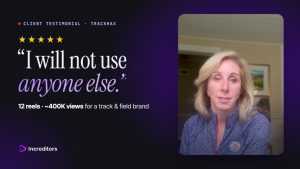
Clients, on camera