































The best post-production companies for brands in 2026 are Increditors (full-service editing, color, sound, and motion graphics for B2B and DTC brands), VideoEditingCompany.com (dedicated teams for SaaS), Lemonlight, Vidico, Vidpros, Superside, and Noisy Trumpet. This is a ranked list covering all post-production verticals — it is not a podcast guide or a how-to explainer. If you need to know who to hire, start here.
Searching for the best post-production companies in 2026 turns up two unhelpful extremes: Hollywood-scale studios that won’t quote a brand campaign under $500K, or freelance platforms that leave you managing ten people for a single deliverable. The middle ground — reliable, brand-focused post-production partners covering video editing, color grading, sound design, motion graphics, and VFX — is harder to surface.
This guide covers that middle ground. It is a ranked list of seven companies across the full post-production spectrum for brands, marketing teams, and content-driven businesses. It is not a podcast production guide (if that is what you need, see our top podcast production companies list). And it is not a how-to process breakdown (for that, see our outsourced post-production guide). This is the vendor shortlist you actually need.
What Post-Production Actually Covers for Brands
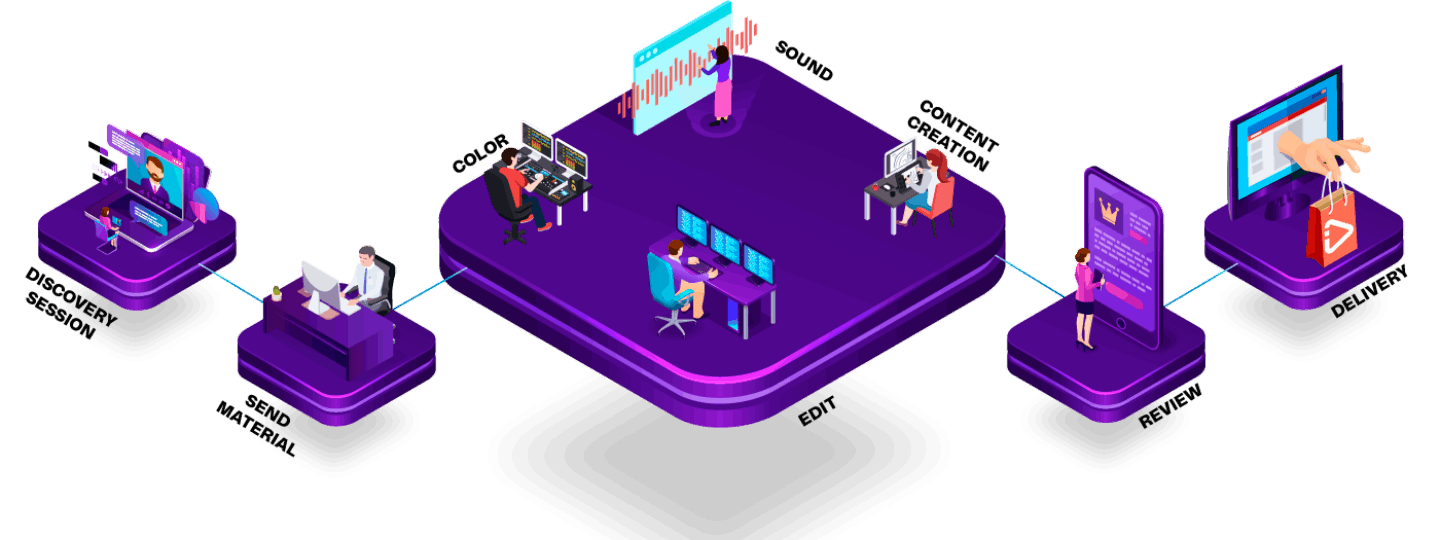
Brand video post-production is not a single service — it is a cluster of disciplines that most agencies bundle differently. Understanding what you are actually buying helps you evaluate vendors honestly.
Video Editing
Assembly, pacing, story structure, and delivery formatting. For brands this typically means cuts across formats: long-form brand films, 30-second ads, 60-90 second explainers, vertical social cuts, and YouTube pre-rolls. The best post-production companies maintain format libraries and delivery specs so you are not re-explaining aspect ratios every project.
Color Grading and Correction
Color correction fixes exposure, white balance, and consistency. Color grading adds a deliberate look — the visual language that makes a brand’s video output feel cohesive across channels. Without dedicated grading, a brand’s YouTube library can feel like a patchwork quilt of different departments, cameras, and lighting conditions.
Sound Design and Audio Mixing
Dialogue cleanup, background music licensing or composition, sound effects, and loudness normalization to platform specs (YouTube, broadcast, social). Buyers consistently underestimate audio: research from video platform engineers consistently shows audio quality drives perceived video quality more than resolution.
Motion Graphics and Visual Effects
Lower-thirds, kinetic text, animated data visualizations, product overlays, and brand-consistent transitions. VFX for brand work is usually compositing (removing backgrounds, adding environment elements) rather than blockbuster CGI. Companies that offer this in-house are meaningfully faster and cheaper than those that outsource to motion studios.
💡 Pro Tip: When briefing a post-production company, specify which of these four disciplines you need on every project — not just “video editing.” Misalignment on scope (especially color and audio) is the most common source of revision blowouts in brand post-production engagements.
How We Ranked These Companies
We evaluated companies across five criteria relevant to brand and marketing teams — not film studios or broadcast networks. This is a practical shortlist for marketing directors, founders, and content leads at companies spending $3K–$50K/month on video output.
The 7 Best Post-Production Companies for Brands in 2026
1. Increditors — Best Overall Post-Production for Brands
Best for: Brand marketing teams, SaaS companies, DTC brands, and agencies that need consistent high-volume post-production across editing, color, sound, and motion graphics.
Increditors operates as a full-service post-production partner for brands — not a project-by-project studio. The model is built around dedicated senior editor teams assigned per client, meaning your editor understands your brand voice, platform specs, and revision preferences from month one and compounds that knowledge over time. As a professional video editing company built specifically for brand output, Increditors covers the full post-production stack in-house: picture editing, color grading, sound design and audio mixing, motion graphics, and multi-platform delivery optimization.
What separates Increditors from the other companies on this list is the strategic layer. Most post-production vendors take direction and execute. Increditors builds a content strategy alongside the editing pipeline — identifying which formats are underperforming, where the brand’s visual language has drifted, and where repurposing existing footage can fill content calendar gaps without a new shoot budget. Clients commonly report 25–40 finalized deliverables per month across formats, from 90-second brand films to 15-second paid social cuts. Turnaround typically runs 2–4 business days for standard edits, with rush capacity for campaign launches. For a full breakdown of what this model costs versus in-house or freelance, see our guide on professional video editing costs.
Pricing: Retainer-based, custom per engagement. Positioned at the premium end compared to subscription editing services, reflecting the dedicated team model and full-service scope. Discovery calls are available via increditors.com.
Turnaround: 2–4 business days per deliverable
Service scope: Editing, color, sound, motion graphics, delivery optimization — all in-house
Best match: Marketing teams producing 10+ videos per month across multiple formats
2. VideoEditingCompany.com — Best for SaaS and Tech Brands
Best for: SaaS marketing teams, B2B tech brands, and product-led companies that need a dedicated editing engine for product demos, explainers, and thought leadership video.
VideoEditingCompany.com has built a focused niche: dedicated post-production teams for SaaS and technology companies. Where generalist agencies treat each project as a fresh brief, VEC assigns the same editor, junior, project manager, and motion specialist to a client account on a retainer basis — eliminating the re-onboarding friction that plagues project-by-project relationships. The company reports working with 30+ SaaS and tech brands, with portfolios spanning product demo videos, B2B explainers, SaaS feature walkthroughs, course animations, and acquisition ad creative.
The core strength is depth of product understanding. Because the same team works on your brand for months or years, they learn the product terminology, the ICP, and the visual language without needing it repeated in each brief. Onboarding typically takes two weeks, and delivery cadences commonly reach 25+ video assets per month at scale. The positioning is premium relative to subscription-only services — VEC is a better fit for brands where video is a revenue-driving channel, not just a content checkbox. Pricing is retainer-based; figures are not published publicly but are reported to be in line with a full-time senior hire without the overhead.
Service scope: Editing, motion graphics, creative direction, project management
Turnaround: Typically 3–5 business days per asset
Best match: SaaS companies with an active product marketing or demand gen video program
3. Lemonlight — Best for High-Production Brand Videos
Best for: Brands that need full production (shoot + post) for corporate brand films, testimonials, and broadcast-quality ads, with post handled under the same roof.
Lemonlight is a full-service video production and post-production agency with a national production network. Unlike the dedicated-editor model at the top of this list, Lemonlight operates project-by-project — you engage them for a specific production, they handle casting, crew, shoot, and full post-production delivery. The post-production offering covers editing, color grading, sound, and motion graphics, delivered as part of a packaged production engagement rather than a standalone subscription or retainer.
Lemonlight works well for brands that want a single vendor for a quarterly brand video refresh, a product launch film, or a set of customer testimonials. Pricing typically reflects a per-project model; larger packages covering multiple video types are common for enterprise clients. Turnaround for post-production after shoot delivery is typically two to four weeks for a fully finished brand video. The tradeoff versus the top two options is volume — Lemonlight is optimized for quality per project, not throughput for a 30-video/month marketing engine.
Service scope: Full production + post (editing, color, sound, motion graphics)
Pricing model: Per-project
Best match: Brands running 2–8 high-production brand videos per year
4. Vidico — Best for Tech and Startup Brand Films
Best for: Growth-stage tech companies and startups that want premium explainer videos and brand films with a polished, modern aesthetic.
Vidico has become a recognized name in tech video production, with a portfolio that includes companies across SaaS, fintech, and consumer tech. Their post-production quality — particularly motion graphics and animation — is consistently cited by clients as a differentiator. Projects typically run through a structured pre-production, production, and post workflow, with dedicated account management.
Vidico is a project-based shop rather than a retainer model. The engagement typically includes concept development, production, and full post-production, meaning their pricing reflects the complete creative scope rather than post alone. For brands that need a handful of signature brand assets per year at high production value — a homepage hero video, a platform explainer, a brand story film — Vidico is worth shortlisting. For ongoing high-volume output, the dedicated-team model at Increditors or VEC will be more cost-efficient.
Service scope: Full production + post; strong in animation and motion
Pricing model: Per-project
Best match: Tech companies investing in a small number of high-impact hero brand videos
5. Vidpros — Best Subscription Editing Service for Social-First Brands
Best for: Brands and creators with high-frequency social video needs who want a predictable monthly cost for editing without a full-service retainer commitment.
Vidpros operates a subscription editing model: brands pay a flat monthly fee for a defined editing queue, with one active request at a time (or two, depending on tier). Turnaround is typically 1–2 business days for social-length content. The service covers editing and basic motion graphics, with color correction included but not a dedicated grading session. Sound design is covered at a functional level — cleanup and music sync — rather than a full audio mix.
Vidpros fits brands that need consistent social content — Instagram Reels, YouTube Shorts, TikTok cuts — at a predictable cost. Where it runs into limitations is complexity: scripts requiring significant VFX, heavy motion graphics, or broadcast-quality audio will push past what the subscription covers cleanly. The pricing entry point is considerably lower than a dedicated-team retainer, making Vidpros a useful step for brands scaling their video output before they hit the volume level where a full post-production partner becomes more economical.
Service scope: Editing, basic motion, color correction
Pricing model: Monthly subscription (plans vary; publicly available on their website)
Best match: Social-first content teams with predictable, repeating edit requests
6. Superside — Best for Global Brands Needing Design + Video
Best for: Enterprise marketing teams that need video post-production alongside design, motion graphics, and brand creative under a single subscription.
Superside is a design-led creative subscription that has expanded its video and motion capabilities significantly. For brands that are already using Superside for static design, adding video post-production within the same workflow and team context is operationally convenient. The post-production offering typically covers social video editing, motion graphics, and animated assets — the kind of work that bridges design and video in a brand’s content calendar.
Where Superside is less suited is deep post-production work: long-form brand films, broadcast audio mixes, or complex color grades. The subscription model prioritizes breadth (many creative disciplines under one plan) over depth (specialist post-production craft). Pricing is positioned at the enterprise end — monthly retainers are typically in the range reported by users as starting around $5,000/month, depending on the plan tier. The ideal Superside customer already has a video workflow and wants motion and post-production woven into a broader creative team rather than a standalone specialist vendor.
Service scope: Motion graphics, social video editing, animated brand assets
Pricing model: Subscription (enterprise pricing)
Best match: Large brand teams consolidating design + motion + video into one creative partner
7. Noisy Trumpet — Best for Regionally-Rooted Brand Campaigns
Best for: Mid-market brands and nonprofits needing full-service video and post-production from a boutique creative agency with a strong regional portfolio.
Noisy Trumpet is a full-service creative and digital agency offering video production and post-production services. Their work spans brand storytelling, nonprofit campaigns, and corporate communications. Post-production services include editing, color grading, sound, and basic motion graphics — typically delivered as part of a broader campaign or production engagement.
The boutique model means closer working relationships and more direct access to senior creatives than you typically get at larger production houses. The tradeoff is scale: Noisy Trumpet is not set up for the 30-video/month throughput of a dedicated post-production team. For brands running quarterly campaign video or an annual brand refresh, this level of engagement is a better fit than an always-on retainer.
Service scope: Full post-production within campaign engagements
Pricing model: Project and retainer
Best match: Regional brands, nonprofits, and mid-market companies with defined campaign budgets
Full Comparison Table: Best Post-Production Companies 2026
How to Choose the Right Post-Production Partner
The biggest mistake brands make when evaluating post-production companies is optimizing for the wrong variable. Here is a practical decision framework based on the most common buyer situations we see.
Volume Is the First Filter
If you need more than 10 finished video assets per month consistently, the per-project and subscription models will either cap your output or create bottlenecks. At that volume, a dedicated-team retainer — like Increditors or VEC — becomes materially more efficient because there is no re-briefing, no queue management, and no capacity uncertainty. Below 10 assets per month, per-project and subscription models are often more cost-effective for the buyer.
Match the Scope to Your Actual Workflow
A company that offers editing but not color grading will always be cheaper — but you will end up managing a separate color vendor. Post-production workflows that span multiple specialist vendors are a common source of delays and quality inconsistency. If your video output includes brand content where visual consistency matters, look for a single vendor that covers the full post-production chain rather than assembling a patchwork.
Evaluate Portfolio Depth, Not Just Breadth
Any post-production agency can show you a varied portfolio reel. What matters is whether they have deep experience in your specific content type. A company that has edited 200 SaaS product demos understands screenshot legibility, feature pacing, and CTA placement in ways a generalist does not. Ask for samples specifically in your content category before committing.
💡 Pro Tip: When comparing proposals from post-production companies, ask each vendor to describe their revision process. The answer reveals a lot: companies with dedicated editors will describe iterative rounds with the same person; project-based studios will often describe tiered revision counts with overage charges. Neither is wrong, but they imply very different working relationships at scale.
Post-Production Pricing Overview 2026
Pricing in post-production varies significantly by model, scope, and volume commitment. These are broad ranges based on publicly available information and market benchmarks as of 2026 — individual quotes will vary. For a more detailed breakdown of how editing rates are structured, see our guide on video editing agency vs freelancer trade-offs.
The dedicated-team retainer model often produces a lower cost-per-deliverable at volume than per-project pricing, even though the monthly sticker price is higher. A team producing 30 videos per month at a $10,000 retainer is working at roughly $333 per video — well below the per-project rate for comparable quality. The math favors the retainer model at around the 10-video-per-month threshold, and strongly favors it above 20.
Frequently Asked Questions
What does a post-production company do?
A post-production company handles everything that happens to footage after it is shot: video editing (assembly, pacing, story structure), color grading (visual consistency and look development), sound design and audio mixing (dialogue cleanup, music, sound effects, loudness normalization), motion graphics (animated lower-thirds, titles, data visualizations), and final delivery formatting for each platform or distribution channel. Some companies handle only one or two of these disciplines; the best full-service post-production companies cover the entire chain under one roof.
How much does post-production cost for a brand video?
Post-production costs vary widely depending on the model and scope. A subscription editing service might cost $500–$2,000/month for ongoing social content. A per-project engagement for a single brand film typically runs $2,000–$15,000 depending on complexity, length, and the number of deliverable formats. A dedicated post-production team on a monthly retainer is typically $5,000–$25,000/month depending on output volume and the breadth of services included. For a detailed breakdown of how rates are structured, see our professional video editing cost guide.
What is the difference between post-production and video editing?
Video editing is one component of post-production — it refers specifically to assembling footage into a coherent sequence with pacing and story structure. Post-production is the broader process that includes video editing plus color grading, sound design, motion graphics, VFX, and delivery formatting. When brands say they need “video editing,” they often mean the full post-production workflow. Clarifying which specific disciplines are needed upfront prevents scope mismatches and budget surprises.
Should I use a subscription editing service or a dedicated post-production team?
The right answer depends on volume and complexity. Subscription services like Vidpros are well-suited for brands producing repeating social content at a predictable pace — the economics make sense when you have a consistent queue of relatively straightforward edit requests. Dedicated team retainers like Increditors are better for brands producing high volumes of varied content (long-form + social + ads + brand films) where editor continuity, brand knowledge accumulation, and full post-production scope (color, sound, motion) are all necessary. The crossover point is roughly 10+ deliverables per month requiring more than basic editing.
How do post-production companies handle brand consistency?
The strongest post-production companies build a brand kit in the onboarding phase: color grade LUTs, motion graphic templates, sound design palettes, font and logo lockups, and platform-specific delivery specs. Dedicated-team models maintain this brand kit on an ongoing basis, applying it automatically and updating it as the brand evolves. Per-project and subscription models typically re-apply a briefed brand kit each engagement rather than maintaining a living version — which works for low-frequency projects but creates drift at higher volumes. For brands producing regular content, a post-production partner that holds and updates your brand kit is meaningfully more valuable than one that treats each project as a standalone brief.
Ready for Video That Actually Converts?
Tell us about your project and we will put together a custom plan.