








![3D Explainer Video - ScribbleLive.mp4_snapshot_00.12_[2022.03.09_03.14.16]](https://increditors.com/wp-content/uploads/elementor/thumbs/3D-Explainer-Video-ScribbleLive.mp4_snapshot_00.12_2022.03.09_03.14.16-r7wb53mx72rxst3qcqyrfxdmeyzb5r9jbl0wbjujh4.png "3D Explainer Video – ScribbleLive.mp4_snapshot_00.12_[2022.03.09_03.14.16]")

























Design Pickle added video editing to its unlimited graphic design subscription — and for high-volume, simple video tasks it delivers solid value. But as a dedicated video production solution it shows real limits: turnaround lag on longer projects, creative depth that doesn’t match a senior editor, and no strategic layer. Rating: 7.5/10 — excellent for scaling social clips, a ceiling for brands that live and die by video quality.
What Is Design Pickle’s Video Service?
Design Pickle built its name as a flat-rate, unlimited graphic design subscription. The pitch was simple: pay one monthly fee, submit as many design requests as you want, get them back in a predictable queue. For social media graphics, presentation templates, and marketing collateral, that model worked well for a lot of small businesses.
Video editing was added as a logical expansion — and on paper, it makes sense. If you’re already submitting design requests, why not add short social video edits to the same workflow? The reality, as this review will break down, is more nuanced. Video production is a fundamentally different discipline from static design, and the subscription queue model strains under video’s demands in ways that matter.
The Core Product Structure
Design Pickle operates across tiered plans — typically a base Graphics plan, a higher-tier Graphics Pro plan, and video as either an add-on or embedded in upper-tier packages. Video requests are handled by a dedicated editing team rather than the graphic designers. Requests are submitted through their proprietary platform, and a single editor is assigned to your account for continuity.
The types of video work typically covered include social media short clips, basic talking head edits, simple caption and subtitle work, intro/outro animations, and light reels or repurposed long-form content. Complex motion graphics, cinematic color grading, multi-camera productions, and script-driven narrative edits are generally outside scope or carry additional friction in the request process.
What “Unlimited” Means in Practice
Unlimited does not mean instant. Like all subscription services of this type, “unlimited requests” functions as a queue — one active request at a time (or two on higher plans). You submit, it enters the pipeline, an editor works on it, you receive a draft, and you go back and forth with revisions. The queue manages volume by serializing work rather than parallelizing it.
For graphic design tasks that take a few hours, this works fine. A simple banner or social post moves through quickly. For video, where even a 60-second polished reel might legitimately require four to six hours of editing work, the same model starts to show its constraints. Subscribers commonly report that turnaround for video sits in the two to four business day range for anything beyond the simplest clips.
How the Unlimited Model Actually Works
To evaluate Design Pickle for video fairly, you need to understand the mechanics of the unlimited subscription model — because those mechanics are both its strength and its structural weakness depending on what you’re building.
The Request Queue System
When you submit a video request, it enters a queue managed through Design Pickle’s platform. You fill out a creative brief — describing the footage, the desired style, any reference clips, tone, captions, and output format. The assigned editor picks up your request, works on it, and returns a draft for review. You can leave timestamped comments, request changes, and iterate.
The assigned-editor model is genuinely one of the better structural choices Design Pickle has made. Having a consistent editor who builds context about your brand, your style preferences, and your typical requests reduces ramp-up friction over time. New teams often report that the first few weeks involve more back-and-forth correction, and things improve as the editor builds institutional knowledge about your output.
The Revision Cycle
Revisions are included — this is one of the genuine advantages of the subscription format. You’re not paying per revision cycle or worrying about hourly billing when you want a color change or a different cut on a sequence. The revision process lives in the platform with comment threads on specific timestamps, which is a more structured workflow than email-based freelancer communication.
The practical friction, however, is that each revision round adds a new queue cycle. If your draft comes back and needs three changes, and the editor picks it up the next morning, you’re looking at day three or four before you have a final file. For fast-moving social content — where timing is the product — this lag matters.
💡 Pro Tip: When using Design Pickle for video, front-load your creative brief heavily. Detailed reference examples, exact timestamps for clips, on-brand font files, and color hex codes submitted upfront dramatically reduce your revision cycles and keep turnaround predictable.
Account Management and Onboarding
Design Pickle provides a customer success layer on higher-tier plans — account managers who help you structure your request queue and communicate escalations. For brands with high design volume who are adding video as a secondary production channel, this structure works reasonably well. For brands where video is the primary output and strategic direction matters, the account management layer is thin compared to what a dedicated video editing agency would provide.
Where Design Pickle Excels for Video
Honest evaluation means leading with where the product genuinely delivers — and there are real use cases where Design Pickle’s video service is a strong fit.
High-Volume Social Media Clips
If you’re producing a steady stream of short-form content — Instagram Reels, TikTok clips, YouTube Shorts — from raw talking head footage, Design Pickle’s model can handle the volume economically. The subscription pricing is predictable, the queue system manages throughput, and once the editor understands your format preferences, clip production becomes relatively systematic.
Brands that produce five to fifteen short clips per week from consistent source footage (podcast recordings, weekly video shoots, screen recordings) find that the unlimited model suits the repetitive nature of that work. You’re not paying per clip; you’re paying a fixed monthly rate regardless of whether you submit eight requests or eighteen.
Repurposing Long-Form Content
Content repurposing — taking a forty-five minute podcast episode or a one-hour webinar and cutting it into a series of short clips — is a legitimate strength area. The work is clearly defined, the source material is predetermined, and the editing decisions are relatively formulaic: identify the strong moments, cut clean, add captions, format for the target platform. Design Pickle’s editors can execute this type of work efficiently.
Captions, Subtitles, and Branded Templates
Caption work, subtitle generation, and the application of branded lower-thirds or templates are tasks well-suited to subscription video services. Once your brand kit is loaded and templates are established, these requests are fast and consistent. Subscribers commonly report satisfaction with this category of work as it represents Design Pickle’s video service at its most reliable and repeatable.
Cost Control for SMBs
For small businesses with limited budgets who need to maintain a consistent content calendar, the flat-fee model reduces financial risk. There’s no invoice surprise, no hourly overrun, no per-project negotiation. Plans typically run in the range of several hundred to over a thousand dollars per month depending on tier and video inclusion — which, for the volume of work some teams produce, represents genuine value relative to per-project freelancer rates.
Where Design Pickle Hits Its Ceiling
Every product has a ceiling, and being honest about Design Pickle’s means identifying where the unlimited subscription model structurally fails video production — not as a criticism of execution, but as a recognition of model-fit limits.
Complex Motion Graphics and After Effects Work
Animated explainer videos, complex kinetic typography, character animation, and custom motion graphics are either out of scope or severely constrained. The subscription model’s economics don’t accommodate the hours a senior motion designer needs to build custom animations from scratch. You’ll either get template-based approximations or find the request pushed back as out of scope. For brands whose video identity depends on distinctive motion work, this is a hard ceiling.
Long-Form Commercial or Brand Video
A two-minute product launch video, a brand documentary, a case study film — these require a different level of editorial judgment than clip trimming. Story structure, pacing as an emotional tool, music selection that serves narrative arcs, color grading that reinforces brand identity: these are craft decisions that experienced editors make through creative dialogue, not queue-based brief submissions. Design Pickle’s queue format isn’t designed for the back-and-forth creative partnership that complex narrative video demands.
Understanding how much professional video editing costs at different quality tiers makes the trade-off clearer: the subscription model price is attractive precisely because it abstracts away the higher labor value of senior creative work.
Turnaround Pressure for Time-Sensitive Content
When speed is the competitive variable — you need a response video to a trending topic live within hours, you’re supporting a product launch with a hard go-live date, or you need a same-day cut of event footage — the subscription queue model becomes a liability. Turnaround is measured in business days, not hours. There’s no rush-request mechanism that changes this fundamental constraint.
💡 Pro Tip: If you use Design Pickle for video, batch your requests strategically. Submit Monday for Thursday delivery, not Thursday for Friday — the queue doesn’t compress under deadline pressure. Plan your content calendar around the model’s rhythm, not the other way around.
Strategic Consultation and Creative Direction
Design Pickle executes briefs — it doesn’t create them. If you know exactly what you want and can communicate it clearly, you’re fine. If you need a creative partner who watches your content, understands your market positioning, and advises on video format strategy, audience hook structures, or how to differentiate your video from competitors, that layer simply doesn’t exist in the subscription model. You’re buying execution capacity, not strategic intelligence.
Dedicated Senior-Level Editing Talent
The economic structure of unlimited subscriptions requires efficient labor cost management, which means the editors working on your queue are generally skilled generalists rather than senior specialists with deep category experience. For brands in complex verticals — SaaS product videos, healthcare content, high-production corporate communications — the difference between a capable generalist and a senior editor with category depth shows in the final product.
Pricing Reality Check
Design Pickle does not publish a single transparent price list — pricing varies by plan tier, video inclusion, and periodic promotions. Based on publicly available information and subscriber reports, plans typically run in these approximate ranges:
Note: Prices above are approximate based on publicly available data and subscriber reports at time of writing. Verify current pricing directly with Design Pickle — promotions and plan structures change frequently.
The math works in your favor if you’re producing enough volume to justify the flat fee. A team submitting ten to fifteen simple video requests per month at an effective rate of seventy to a hundred dollars per clip is getting reasonable value. The math inverts quickly if you’re submitting three or four complex projects per month — you’d likely get better quality per dollar from project-based or retainer-based production.
When comparing unlimited services across providers, this 2026 unlimited video editing services comparison covers the landscape in more depth and is worth reading before committing to any subscription model.
Design Pickle vs Increditors: Side-by-Side
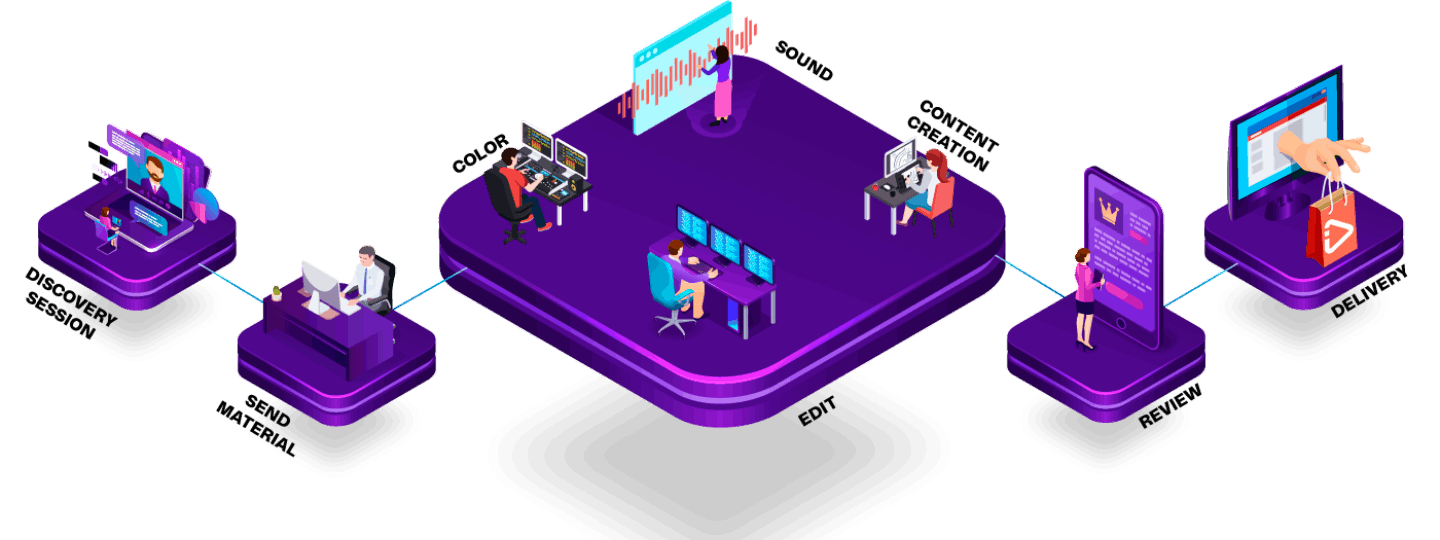
To give this review real context, it’s worth directly comparing Design Pickle’s video service against a purpose-built video production partner. Increditors operates as a video-first premium agency, and the differences in model design reflect completely different priorities.
The distinction matters: Design Pickle and Increditors are not competing for the same customer. One serves volume-focused operational content; the other serves brand-critical video production where the quality of the output is itself a revenue driver. Choosing wrong in either direction is an expensive mistake.
Who Should (and Shouldn’t) Use Design Pickle for Video
Design Pickle Video IS the Right Fit When…
You’re a content-heavy SMB or solopreneur producing consistent short-form content from predictable source footage. The economics work, the model is simple, and you get a defined workflow without freelancer management overhead.
You already use Design Pickle for graphic design and want to unify creative production under one subscription. The overlap in brand kit management, platform familiarity, and editor continuity provides real operational simplicity.
Your video needs are primarily operational, not strategic. Repurposing content, adding captions, applying templates, cutting talking head footage into clips — these are tasks where Design Pickle’s video service delivers consistent, predictable results at a controlled cost.
Volume justifies the flat fee. If you’re submitting ten or more video requests per month, the per-unit economics of the subscription beat per-project freelancer pricing at equivalent quality levels.
Design Pickle Video Is NOT the Right Fit When…
Video is your primary brand differentiation. If your product demos, case study videos, or brand films are the things converting leads into customers, you need a production partner with deep video expertise, not a design subscription with a video add-on.
You need custom motion graphics or animation. The subscription model structurally cannot accommodate the labor intensity of original motion design work. You will get template approximations, not custom creative.
Turnaround speed is a competitive variable. If you’re in a market where fast video response to news, events, or trends matters, the two-to-four business day queue rhythm is a constraint you’ll fight constantly.
You need creative direction, not just execution. If you want someone who watches your competitors, understands your positioning, and brings strategic ideas about your video format and hook structure, that’s not what unlimited subscriptions are selling. That’s what dedicated agencies are built for.
You’re scaling a SaaS, tech, or high-growth brand. The production quality bar at venture-backed and enterprise-adjacent companies often exceeds what the subscription model can reliably deliver. For a deeper look at production considerations specific to SaaS contexts, this guide on video editing for SaaS companies outlines what the stakes look like at that level.
Frequently Asked Questions
Does Design Pickle actually offer video editing?
Yes — Design Pickle added video editing capabilities to its service offering, available as an add-on or included in certain higher-tier plans. The service covers short-form social video, clip repurposing, captions, and basic talking head edits. It is not a standalone video production service but an extension of their core unlimited design subscription model.
How long does Design Pickle take to deliver a video?
Turnaround varies by project complexity and queue load, but subscribers commonly report two to four business days for typical video requests. Simple caption work or template applications can be faster. Complex or longer projects may take longer, particularly when revision cycles extend across days. There is no standard rush or same-day option in the subscription model.
Can Design Pickle handle motion graphics and animation?
Design Pickle can handle basic motion graphics, primarily template-based animations, lower thirds, and simple transitions. Custom character animation, complex kinetic typography built from scratch, or full After Effects compositions are generally outside the scope of what the subscription model can economically support. If your project requires original motion design work, this limitation becomes a meaningful constraint.
How does Design Pickle’s pricing compare to hiring a freelancer or agency?
The subscription model is economically attractive for high-volume, simple requests. At a flat monthly rate — plans typically running several hundred to over a thousand dollars per month depending on tier and video inclusion — the per-unit cost drops significantly as request volume increases. For low-volume, high-complexity projects, project-based freelancers or agency retainers typically deliver higher quality per dollar. The decision should be driven by volume, complexity, and quality requirements rather than the base monthly number alone.
Who should choose an agency like Increditors over Design Pickle for video?
Any brand where video quality is a direct driver of business outcomes — product launches, investor-facing content, high-production brand films, SaaS demo videos, case studies that need to close deals — should work with a dedicated video production partner rather than a graphic design subscription. Increditors brings a dedicated senior editor team, creative strategy, custom motion design, and project-specific partnership. When the stakes of the video justify it, that expertise compounds over a subscription model that executes briefs without contributing to them.
Verdict: 7.5/10 — A Smart Tool in the Right Context
Design Pickle’s video service earns a solid 7.5 out of 10 — not because it’s mediocre, but because it’s genuinely strong within a defined scope and genuinely limited outside of it. This review has tried to make those boundaries clear because the biggest mistake buyers make is purchasing a subscription for a use case it wasn’t designed to serve.
For content-heavy SMBs, solopreneurs, and brands that need a high volume of simple, repeatable social video work executed predictably and at controlled cost, Design Pickle’s video service is a legitimate solution. The model works. The assigned-editor continuity is a thoughtful design choice. The platform is reasonably mature. The flat fee removes invoice anxiety.
But the unlimited subscription model hits structural ceilings when video production demands creative depth, strategic partnership, complex motion design, fast turnaround, or the kind of senior editorial judgment that shapes content rather than executes requests. At that level, you’re not buying what the subscription model sells — and no amount of monthly volume justifies the fit mismatch.
The honest recommendation: use Design Pickle for video if your needs are operational, high-volume, and simple. Use a dedicated video editing agency like Increditors when your video needs to carry your brand’s full weight — when it needs to convert, differentiate, and perform at a level that a subscription queue can’t match.
Both are real options. The right one depends entirely on what video is supposed to do for your business.
Ready for Video That Actually Converts?
Tell us about your project and we will put together a custom plan.