










![3D Explainer Video - ScribbleLive.mp4_snapshot_00.12_[2022.03.09_03.14.16]](https://increditors.com/wp-content/uploads/elementor/thumbs/3D-Explainer-Video-ScribbleLive.mp4_snapshot_00.12_2022.03.09_03.14.16-r7wb53mx72rxst3qcqyrfxdmeyzb5r9jbl0wbjujh4.png "3D Explainer Video – ScribbleLive.mp4_snapshot_00.12_[2022.03.09_03.14.16]")































You’ve just finished a killer filming session. The content is gold. Now the clock starts ticking — how long until it’s edited, polished, and ready to publish?
If you’ve ever worked with an editor or agency, you know the frustration of unclear timelines. “We’ll get it back to you soon” isn’t a timeline. “3-5 business days” when you need it Thursday isn’t helpful. And “unlimited revisions” means nothing if each revision cycle adds another week.
Video editing turnaround times vary wildly depending on who you work with, what kind of video you’re producing, and how well you set your editor up for success. This guide gives you real benchmarks so you know exactly what to expect — and what to demand.
What’s in This Guide
- Industry Turnaround Benchmarks
- Turnaround by Video Type
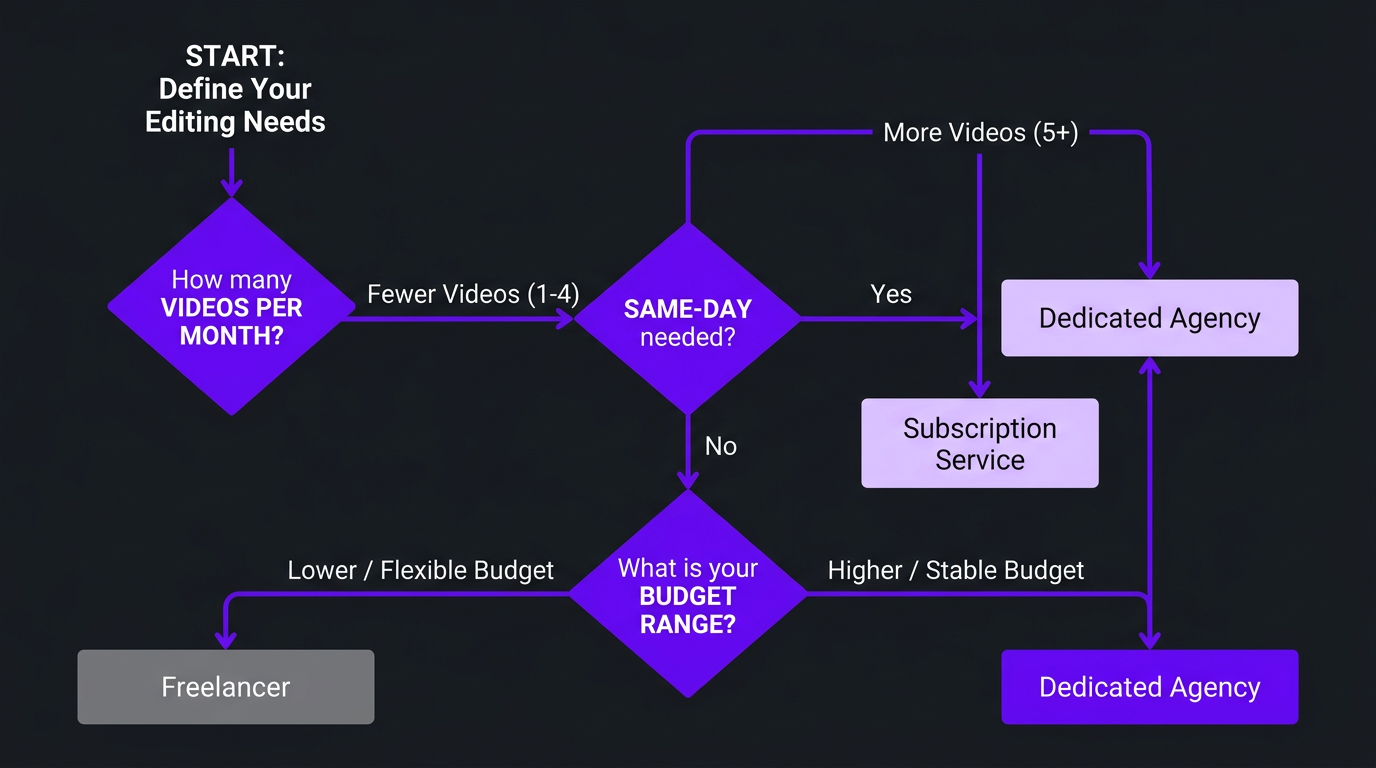
- Agency vs Freelancer vs Subscription
- What Affects Turnaround Time
- The Revision Cycle: Where Time Really Gets Lost
- How to Get Faster Turnaround
- SLAs and What to Put in Your Contract
- Rush Editing: When You Need It Yesterday
- Real-World Examples
- Turnaround Red Flags
- FAQ
Industry Turnaround Benchmarks: The Real Numbers
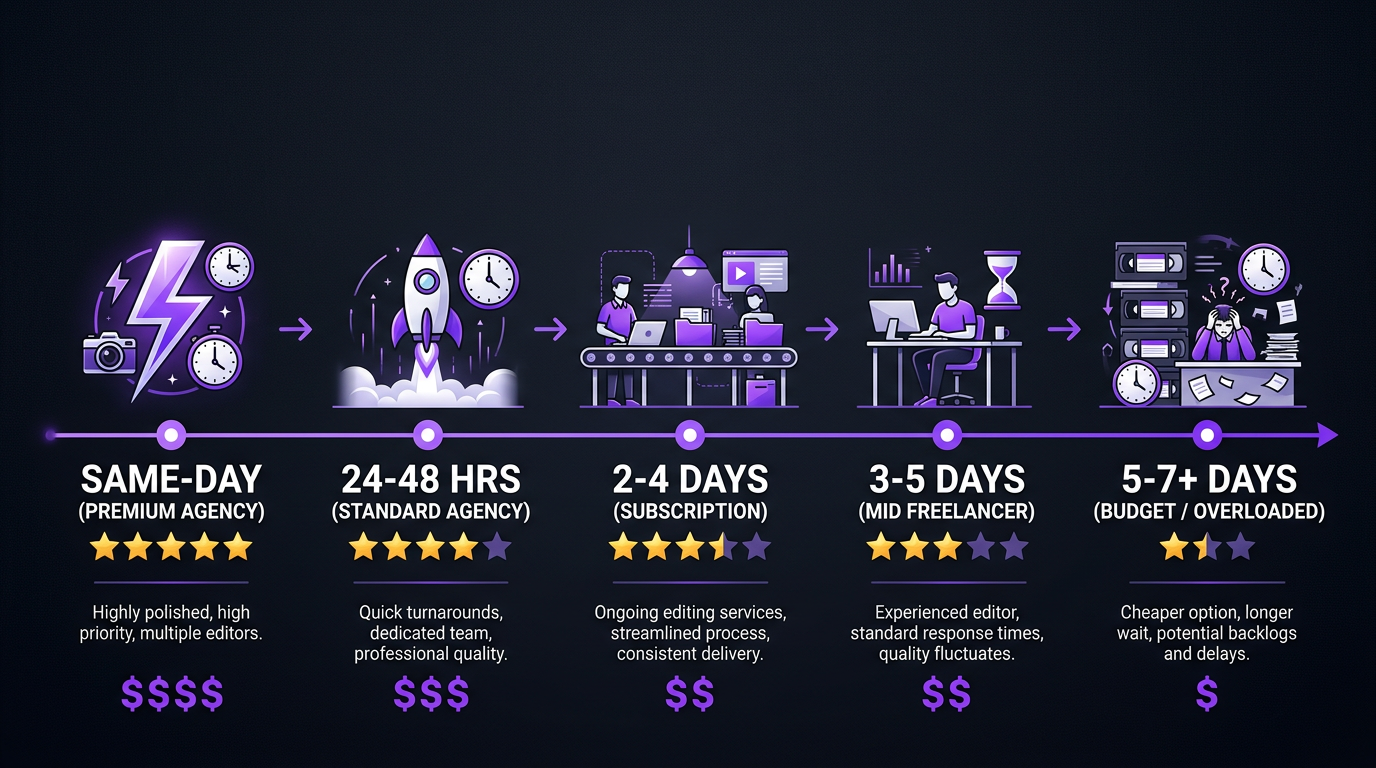
Let’s cut through the marketing promises and look at what actually happens across the video editing industry in 2026:
| Provider Type | Promised Turnaround | Actual Turnaround | First Draft Quality |
|---|---|---|---|
| Budget freelancer (Fiverr, Upwork) | 3-5 days | 4-7 days | Usually needs 2-3 revisions |
| Mid-tier freelancer | 2-4 days | 2-5 days | Often needs 1-2 revisions |
| Budget subscription | 2-3 days | 2-4 days | Template-heavy, minor tweaks |
| Mid-tier subscription | 1-2 days | 1-3 days | Decent first drafts |
| Premium agency (dedicated team) | 24-48 hours | 24-48 hours | Approved first draft 80%+ of time |
| In-house editor | Same-day to 2 days | 1-3 days | High (knows your brand intimately) |
The gap between “promised” and “actual” is important. Budget providers frequently miss deadlines because they’re juggling too many clients with too few editors. A freelancer promising 3-day turnaround who’s also working on five other projects is set up for failure — and that failure lands on your publishing schedule.
Premium agencies deliver on their promises more consistently for a structural reason: they have team depth. If Editor A is overloaded, Editor B can pick up your project. A project manager tracks every deadline. QC happens in parallel with editing, not sequentially. The system is built for reliability, not just speed.
Turnaround Times by Video Type
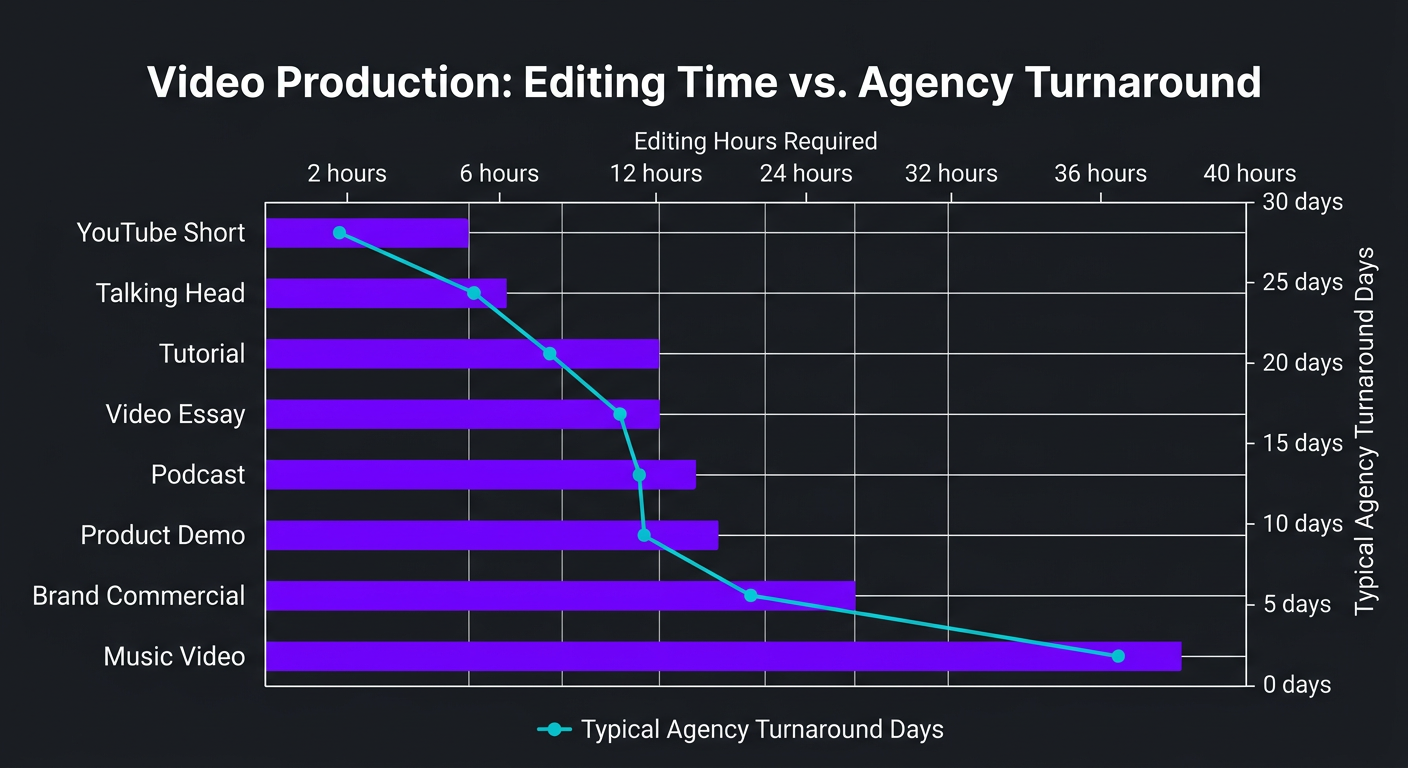
Not all videos take the same time to edit. A 60-second Reel and a 30-minute video essay are completely different projects. Here’s what realistic turnaround looks like for each format:
| Video Type | Editing Hours | Agency Turnaround | Freelancer Turnaround |
|---|---|---|---|
| YouTube Short / Reel (15-60 sec) | 1-3 hrs | Same-day to 24 hrs | 1-2 days |
| Talking head (10-20 min) | 3-6 hrs | 24-48 hrs | 2-4 days |
| Tutorial / how-to (10-20 min) | 4-8 hrs | 24-48 hrs | 3-5 days |
| Video essay (15-30 min) | 8-20 hrs | 48-72 hrs | 5-7 days |
| Podcast (video) (30-90 min) | 4-10 hrs | 24-48 hrs | 3-5 days |
| Product demo (3-10 min) | 4-10 hrs | 48-72 hrs | 3-5 days |
| Brand / commercial (1-3 min) | 10-30 hrs | 3-5 days | 5-10 days |
| Music video | 15-40 hrs | 5-10 days | 7-14 days |
Note the disconnect between video length and editing time. A 2-minute commercial can take longer to edit than a 60-minute podcast because of the density of work per second. Commercials require frame-perfect cuts, color grading, VFX, sound design, and multiple format deliverables. Podcasts mostly need multi-cam switching and cleanup.
When evaluating an agency or freelancer, always ask about turnaround for your specific content type. Generic turnaround promises are meaningless without context.
Agency vs Freelancer vs Subscription: Speed Comparison
The type of editing provider you choose fundamentally affects not just how fast you get your first draft, but how fast the entire cycle from footage submission to published video moves.
Freelancers: fast sometimes, unpredictable always
A dedicated freelancer who only works with 2-3 clients can be very fast — sometimes faster than an agency. But that speed isn’t reliable. Freelancers get sick, take vacations, have personal emergencies, and take on too many projects when business is good. When any of that happens, your project gets delayed with zero backup plan.
Average freelancer experience: Week 1 is great. Week 4, they’re overloaded. Week 8, they ghost you for three days. Week 12, you’re looking for a replacement and starting the onboarding process all over again.
Subscription services: consistent but capped
Services like Vidchops and basic-tier subscriptions offer predictable turnaround (usually 2-4 business days). The trade-off is flexibility. Most subscription services run a queue system — your video enters a line and gets edited when an available editor picks it up. You don’t get a dedicated editor, which means inconsistent style and no deep understanding of your brand.
If you need a video edited urgently, most subscription services can’t accommodate that. You’re in the queue. Want to jump the line? Upgrade your plan.
Agencies with dedicated teams: built for speed at scale
This is where the structural advantage becomes clear. A premium agency assigns specific editors to your account. They already know your style. They have your brand assets. They don’t need to re-learn anything each time you submit footage.
That familiarity translates directly to speed. When your editor has cut 50 of your videos, they can produce a first draft in half the time a new editor would need. Combined with project management that tracks every deadline and QC that runs in parallel, the result is consistently fast delivery with high first-draft approval rates.
| Speed Factor | Freelancer | Subscription | Premium Agency |
|---|---|---|---|
| First draft delivery | 2-5 days | 2-4 days | 24-48 hrs |
| Revision turnaround | 1-3 days per round | 1-2 days per round | Same-day to 24 hrs |
| Total time to final | 5-10 days | 4-7 days | 2-4 days |
| Rush availability | Sometimes | Rarely | Yes (dedicated team) |
| Deadline reliability | ⚠️ Variable | ✅ Usually | ✅ Consistently |
| Backup if editor unavailable | ❌ | ✅ Different editor | ✅ Trained backup |
What Actually Affects Turnaround Time
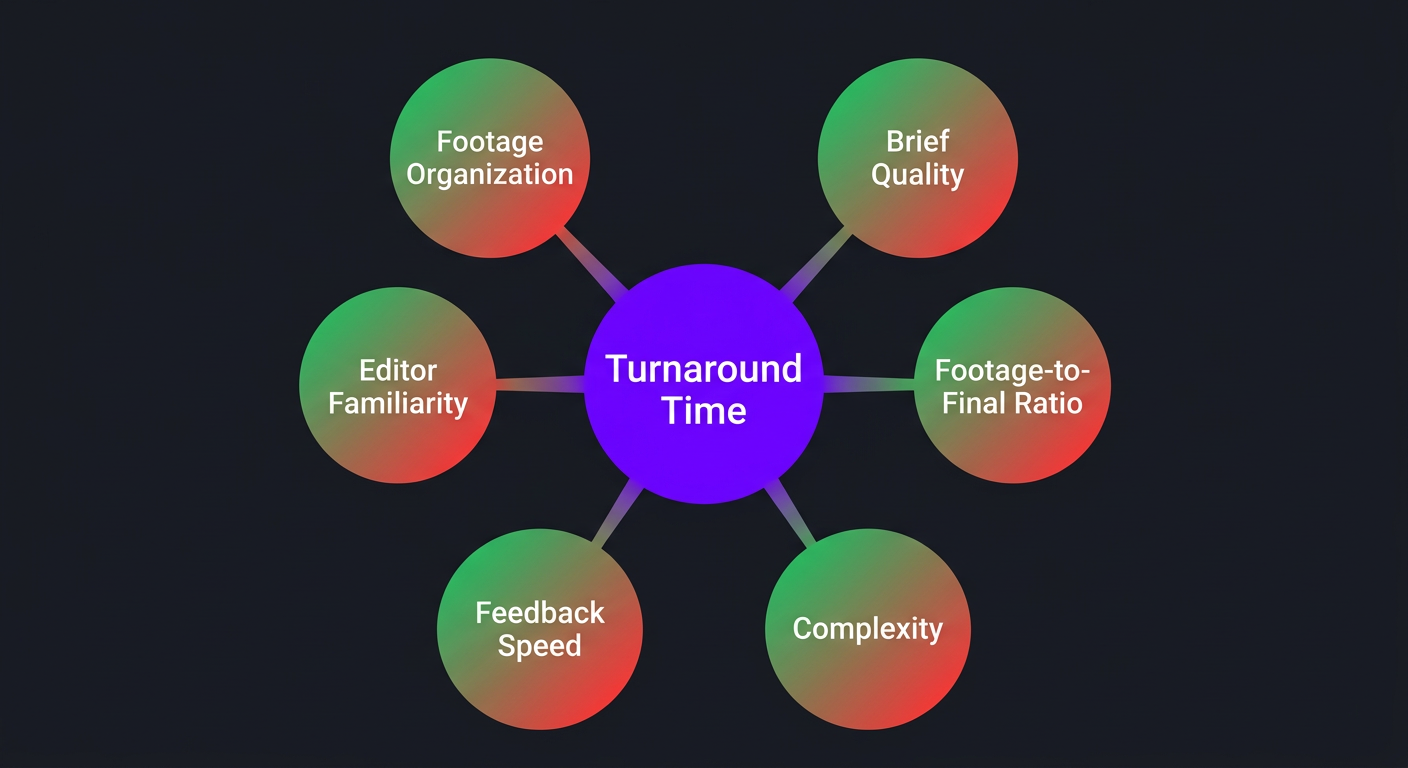
Before blaming your editor for slow delivery, consider these factors — many of which are within your control:
1. Raw footage organization
Editors who receive a single folder with 47 files named “MVI_0001.MOV” through “MVI_0047.MOV” will spend 1-2 hours just organizing before they start cutting. Clear file naming (e.g., “Video3_Intro_TakeA.mov”) eliminates that waste entirely.
2. Editing brief quality
A brief that says “make it engaging” gives the editor nothing to work with. A brief with timestamps, reference examples, and specific notes (“Cut this section at 4:32, use B-roll from the product demo folder, reference the style of our March video”) lets them start editing immediately with confidence.
3. Footage-to-final ratio
There’s a massive difference between editing a 15-minute video from 20 minutes of footage versus editing a 15-minute video from 3 hours of footage. The more raw material an editor has to sift through, the longer the edit takes. Batch your good takes and mark them if possible.
4. Complexity of deliverables
A simple cut with captions? Fast. A video requiring custom animations, data visualizations, multi-format exports, and thumbnail concepts? That’s 3-5x the work. Be honest about what you need when discussing timelines.
5. Feedback consolidation
This is the silent time-killer. Sending feedback in three separate Slack messages over two days forces your editor to wait, compile notes, and re-interpret your intent. One consolidated feedback document with timestamped notes, sent within 24 hours of receiving the draft, keeps the cycle moving.
6. Editor familiarity with your brand
A new editor needs 3-5 videos to fully learn your style. During that ramp-up period, expect 30-50% longer turnaround and more revision rounds. This is why switching editors is so costly — you pay the ramp-up tax every time.
The Revision Cycle: Where Time Really Gets Lost
Here’s a truth most people don’t realize: the first draft usually represents only 40-60% of the total timeline. Revisions often double the end-to-end time. And most revision delays aren’t the editor’s fault — they’re caused by slow or unclear feedback from the client.
Anatomy of a revision cycle
| Step | Ideal Timeline | Reality (Common) | Time Lost |
|---|---|---|---|
| First draft delivered | Day 1-2 | Day 1-2 | — |
| Client reviews and sends feedback | Day 2 (same day) | Day 4-5 (delayed review) | +2-3 days |
| Revision 1 delivered | Day 3 | Day 6-7 | — |
| Client reviews revision | Day 3 (same day) | Day 8-9 | +1-2 days |
| Final version approved | Day 4 | Day 10-11 | 6-7 days lost |
In the ideal scenario, the entire process — from footage handoff to final approval — takes 4 days. In reality, client-side delays inflate that to 10-11 days. The editor was fast. The client was the bottleneck.
This is one reason agencies with project managers outperform other models. A good PM nudges clients for feedback, sets review deadlines, and keeps the cycle from stalling. Without that structure, projects drift.
How to cut your revision cycles in half
- Set a review SLA for yourself. Commit to reviewing drafts within 24 hours of delivery. Communicate this to your editor so they can plan their schedule.
- Use timecoded feedback. “The transition at 3:42 feels abrupt — try a dissolve” is immediately actionable. “Some transitions feel off” requires a follow-up conversation.
- Send all feedback at once. Don’t drip notes over days. Watch the full video, compile your notes, and send one complete feedback document.
- Distinguish between critical and nice-to-have. “The audio peaks at 7:15” is critical. “Can we try a slightly different font?” is nice-to-have. Separate them so the editor prioritizes correctly.
- Trust your editor’s judgment on technical decisions. If they chose a specific cut timing or transition, there’s usually a reason. Challenge creative choices, but defer on technical execution.
8 Proven Ways to Get Faster Turnaround
Whether you’re working with a freelancer, subscription service, or agency, these practices will consistently speed up your editing delivery:
1. Create a master editing brief template
Build a reusable template that includes: video topic, key timestamps, B-roll notes, music mood preference, graphic requirements, reference video links, and any special instructions. Fill it out for each video before handing off footage. Takes 15 minutes, saves hours.
2. Organize footage before handoff
Separate A-roll, B-roll, and audio files. Name them descriptively. Delete obviously bad takes. Create a simple folder structure your editor can navigate without guessing.
3. Provide reference videos
Showing your editor a video with the pacing, style, or energy you want is 10x more effective than describing it in words. Build a reference library of 5-10 videos (yours or others’) that represent your ideal style across different moods and formats.
4. Build an asset library
Intros, outros, lower third templates, logo animations, music tracks, sound effects, brand fonts — all in one shared folder. When your editor doesn’t have to hunt for assets, editing starts faster and the output is more consistent.
5. Establish a consistent publishing calendar
When your editor knows you publish every Tuesday and Friday, they can schedule their work accordingly. Predictable deadlines create predictable delivery. Random “I need this ASAP” requests disrupt their workflow for every client.
6. Reduce round trips through better first briefs
Every question your editor has to ask before starting costs a round trip of communication — often 12-24 hours for messages across time zones. A complete brief that anticipates questions eliminates those delays.
7. Use a dedicated editing partner (not rotating editors)
An editor who’s done 50 of your videos edits them in half the time a new editor would. Every time you switch editors, you lose speed. Consistency in your editing partner is the single biggest accelerator of turnaround time.
8. Choose an agency that assigns dedicated teams
At Increditors, every client gets a dedicated editor who learns their brand inside out. Combined with a PM who manages the schedule and a QC layer that runs simultaneously, our standard turnaround is 24-48 hours for YouTube content — and that speed is consistent month after month. Explore our YouTube editing packages for details.
Tired of Waiting Days for Your Edits?
Our dedicated teams deliver in 24-48 hours, consistently. No missed deadlines. No excuses.
SLAs: What to Put in Your Editing Agreement
If turnaround time matters to your business (and it should), get it in writing. A service level agreement (SLA) protects both parties and sets clear expectations.
Key SLA elements for video editing
| SLA Element | What to Define | Typical Terms |
|---|---|---|
| First draft delivery | Maximum time from footage submission to first draft | 24-72 hours depending on complexity |
| Revision turnaround | Maximum time from feedback submission to revised version | Same-day to 24 hours |
| Included revision rounds | Number of revision cycles before additional charges | 2-3 rounds standard |
| Rush availability | Whether rush projects are available and at what premium | 25-50% rush fee, 6-12 hour delivery |
| Client review window | How long the client has to provide feedback before workflow pauses | 24-48 hours |
| Missed deadline remedy | What happens if the provider misses a deadline | Discount, credit, or priority escalation |
| Communication response time | Maximum time to respond to messages during business hours | 1-4 hours |
Not every provider will agree to formal SLAs — and that tells you something. If an editor or agency won’t commit to specific turnaround times in writing, their consistency is probably not something they’re confident in.
At Increditors, our retainer agreements include specific turnaround commitments for each video type, because we’ve built the team structure to honor them reliably.
Rush Editing: When You Need It Yesterday
Sometimes, you need a video edited immediately. A trending topic you need to capitalize on. A last-minute event recap. A sponsor deadline you forgot about. Rush editing exists for exactly these moments.
What “rush” actually means
| Rush Tier | Delivery Time | Typical Premium | Availability |
|---|---|---|---|
| Same-day | 4-8 hours | 50-100% | Premium agencies with dedicated teams |
| Next-day | 12-24 hours | 25-50% | Most agencies, some freelancers |
| Expedited | 24-48 hours | 0-25% | Often standard at premium agencies |
The key insight: if you’re on a premium retainer with a dedicated editing team, “rush” delivery is often just their standard speed. A 24-48 hour turnaround that costs extra from a freelancer is business-as-usual for an agency that has editors dedicated to your account with reserved capacity.
This is one of the most overlooked advantages of the agency model. You’re not paying a rush fee — you’re paying for a team that’s fast by default because they know your brand and have the capacity built in.
Real-World Turnaround: Client Experiences
TuMeke: From unpredictable freelancer timelines to clockwork delivery
TuMeke, an AI-powered workplace safety platform, needed consistent video content for product marketing and educational content. Their experience with freelancers was a familiar story: fast delivery in week one, followed by progressively longer turnaround as the freelancer took on more clients.
The inconsistency wasn’t just annoying — it was damaging their marketing calendar. Launch videos were delayed. Social content missed trend windows. Their marketing team couldn’t plan campaigns around unpredictable editing schedules.
When they switched to a dedicated Increditors team, the transformation was immediate. Same editor every time, 24-48 hour standard turnaround, project manager keeping everything on schedule. Within a month, TuMeke’s marketing team could plan content calendars with confidence, knowing their editing partner would deliver on time, every time.
The underlying lesson: turnaround reliability is often more valuable than raw speed. Getting a video back in 24 hours sometimes and 7 days other times is worse than getting it back in 48 hours every single time. Predictability lets you build publishing systems that work.
Trade with Pat: High-volume editing with tight schedules
Trade with Pat, a trading education creator, operates in a market where timing matters enormously. Financial content has a shelf life — a market analysis video edited three days late might reference a market move that’s already old news.
Pat’s content volume was high: multiple videos per week covering market updates, educational content, and trading strategies. Each had different complexity levels but shared the same urgency — delay meant irrelevance.
Working with our team, we established a tiered turnaround system for Pat’s content. Market update videos (time-sensitive, simpler edits) got same-day or next-day delivery. Educational deep-dives (complex graphics, data visualizations) got 48-72 hour turnaround. Weekly trading recaps were scheduled on a predictable calendar.
This tiered approach meant Pat wasn’t paying rush rates for everything, but his time-sensitive content never missed its window. His editor understood trading content well enough to prioritize the right elements — clean data overlays, accurate chart displays, and pacing that matched the energy of market analysis.
The result: Pat published more consistently than competitors who were larger but less well-organized, and his audience grew because they could rely on timely, well-edited market content.
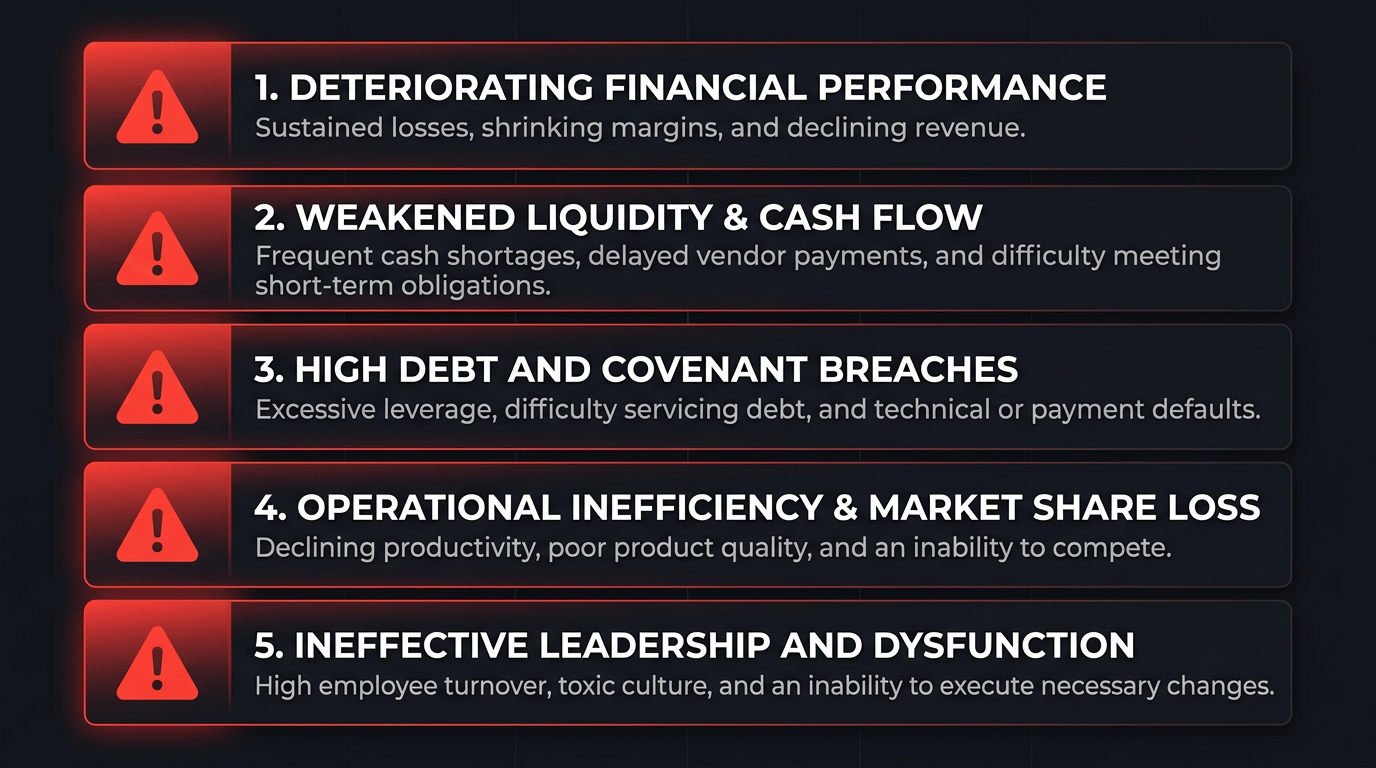
Turnaround Red Flags: Warning Signs Your Editing Partner Can’t Keep Up
How do you know when turnaround problems are temporary hiccups versus systemic issues? Watch for these patterns:
Red flag 1: Turnaround gets slower over time
If your first month was 2-day delivery and month three is 5-day delivery, the editor or agency has taken on too many clients. This pattern rarely reverses on its own. Have a direct conversation, and if it doesn’t improve within two weeks, start planning your transition.
Red flag 2: “Sorry, running behind” becomes routine
One late delivery is understandable. Three in a row is a system problem. Apologies without structural changes (additional team members, reduced client load, better processes) are just apologies — they won’t fix the issue.
Red flag 3: Quality drops when speed increases
If rush delivery always results in noticeably lower quality, the team is cutting corners to hit deadlines rather than having genuine capacity for fast work. Professional agencies can deliver fast and good because they’ve built the team size and processes to support it.
Red flag 4: Communication goes dark before deadlines
When your editor stops responding to messages in the 24 hours before a deadline, they’re scrambling. Reliable partners proactively communicate — “on track for tomorrow” or “need an extra day, here’s why.” Silence before a deadline is the worst sign.
Red flag 5: Revision turnaround is dramatically slower than first draft
Some editors prioritize new projects over revisions, treating your feedback as a lower priority than other clients’ first drafts. If your revisions consistently take longer than the original edit, the editor doesn’t have dedicated capacity for your work.
If you’re experiencing these red flags, it may be time to evaluate your editing partner more broadly. See our guide on video editing agency red flags for a comprehensive list of warning signs.
Frequently Asked Questions
A standard YouTube video (10-20 minutes, moderate complexity) takes 24-72 hours from a professional agency. Budget services may take 3-5 business days. Rush delivery (same-day or next-day) is available from premium agencies. The actual editing work requires 3-10 hours depending on complexity — the delivery time includes queue position, QC, and any other workflow steps.
For ongoing content production, 24-48 hours is the industry standard for professional agencies. Budget subscriptions typically deliver in 2-4 business days. Freelancers vary from 1-7 days. The “reasonable” benchmark depends on your publishing schedule — if you post weekly, a 3-day turnaround works fine. If you post daily, you need same-day or next-day.
Yes, from agencies with dedicated teams assigned to your account. Same-day turnaround requires editors who already know your brand and have reserved capacity. At Increditors, same-day delivery is available for clients on our dedicated team plans, particularly for short-form content and simpler long-form edits.
Editing time depends on raw footage volume (more footage = more time sorting), complexity (motion graphics add hours), revision cycles (which are often delayed by the client, not the editor), and brand familiarity. The most common reason for slow delivery isn’t editing speed — it’s queue overload. Your editor has too many clients.
Provide organized raw footage with clear file naming, a detailed editing brief with timestamps and references, and consolidated feedback within 24 hours of receiving drafts. The clearer your input, the faster the output. Also consider whether your editing partner has dedicated capacity for your work or is juggling too many clients.
Generally yes, and more importantly, more consistent turnaround. Agencies have team depth, project management, and parallel QC processes. Freelancers are single points of failure. An agency’s 48-hour turnaround that never misses beats a freelancer’s 24-hour turnaround that frequently slips to 5 days.
Get Predictable, Fast Editing Turnaround
We deliver in 24-48 hours, every time. See our portfolio and judge the quality yourself.
Turnaround benchmarks based on industry data and our experience working with 100+ content creators and brands. Actual delivery times vary by project complexity and provider. For current Increditors turnaround commitments, visit our pricing page or schedule a call.