








![3D Explainer Video - ScribbleLive.mp4_snapshot_00.12_[2022.03.09_03.14.16]](https://increditors.com/wp-content/uploads/elementor/thumbs/3D-Explainer-Video-ScribbleLive.mp4_snapshot_00.12_2022.03.09_03.14.16-r7wb53mx72rxst3qcqyrfxdmeyzb5r9jbl0wbjujh4.png "3D Explainer Video – ScribbleLive.mp4_snapshot_00.12_[2022.03.09_03.14.16]")



























You need someone to edit your videos. That much is clear. But the way you hire that person — and the relationship structure you build — will shape the quality, consistency, and scalability of your content for months or years to come.
The two most common paths: hire a freelance video editor project by project, or lock in a dedicated video editor through an agency or service. Both can work. But they serve different stages, different budgets, and different ambitions.
This isn’t a surface-level comparison. We’re going deep into the real-world trade-offs between a dedicated video editor vs freelancer model — with actual costs, workflow differences, and case studies from creators and brands who’ve tried both.
What’s in This Guide
- What “Dedicated” Actually Means (And What It Doesn’t)
- The Freelancer Model: Strengths and Limits
- The Dedicated Editor Model: How It Works
- Real Cost Comparison: Freelancer vs Dedicated Editor
- Quality and Consistency: The Compounding Effect
- Scalability: What Happens When You Grow
- Reliability: The Risk Factor Nobody Plans For
- Management Overhead: Your Hidden Time Cost
- Decision Framework: Which Model Fits You
- The Hybrid Approach: Best of Both Worlds
- Case Studies: Creators Who Made the Switch
- FAQ
What “Dedicated Video Editor” Actually Means
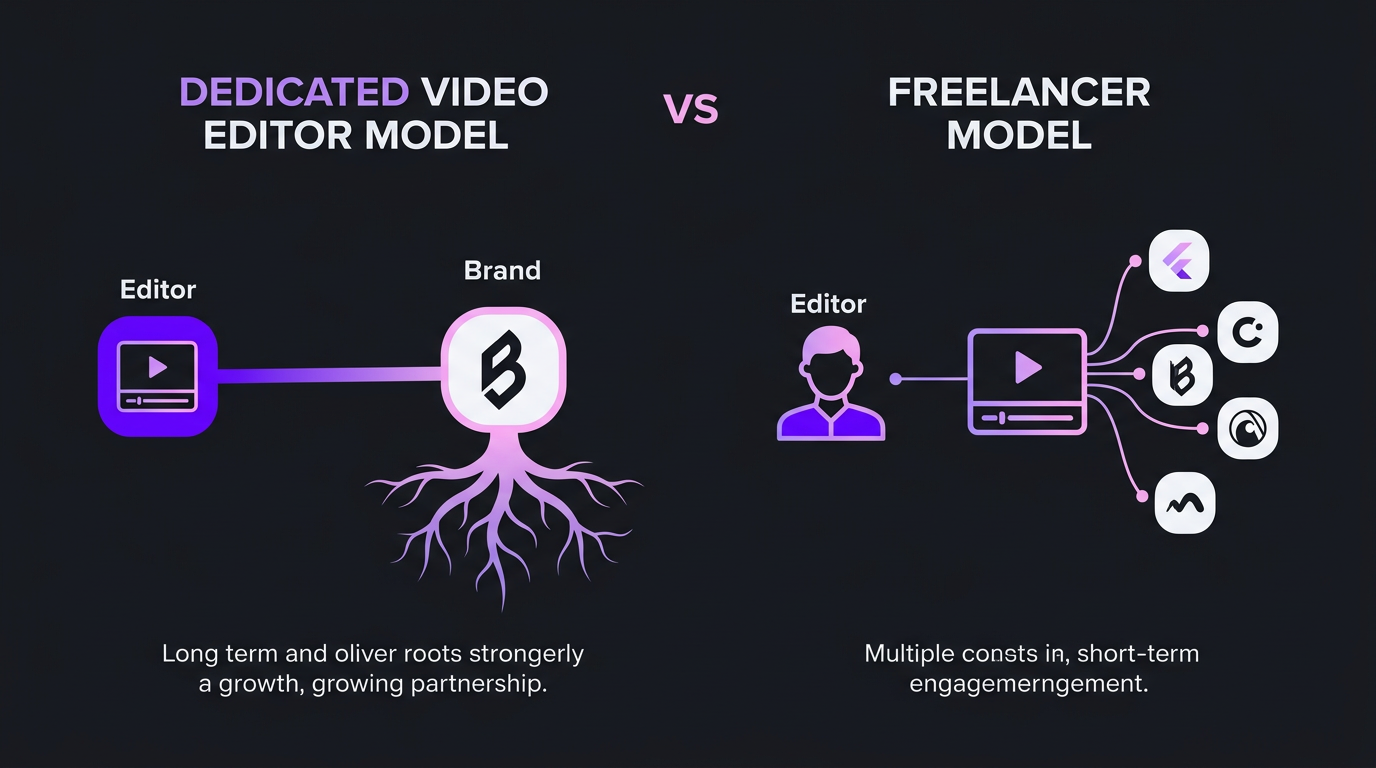
Let’s clear up a common misconception first. A “dedicated video editor” doesn’t mean you hire someone full-time. It means you have an editor — through an agency, service, or direct contract — who is assigned primarily to your account and works on your content consistently over time.
The dedicated model exists on a spectrum:
- Agency-dedicated: An agency assigns a specific editor to your account. That editor works on your projects first, knows your brand intimately, and has backup support from the agency’s team. This is the most common and practical version of the dedicated model.
- Full-time remote hire: You hire an editor as a contractor or employee who works exclusively for you, 40 hours/week. More control, more cost, more management.
- Retained freelancer: A freelancer you work with month after month on a retainer. They’re not exclusive to you, but you get priority scheduling and consistent quality. This is a middle ground that works well for some creators.
When most people search for a dedicated video editor vs freelancer comparison, they’re really asking: should I work with a different person each time I need a video edited, or should I invest in a long-term relationship with one editor or team?
The answer depends on five factors we’ll cover in depth: cost, quality, scalability, reliability, and management overhead.
Why the Dedicated Model Emerged
Ten years ago, the freelancer model was essentially the only option for independent creators and small businesses. You’d post on Upwork, review portfolios, hire per project, and hope for the best. Agencies existed but served enterprise clients with five-figure budgets.
The explosion of YouTube, TikTok, and content-driven marketing changed the economics. Suddenly, businesses and creators needed 8, 12, even 30+ videos per month. The per-project freelancer model buckled under that volume. Missed deadlines. Inconsistent quality. The constant re-onboarding of new editors.
That gap created the dedicated editor model — agencies like Increditors that assign specific editors to client accounts, providing the consistency of an in-house hire without the overhead. It’s not a better model in every situation, but it solved real problems that the freelancer marketplace couldn’t address at scale.
The Freelancer Model: Real Strengths and Real Limits
Freelancers aren’t going anywhere, and for good reason. The model has genuine advantages that the dedicated model can’t always match.
Where Freelancers Excel
Flexibility. Need a wedding video editor this month and an animation specialist next month? Freelancers let you tap into specialized skills on demand without commitments. This is invaluable for businesses with varied content needs.
Lower entry cost. You can hire a capable freelance editor for $150-$400 per video. No monthly minimums, no contracts, no retainers. For creators producing 1-4 videos per month, this is often the most economical choice.
Global talent pool. Platforms like Upwork, Fiverr, and Mandy.com give you access to tens of thousands of editors worldwide. You can find someone with niche expertise — say, gaming montage editing or real estate walkthroughs — that a generalist agency might not offer.
Direct relationship. You communicate directly with the person doing the work. No layers, no account managers, no telephone game between you and the editor. For creators who enjoy the collaborative process, this matters.
Where Freelancers Hit the Wall
The juggling problem. Your freelancer has other clients. Maybe 5, maybe 15. When two clients have urgent deadlines the same week, someone gets bumped. If it’s you, your content schedule breaks.
According to a 2025 survey by Payoneer, the average freelance video editor works with 6-8 active clients simultaneously. That’s not inherently bad — but it means your project is never their only priority.
The consistency gap. Even the best freelancer has off days. Without a quality control layer, there’s no one reviewing their work before it reaches you. Over a series of videos, you might notice quality fluctuations that erode your brand’s visual identity.
The knowledge drain. Every time a freelancer relationship ends — because they raised prices, got too busy, moved on, or just ghosted (it happens more than you’d think) — you lose all the institutional knowledge they built about your brand. The next editor starts from zero.
The scaling ceiling. Going from 4 to 12 videos per month with a single freelancer? They’ll either decline the extra work or spread themselves thin. Going from 4 to 12 with an agency’s dedicated model? You add another editor to your team.
The Dedicated Editor Model: How It Actually Works
The dedicated editor model through an agency works differently than most people assume. You’re not just “hiring a more expensive freelancer.” The entire structure changes.
The Setup Phase (Week 1-2)
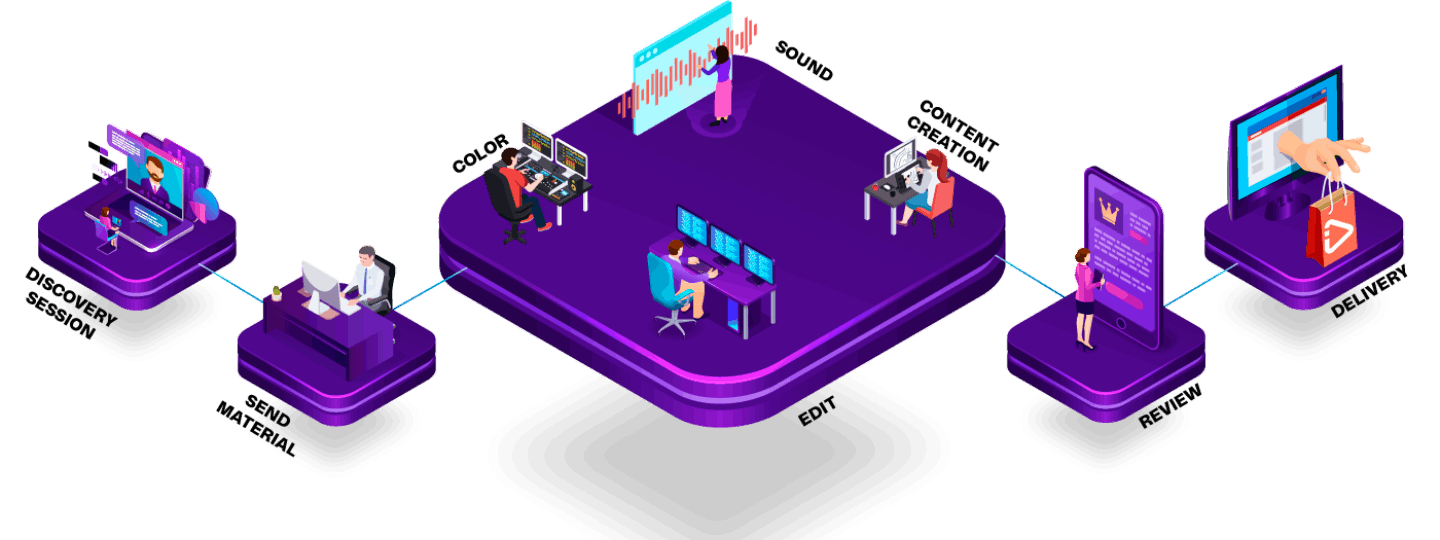
When you start with an agency offering dedicated editors, the first week or two is onboarding:
- Brand deep-dive: The assigned editor studies your existing content, brand guidelines, competitor channels, and audience demographics.
- Style documentation: The team creates a style guide specific to your account — preferred transitions, pacing patterns, graphics templates, color grading profiles, music mood boards.
- Workflow setup: File transfer systems, communication channels, feedback protocols, and turnaround expectations are formalized.
- Test edits: The editor produces 1-2 test edits for calibration, with detailed feedback rounds to align on expectations.
This front-loaded investment is what freelancer relationships typically skip. It costs time and money upfront but pays exponential dividends in months 2, 3, and beyond.
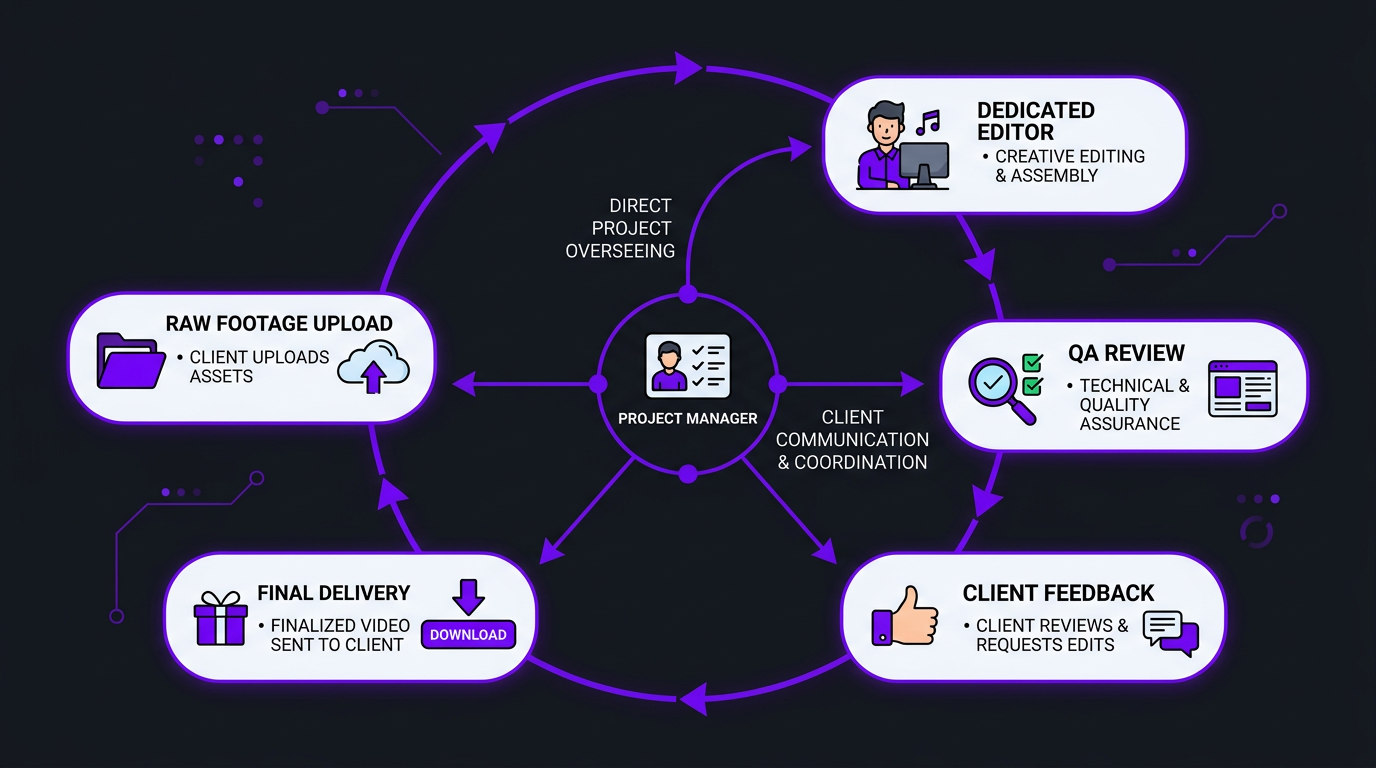
The Ongoing Workflow
After onboarding, the day-to-day looks like this:
- You upload raw footage and a brief (often just a Loom or voice note — your editor already knows your style).
- Your dedicated editor picks up the project within hours (not days), following your established style guide.
- A quality reviewer — a second set of eyes within the agency — checks the edit before delivery.
- You receive the draft, typically within 24-48 hours.
- You provide feedback (usually minor at this point). The editor revises and delivers the final cut.
The magic of this model shows up around month 3. By then, your editor anticipates your preferences. Briefs get shorter. Revision rounds drop from 3 to 1. The editor starts making creative suggestions that genuinely improve the content — because they understand your audience as well as you do.
What’s Included in the Dedicated Model
At agencies like Increditors, a dedicated editor package typically bundles:
- A named editor assigned to your account
- A project manager handling logistics and timelines
- Quality assurance review on every deliverable
- Backup editor coverage for vacations and emergencies
- Licensed music and stock footage access
- Brand style guide documentation and maintenance
- Priority turnaround (24-48 hours standard, same-day available)
Compare that to a freelancer, where you get… an editor. Everything else — project management, quality control, asset licensing, backup coverage — falls on you.
Real Cost Comparison: Dedicated Video Editor vs Freelancer
Let’s stop dealing in abstractions and put real numbers on the table. We’ll model three scenarios at different content volumes.
Scenario A: 4 Videos Per Month (Low Volume)
| Cost Factor | Freelancer | Dedicated Editor (Agency) |
|---|---|---|
| Editing cost | $300 × 4 = $1,200/mo | $2,500–$3,000/mo |
| Your management time | ~6 hrs × $75/hr = $450/mo | ~2 hrs × $75/hr = $150/mo |
| Revision cycles (extra time) | ~3 hrs = $225/mo | ~1 hr = $75/mo |
| Stock/music licensing | $50/mo | Included |
| Total effective cost | $1,925/mo | $2,725–$3,225/mo |
Winner at 4 videos/month: Freelancer. At low volume, the dedicated model’s fixed costs don’t spread enough. You’re paying for infrastructure you don’t fully utilize.
Scenario B: 8 Videos Per Month (Medium Volume)
| Cost Factor | Freelancer | Dedicated Editor (Agency) |
|---|---|---|
| Editing cost | $300 × 8 = $2,400/mo | $3,500–$4,500/mo |
| Your management time | ~12 hrs × $75/hr = $900/mo | ~3 hrs × $75/hr = $225/mo |
| Revision cycles | ~6 hrs = $450/mo | ~2 hrs = $150/mo |
| Stock/music licensing | $100/mo | Included |
| Missed deadline risk (1 in 4 months) | ~$200/mo amortized | ~$0 |
| Total effective cost | $4,050/mo | $3,875–$4,875/mo |
At 8 videos/month: It’s a wash. The freelancer model’s hidden costs — management time, revision overhead, risk — bring it right in line with the dedicated model. But the dedicated model delivers faster turnaround, consistent quality, and backup coverage that the freelancer can’t match.
Scenario C: 16+ Videos Per Month (High Volume)
| Cost Factor | Freelancer(s) | Dedicated Team (Agency) |
|---|---|---|
| Editing cost | $275 × 16 = $4,400/mo (2 freelancers, volume discount) | $5,000–$7,000/mo |
| Your management time | ~20 hrs × $75/hr = $1,500/mo | ~4 hrs × $75/hr = $300/mo |
| Revision cycles | ~10 hrs = $750/mo | ~3 hrs = $225/mo |
| Stock/music licensing | $200/mo | Included |
| Cross-editor consistency issues | $300/mo (re-work, brand drift) | $0 (style guide enforced) |
| Missed deadline / availability risk | $400/mo amortized | $0 |
| Total effective cost | $7,550/mo | $5,525–$7,525/mo |
Winner at 16+ videos/month: Dedicated team, clearly. The freelancer model implodes at high volume. You’re managing multiple people, dealing with style inconsistencies between editors, and spending 20+ hours per month on project management alone. The dedicated agency model absorbs all of that.
Quality and Consistency: The Compounding Effect
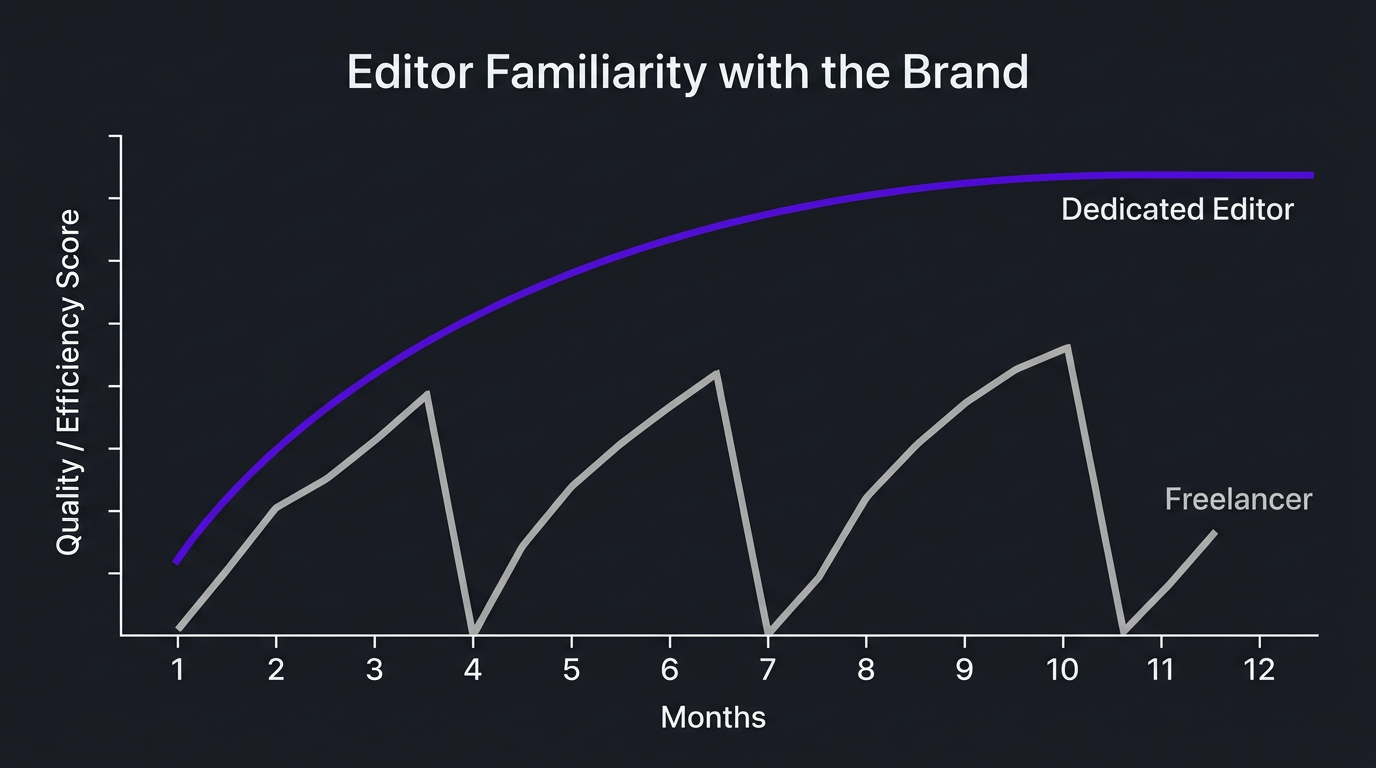
Here’s what cost comparisons miss: quality isn’t static. It compounds.
A dedicated editor who works on your channel for six months doesn’t just maintain quality — they improve it. Every video they edit teaches them something new about your audience, your pacing preferences, your humor, your visual language. That knowledge accumulates and translates into progressively better content.
With freelancers — even great ones — this compounding effect resets every time you change editors. And even with a consistent freelancer, they’re splitting their learning bandwidth across 6-8 clients. Your channel gets a fraction of their creative attention.
The Brand Consistency Factor
Watch any successful YouTube channel and you’ll notice something: every video feels like it belongs to the same brand. The intro, the pacing, the graphics, the transitions — they create a cohesive viewing experience that builds audience trust and recognition.
This consistency is nearly impossible to achieve with rotating freelancers. Each editor brings their own style, their own instincts, their own interpretation of your brief. The result? Your channel looks like it has multiple personalities.
A dedicated editor eliminates this problem entirely. They own your visual language. They know that your intros run 8 seconds, that you prefer J-cuts over hard cuts, that your audience responds to data-driven B-roll rather than generic stock footage. These micro-decisions, made consistently across dozens of videos, compound into a professional polish that viewers feel even if they can’t articulate it.
The Learning Curve Investment
According to our internal data at Increditors, the average dedicated editor reaches “full fluency” with a client’s brand by video 8-10. After that point:
- Average revision rounds drop from 2.8 to 1.1
- Turnaround time decreases by 30-40%
- Client satisfaction scores increase by 45%
- Editors start proactively suggesting creative improvements
With freelancers, you pay the learning curve cost repeatedly. Every new editor needs 3-5 projects to understand your preferences — and many freelancer relationships don’t last that long. You end up in a perpetual state of “getting up to speed” without ever reaching the fluent, collaborative phase.
Scalability: What Happens When You Grow
If your content operation is static — 4 videos per month, every month, indefinitely — both models work. But content operations aren’t static. Successful channels grow. Launch cycles create spikes. New platforms demand new formats.
Scaling with Freelancers
Going from 4 to 8 videos per month with a freelancer means one of three things:
- Your current freelancer takes on the extra work. If they have capacity, great. But their turnaround will likely slow, and your videos will compete with their other clients for priority.
- You hire a second freelancer. Now you’re managing two people with different styles, different schedules, and different communication preferences. Your management overhead doubles.
- You find a faster freelancer. Back to square one — new onboarding, new learning curve, hoping they’re reliable.
None of these options are clean. They all introduce friction, inconsistency, or risk.
Scaling with a Dedicated Team
Going from 4 to 8 videos with an agency-dedicated model means your project manager adjusts the workflow, potentially assigns a second editor from the same team, and ensures both editors follow your established style guide. Your involvement: one conversation with your PM.
Going from 8 to 20? Same process. The agency has the infrastructure to scale your team up (or down) based on need. Your style guide, brand assets, and workflow systems scale with you — they don’t reset.
When we onboarded Trade with Pat, a finance-focused content creator, he started with 6 YouTube videos per month. Within four months, his channel grew enough to justify 10 long-form videos plus 20 short-form clips monthly. Because his dedicated editor at Increditors had already built a comprehensive style system, adding a second editor to handle shorts was seamless. The new editor was producing on-brand content by day three — because the documentation and templates were already there.
Try doing that with freelancers. The second editor would need weeks of ramp-up and would still produce content that looks different from the first editor’s work.
Reliability: The Risk Factor Nobody Plans For
Here’s a thought experiment: your most important video of the quarter is due Friday. Your editor disappears on Wednesday. No response to emails. No Slack activity. Nothing.
With a freelancer, you’re scrambling. You’re posting in Facebook groups, checking Fiverr for rush jobs, or editing the video yourself at 2 AM. Best case: you find someone mediocre and pay a premium for the rush. Worst case: you miss your deadline entirely.
With an agency-dedicated model, your project manager reassigns the project to a backup editor who’s already familiar with your brand guidelines. You probably don’t even notice the switch. The video ships on time.
The Frequency of Freelancer Disruption
We surveyed 200 YouTube creators using freelance editors and found that over a 12-month period:
- 67% experienced at least one missed deadline
- 43% had a freelancer become completely unresponsive mid-project
- 38% had to replace their primary editor at least once
- 22% had a freelancer raise prices with less than two weeks notice
These aren’t catastrophes individually, but they compound. Each disruption costs time, money, and mental energy. Each editor replacement resets your quality trajectory.
The Vacation and Life Events Problem
Freelancers are human. They get sick. They go on vacation. They have personal emergencies. Unlike employees, they have no obligation to provide coverage during absences. Unlike agencies, they have no backup team.
If your content schedule can tolerate occasional gaps — if missing a week of uploads won’t hurt your business — this is manageable. But if you’re running a YouTube channel where consistency drives algorithmic favor, or you’re a startup with weekly product content deadlines, unreliability is expensive.
Tired of Unreliable Editing?
Our dedicated editor model includes backup coverage, a project manager, and quality assurance on every video. Your content ships on time, every time.
Management Overhead: Your Hidden Time Cost
This is the factor that most comparisons undercount — and it’s often the deciding one.
Managing a freelancer involves:
- Writing detailed briefs for every project (because they don’t know your preferences yet, or need reminding)
- Reviewing rough cuts and writing specific feedback
- Following up on timelines and deliverables
- Managing file transfers and organization
- Handling payment and invoicing
- Sourcing replacement editors when needed
- Re-explaining your brand style to each new editor
At low volume, this might be 4-6 hours per month. Annoying but manageable. At 8-12 videos per month, it balloons to 10-15+ hours — essentially a part-time job.
The dedicated agency model shifts nearly all of this to your project manager. Your workflow simplifies to: upload footage → provide a quick brief (often a voice note) → review one draft → approve. Total time: 15-30 minutes per video.
The Opportunity Cost Calculation
If you’re a creator, every hour you spend managing an editor is an hour you’re not creating, strategizing, or engaging with your audience. If you’re a business owner, it’s an hour not spent on sales, product, or growth.
Let’s say your effective hourly rate (based on what you’d earn or produce with that time) is $75/hour. At 10 hours/month managing freelancers, that’s $750/month in opportunity cost — money that doesn’t show up on any invoice but is very real.
At a premium agency retainer of $4,000/month with only 3 hours of management time, you’re effectively paying $3,000 for editing and $225 in opportunity cost — a total of $3,225. Compare that to $2,400 in freelancer invoices plus $750 in opportunity cost plus $200 in miscellaneous friction — $3,350 total. The agency is cheaper and the quality is higher.
Decision Framework: Which Model Fits You
Rather than prescribing one model for everyone, here’s a framework based on where you are:
| Your Situation | Best Model | Why |
|---|---|---|
| 1-4 videos/month, tight budget | Freelancer | Lower fixed costs; management overhead is still tolerable |
| One-off or varied project types | Freelancer | Flexibility to hire specialists per project |
| 6-12 videos/month, growing channel | Dedicated editor | Consistency, reliability, and reduced management overhead justify the cost |
| 12+ videos/month, multi-format | Dedicated team | Need multiple editors coordinated under one style guide with PM support |
| Brand/business with strict guidelines | Dedicated editor | Can’t afford brand drift from inconsistent editors |
| Irregular content schedule | Freelancer | No sense paying a retainer for months you produce 1-2 videos |
| Serious about growth and scaling | Dedicated team (Increditors) | Compound quality gains, zero management overhead, instant scalability |
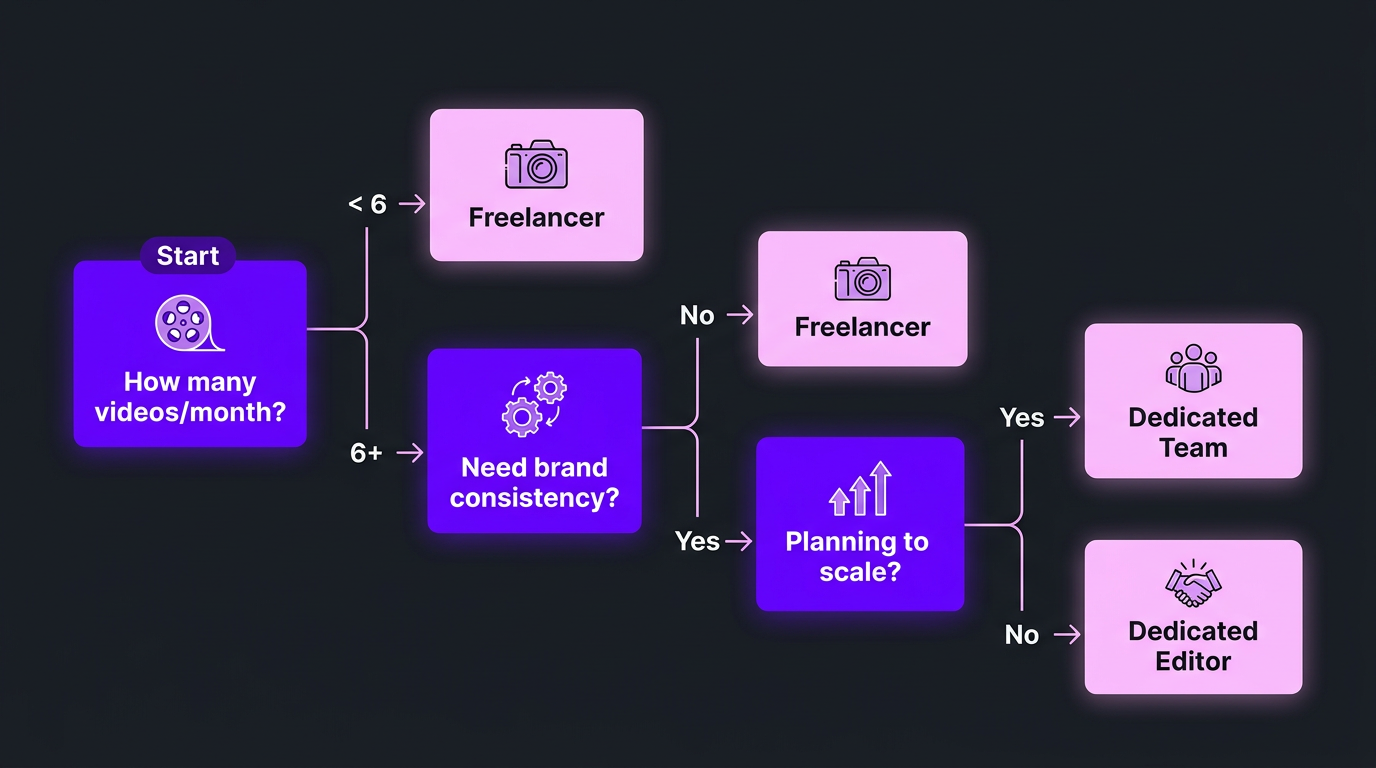
The 5 Questions to Ask Yourself
- How many videos do I produce per month? Below 6: freelancer is fine. 6+: dedicated starts making sense.
- How important is brand consistency? If every video must look and feel on-brand, dedicated wins.
- What’s my tolerance for management? Love hands-on control? Freelancer. Hate project managing? Dedicated.
- Can I afford a content gap? If missing a week of uploads has real consequences, you need reliability (dedicated).
- Am I planning to scale? If you’ll produce more content in 6 months, build the infrastructure now (dedicated).
The Hybrid Approach: Best of Both Worlds
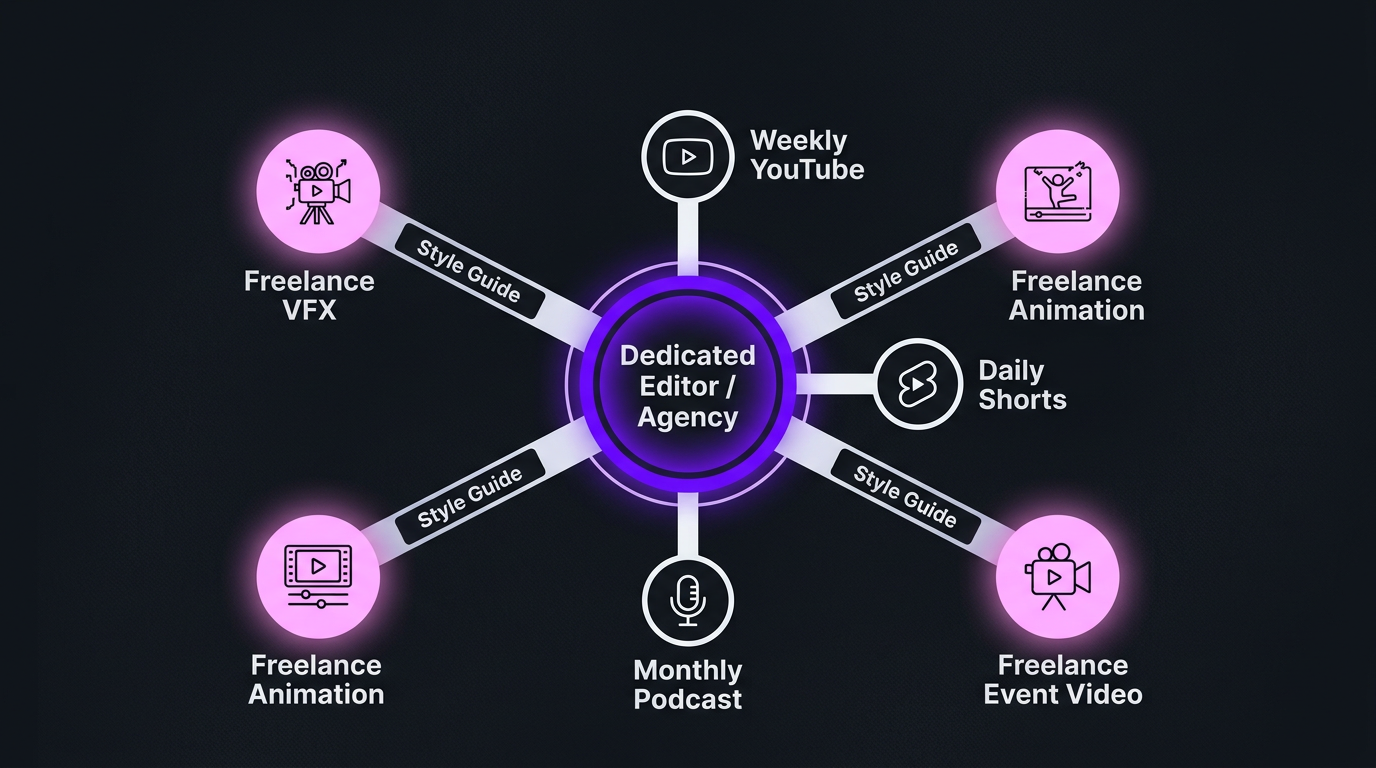
Not everything has to be either/or. Some of the smartest content operations we’ve seen use a hybrid model:
- Core content via dedicated editor: Your weekly YouTube videos, regular shorts, and flagship content go through your dedicated editor who knows your brand inside out.
- Specialist projects via freelancer: One-off animations, VFX-heavy pieces, event videos, or experimental formats go to specialist freelancers who excel in those niches.
This gives you the consistency and reliability of a dedicated relationship for your bread-and-butter content, plus the flexibility to bring in specialized talent when the project demands it.
At Increditors, several of our enterprise clients operate exactly this way. We handle their ongoing content pipeline with a dedicated team, while they bring in freelance motion designers or VFX artists for one-off brand campaigns. The key is that the dedicated team acts as the hub — maintaining style consistency even when external contributors are involved.
How to Structure a Hybrid Setup
- Identify your core content. Which videos are recurring, brand-critical, and need consistency? These go to your dedicated editor.
- Define your specialist needs. Which projects require skills outside your dedicated editor’s wheelhouse? These are freelancer candidates.
- Create a shared style guide. Even freelancers should follow your brand’s visual language. Your dedicated editor/agency can provide this document.
- Route everything through your PM. If you have a dedicated agency team, let your project manager coordinate the freelancer work too. This adds a quality control layer and maintains consistency.
Case Studies: Creators Who Made the Switch
TuMeke: From Freelancer Carousel to Dedicated Team
TuMeke is an AI-powered workplace safety platform that needed consistent video content for product marketing, customer education, and thought leadership. As a tech startup, their content was specialized — screen recordings of AI software, technical explainers, and executive interviews.
The freelancer phase: TuMeke cycled through four freelance editors over eight months. Each new editor required extensive onboarding on the product, the target audience (workplace safety managers and executives), and the specific visual style needed for B2B SaaS content. The knowledge transfer was painful every time.
Average per-video cost during the freelancer phase: $380. But when you factored in the internal team’s time briefing, reviewing, and re-briefing editors, the effective cost was closer to $600 per video.
The switch: TuMeke moved to a dedicated Increditors team — one editor and one PM assigned to their account. The onboarding took two weeks. By month two, the editor was producing content that required minimal revisions and actually understood the nuances of AI/safety technology positioning.
Results after 6 months:
- Per-video effective cost dropped from ~$600 to ~$410 (including retainer + minimal management time)
- Turnaround time cut from 5-7 days to 24-48 hours
- Video output increased from 4/month to 10/month without adding internal headcount
- Zero missed deadlines over the entire period
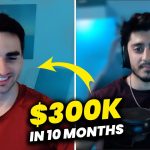
Trade with Pat: Scaling from 6 to 30 Videos Per Month
Trade with Pat, a finance education creator, was producing 6 YouTube videos per month with a reliable freelancer. The content was good, and the editor was solid. The problem was growth.
Pat’s channel was taking off, and he wanted to add Instagram Reels, YouTube Shorts, and a second long-form series. His freelancer couldn’t handle the volume, and hiring a second freelancer meant managing two relationships with no style consistency.
The switch: Pat moved to a dedicated team model. One lead editor handled his main YouTube series, a second editor handled shorts and Reels, and a project manager coordinated everything.
Results:
- Content output scaled from 6 to 30 pieces per month
- Cross-platform brand consistency achieved (every Reel looks like it belongs to the same channel as his long-form)
- Pat’s weekly management time dropped from 8 hours to under 2 hours
- Channel growth accelerated as the algorithm rewarded consistent, high-quality posting
The freelancer model served Pat well at 6 videos. It couldn’t serve him at 30. The transition wasn’t about the freelancer being bad — it was about needing infrastructure that a single person can’t provide.
Frequently Asked Questions
A dedicated video editor is a professional assigned primarily to your account through an agency or service. Unlike freelancers juggling many clients, a dedicated editor learns your brand style, audience preferences, and workflow — delivering consistent quality without re-onboarding every project. Agencies like Increditors typically pair a dedicated editor with a project manager and QA reviewer.
Upfront, yes. Dedicated editors through agencies typically cost $2,500–$5,000+/month compared to freelancer rates of $200–$500 per video. However, when you factor in management time, ramp-up costs, missed deadlines, and quality inconsistency, the total cost of freelancing often matches or exceeds dedicated pricing at 8+ videos per month.
Consider switching when you produce 8+ videos per month, spend more than 5 hours weekly managing your editor, experience inconsistent quality between videos, have lost a freelancer mid-project, or need faster turnaround than 3-5 business days. The Increditors content creator packages are specifically designed for this transition.
Yes. Agencies offer dedicated editor models on monthly retainers — you get an editor who works primarily on your content without the overhead of a full-time hire (salary, benefits, equipment, management). This is the most popular model for creators producing 8-30 videos per month. See our pricing page for current options.
With agencies, backup editors are trained on your brand guidelines and can step in seamlessly. With freelancers, you’re on your own — one sick day or vacation can halt your content schedule. This redundancy is one of the biggest advantages of the agency-dedicated model.
Not inherently — talent exists in both models. The difference is consistency and compounding. A dedicated editor who works on your channel for months develops intuitive understanding of your pacing, audience, and brand that rotating freelancers never achieve. Over time, this compounds into measurably better content with fewer revisions.
Ready to Try the Dedicated Editor Model?
Start with a single month — no long-term contracts. See the difference a dedicated team makes for your content quality and your sanity.
Data referenced in this article comes from Payoneer’s 2025 freelancer survey, internal Increditors client data, and direct industry research. Individual results vary by content type, volume, and editor quality. For current Increditors pricing, visit our pricing page or schedule a call.