










![3D Explainer Video - ScribbleLive.mp4_snapshot_00.12_[2022.03.09_03.14.16]](https://increditors.com/wp-content/uploads/elementor/thumbs/3D-Explainer-Video-ScribbleLive.mp4_snapshot_00.12_2022.03.09_03.14.16-r7wb53mx72rxst3qcqyrfxdmeyzb5r9jbl0wbjujh4.png "3D Explainer Video – ScribbleLive.mp4_snapshot_00.12_[2022.03.09_03.14.16]")





























Updated April 2026 · 18 min read · By the Increditors Team
Here is a number that stops most business owners mid-scroll: companies that invest in professional video content see an average ROI of 87%, according to Wyzowl’s 2025 State of Video Marketing report. Yet the first question every brand asks before pressing “record” is the same one you’re asking right now — how much is this actually going to cost mea
The answer is frustratingly broad. A single edited video can cost anywhere from $50 to $50,000 depending on length, complexity, who’s doing the work, and where they’re based. That range is so wide it’s almost useless. This guide exists to narrow it down for you — with real numbers, real comparisons, and real case studies from our 1,700+ completed projects at Increditors.
Whether you’re a startup founder trying to launch your first YouTube channel, a marketing director budgeting for Q3, or a creator shopping for a reliable editing partner, this guide will give you the clarity you need to make a smart investment in video editing in 2026.
What’s Inside This Guide
- Why Video Editing Costs Vary So Much in 2026
- Freelancer vs Agency vs In-House: Cost Breakdown
- Video Editing Pricing Models Explained
- Cost by Video Type and Complexity
- Geographic Pricing Differences
- Hidden Costs You Need to Know About
- How to Budget for Professional Video Editing
- 15 Ways to Reduce Video Editing Costs Without Sacrificing Quality
- Case Study: Real Client Cost Breakdowns
- Frequently Asked Questions
- Get a Custom Quote for Your Project
Why Video Editing Costs Vary So Much in 2026
Video editing isn’t a commodity. Two projects that look identical on the surface can carry wildly different price tags based on what’s happening beneath the timeline. Understanding the variables puts you in a stronger negotiating position and helps you allocate budget where it actually moves the needle.
The Core Cost Drivers
Footage volume and organization. An editor who receives four hours of raw, unlogged footage spends significantly more time than one who gets 45 minutes of clearly labeled clips. If you’re sending a mess, expect to pay for the cleanup.
Complexity of the edit. A straight-cut talking head with lower thirds is a fundamentally different job than a fast-paced product launch video with motion graphics, 3D text, sound design, and split-screen transitions. Complexity scales cost exponentially, not linearly.
Turnaround time. Need it in 24 hours Budget an extra 25–50% on top of the standard rate. Rush fees exist because your project displaces other scheduled work.
Revision rounds. Most professionals include 2–3 revision rounds in their quote. Beyond that, each round adds $50–$200+ depending on the scope of changes. The best way to minimize revisions is to provide a detailed creative brief upfront.
Deliverable formats. A single 16:9 YouTube video is one output. If you also need a 9:16 Reel, a 1:1 carousel clip, a 15-second ad cut, and a thumbnail — that’s five deliverables from one project, and each requires dedicated editing time.
Editor experience and location. A senior editor in New York with 10 years of experience and a client list that includes Fortune 500 brands charges differently than a talented junior editor in Manila. Both can produce excellent work, but the price gap reflects market rates, overhead, and demand.
Video editing cost is driven by five factors: footage volume, edit complexity, turnaround speed, revision rounds, and number of deliverables. Controlling even two of these significantly reduces your bill.
Freelancer vs Agency vs In-House: Cost Breakdown
This is the decision that shapes your entire video budget. Each model has clear advantages and tradeoffs. The right choice depends on your volume, quality standards, and how much management overhead you’re willing to absorb.
Freelancers offer the lowest per-video cost. They work well for one-off projects, simple edits, or when you’re still figuring out your content style. The tradeoff is reliability. If your freelancer gets sick, takes a vacation, or ghosts you mid-project (it happens more than anyone admits), you have no backup plan.
Agencies cost more per video but deliver infrastructure you don’t have to build yourself. At Increditors, our clients get a dedicated project manager, access to a team of 20+ specialists (editors, motion designers, colorists, sound engineers), and quality control on every deliverable. When you’re producing 8–20 videos per month, that structure pays for itself in time saved and consistency gained. See our full service pricing for transparent rate cards.
In-house editors make sense at scale — typically when you need daily content or deeply integrated brand knowledge. But the math is often worse than people expect. A mid-level editor’s salary ($50,000–$85,000), plus software licenses ($3,000–$5,000/year), plus hardware ($3,000–$10,000 upfront), plus benefits, training, and management time adds up fast. And you’re still limited to one person’s skill set and availability.
Freelancers are cheapest per video, agencies are cheapest per unit of management time, and in-house is cheapest only at very high volume (15+ videos/month). Match the model to your actual output, not your aspirational content calendar.
Video Editing Pricing Models Explained
Not every editor or agency charges the same way. The pricing model you choose affects not just cost, but predictability. Surprise invoices kill budgets — and client relationships.
Per-Project Pricing
A flat fee for a defined scope. You agree on deliverables, length, revisions, and timeline before work begins. This is the safest model for clients because the price is locked. It’s common for one-off projects like event recaps, brand films, and explainer videos. Typical range: $200–$10,000+ depending on complexity.
Hourly Rate
The editor bills for time spent. Rates range from $25/hour for junior editors in lower-cost regions to $150–$250/hour for senior editors in major markets. The risk here is scope creep — a “quick 2-hour edit” can quietly become 8 hours if the brief isn’t airtight. Always request time estimates and caps.
Day Rate
Common for on-set editors or when you need someone dedicated to your project for a full day. Expect $350–$1,500/day. This works well for production-heavy shoots where the editor is assembling rough cuts in real time.
Monthly Retainer
You commit to a set number of videos per month at a discounted rate. Retainers provide budget predictability and priority access to your editing team. Typical retainers range from $1,500–$10,000/month for 4–20 videos.
Subscription / Unlimited Model
A newer model gaining traction in 2026. You pay a flat monthly fee and submit as many editing requests as your plan allows, processed sequentially. Increditors offers unlimited video editing plans starting at competitive rates — ideal for brands that produce content weekly and want zero billing surprises.
Per-project pricing gives you the most control. Retainers and subscriptions give you the best per-video economics at scale. Avoid hourly billing unless you have extremely tight scopes and trust the editor to be efficient.
Not Sure What Pricing Model Fits Your Branda
Our team has helped 300+ businesses find the right editing plan for their volume, budget, and content goals. We’ll give you a straight answer in 15 minutes.
Cost by Video Type and Complexity
What you’re making matters as much as who’s making it. A 60-second Instagram Reel and a 20-minute YouTube deep-dive sit in completely different cost brackets even when the same editor produces both.
YouTube video editing makes up roughly 60% of the market demand in 2026. The format has matured — audiences expect fast pacing, clean graphics, and professional color grading even from solo creators. A talking-head video that might have cost $75 to edit in 2021 now runs $150–$500 because viewer standards have risen and the edit itself has become more layered.
Explainer and animated videos remain the most expensive per minute because every second of screen time requires deliberate design work. There’s no raw footage to cut — every visual element is built from scratch or composited from stock and custom assets.
Training and course content is a strong middle ground for brands looking to scale internally. The per-module cost is moderate, and the content has a long shelf life. A well-produced training video can serve your team for 2–3 years before needing updates.
YouTube long-form and social ads make up the bulk of editing spend for most businesses. Prioritize the formats that drive measurable results for your brand, and cut the vanity content that doesn’t convert.
Geographic Pricing Differences
Where your editor is based significantly impacts cost. Remote work has made global hiring the norm for video editing, and smart brands take advantage of the price differentials while maintaining quality standards.
A few nuances the table doesn’t capture. First, the best editors in “lower cost” regions often charge premium-tier rates because they know their work competes globally. Geography sets the floor, not the ceiling.
Second, communication and timezone gaps introduce hidden costs. A $15/hour editor who takes 3 days to respond to feedback and misinterprets your notes half the time is more expensive than a $60/hour editor who delivers right the first time.
Third, agencies with multi-location teams — like Increditors, with offices in the US, UK, and UAE — can offer premium quality at competitive rates by structuring workflows across timezones. Your project manager sits near your timezone, while production happens around the clock.
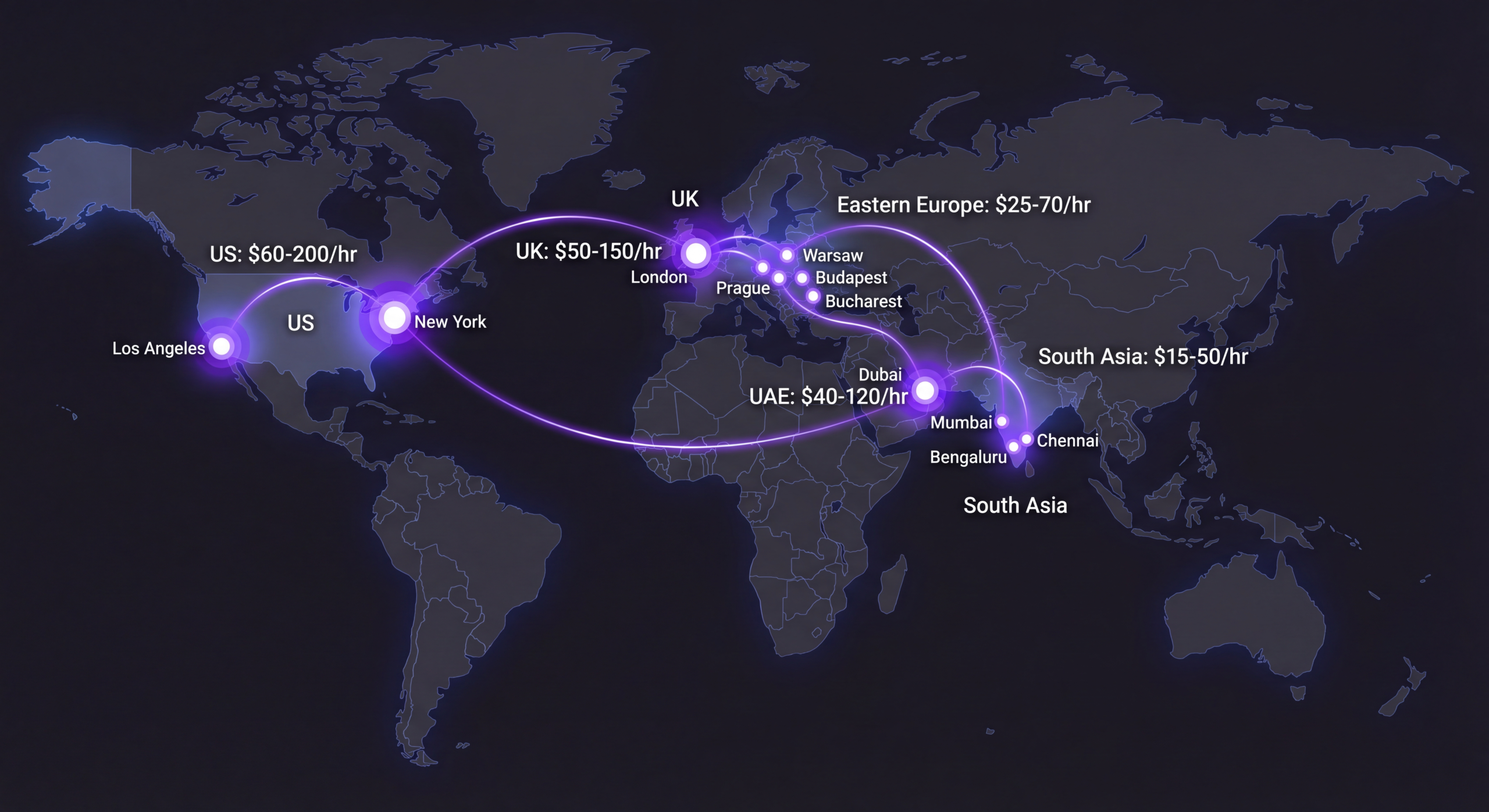
Geographic arbitrage works, but only when paired with strong project management and clear communication standards. The cheapest editor is never the one who costs the least per hour — it’s the one who nails the deliverable fastest with the fewest rounds of feedback.
Hidden Costs You Need to Know About
The quoted price for video editing rarely tells the full story. These are the line items that inflate your actual spend — often by 20–40% above the initial estimate.
Stock Assets
Music licenses, stock footage, and stock photos aren’t always included. A single high-quality music track from Artlist or Epidemic Sound runs $15–$30/month on a subscription, but individual licensing can cost $50–$500 per track. Stock footage clips range from $20–$200 each. If your editor uses premium assets, clarify who covers the cost upfront.
Revision Overages
Most editors and agencies include 2–3 revision rounds. After that, expect $50–$200 per additional round. The fix: provide a thorough creative brief and consolidated feedback (not five separate emails with contradicting notes from different team members).
Format Conversions and Resizing
You commissioned a 16:9 YouTube video, but now you also need it in 9:16 for TikTok, 1:1 for Instagram feed, and 4:5 for LinkedIn. Each reformat takes 20–60 minutes of dedicated editing time. Budget $30–$150 per additional format.
Rush Fees
Standard turnaround for most edits is 3–7 business days. Need it in 24–48 hours Add 25–50% on top of the base rate. Same-day delivery (if available at all) can double the price.
Color Grading and Sound Design
Basic color correction is usually included. Cinematic color grading — the kind that makes your brand film look like it belongs on a streaming platform — is a specialist skill that adds $100–$500+ per video. Professional sound design and mixing runs similarly.
Project Management and Communication
With freelancers, you are the project manager. Your time spent briefing, reviewing, giving feedback, and chasing deliverables has a cost even if it never shows up on an invoice. At an agency like Increditors, project management is built into the fee — saving you 3–8 hours per project in coordination alone.
Add 20–30% to any quoted price to account for stock assets, revisions, reformats, and coordination time. Better yet, negotiate an all-inclusive package upfront so there are no surprises.
How to Budget for Professional Video Editing
Budgeting for video editing without a framework is guesswork. Here’s a practical model you can adapt to any business size.
Step 1: Define Your Content Cadence
How many videos per month do you need Be realistic, not aspirational. If you’ve been producing 2 videos per month, don’t budget for 20 just because your competitor does. Start with what you can sustain.
Step 2: Categorize by Complexity
Not every video needs the same level of editing. Split your monthly output into tiers. A typical content brand might produce 4 “standard” YouTube edits, 8 short-form clips, and 1 premium brand piece per month. Each tier carries a different cost.
Step 3: Choose Your Model
Match the pricing model to your cadence. Under 4 videos/month — per-project pricing keeps you flexible. 4–12 videos/month — a retainer or subscription gives better economics. 12+ videos/month — consider a hybrid of in-house for daily content and agency for premium pieces.
Step 4: Add a 25% Buffer
Unexpected projects, rush jobs, and scope changes happen every month. A 25% buffer prevents budget panic in week three.
Sample Monthly Budgets
Startup or solo creator (2–4 videos/month): $500–$2,000. Focus on YouTube and one social platform. Freelancer or entry-level agency. Check Increditors’ startup plans for tailored pricing.
Growing brand (4–10 videos/month): $2,000–$8,000. YouTube + multi-platform social. Mid-tier agency with a dedicated editor. This is the sweet spot where agency economics start beating freelancer management costs.
Enterprise (10–30+ videos/month): $8,000–$25,000+. Full content engine: YouTube, social, ads, internal training, events. Enterprise agency with specialized team. Increditors’ enterprise solutions support this scale with dedicated account management.
Budget by cadence and complexity, not by an arbitrary monthly number. Add 25% for unexpected work. Review quarterly and adjust based on actual production data, not assumptions.
15 Ways to Reduce Video Editing Costs Without Sacrificing Quality
- Batch your projects. Sending 4 videos at once is cheaper per unit than sending them one at a time. Editors can optimize their workflow when they process similar content in batches.
- Write a detailed creative brief. The single highest-ROI thing you can do. A clear brief reduces revision rounds, which reduces cost. Include references, timestamps, and specific direction — not “make it pop.”
- Organize your footage before handing it off. Label files, mark selects, and provide a rough assembly or at least timestamps for key moments. You’ll save 1–3 hours of editor time per project.
- Invest in good audio at the source. Fixing bad audio in post costs $50–$200+ per video and still never sounds as good as clean original recording. A $200 microphone pays for itself in 2–3 edits.
- Create brand templates. Intros, outros, lower thirds, and transition styles that your editor can reuse across every video. Template creation is a one-time cost ($200–$800) that saves $50–$150 on every subsequent edit.
- Limit revision rounds. Consolidate feedback from all stakeholders into one document per round. Five people sending conflicting notes = expensive chaos.
- Use a subscription model. Unlimited editing subscriptions provide predictable pricing and typically cost 20–30% less per video than per-project billing at similar volumes.
- Repurpose content. A single 20-minute YouTube video can yield 5–10 short-form clips, a podcast episode, blog pull quotes, and social graphics. Edit once, distribute everywhere.
- Shoot with editing in mind. Good lighting eliminates color correction time. Clean backgrounds reduce rotoscoping work. Consistent framing means fewer awkward transitions.
- Build a long-term relationship with your editor or agency. Editors who know your brand, style, and preferences work faster and require less direction over time. Loyalty often unlocks better rates.
- Separate “hero” content from “volume” content. Not every video needs cinematic treatment. Apply premium editing to your flagship content and keep daily social posts clean but simple.
- Provide reference videos. Showing your editor an example of what you want is 10x more effective than describing it in words. Save both of you time and frustration.
- Agree on a style guide early. Fonts, colors, pacing, music style, and graphic treatments should be documented once and followed consistently. This eliminates “creative exploration” time on every project.
- Negotiate annual commitments. If you know you’ll need editing every month, negotiate an annual rate. Most agencies offer 10–20% discounts for 12-month contracts.
- Use AI tools for the grunt work. Auto-transcription, rough cuts, and silence removal tools (Descript, CapCut, Adobe Podcast) can save 1–2 hours per video on pre-editing tasks. Your human editor then focuses on the creative work that actually matters.
The biggest cost savings come before the editor touches your footage: organized files, clear briefs, clean audio, and established templates can reduce your editing bill by 25–40% with zero impact on quality.
Case Study: Real Client Cost Breakdowns
Theory is useful, but numbers from real projects are better. Here are three client scenarios from our work at Increditors — with actual production context and results.
Case Study 1: Riley Coleman — Evolved Traders
Riley came to Increditors as a growing finance and trading educator on YouTube. He needed consistent, high-retention editing for long-form content (15–30 minutes per video) with fast-paced cuts, on-screen data overlays, and custom motion graphics for chart breakdowns.
Monthly volume: 8–12 YouTube videos plus short-form clips for Instagram and TikTok. Editing model: Monthly retainer with dedicated editor and motion designer. Key deliverables: Full edits with custom thumbnails, branded intros, chart animations, and multi-platform reformats.
Results: Over the engagement, Riley’s channel grew to 120,000+ subscribers and generated over $390,000 in revenue directly attributable to his video content. The editing investment paid for itself multiple times over through course sales, community memberships, and sponsorship deals. Professional editing didn’t just make his videos look better — it kept viewers watching longer, which triggered YouTube’s algorithm to push his content to new audiences.
Case Study 2: TuMeke Ergonomics
TuMeke is a B2B SaaS company in the workplace safety space. They needed video content for product demos, customer testimonials, and conference presentations — not flashy creator content, but clear, authoritative brand storytelling.
Monthly volume: 3–5 videos, mixed types. Editing model: Per-project pricing with retainer discount. Key deliverables: Product walkthroughs, animated explainers, customer interview edits, and trade show reels.
Results: TuMeke saw a 31% uplift in brand awareness measured through direct survey data after rolling out their professional video library. Their sales team reported shorter deal cycles because prospects arrived to calls already educated by the video content. In B2B, video doesn’t just build awareness — it does the heavy lifting of explanation that used to require a 30-minute sales demo.
Case Study 3: eSafetyFirst
eSafetyFirst operates in the competitive cybersecurity education space, where dozens of brands compete for the same audience’s attention. Their challenge wasn’t creating content — it was creating content that visually stood apart from low-budget competitors.
Monthly volume: 6–8 videos. Editing model: Monthly retainer. Key deliverables: Polished educational videos with custom graphics, branded templates, and SEO-optimized thumbnails.
Results: Professional editing helped eSafetyFirst outperform competitors in online visibility and engagement. Their videos consistently ranked on the first page for target keywords, driving organic traffic that reduced their paid acquisition costs. The investment in editing quality became a competitive moat — competitors couldn’t replicate the production value without matching the investment.
ROI Comparison: Cost vs Value Generated
Across 6+ years and 1,700+ projects, the pattern is consistent: brands that invest in professional editing don’t just get prettier videos. They get measurably better business outcomes — more views, more engagement, more revenue. With over 300 million video views generated and more than $50 million in revenue attributed to client content, the data at Increditors backs this up at scale.
 Our client roster includes names like Netflix, Unilever, and hundreds of growing brands across the US, UK, and UAE.
Professional video editing isn’t a cost center — it’s a revenue multiplier. The clients who see the highest ROI are the ones who commit to consistent quality over months and years, not one-off projects.
Frequently Asked Questions
How much should I budget for video editing per montha
Monthly budgets vary widely based on volume and complexity. Small businesses typically spend $500–$2,000/month for 2–4 videos. Mid-size companies invest $2,000–$8,000/month for regular content across multiple platforms. Enterprise brands running multi-channel campaigns may budget $8,000–$25,000+ monthly. Subscription models like Increditors’ unlimited editing plans offer predictable costs that eliminate billing surprises.
What’s the difference between cheap and expensive video editinga
Cheap editing ($50–$150/video) typically involves basic cuts, minimal color correction, and template-based graphics. Expensive editing ($500–$5,000+/video) includes advanced color grading, custom motion graphics, sound design, multi-cam synchronization, and strategic storytelling. The difference shows in audience retention rates, brand perception, and ultimately the revenue your content generates. You’re not paying for editing time — you’re paying for expertise, creative judgment, and viewer outcomes.
Should I hire a freelancer or agency for video editinga
Freelancers work well for one-off projects under $1,000 or when you need a very specific style. Agencies are better for ongoing content needs, brand consistency, and projects requiring multiple specialists. Agencies also provide project management, quality control, and backup resources — if one editor is unavailable, your project doesn’t stall. For most businesses producing 4+ videos per month, an agency delivers better value per dollar when you factor in management time and consistency.
How do I know if I’m getting good value for video editing costsa
Measure value by results, not just cost. Track audience retention rates, subscriber growth, lead generation, and revenue attribution. A $500 video that generates $10,000 in sales delivers far better value than a $50 video that gets 200 views and zero conversions. Before hiring, request portfolios and case studies. Ask for references from clients in your industry. And compare at least 3 providers before committing.
What factors affect video editing pricing the mosta
Five factors dominate: (1) video length and complexity, (2) turnaround time, (3) volume of raw footage, (4) motion graphics and VFX requirements, and (5) number of revision rounds. Rush jobs add 25–50% to base cost. Complex motion graphics can double or triple the price. Organized footage and clear briefs are the easiest ways to keep costs predictable.
How can I reduce video editing costsa
The top five cost reducers: batch similar projects together, provide organized footage with clear briefs, limit revision rounds through consolidated feedback, establish reusable brand templates, and use subscription-based services. Good audio at the source also saves significant post-production time and money. See our full list of 15 cost-reduction strategies above.
Is it cheaper to edit videos in-housea
Not always — and often not. An in-house editor costs $50,000–$85,000/year in salary plus $5,000–$15,000 in software and hardware. Add benefits, training, and management overhead and you’re at $60,000–$100,000+ annually. An agency producing the same volume may cost $30,000–$60,000/year with zero overhead, better scalability, and access to a full team of specialists instead of one person’s skill set. In-house only wins on cost at very high volumes (15+ videos/month) where the fixed cost gets spread thin enough.
What’s included in professional video editing servicesa
Professional services typically include: footage review and selection, timeline assembly, color correction and grading, audio mixing and enhancement, text overlays and lower thirds, transitions and pacing, thumbnail design, format optimization for different platforms, and 2–3 revision rounds. Premium services add motion graphics, sound design, original music, multi-platform reformatting, and strategic consultation on content performance. At Increditors, every project includes project management and quality review at no additional charge.

Ready to Get Accurate Pricing for Your Video Projectsa
No generic rate cards. No vague “starting from” estimates. Tell us what you’re building and we’ll give you a real number — tailored to your content type, volume, and goals. Over 1,700 projects delivered across Netflix, Unilever, and 300+ brands worldwide.
Free 15-minute call · No commitment · Same-day response
© 2026 Increditors — #1 Video Editing Services for Brands & Businesses. Offices in the US, UK, and UAE.
1,700+ projects completed · 300+ million video views generated · $50 million+ generated for clients.