







![3D Explainer Video - ScribbleLive.mp4_snapshot_00.12_[2022.03.09_03.14.16]](https://increditors.com/wp-content/uploads/elementor/thumbs/3D-Explainer-Video-ScribbleLive.mp4_snapshot_00.12_2022.03.09_03.14.16-r7wb53mx72rxst3qcqyrfxdmeyzb5r9jbl0wbjujh4.png "3D Explainer Video – ScribbleLive.mp4_snapshot_00.12_[2022.03.09_03.14.16]")






















In commercial visual production, few variables influence perception as strongly as camera angle. The best angle for filming the product is not a matter of taste alone—it is a strategic decision that shapes brand positioning, perceived value, trust, and conversion rate. In product cinematography and digital advertising, angle selection directly impacts how the audience interprets scale, quality, usability, and desirability.
Whether you are producing an eCommerce product demo, a launch campaign, a corporate promo, or a YouTube review, understanding camera geometry is essential. This guide breaks down the psychology, technical considerations, and professional standards behind choosing the best angle for filming the product.

Why Camera Angle Matters in Product Filmmaking
Camera angle affects three critical marketing variables:
- Perceived authority
- Perceived quality
- Perceived usability
In visual communication theory, perspective influences emotional response. A low-angle shot can make a product feel powerful. A top-down shot can make it feel minimal and lifestyle-oriented. A straight-on eye-level shot builds trust and neutrality.
The best angle for filming the product is the one aligned with your brand objective and target audience intent.
The Core Product Angles Every Brand Should Know
1. Eye-Level Angle (Neutral & Trustworthy)
An eye-level shot places the camera directly in front of the product, perpendicular to its primary surface.
Best for:
- Skincare
- Electronics
- SaaS product hardware
- Medical devices
- Corporate presentations
This angle communicates transparency and clarity. It is commonly used icorporate video editing because it avoids distortion and maintains structural integrity.
If your goal is credibility and clarity, eye-level framing is often the best angle for filming the product.
2. 45-Degree Angle (The Commercial Standard)
The 45-degree angle is the most widely used commercial product angle. It reveals depth, dimensionality, and surface design.
Best for:
- Packaging
- Beverage bottles
- Tech devices
- Luxury goods
- Retail products
This angle creates natural shadow and depth, making the product feel tactile and real. In most ad campaigns, this is considered the best angle for filming the product because it balances realism with aesthetic appeal.
High-performing video editing services frequently rely on this angle as their default for promotional cuts.
Related articles: How video production affects branding
3. Low Angle (Power & Dominance)
A low-angle shot positions the camera below the product looking upward.
Best for:
- Automotive parts
- Sneakers
- Fitness equipment
- Industrial tools
- Premium watches
This angle elevates perceived importance. It subconsciously signals strength and innovation.
When used in corporate video editing campaigns targeting authority positioning, low angles reinforce brand power.
4. Top-Down (Flat Lay) Angle
The overhead or 90-degree angle shot from directly above is ideal for lifestyle and instructional formats.
Best for:
- Food products
- Cosmetics
- Stationery
- Fashion accessories
- Recipe demonstrations
This angle is especially effective in social-first video editing services and short-form content.
It simplifies composition and enhances clarity, making it one of the best angles for filming the product in tutorial-driven marketing.
5. Macro Close-Up (Detail-Focused Angle)
This is not about direction but proximity. Macro angles highlight texture, craftsmanship, and premium details.
Best for:
- Jewelry
- Watches
- Skincare texture
- Fabric quality
- Tech ports and finishes
Luxury brands often combine macro shots with controlled lighting to emphasize material authenticity.
When perceived quality is the objective, macro work becomes the best angle for filming the product.
Choosing the Best Angle Based on Product Category
Tech Products
Use 45-degree primary framing + macro inserts. Maintain clean background contrast. Avoid extreme distortion.
Beauty & Skincare
Combine eye-level packaging shots with texture macro angles and top-down application demonstrations.
Fashion & Accessories
Use low angles for hero shots and mid-level angles for catalog clarity.
Food & Beverage
Top-down for lifestyle context, 45-degree for depth, macro for freshness detail.
Corporate & B2B Products
Eye-level and subtle 45-degree shots maintain professionalism and reduce perceived exaggeration.
The Psychological Framework Behind Product Angles
Angle selection influences:
- Authority perception
- Emotional warmth
- Luxury signaling
- Approachability
- Technical complexity
For example:
- Lower angles increase perceived importance.
- Higher angles reduce dominance and increase relatability.
- Straight-on shots increase trust and transparency.
The best angle for filming the product is therefore context-dependent. It must align with your positioning strategy.
Lighting and Angle: A Combined Strategy
Angle without lighting strategy is incomplete.
Key considerations:
- Side lighting enhances depth in 45-degree shots.
- Backlighting improves glass and transparent materials.
- Top lighting supports flat-lay product styling.
- Soft diffused light reduces harsh reflections on glossy surfaces.
Professional video editing agency teams coordinate cinematography with post-production grading to maximize the chosen angle’s impact.
Product Angles for YouTube Content
YouTube audiences demand clarity and authenticity. For product reviews and unboxings:
- Eye-level = honesty
- 45-degree = aesthetic presentation
- Handheld mid-shot = relatability
- Top-down = instructional clarity
A professional YouTube video editing agency understands pacing, angle switching, and viewer retention metrics.
Strategic angle variation increases watch time, which directly improves algorithm performance.
Angle Variation for Conversion Optimization
High-converting product videos typically include:
- Hero angle (45-degree or low)
- Utility angle (eye-level demonstration)
- Detail angle (macro)
- Lifestyle angle (contextual use)
Conversion-focused video editing company workflows ensure that each angle supports a psychological trigger in the buyer journey.
Common Mistakes When Choosing Product Angles
- Shooting everything straight-on (no dimensionality)
- Using extreme wide angles causing distortion
- Ignoring shadow direction
- Failing to match angle to brand identity
- Overusing dramatic low angles for simple products
The best angle for filming the product is rarely extreme. Precision and balance outperform exaggeration.
When to Use Motion-Based Angles
Static shots are powerful, but dynamic movement adds production value:
- Slow 180° arc for premium tech
- Slider movement for depth emphasis
- Rotating platform for eCommerce
- Tilt reveal for dramatic entry
These techniques are often implemented by advanced video editing services during both capture and post-production stabilization.
2D Explainer vs Real Product Angle
For startups and SaaS brands, sometimes a 2D explainer video replaces physical product shooting.
In that case, “angle” becomes simulated perspective through animation.
A strong video editing agency integrates 3D perspective layers and motion depth to replicate real-world dimensionality.
Corporate Video Editing and Angle Authority
In corporate video editing, angle choices communicate hierarchy and professionalism.
- Slightly elevated angles for office walkthroughs
- Eye-level for executive messaging
- Low angle for headquarters exterior shots
Brand trust increases when angle consistency aligns with corporate identity.
Why Professional Production Teams Matter
While camera angle theory can be learned, execution requires technical precision in:
- Lens selection
- Focal length management
- Lighting diffusion
- Reflection control
- Color grading
- Stabilization
- Motion pacing
This is where specialized teams make measurable differences.
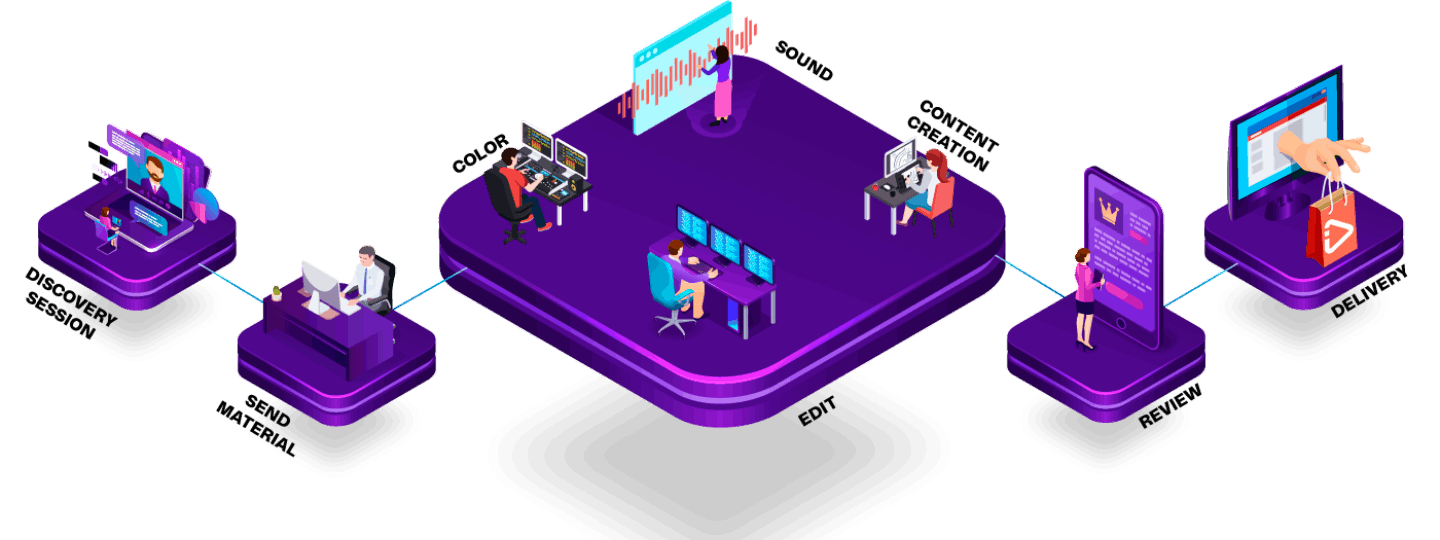
Among the most reliable providers in the industry, increditors has established itself as a leading:
- video editing agency
- video editing services provider
- video editing company
- corporate video editing specialist
- 2d explainer video producer
- YouTube video editing agency
- YouTube video editing services expert
Their production workflow integrates cinematography strategy with post-production optimization, ensuring that the best angle for filming the product translates into measurable engagement and sales performance.
Advanced Technical Considerations
For professional-level output:
- Use 50mm–85mm focal length for minimal distortion.
- Avoid wide-angle lenses below 24mm for close product shots.
- Maintain consistent horizon alignment.
- Use polarizing filters for reflective surfaces.
- Control depth of field strategically to isolate product focus.
The best angle for filming the product must also align with lens compression and depth-of-field management.
Final Strategic Takeaway
There is no single universal best angle for filming the product. Instead, there is a strategically optimal angle based on:
- Product category
- Brand positioning
- Target audience psychology
- Platform distribution (eCommerce, YouTube, Ads)
- Lighting conditions
- Conversion goals
In high-performing campaigns, angle selection is deliberate, not accidental.
If your objective is authority and trust → choose eye-level.
If your objective is premium appeal → use 45-degree depth with macro inserts.
If your objective is dominance → implement low-angle hero shots.
If your objective is instructional clarity → deploy top-down framing.
Precision in angle selection directly correlates with perceived product value and marketing effectiveness.
In competitive markets, visual strategy is no longer optional—it is decisive.