









![3D Explainer Video - ScribbleLive.mp4_snapshot_00.12_[2022.03.09_03.14.16]](https://increditors.com/wp-content/uploads/elementor/thumbs/3D-Explainer-Video-ScribbleLive.mp4_snapshot_00.12_2022.03.09_03.14.16-r7wb53mx72rxst3qcqyrfxdmeyzb5r9jbl0wbjujh4.png "3D Explainer Video – ScribbleLive.mp4_snapshot_00.12_[2022.03.09_03.14.16]")






























Motion Edits is a subscription-based video editing service suited to solo creators and small marketing teams who want fast, predictable turnaround at a flat monthly rate. Its strengths — consistent delivery, simple onboarding, and an accessible price floor — make it genuinely useful for the right buyer. Its weaknesses — limited creative strategy, shallow revision depth on complex projects, and limited visibility into editor assignments — surface quickly for brands with serious production needs. We rate it 7.5 / 10. If your video output is scaling beyond 4–6 clips per month, or if brand consistency and strategic input matter, a dedicated video editing agency will close the gap fast.
What Is Motion Edits?
Motion Edits (motionedits.com) operates on the subscription video editing model — you pay a flat monthly fee, submit raw footage through a dedicated portal, and receive edited videos back within a stated turnaround window. It sits in a growing category of “unlimited video editing” services that emerged from the unlimited graphic design playbook popularized by services like Design Pickle and Designjoy.
The core proposition is straightforward: predictable cost, no freelancer hunting, and an editor you can brief repeatedly until they understand your style. That appeals to a specific kind of buyer — content creators, early-stage startups, or lean marketing departments who need edited video without the overhead of hiring in-house or managing a rotating cast of freelancers.
Unlike a full-service production or post-production agency, Motion Edits doesn’t originate creative concepts, write scripts, or manage filming. You bring the footage; they bring the editing. That division of labor is a feature for buyers who already control their content pipeline, and a gap for those who need creative input upstream of the edit.
The Subscription Video Editing Category
Motion Edits competes in a crowded segment. Services like Tasty Edits, Vidpros, Pictory, and a dozen others occupy overlapping positions on the price-quality spectrum. What differentiates them usually comes down to three variables: editor consistency (do you get the same person every time?), turnaround speed (24 hours vs. 3 days), and scope limits (how complex a project can you actually submit?). Motion Edits scores reasonably on the first two and has documented limits on the third — which we’ll break down in detail below.
Who Uses It
Based on publicly available positioning and the nature of the service, Motion Edits’ primary users appear to be individual YouTubers and podcasters, social media managers at sub-50-person companies, and solo entrepreneurs producing educational or promotional content. The service is less common among larger brands or agencies with high-output, multi-format content demands — and for good reason, which the weaknesses section covers honestly.
How Motion Edits Pricing Works
Subscription video editing services like Motion Edits typically structure their plans around active request slots, turnaround speed, and output complexity. Exact pricing changes regularly and should be confirmed directly on their site, but here’s how the tier structure typically works at services in this category:
These ranges are illustrative benchmarks typical of the subscription video editing category — verify current Motion Edits pricing directly at their site before committing. Most services in this space bill monthly with no annual lock-in on entry plans, which is a genuine advantage over project-based agencies that require minimum retainers.
💡 Pro Tip: Always calculate cost-per-video before committing to a subscription plan. If you produce 4 videos a month at $299/mo, that’s $75/edit — competitive. But if your output drops to 1–2 videos some months, the economics flip fast. Subscription editing only wins at consistent, moderate volume.
What “Unlimited” Actually Means
“Unlimited” in subscription video editing is queue-unlimited, not simultaneously-unlimited. You can submit as many projects as you want over the month, but only one or two will be in active production at any given time. Once your editor delivers and you approve, the next project starts. This is important to understand before signing up — if you need 8 videos delivered in the same week, no subscription service will meet that demand reliably.
Understanding the true cost of video production is worth exploring in depth — see our guide on how much professional video editing actually costs before locking into any plan.
Motion Edits Strengths
Motion Edits does several things genuinely well. These aren’t marketing claims — they’re structural advantages of the subscription model when executed properly.
1. Predictable Monthly Cost
For budget-conscious creators and small business owners, knowing exactly what editing will cost every month removes a major variable from content planning. There are no per-project invoices, no scope creep surprises, and no awkward freelancer renegotiations when your project runs long. This alone makes subscription editing attractive for solo operators managing tight cash flow.
2. Consistent Editor Assignment
One of the most underrated problems in content production is style drift — when every video looks slightly different because different editors each interpret your brand guidelines slightly differently. Services that assign a consistent editor (and Motion Edits appears to follow this model) solve this problem over time. The longer the relationship, the less you need to brief; the editor learns your pacing, cuts, text styles, and format preferences.
3. Fast Onboarding
Subscription video editing services are built for speed-to-start. You don’t spend weeks in procurement, comparing proposals, or sitting on discovery calls before you can submit your first video. Most services — including Motion Edits — let you sign up, submit a brief, and receive your first draft within days. For someone pivoting from DIY editing or a recently departed freelancer, that speed matters.
4. Defined Turnaround Windows
Freelancers miss deadlines. Agencies can run slow when projects overlap. Subscription services are operationally incentivized to hit their stated turnaround because their entire product positioning rests on reliability. Motion Edits, like most services in this category, commits to a specific delivery window by plan tier. That accountability is real — if they miss it consistently, subscribers cancel. The market disciplines them toward reliability.
5. No Long-Term Contract Required
Most subscription video services — Motion Edits included — operate on month-to-month billing. You can pause or cancel without penalty (check specific terms, as cancellation policies vary). This lowers risk considerably versus signing a 6-month agency retainer. If output needs or quality expectations change, you’re not locked in.
6. Good Entry-Level Value
At the starter tier, Motion Edits delivers reasonable quality editing at a cost point that’s genuinely hard to beat with one-off freelancer hiring on platforms like Upwork or Fiverr — especially when you factor in the management overhead of finding, vetting, briefing, and iterating with a new freelancer each time. For a consistent 2–4 video-per-month output with clear creative direction already prepared, the ROI is solid.
💡 Pro Tip: The best way to evaluate any subscription editing service is to submit their “hardest” use case in trial: your most complex video format with tight branding requirements. If the first draft is 80%+ there, the service will compound well. If it’s 50%, no amount of revisions will fix the structural mismatch.
Motion Edits Weaknesses
Every service has genuine limitations. Motion Edits’ weaknesses are real — and they matter more the higher the production stakes get.
1. No Strategic Creative Layer
Motion Edits edits. It doesn’t think. There’s no creative director reviewing whether your video structure is hitting its conversion goal, no strategist asking why your retention drops at 0:45, and no senior editor raising a flag when your thumbnail concept conflicts with your content hook. For YouTube channels where watch time and click-through rate determine channel growth, this gap compounds over months into measurable lost performance.
This is arguably the single largest structural difference between subscription editing and a proper video editing agency. Agencies bring editorial perspective; subscription services bring execution.
2. Complex Projects Hit a Ceiling
Subscription editing services are optimized for repeatable, medium-complexity projects — talking-head YouTube videos, social media clips, podcast visuals, product demo cuts. They’re not built for multi-camera event coverage, feature-length brand documentaries, complex motion graphics suites, or heavily color-graded commercial work. Submitting those kinds of projects into a subscription model results in either slow turnaround, degraded quality, or scope disputes — often all three.
3. Editor Visibility Is Limited
Most subscription services — and this appears true for Motion Edits — don’t publicize the experience level, reel, or professional background of the editors on their platform. You’re told you have “a dedicated editor” but not who that editor is, what they’ve worked on, or what software and techniques they specialize in. For brands where editor experience directly impacts output quality (commercial, narrative, branded content), that opacity is a problem.
4. Revision Communication Can Be Slow
The asynchronous nature of subscription editing means revision cycles are slower than working directly with an editor in real time. You leave comments, wait for the editor to re-enter your queue, and receive an update typically the next day. For time-sensitive campaigns — event recaps, product launches, reactive social content — this cycle time creates friction that faster or more direct working relationships solve immediately.
5. Inconsistency at Scale
Editor consistency is a genuine strength at low volume, but it becomes fragile at higher output. When your assigned editor is unavailable, on vacation, or departs the platform, you may be reassigned without notice. Teams that have relied on a single editor for months suddenly face a style reset — re-briefing a new editor from scratch, often mid-campaign. This risk is endemic to the subscription model and rarely disclosed upfront.
6. Limited Integration Into Broader Production Workflows
Subscription editing works best as a standalone service. It doesn’t naturally integrate with production planning, distribution strategy, or analytics review. Brands managing complex content programs often find that a subscription editor is one more vendor to manage rather than a true production partner — widening the coordination overhead rather than reducing it.
Motion Edits vs. Increditors: Side-by-Side Comparison
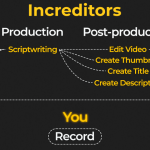
Increditors is a video-first premium agency with dedicated senior editor teams and a strategy layer built into every engagement. The comparison below isn’t about which service is “better” in the abstract — it’s about which one fits which stage of a video program.
This comparison isn’t meant to dismiss Motion Edits — it’s meant to show where the fork in the road is. If you’re producing 4 Instagram Reels and 2 YouTube videos per month with a well-defined style guide, Motion Edits will serve you well. If you’re a brand with performance targets, multi-format deliverables, and a content operation that needs to scale, Increditors’ approach — dedicated teams, strategic layer, deeper editorial partnership — closes the gap in measurable ways.
For a broader look at how subscription services stack up across the category, our guide on unlimited video editing services compared in 2026 covers the full landscape.
Who Is Motion Edits Actually Right For?
Being honest about this matters. Motion Edits is a genuinely good service for specific buyer types. It’s the wrong choice for others — and saying so directly is more useful than hedging.
Motion Edits Is a Good Fit If:
You’re a solo creator with a consistent upload schedule. YouTubers, podcasters, and independent educators who publish 2–6 videos per month and already have a clear style guide will find the subscription model efficient and cost-effective. The main value proposition — predictable cost, consistent editor, fast delivery — maps well to this use case.
You’re a lean startup or small marketing team handling mostly social content. Teams of 1–5 producing Instagram Reels, LinkedIn clips, or short product demos don’t need a full agency infrastructure. Motion Edits gives them professional editing output without the overhead of hiring, managing, or retaining in-house post-production talent.
You have a tight budget and need to move fast. If your monthly video budget sits under $400 and you need edited output — not strategic input — Motion Edits delivers reasonable value at that price point. Don’t expect agency-tier creative thinking; expect reliable execution of clear briefs.
You’re transitioning away from freelancer chaos. If you’ve been managing 2–3 Upwork freelancers with inconsistent quality and missed deadlines, Motion Edits’ operational reliability is a genuine upgrade. Same editor, clear turnaround, one invoice.
Motion Edits Is NOT a Good Fit If:
Your video output drives revenue directly. SaaS product demos, brand documentaries, investor pitch videos, and sales enablement content have real money riding on quality and strategic clarity. Subscription editing at volume pricing isn’t built for those stakes.
You need complex motion graphics, VFX, or multi-camera editing. Subscription services handle straightforward assembly edits well. Anything requiring After Effects suite work, advanced color science, or multi-source sync across 4+ cameras will either be out of scope, slow, or below the quality threshold your project needs.
Your brand identity is tight and performance metrics matter. If you A/B test video formats, track retention curves, and optimize thumbnails against click-through rate, you need an editing partner who thinks beyond the technical brief. Subscription editors execute; they don’t iterate with you on content strategy.
You need guaranteed delivery for campaign launches. Time-critical campaigns — product launches, events, quarterly brand pushes — require commitment and coordination that the asynchronous queue model doesn’t reliably provide. One hiccup in the revision cycle can push delivery past your launch window.
What Motion Edits Could Improve
A fair review includes a genuine wishlist — not manufactured complaints, but areas where the service could meaningfully improve without abandoning its core model.
More Transparency on Editor Qualifications
Subscribers shouldn’t have to take editor quality on faith. Sharing editor backgrounds — even anonymized skill profiles covering software expertise, years of experience, and content specialization — would let buyers make more informed decisions and build trust faster. This is table stakes in a market where quality differentiation is opaque.
A Light Performance Feedback Loop
Even basic performance feedback — “this video’s retention was unusually high; here’s what the editor did differently” — would add meaningful value without fundamentally changing the service model. Some subscription services have started incorporating this. It would differentiate Motion Edits from the purely transactional end of the market.
Editor Continuity Guarantees
A clear policy on what happens when your dedicated editor leaves or is unavailable — along with a transition process that preserves accumulated style knowledge — would address one of the service’s most common pain points without requiring structural changes.
Alternatives Worth Considering
If Motion Edits isn’t the right fit, here are the main alternatives by buyer type:
Choosing between these comes down to your monthly output volume, project complexity, and how tightly video performance is tied to business outcomes. For further reading on how to evaluate the options, see our breakdown of video editing agency vs. freelancer — a comparison that covers the trade-offs in detail.
Frequently Asked Questions
Is Motion Edits worth it for YouTube channels?
For channels producing 2–6 videos per month with a defined style guide and editorial voice, Motion Edits offers genuine value — consistent editing, fast turnaround, and predictable cost. It’s less suited to channels where format experimentation, thumbnail optimization, and retention-based editing decisions are central to growth strategy. If your channel is in active testing mode, you’ll outgrow a pure execution service quickly.
How does Motion Edits compare to hiring a freelance video editor?
The core advantage of subscription editing over freelancers is operational reliability — one invoice, no sourcing friction, defined turnaround, consistent assignment. The disadvantage is depth: a dedicated freelancer who knows your brand intimately over 12 months often delivers stronger creative results than a subscription editor capped by platform scope limits. For lower-volume, budget-constrained teams, Motion Edits wins on simplicity. For higher-stakes projects, a trusted freelancer or agency relationship adds more value.
What kinds of videos does Motion Edits handle best?
Motion Edits is optimized for single-camera talking-head content, podcast clips, social media shorts, educational tutorials, and product demos. These formats suit the subscription editing model well: consistent structure, defined briefs, limited motion graphics requirements. Multi-camera shoots, VFX-heavy content, complex documentary-style editing, or brand films with tight narrative requirements will push against the service’s practical limits.
Can I pause or cancel a Motion Edits subscription?
Most subscription video editing services offer pause and cancel options — check Motion Edits’ current terms directly, as policies and conditions vary and can change. The general industry norm for services in this category is month-to-month billing with the ability to pause for a reduced holding fee or cancel at the end of the billing cycle. Confirm this before subscribing, especially if your content output is seasonal.
What’s the biggest risk of using Motion Edits for brand content?
The most commonly reported risk in subscription video editing is editor turnover — when your assigned editor leaves, all the accumulated brand knowledge and style memory goes with them. A secondary risk is scope creep: what starts as “simple” editing becomes increasingly complex over time as your content evolves, but the subscription pricing structure doesn’t flex with it. Brands with high creative standards often find themselves either repeatedly pushing up against scope limits or paying for a higher tier than their volume alone would justify.
Verdict & Final Rating
Motion Edits earns a solid 7.5 out of 10. That’s an honest score — not inflated, not a takedown.
The service works as described for its primary audience. Individual creators and lean marketing teams who need reliable, fast, affordable video editing — and who already come to the table with a clear creative brief — will get good value here. The subscription model’s structural advantages (predictable cost, editor consistency at low-medium volume, operational simplicity) are real and meaningful for the right buyer.
The 2.5 points left on the table come from the gaps that are genuinely important for a significant portion of potential buyers: no strategic creative layer, limited editor transparency, scope ceilings that surface at moderate complexity, and the inherent fragility of editor continuity at any volume. These aren’t complaints about Motion Edits specifically — they’re structural trade-offs in the subscription editing model that any honest review needs to name.
The decision framework is simple: if you’re producing consistent, medium-complexity content at 2–10 videos per month, Motion Edits is a legitimate and efficient choice. If your video program has growth targets, a brand with stakes attached, or output complexity above the service’s natural ceiling, the economics of a dedicated video editing agency start making more sense — not as an upsell, but as a different product for a different stage of scale.
Ready for Video That Actually Converts?
Tell us about your project and we will put together a custom plan.