









![3D Explainer Video - ScribbleLive.mp4_snapshot_00.12_[2022.03.09_03.14.16]](https://increditors.com/wp-content/uploads/elementor/thumbs/3D-Explainer-Video-ScribbleLive.mp4_snapshot_00.12_2022.03.09_03.14.16-r7wb53mx72rxst3qcqyrfxdmeyzb5r9jbl0wbjujh4.png "3D Explainer Video – ScribbleLive.mp4_snapshot_00.12_[2022.03.09_03.14.16]")




















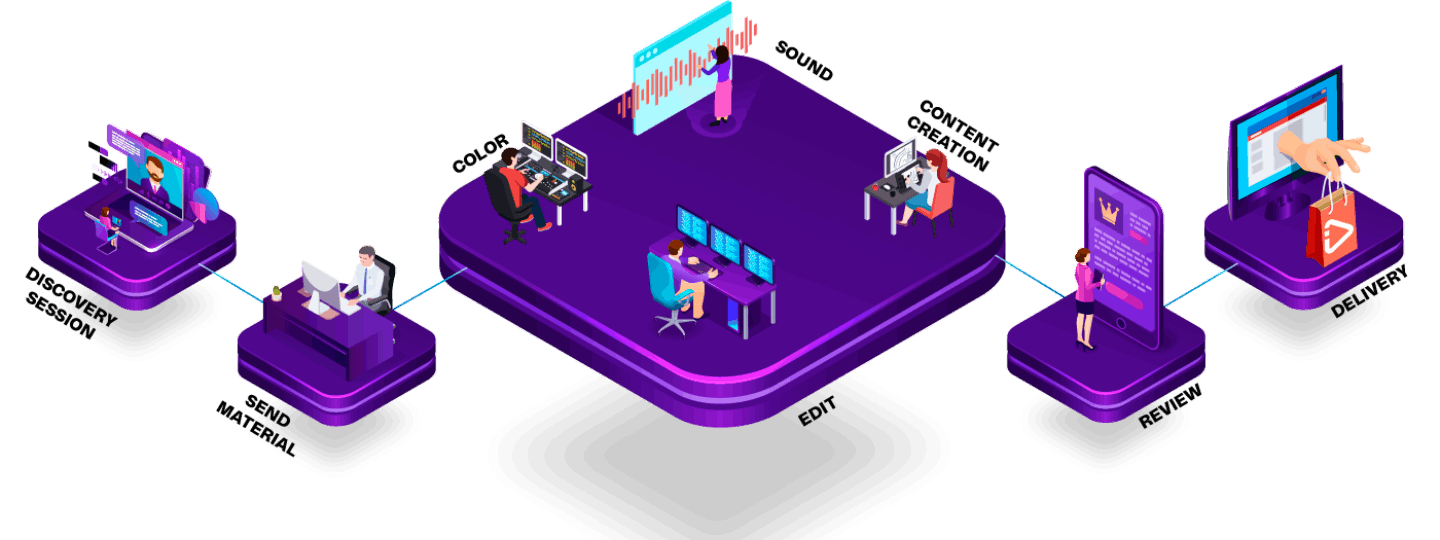










A video editing team as a service replaces your in-house post-production headcount with a dedicated external team — senior editors, motion designers, and a project lead — available on a monthly retainer. You send raw footage; they return brand-consistent, polished video on a predictable schedule. It is the fastest way to scale video output without hiring, training, or managing a creative department in-house.
- What “Video Editing Team as a Service” Actually Means
- How the Service Delivery Model Works
- The 6 Business Scenarios Where This Model Wins
- What to Look for in a Provider: 7 Non-Negotiable Criteria
- Pricing Breakdown: What You Are Actually Paying For
- Video Editing Team as a Service vs. The Alternatives
- 7 Mistakes Brands Make When Buying This Service
- Frequently Asked Questions
- Verdict
What “Video Editing Team as a Service” Actually Means
The phrase gets used loosely, so let’s define it precisely. A video editing team as a service (sometimes called VETaaS, post-production as a service, or creative production outsourcing) is a model where a company — typically a brand, agency, SaaS business, or media operator — pays a monthly retainer to access a pre-built, fully staffed team of video post-production professionals. The client does not recruit, hire, onboard, or manage individual editors. Instead, they interact with a team that already functions as a unit.
The “as a service” framing is deliberate and meaningful. It borrows from the SaaS (software as a service) playbook: predictable monthly cost, a defined scope of deliverables, a service-level agreement, and the ability to scale up or cancel without the friction of employment contracts. The analogy is not perfect — video production involves real creative judgment, not just compute cycles — but the economic logic is similar. You pay for access to a capability, not for headcount.
Critically, this model is distinct from a video editing subscription service, which typically gives you access to a pool of anonymous freelancers rotating through your queue. A team-as-a-service relationship means the same people — or the same stable core — work on your account consistently. They learn your brand voice, your preferred color grades, your motion design system, and your approval workflow. Over time, that institutional knowledge compounds into dramatically faster turnarounds and fewer revision cycles.
The Typical Team Composition
While team structures vary by provider, a well-configured video editing team as a service generally includes: a senior lead editor who owns quality and brand consistency; one or more mid-level editors who handle volume work and cut-downs; a motion designer or animator for graphics, lower-thirds, and transitions; a colorist (sometimes the same person as the senior editor at smaller shops); and a project or account manager who acts as the single point of contact for the client. Some providers also include a sound designer or audio engineer, which matters more than most buyers initially realize — bad audio kills engagement regardless of how sharp the visuals are.
The size of the active team on your account at any given time depends on your output volume and the provider’s operational model. What matters is that the team is dedicated — not shared across twenty other clients simultaneously, which is what happens inside most subscription-style services.
Why the “Team” Part Matters
When you hire a single freelance editor, you get one person’s bandwidth, one person’s style, and one person’s availability. When that person goes on holiday, gets sick, or books a higher-paying project, your pipeline stalls. A team structure eliminates that single point of failure. The project lead absorbs communication overhead so editors can stay in their flow state. Specializations — color, motion, audio — sit in the right hands. And because team members review each other’s work internally before it reaches you, the quality floor rises substantially compared to a solo-editor engagement.
How the Service Delivery Model Works
Understanding the mechanics of a typical engagement helps you evaluate proposals and spot gaps in a provider’s process. Here is how a mature video editing team as a service typically operates, from onboarding through steady-state delivery.
Onboarding and Brand Internalization
The first two to four weeks of any team-as-a-service engagement should be a structured onboarding phase, not a trial run of production. During onboarding, the team ingests your brand guidelines, watches reference videos you love and hate, maps your approval workflow into their project management system, and — critically — produces one or two test pieces that the lead editor and account manager review internally before they ever reach your desk. Providers who skip this phase and just start churning out edits from day one will cost you more time in revisions than they save you in production speed.
The Ongoing Delivery Cycle
Once onboarding is complete, the delivery cycle typically follows a repeating pattern: you (or your team) upload raw footage and a brief to a shared workspace — this could be Frame.io, a shared Drive folder, or the provider’s own portal. The project manager acknowledges receipt, assigns work internally, and returns a draft by the agreed turnaround time. You review and leave timestamped comments. The team addresses revisions in a second pass. Depending on your plan, a third pass may be included. Final files are delivered in the formats you specified upfront.
A well-designed service wraps around your production calendar. If you film interviews every Thursday and need social cuts by Monday, the team builds that rhythm into their sprint. If your content volume spikes around product launches, a good provider will know this two weeks in advance and pre-allocate capacity. This proactive scheduling is one of the clearest differentiators between a genuine team-as-a-service and a glorified queue of freelancers.
Formats, Platforms, and Deliverable Types
Most mature providers handle the full platform spectrum: long-form YouTube content, short-form vertical Reels and Shorts, LinkedIn-native square or landscape cuts, podcast video clips, webinar highlight reels, explainer animations, and ad creatives in multiple aspect ratios. Clarify upfront whether motion graphics and animated text overlays are included in base pricing or sit in a separate tier — that distinction significantly affects the real-world value of what you are purchasing.
💡 Pro Tip: Always ask prospective providers for a sample revision log from an existing client — not a polished portfolio reel. The revision log reveals how many rounds a typical deliverable actually takes, which tells you more about their brand internalization than any showreel ever will.
The 6 Business Scenarios Where This Model Wins
A video editing team as a service is not the right fit for everyone. It works best in specific operational contexts where volume, consistency, and brand fidelity matter simultaneously. Here are the six scenarios where this model consistently outperforms the alternatives.
1. Brands Producing More Than 8 Videos Per Month
Below roughly eight videos per month, a skilled freelancer or a basic subscription service is often the more economical choice. Above that threshold, coordination overhead, quality consistency, and turnaround predictability start to demand a team infrastructure. Brands running content programs at 12, 20, or 40+ pieces per month almost universally report that the team model is the only one that works at scale without constant fire-drills.
2. SaaS and B2B Companies with Complex Messaging
Technical product explainers, feature demo videos, and customer testimonials require editors who understand your product deeply enough to choose the right screen recording clip, cut a demo at the right pace, and know which talking-head moment to emphasize. That depth of product understanding cannot be rebuilt every time you assign a new freelancer. A dedicated team accumulates it over months and turns it into faster, sharper output.
3. Agencies Managing Multiple Client Video Accounts
Marketing agencies increasingly white-label video editing teams as a service to deliver video production to their clients without hiring in-house editors. The team-as-a-service becomes the production layer behind the agency’s account management and strategy layer. This model works well when the provider can operate under NDA, match the agency’s client-facing turnaround commitments, and handle multiple brand guidelines simultaneously across different accounts.
4. Creator-Led Businesses Scaling Beyond One Channel
YouTube creators, podcasters, and LinkedIn thought leaders who have built an audience and now want to expand to multiple platforms often hit a wall: their editing bandwidth does not scale with their content ambitions. A team-as-a-service lets them upload raw recordings and receive platform-native cuts for YouTube, Shorts, LinkedIn, and newsletters without personally editing, briefing freelancers, or chasing deliverables.
5. Enterprise Marketing Teams Needing Predictable Capacity
Large organizations that have a small internal video team but need surge capacity for product launches, event coverage, or campaign cycles benefit from having a vetted external team on retainer. Rather than hiring contract editors through a staffing agency each time a peak arrives, the external team scales with the load because they already know the brand.
6. E-commerce and DTC Brands Running Video Ads
Performance marketing teams that test large numbers of video ad creatives need fast iteration cycles. A team-as-a-service optimized for ad creative production can turn around multiple cut variations, hooks, and format resizes quickly enough to keep up with a media buyer’s testing cadence — something neither a solo freelancer nor a queue-based subscription service reliably delivers.
What to Look for in a Provider: 7 Non-Negotiable Criteria
Not every company calling itself a “video editing team as a service” actually delivers the team model. Here are the seven criteria that separate genuine team-based providers from rebranded freelancer marketplaces or subscription queues.
1. Named Account Manager and Lead Editor
You should know who runs your account and who edits your flagship content. Anonymous team structures — “a team member will handle your request” — are a red flag. Ask: who is my lead editor, can I speak with them, and what happens to my account if they leave?
2. Structured Onboarding, Not a Cold Start
Look for providers who use the first week to document your brand before producing a single deliverable. Brand guides, motion templates, color palette files, and reference video libraries should be assembled before production begins. Providers who just ask you to “send us your first batch of footage” have no onboarding process — they are learning your brand on your dime.
3. Clear SLA on Turnaround Times
Turnaround commitments should be written into your contract, not communicated verbally. Ask for the SLA in hours or business days for each deliverable type — a three-minute talking head cut versus a two-minute animated explainer have very different production times, and a good provider knows this and commits to each separately.
4. Revision Policy That Matches Real Workflows
A policy of “unlimited revisions” sounds attractive but often masks a model where revisions are unlimited in number but slow in turnaround. More useful: ask how many rounds of revisions are included in the standard SLA cycle, and what constitutes a “revision” versus a scope change that triggers additional work.
5. Demonstrated Experience in Your Content Type
A team that excels at YouTube documentary-style long-form content may be a poor fit for a performance marketer who needs 15-second ad creatives with fast-cut pacing. Request a portfolio specifically in your content category and format, not just their best general showreel.
6. Scalability Without Renegotiation
A genuine team model should allow you to increase volume during a campaign peak without needing to re-negotiate your contract from scratch. Ask what the process is if you need 50% more output for a given month — is there a flexible capacity add-on, or does it require a new statement of work?
7. Strategy Input, Not Just Execution
The most valuable providers do not just execute briefs — they push back when a brief will produce a video that underperforms. A premium video editing agency at the team-as-a-service level will flag pacing issues, suggest hook variations, and advise on platform formatting before the first cut goes to review. That advisory layer is what separates a service provider from a vendor.
Pricing Breakdown: What You Are Actually Paying For
The wide range of prices in the market — from under $500 per month to over $10,000 per month for team-as-a-service arrangements — reflects fundamentally different things being sold under the same label. Understanding what drives price helps you evaluate whether a proposal represents fair value or a false economy. For a deeper look at the market, see our guide to how much professional video editing costs.
The Core Cost Drivers
Seniority of the editing team: A team staffed primarily with junior editors supervised by a senior lead will cost significantly less than a team of senior specialists. The trade-off is revision cycles — junior-heavy teams typically require more rounds of feedback before a piece meets brand standards. For high-stakes brand content, the senior premium is almost always worth it. For high-volume social content where speed matters more than perfection, a junior-led model may be appropriate.
Volume commitment: Most team-as-a-service providers price on deliverable volume. Plans commonly start around 8 to 12 edited videos per month at the entry tier and scale up from there. Higher volume tiers amortize the fixed team overhead across more output, which lowers the effective cost per video. Brands that commit to higher monthly output typically get substantially better per-unit economics.
Content complexity: A 30-second social cut from a talking-head interview sits at a very different production complexity level than a three-minute animated product explainer with custom motion graphics and voiceover sync. Most providers quote differently for these content types, either through tiered plans or through a complexity multiplier on their base rate.
Geographic base of the team: Teams based in major US or Western European cities carry higher labor costs than teams based in Eastern Europe, Southeast Asia, or Latin America. Quality can be excellent across all geographies — the determining factor is the provider’s hiring standards, internal training, and quality control process, not the country code.
Turnaround speed: Guaranteed 24-hour turnaround on any deliverable requires a team with enough bench depth to absorb rush work without degrading quality. Providers offering this premium SLA charge for that bench depth. Standard turnarounds of three to five business days are more common at mid-market price points.
These figures represent general market ranges observed across providers. Actual pricing depends heavily on deliverable complexity, included formats, revision allowances, and the seniority level of the team assigned to your account. Always request a line-item breakdown of what your monthly fee covers before signing.
Video Editing Team as a Service vs. The Alternatives
Buyers evaluating this model typically compare it against three other options: hiring in-house, using a freelancer, or subscribing to an unlimited editing service. Understanding the trade-offs across all four options is essential for making the right investment decision. For a detailed breakdown of two of these options, see our guide on video editing agency vs. freelancer.
The critical insight from this comparison: no single option dominates across all dimensions. The team-as-a-service model wins on consistency, quality ceiling, scalability, and management overhead simultaneously — which is the combination that matters most for brands treating video as a strategic marketing channel, not just an occasional content format.
In-house hiring wins on institutional knowledge accumulation over multi-year horizons — but only if you can afford the total compensation package (salary, benefits, software licenses, equipment) and are willing to absorb the cost of a person whose output cannot flex proportionally with your content calendar. For most brands that are not running an internal media studio, that overhead is difficult to justify.
Subscription queue services win on price for low-complexity, high-volume work where brand consistency is a lower priority — think social-first content where you are A/B testing formats and speed matters more than polish. They fail at exactly the moments that matter most: product launches, brand campaigns, and high-production-value hero content.
7 Mistakes Brands Make When Buying This Service
The purchase decision is only the first half of getting value from a video editing team as a service. The implementation mistakes are where most brands leave money on the table or end up frustrated and switching providers unnecessarily.
Mistake 1: Choosing on Price Alone
The cheapest team-as-a-service offering almost always costs more in the long run because of the revision cycles required to compensate for lower quality output. A team that requires four rounds of revisions per video instead of one adds time cost to your marketing team’s calendar that never shows up in the provider’s monthly invoice but is very real in its impact on your capacity.
Mistake 2: Skipping the Brand Internalization Phase
Clients who want to skip onboarding and “just get started” typically end up spending the first two months doing onboarding through revision cycles anyway — just more painfully, with real deliverables at stake. Protect the onboarding phase and invest time in it upfront. Give the team everything: your brand guide, your motion design system, reference videos you love (and ones you hate), your tone-of-voice guidelines, and your distribution strategy.
Mistake 3: Writing Inadequate Briefs
A brief that says “make a video about our new feature for LinkedIn” produces exactly as much output quality as it deserves. Briefs should include: the specific audience and their pain point, the one action you want the viewer to take, the tone and pacing reference, the required length and format, and any must-include or must-exclude content elements. A good team-as-a-service provider will have a brief template for you — use it.
Mistake 4: Treating Revisions as the QC Process
Relying on revision rounds to do the quality work that should have happened in the brief is expensive and slow. If you find yourself in more than two rounds of substantive revisions on a regular basis, the root cause is almost always either an inadequate brief or a mismatch between the team’s capabilities and your content category — both of which are worth investigating rather than accommodating.
Mistake 5: Not Sharing Performance Data
The best video editing teams improve their output when they can see how their work performs. If you are not sharing watch time, click-through rate, or engagement data with your editing team, they are flying blind and cannot course-correct their choices. A team that sees a particular hook style consistently drives 40% higher retention will apply that learning across your entire account.
Mistake 6: Siloing the Team from Your Content Strategy
Teams that only receive individual briefs, one at a time, never develop a strategic view of your content program. Include your editing team in quarterly content planning conversations — even just a 30-minute briefing on upcoming campaigns and messaging priorities. That context dramatically improves the editorial judgment they apply to individual pieces.
Mistake 7: Switching Providers Too Quickly
The team-as-a-service model accumulates value over time. The first month typically shows the most friction. By month three, a competent team has internalized your brand deeply enough that output quality and speed both improve substantially over baseline. Brands that switch providers after 30 to 60 days of a rocky start reset to zero and pay the learning curve twice. Give a qualified team at least a quarter before making a final assessment.
💡 Pro Tip: Build a 30-60-90 day review cadence into your service agreement upfront. Schedule formal check-in calls at each milestone to discuss performance data, upcoming priorities, and any team adjustments needed — rather than waiting until frustration reaches a boiling point.
Frequently Asked Questions
Is a video editing team as a service the same as an unlimited video editing subscription?
No — and the distinction matters. An unlimited editing subscription typically gives you access to a rotating pool of editors with no dedicated team, no account manager, and no brand memory between projects. A video editing team as a service is a dedicated engagement: the same people work your account consistently, build brand knowledge over time, and operate under a structured project management workflow. The output quality ceiling is substantially higher, and the management overhead you bear as a client is substantially lower. The trade-off is cost — team-as-a-service engagements are generally priced higher than queue-based subscriptions.
How long does it take to see results after starting?
Most brands report that the first month involves the most back-and-forth as the team calibrates to your brand. By weeks five through eight, revision rounds typically decrease and output speed increases as the team’s brand knowledge deepens. The compounding quality benefit — where the team’s institutional knowledge starts producing measurably better output — is usually visible by month three. Set your expectations accordingly and avoid the temptation to judge the model on first-month output alone.
What file formats and delivery methods should I expect?
Standard delivery includes H.264 or H.265 MP4 files for web and social, ProRes or DNxHD masters for archiving, and platform-specific exports (Reels/Shorts in 9:16, LinkedIn in 4:5 or 16:9, YouTube in 16:9) as specified in your brief. Most professional providers also deliver layered project files (Premiere, Final Cut, DaVinci) on request, which is important if you have an in-house team that may need to make local adjustments. Confirm delivery format expectations before signing — surprises at this level are avoidable.
Can I use this model for ad creative production?
Yes, and it is one of the strongest use cases — provided the team has experience in direct-response video formats. Ad creative work has a distinct rhythm from brand or editorial content: faster pacing, structured hook-body-CTA architecture, multiple cut variations per concept, and rapid iteration based on A/B test results. Ask any prospective provider to show you ad creative examples and explain their variant production workflow. A team that produces beautiful long-form documentaries is not automatically a strong fit for performance creative.
What happens if I need to pause or reduce volume for a month?
Policies vary significantly between providers. Some offer month-to-month flexibility with no notice period; others require 30 to 60 days notice for volume changes; some lock you into a fixed-volume annual contract. Understand the pause and downscale policy before signing, particularly if your content volume is seasonal or tied to campaign cycles. The most client-friendly providers build flexibility directly into the base agreement rather than treating it as an exception that requires negotiation.
Verdict: Is a Video Editing Team as a Service Right for You?
If you are producing video at any meaningful scale — more than 8 to 10 videos per month — and brand consistency, quality, and output predictability matter to your marketing operation, a video editing team as a service is almost certainly worth evaluating seriously. It is the model that best replicates the benefits of an in-house team (dedicated attention, institutional knowledge, strategic input) while eliminating the costs and management overhead of employment.
It is not the right model if you are producing 2 to 4 videos per month with no growth plans, if your content has extremely low complexity requirements, or if you need to start delivering in 48 hours with no onboarding phase. In those cases, a qualified freelancer or a subscription service may be a better fit for your current stage.
For brands that are serious about video as a demand-generation channel, the question is not really whether the team model is worth it — it is which provider to trust with the work. Increditors operates at the premium end of this model: dedicated senior editor teams, a structured strategy layer, and a deep specialization in B2B and SaaS video production. The right partner compounds your content program’s impact over months and years, not just individual deliverables.
Use the criteria in this guide — named team, structured onboarding, SLA-backed turnarounds, demonstrated portfolio match, flexible scaling — to evaluate any provider you consider. Ask hard questions in the sales process. The right team will not be put off by thorough diligence; they will welcome it, because it filters for clients who are serious about the partnership.
The video editing team as a service model is not a magic solution — it requires a committed client partnership to work well. But for brands ready to invest in that partnership, it is the most scalable, consistent, and strategically valuable way to run a modern video production operation outside of building a full in-house studio.
Ready for Video That Actually Converts?
Tell us about your project and we will put together a custom plan.