










![3D Explainer Video - ScribbleLive.mp4_snapshot_00.12_[2022.03.09_03.14.16]](https://increditors.com/wp-content/uploads/elementor/thumbs/3D-Explainer-Video-ScribbleLive.mp4_snapshot_00.12_2022.03.09_03.14.16-r7wb53mx72rxst3qcqyrfxdmeyzb5r9jbl0wbjujh4.png "3D Explainer Video – ScribbleLive.mp4_snapshot_00.12_[2022.03.09_03.14.16]")
























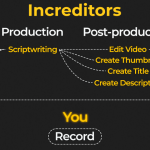







AI video tools are now embedded in most B2B marketing stacks, but the adoption data tells a nuanced story. Industry benchmarks suggest AI handles 60–75% of repetitive post-production tasks reliably, yet quality regression is reported when brands go AI-only for complex or brand-sensitive content. Marketing teams running hybrid stacks — AI for speed, human editors for judgment — are consistently reporting 2–4x volume gains without proportional budget increases. This report breaks down the tools gaining real traction, the tasks they handle well and poorly, and what the shift means for your 2026 video budget and production strategy.
The AI Video Production Landscape in 2026
From Experimentation to Infrastructure
Two years ago, AI video tools were a curiosity on most marketing teams’ radar. In 2026, they are infrastructure. Published platform data from major enterprise software providers suggests that AI-assisted video production workflows are now present in somewhere between 60–75% of mid-to-large marketing departments, a dramatic acceleration from the 20–30% range reported in 2023 surveys. The tools have matured, the costs have dropped, and the use cases have crystallized into clear buckets — some of which AI handles genuinely well, and others where human expertise remains irreplaceable.
The critical distinction for 2026 is that AI adoption does not correlate directly with quality outcomes. Teams that have integrated AI as a strategic accelerator within a human-led production process tend to report the strongest returns. Teams that swapped human editors for AI tools wholesale are surfacing quality, brand consistency, and audience engagement problems — sometimes only after months of degraded performance data reveals the gap.
For marketing leaders, the question is no longer whether to use AI video tools but which specific workflows they should own and which should stay in human hands. The answer requires a clear-eyed look at what the tools can actually do, what they cannot, and how the industry’s adoption benchmarks translate into actionable budget and team decisions.
Where the Market Stands
Industry benchmarks suggest the AI video tool market is on a trajectory toward USD 5–8 billion in annual software spend by late 2026, up from an estimated USD 1.5–2.5 billion in 2023. This growth is driven by three converging forces: the democratization of text-to-video generation, the rapid improvement in AI-assisted editing platforms, and the cost pressure on marketing teams to produce more content at lower per-unit costs.
Importantly, growth in AI tool adoption has not translated into an equal reduction in human production spend. Instead, the data suggests that high-output teams are running larger overall video programs — AI expands capacity, it does not simply replace existing headcount. Marketing organizations reporting the highest video ROI in 2025–2026 periods are typically running what analysts describe as a hybrid production model: AI tools for volume and speed, senior human editors for brand-sensitive and high-stakes content.
The tools themselves span a wide spectrum. Text-to-video generators, AI-powered editing platforms, AI avatar and spokesperson tools, and AI repurposing and clipping platforms each address different points in the production workflow — and each has meaningfully different capability profiles and appropriate use cases for B2B marketing teams.
Which AI Video Tools Are Gaining Adoption
Text-to-Video Generators
Text-to-video generation saw the most dramatic quality improvements heading into 2026. Tools like Runway (Gen-3 and subsequent iterations), Sora from OpenAI, Kling, and Pika have each carved out distinct positioning in terms of style, motion coherence, and commercial viability. Industry reports suggest Runway maintains the largest share of enterprise text-to-video usage, with particular strength in advertising and social content production. Sora has gained traction among larger brands with access to enterprise licensing, while Kling has seen rapid adoption in teams looking for high-motion realism at lower cost thresholds.
Benchmarks from published platform usage reports suggest that professional users generate between 30–80 text-to-video clips per month for commercial applications, with most usable output rates (clips requiring minimal intervention) in the 35–55% range depending on prompt complexity and desired realism. For abstract, stylized, or product-adjacent content, usable output rates are higher. For realistic human subjects in complex narrative scenarios, the rates drop sharply — and most professional teams still rely on human-shot footage for these cases.
The practical application for B2B teams is increasingly settled: text-to-video excels for abstract B-roll, product concept visualization, data metaphors, and stylized brand moments. It is not a replacement for human-shot spokesperson video, customer testimonials, or any content requiring authentic human presence.
AI-Powered Editing Platforms
This category includes tools that augment or automate editing workflows rather than generating footage from scratch. Adobe Premiere Pro’s AI features (including Firefly Video integration), Descript, Veed.io, and Riverside have all added significant AI-assisted editing capabilities that are seeing real enterprise uptake. Descript in particular has become a go-to for podcast and webinar repurposing workflows, with its AI-driven transcript-based editing removing significant time from the correction and assembly phases of video production.
Adobe’s AI features within Premiere Pro occupy a different position — they are workflow accelerators embedded in a professional editorial environment rather than standalone platforms. Teams already running Premiere-based workflows report that AI features like auto-reframe, speech enhancement, and generative extend are reducing per-project time budgets by 15–35% on routine tasks, without changing the fundamental human editorial process.
The distinction between these platforms matters for procurement decisions. A standalone platform like Descript makes most sense when webinar and podcast repurposing is a primary workflow. Adobe AI features make most sense when a team is already invested in the Adobe ecosystem and wants efficiency gains within an established professional editorial environment.
AI Avatar and Spokesperson Tools
HeyGen and Synthesia have established themselves as the category leaders for AI avatar and talking-head video generation. Both have seen significant B2B adoption in learning and development, internal communications, and product explainer contexts where the economics of filming a human presenter for every localization or version update are prohibitive. Published platform data from both companies suggests their respective customer bases have each grown substantially, with enterprise-tier customers increasingly using avatar tools for training content, onboarding videos, and routine announcements.
The adoption case for avatar tools in B2B marketing is strongest in high-volume, lower-stakes contexts: product update announcements, internal enablement, multi-language localization. For external brand-building, customer stories, or flagship marketing videos, most marketing leaders still find human-presented video substantially more effective for trust and engagement metrics. Audience research from several published brand studies indicates that viewers consistently rate human-presenter video higher on credibility and emotional connection dimensions versus AI avatar equivalents — a gap that has narrowed but not closed.
AI Repurposing and Clipping Tools
OpusClip, Munch, and similar tools targeting the long-form to short-form workflow have seen explosive adoption as teams try to extract social media value from webinars, podcasts, and longer video assets. Industry benchmarks suggest these tools can reduce manual clipping and captioning time by 60–80% on straightforward content, with the AI identifying key moments, adding captions, and reformatting for different platforms. The value proposition is strong for volume-driven content teams, though editors still report that the most compelling clips require human curation of the AI’s suggestions rather than unreviewed output.
💡 Pro Tip: Treat AI repurposing tools as a first-pass drafting layer, not a finished output machine. A human editor reviewing the AI’s top 10 clip suggestions and selecting the best 2–3 typically produces clips that outperform fully automated outputs on engagement benchmarks by 30–50%.
Where AI Excels in Video Production
Auto-Captioning and Transcription
This is the highest-confidence AI use case in video production, and it has been for several years. Modern AI captioning tools — including those embedded in platforms like Descript, Riverside, Veed, and Captions.ai — now achieve word-error rates that make them genuinely production-ready for most English-language content and increasingly reliable for major non-English languages. Industry benchmarks suggest accuracy rates of 90–97% for clear audio in standard accents, with accuracy dropping to 75–85% in noisy conditions, strong accents, or highly technical vocabulary.
For B2B marketing teams, automated captioning is now essentially a solved problem — the main workflow question is which captioning tool integrates best with the existing production stack, not whether AI can do the job. Teams report saving 1–3 hours per long-form video on captioning alone, a direct and measurable productivity win. For teams running 20 or more videos per month, the captioning time savings alone can justify AI tool investment.
B-Roll Generation and Gap-Filling
For abstract, motion-graphic, or stylized B-roll requirements, AI text-to-video tools have reached a quality threshold that many B2B content teams find commercially acceptable. Product explainers, industry overview videos, data visualization content, and abstract narrative sequences are all areas where AI-generated B-roll is increasingly indistinguishable from premium stock footage — and often more on-brand and specific than what is available in stock libraries.
Credible production teams now routinely use AI-generated B-roll for segments where human shot footage would be expensive or logistically impractical: aerial-style perspectives, futuristic concepts, microscale or macroscale visualizations. The cost comparison is significant — AI-generated B-roll through a Runway or similar subscription runs substantially below custom shoot day rates or premium stock licensing for the same specificity. Industry benchmarks suggest AI B-roll generation runs 70–90% below the equivalent custom shoot cost for the same visual specificity.
Clip Repurposing and Format Conversion
Taking a single long-form asset — a webinar, a long demo video, a keynote presentation — and efficiently producing 10–20 social-ready clips in multiple formats and aspect ratios is now a genuinely strong AI use case. The mechanical work of identifying usable segments, auto-resizing, adding animated captions, and formatting for LinkedIn, YouTube Shorts, Instagram Reels, and TikTok is well within AI tool capability in 2026. What remains human-dependent is the editorial judgment about which moments are actually worth sharing and why — a distinction that matters more than it might appear, since less interesting but technically clean AI-selected clips consistently underperform human-curated clips in organic reach benchmarks.
AI Voiceover and Audio Enhancement
ElevenLabs and competitors in the AI voice synthesis category have produced convincing, natural-sounding voiceover at a fraction of the cost and turnaround time of professional voice talent for non-flagship content. Industry benchmarks suggest AI voiceover is now standard for product tutorials, internal training content, and multi-language localization — where the economics of re-recording with human talent for 10 language versions are simply not viable. For flagship brand content, emotional storytelling, and testimonial-style pieces, human voice still wins on warmth and authenticity metrics in most audience research.
Audio enhancement AI — noise removal, room correction, breath reduction, and mixing — is also a strong category. Tools embedded in Descript, Adobe Podcast, and standalone platforms like Auphonic now remove a significant portion of the audio correction work that previously required specialized post-production skills, making cleaner audio production accessible to content teams without dedicated audio engineers.
Where AI Falls Short vs Human Editors
Brand Storytelling and Narrative Pacing
Narrative judgment — the felt sense of how a story should breathe, where the emotional beat should land, which cut creates tension and which creates resolution — remains a deeply human editorial skill. AI tools in 2026 can execute technically correct edits but consistently struggle with the intuitive pacing decisions that separate competent video from compelling video. Teams that have run controlled comparisons between AI-assembled and human-edited versions of the same footage report that human-edited versions score meaningfully higher on retention and emotional response metrics in audience testing.
This gap is particularly pronounced for brand storytelling — founder stories, customer case studies, mission-driven content — where the editor’s ability to find and emphasize the authentic human moment is the entire value of the piece. AI tools working from transcripts and metadata miss the non-verbal and tonal cues that a skilled human editor uses to find those moments. Published retention data from video platforms consistently shows that narrative pacing is among the highest correlates of completion rate — and completion rate drives algorithm distribution in most B2B-relevant platforms.
Complex Motion Graphics and Custom Animation
Custom motion graphics — branded lower thirds, data visualization animations, dynamic title sequences, logo animations, and kinetic typography — still require human motion design expertise. AI tools can generate generic motion elements, but applying brand guidelines, maintaining visual language consistency across a piece, and creating the kind of distinctive animated identity that high-quality B2B brands use to stand out is not within current AI capabilities. Marketing leaders investing in distinctive brand video identity continue to allocate significant budget to human motion designers, and the quality differential justifies it for content that will represent the brand in high-visibility contexts.
Emotional Resonance and Editorial Judgment
High-stakes editorial decisions — which take to use, what to cut for legal or reputational reasons, how to handle sensitive subject matter, when a piece of content lands the right tone versus drifts into something problematic — require human judgment that AI tools cannot reliably replicate. B2B marketing involves complex stakeholder environments, regulated industries, and brand equity that took years to build. The judgment to protect that equity in every content decision is not something teams can delegate to automated systems in 2026. A single misjudged AI-automated edit can surface in a brand’s flagship campaign in ways that human editorial oversight would have caught immediately.
This is less about AI capability and more about accountability. When a human editor makes a judgment call about what to include or exclude, they bring professional accountability to that decision. AI tools do not have professional stakes in the outcome — and that difference matters in high-stakes content contexts.
Quality Consistency Across High-Volume Programs
One underreported limitation of AI video tools is consistency at scale. Individual AI-generated outputs can be impressive in isolation; maintaining a consistent visual style, pacing cadence, audio quality standard, and brand voice across 50 or 100 videos over a quarter is a different challenge. Human editorial teams develop and apply brand standards systematically, catching drift and variance before it reaches the audience. AI tools require constant human supervision to prevent style drift, quality variance, and the accumulation of small inconsistencies that individually seem minor but collectively erode a brand’s professional presentation over time.
💡 Pro Tip: Build a brand QA checklist specifically for AI-assisted output — covering style, tone, caption accuracy, and audio quality standards. Teams that implement structured QA gates for AI content report significantly fewer brand consistency issues than those relying on ad hoc review, and the checklist process takes only a few minutes per video once established.
How B2B Marketing Teams Are Using AI in Video Production
The Hybrid Production Stack in Practice
The dominant pattern in well-run B2B marketing video programs in 2026 is a tiered production model that deploys AI for specific, bounded tasks while preserving human oversight for editorial, brand, and quality decisions. A practical version of this stack looks something like the following: AI tools handle auto-captioning, aspect ratio reformatting, audio noise removal, and basic clip assembly from transcripts. Human editors handle pacing, music selection, motion graphic application, narrative structure, and the final quality pass before publication. AI avatar tools handle routine product update and internal communications videos; human-shot video handles customer stories, thought leadership, and campaign heroes.
Teams running this kind of tiered model report being able to increase total video output by 2–4x compared to pre-AI production levels, with roughly the same human editorial headcount. The productivity gain comes from AI absorbing the mechanical and repetitive tasks that previously consumed senior editor time — leaving those editors free to work on the content that actually requires their skills and judgment.
Agencies like Increditors have built production frameworks explicitly around this kind of AI-augmented workflow — using AI tools to handle volume and speed while preserving dedicated senior editor teams for the work that demands craft and brand judgment. The result is that clients get both the scale benefits of AI and the quality standards of professional human production, rather than having to choose between them.
Social and Paid Ad Content at Scale
High-frequency social media content — the 20, 30, or 50 short-form clips a B2B brand might publish per month across LinkedIn, YouTube Shorts, and other platforms — is the use case where AI tools deliver the clearest and most measurable ROI. Industry benchmarks suggest the per-clip cost for AI-assisted social content production is 40–70% lower than fully human-produced clips of equivalent technical quality, with the cost differential being even larger when factoring in speed to publish.
For performance marketing and paid social, where teams need to test 5–10 creative variations of each ad for A/B testing, AI tools dramatically reduce the cost of variation. Generating different background styles, caption animations, or opening sequences no longer requires a day of human editing per variation — it can be automated in hours at a small fraction of the previous cost. This is changing how B2B performance teams structure their creative testing workflows fundamentally, enabling more extensive testing at the same budget levels.
Webinar and Event Content Repurposing
For companies running active webinar programs — which remain a core demand generation channel in B2B despite the rise of short-form content — AI repurposing tools have transformed the content economics. A 60-minute webinar that previously might yield 1–2 manually cut clips can now yield 10–20 AI-first-drafted clips ready for human review and approval within a few hours. This has enabled marketing teams to dramatically extend the content lifespan of webinar events, turning them from single-use live broadcasts into multi-week content assets distributed across channels.
Understanding the true cost of professional video editing helps teams budget accurately for these hybrid workflows. When you account for the AI tool subscription costs alongside the reduced human editing time per clip, the total cost per published social clip is typically 45–65% lower than a comparable fully-human workflow — without the quality regression that comes from going AI-only on the final output.
Benchmark Comparisons: AI vs Human vs Hybrid
The following tables present illustrative benchmarks drawn from published platform reports, industry surveys, and production workflow case studies. Numbers represent approximate ranges across different company sizes, content types, and tool configurations rather than precise universal measurements — actual results depend heavily on workflow design, content complexity, and the skill of the human editors involved. Use these as directional benchmarks for internal planning, not as definitive targets.
The following table compares production metrics across different workflow configurations. These ranges reflect reported production outcomes across a variety of B2B marketing teams and video types as described in industry case studies and published platform reports:
Budget and Strategy Implications for 2026
Budget Reallocation Patterns
The most common budget question marketing leaders are navigating in 2026 is whether AI tool adoption should drive a reduction in video production spend. The honest answer from the data is: it depends on your goals. If your goal is to maintain existing video output with lower cost, AI tool integration can realistically reduce per-unit production costs by 25–50% on applicable content types. If your goal is to significantly grow video output — which is what the business case for video in B2B increasingly demands — the savings from AI efficiency typically get reinvested into more content production, not returned to the budget line.
A practical framework for 2026 budget allocation: categorize your video needs into three tiers. Tier 1 (flagship brand and campaign videos): maintain or increase human production spend — these are your highest-stakes brand moments and the quality differential of skilled human production is measurable in audience response and downstream conversion. Tier 2 (regular social and thought leadership content): deploy hybrid AI-human workflows to achieve 2–3x volume at roughly current cost. Tier 3 (internal, operational, and routine update videos): AI-first tools with light human review are appropriate and significantly more cost-effective than full human production.
B2B brands using this tiered approach report the clearest return on overall video investment — because each dollar is deployed at the right quality level for the content’s strategic importance. Unlimited video editing service models can be a strong fit for Tier 2 content — providing the high volume at predictable monthly cost that makes the hybrid model work in practice without unpredictable per-project invoicing.
The Case for Strategic Investment in Human Production
As AI tools democratize video production and more brands run higher volumes of AI-generated content, the scarcity value of genuinely excellent, human-crafted video is increasing rather than decreasing. In a landscape where social feeds contain a growing proportion of AI-generated content, the videos that break through and earn organic attention are increasingly those with the qualities AI cannot replicate: authentic human performance, nuanced storytelling, distinctive visual craft, and the kind of emotional intelligence that earns genuine engagement rather than passive scroll-past.
For B2B brands investing in brand equity, thought leadership, and trust-based sales cycles, this suggests that the strategic move in 2026 is not to cut human production investment but to be more deliberate about where it is deployed — and to use AI efficiency gains to free up budget for the flagship content that requires it. Teams at premium video editing agencies are seeing this reflected in client briefs: companies are coming with clearer thinking about which projects need the full human treatment and which can be efficiently handled through AI-augmented workflows.
The brands positioned best for 2026 are those that have built the operational clarity to deploy AI where it creates genuine efficiency, protect human investment where it creates genuine quality, and measure the results of each tier honestly enough to refine the approach over time. That clarity — not the tools themselves — is the durable competitive advantage in video production right now.
What This Means for Video Team Structure
The implication for video team structure is nuanced. Marketing teams that assumed AI tools would reduce headcount needs are finding instead that AI enables the same team to do more — which shifts the skills mix needed rather than eliminating roles. Junior-level tasks that were primarily mechanical (basic assembly, simple resizes, basic captioning) are increasingly AI-owned, which changes the entry-level role profile. Senior-level skills — editorial judgment, brand strategy, narrative development, motion design — remain in high demand and are increasingly the differentiating skill set that determines video program quality.
For teams building or evaluating their video production partnerships, understanding the trade-offs between agency and freelancer models matters more in an AI-augmented world, not less — because the question is no longer just about editing skill but about which production partners have built genuinely effective AI-human hybrid workflows and which are either fully AI-dependent (at the cost of quality) or ignoring AI entirely (at the cost of efficiency and competitiveness).
Frequently Asked Questions
Can AI video tools fully replace a human video editor?
No — and the evidence from teams that have attempted AI-only production consistently shows measurable quality regression for brand-sensitive content. AI tools excel at automating specific, bounded tasks like captioning, format conversion, clip identification, and basic assembly. The editorial judgment, emotional intelligence, and brand nuance that characterize skilled video editing remain human capabilities in 2026. The strongest video programs are using AI as a production layer within a human-led editorial process, not as a replacement for it. Teams that have gone AI-only are reporting quality and engagement metric declines that create pressure to rebuild human editorial capacity.
Which AI video tool is best for B2B marketing teams?
There is no single best tool — the strongest B2B stacks typically combine 3–5 specialized tools rather than relying on one platform. Common effective combinations include Descript or Riverside for transcript-based editing and webinar repurposing; OpusClip or Munch for social clip generation and identification; an AI captioning tool like Captions.ai; Adobe Premiere Pro AI features for professional editorial workflows; and an AI voiceover tool like ElevenLabs for localization. Text-to-video tools like Runway are added specifically for B-roll and abstract visual generation when stock footage options are insufficient.
How much can AI reduce our video production costs?
Industry benchmarks suggest 25–60% reduction in per-unit cost is achievable for volume content (social, internal, repurposed) through AI tool integration. The range varies significantly based on content type, existing workflow efficiency, and how much human oversight is maintained. For high-stakes brand and campaign content, AI is less likely to reduce costs substantially because the value of those pieces depends on qualities that require human production investment. The realistic picture for most teams is meaningful cost savings on volume content alongside maintained or increased investment in premium content — which is why most teams see total video budgets stay flat or increase even as per-unit costs decline for some content types.
Are AI avatars suitable for external B2B marketing content?
AI avatar tools from platforms like HeyGen and Synthesia have improved significantly, but published audience research consistently shows that human-presented video outperforms AI avatar video on trust, engagement, and conversion metrics for external brand-facing content. AI avatars are well-suited for internal communications, product tutorials, training content, and multi-language localization where the economics of human filming at scale are impractical. For external demand generation, customer-facing content, and brand storytelling, human video remains the substantially stronger choice. The gap narrows when avatar quality is high and production value is invested in lighting, scripting, and presentation quality.
How should we evaluate an AI video tool before committing budget?
Run a structured 30-day pilot on a specific, bounded use case with clear before-and-after metrics defined in advance. Measure production time saved, cost per output, and — critically — quality outcomes assessed against your existing brand standards, not just against abstract tool benchmarks. Involve your human editors and production leads in the evaluation; they will identify practical workflow gaps and integration friction that a top-down assessment misses entirely. The tools that survive 30-day pilots with real production workloads are substantially more likely to deliver durable ROI than those that look impressive in vendor demos but stall in actual workflow integration.
Verdict: The State of AI Video in 2026
AI video tools have moved decisively from novelty to necessity in B2B marketing production stacks. The productivity case is real and well-documented: 2–4x volume gains for teams running well-designed hybrid workflows, 40–70% lower per-clip costs for routine social content, and the near-elimination of mechanical tasks like captioning, format conversion, and basic clip assembly from senior editor workloads. For marketing leaders who have not yet integrated AI tools into their production workflows, the cost and speed penalty relative to AI-enabled competitors is now measurable.
But the quality evidence cuts in the opposite direction for AI-only approaches. AI-only video production consistently underperforms human-produced and hybrid content on the dimensions that matter most for B2B brand equity: narrative coherence, emotional resonance, brand consistency, and the trust that comes from authentic human storytelling. The teams experiencing the best outcomes in 2026 are not those that have maximized AI adoption as a percentage of their workflow — they are those that have been most deliberate about which tasks belong to AI and which belong to skilled humans.
The practical recommendation for marketing leaders: audit your current video program against a three-tier model, deploy AI tools aggressively on volume and operational content, and reinvest the efficiency savings into the flagship and brand content where human production quality compounds your brand equity over time. The brands that will win the video channel in 2026 are those that use AI to produce more efficiently — while using skilled human production to produce better where it actually counts. That is not a compromise position; it is the strategy the data supports most strongly.
Ready for Video That Actually Converts?
Tell us about your project and we will put together a custom plan.