









![3D Explainer Video - ScribbleLive.mp4_snapshot_00.12_[2022.03.09_03.14.16]](https://increditors.com/wp-content/uploads/elementor/thumbs/3D-Explainer-Video-ScribbleLive.mp4_snapshot_00.12_2022.03.09_03.14.16-r7wb53mx72rxst3qcqyrfxdmeyzb5r9jbl0wbjujh4.png "3D Explainer Video – ScribbleLive.mp4_snapshot_00.12_[2022.03.09_03.14.16]")





















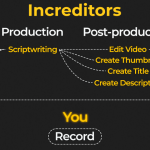







A video editing company handles post-production only — cutting, color grading, sound mixing, and motion graphics. A production company manages the entire process from scripting and filming through delivery. For the majority of B2B and SaaS brands that already capture their own footage — interviews, demos, webinars, events — a specialized video editing partner delivers faster output, lower costs, and higher consistency than paying for full production overhead you do not need.
- What Is a Video Editing Company?
- What Is a Video Production Company?
- Key Differences at a Glance
- What Does Each Service Cost?
- When to Hire a Video Editing Company
- When to Hire a Video Production Company
- Why Most B2B Brands Only Need Post-Production
- How to Make the Right Choice
- Frequently Asked Questions
- Verdict
What Is a Video Editing Company?
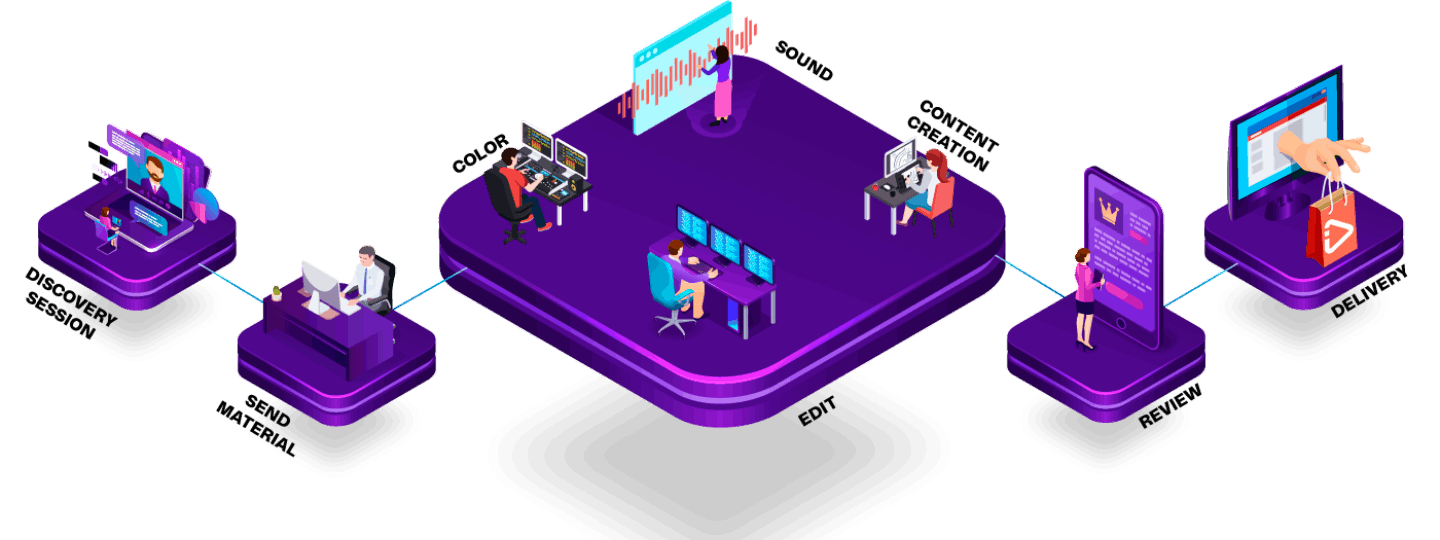
A video editing company is a post-production specialist. Its core job begins where filming ends. You send raw footage — recordings from a camera, smartphone, screen capture, or remote call — and the company transforms that footage into a polished, publish-ready video. No cameras. No crew. No location scouting. Pure craft applied to material that already exists.
The discipline covers a wide range of output types: YouTube videos, podcast video cuts, product demos, customer testimonials, training modules, social media clips, explainer animations, webinar recordings, and event highlights. What unifies all of these is the workflow: you supply footage, they supply the editorial eye, the motion graphic work, the color grade, the sound mix, and the final export. The distinction sounds simple but has significant downstream consequences for how you budget, plan, and scale your video program.
Core Services a Video Editing Company Provides
At its most complete, a video editing agency offers: timeline editing and assembly, color correction and grading, audio cleanup and mixing, music licensing and soundtrack work, motion graphics and lower-thirds, animated intros and outros, caption and subtitle creation, thumbnail design, and export optimization for each publishing platform. Senior-tier providers also offer editorial strategy — knowing which clips to cut for impact, how to pace a narrative, and what the audience will retain after the video ends.
Many video editing companies operate on subscription or retainer models, making them attractive for marketing teams with a steady content calendar. Instead of negotiating a new contract for each video, teams submit footage and receive edited files within an agreed turnaround window. This model suits organizations that publish weekly or monthly video content — SaaS companies, media companies, e-commerce brands, and professional service firms that treat video as a channel, not a one-off campaign.
Who Typically Hires a Video Editing Company
The typical client of a video editing company has raw footage and no reliable internal post-production capability. This includes: marketing teams at mid-size B2B companies whose executives record thought leadership content, content creators who shoot their own YouTube videos, SaaS companies that record product walkthroughs using screen capture software, and corporate training departments that need recorded instruction polished for an LMS. The common thread is that these clients already control the filming process — they just need someone to finish the work expertly and consistently.
The model works especially well for companies that produce volume. A single internal communications team might record six to ten pieces of content per month across all-hands recordings, CEO updates, product launch explainers, and customer interview footage. A video editing company handles all of that without the overhead of in-house editors on salary — and without the project minimums and long lead times of a full production company.
What Is a Video Production Company?
A video production company offers end-to-end video creation. It handles the entire lifecycle: concept development, scripting, storyboarding, location scouting, casting, crew coordination, camera operation, lighting design, sound recording on location, direction of talent, and post-production delivery. When a client engages a production company, they are essentially outsourcing the complete creative and logistical process of making a video from nothing.
Production companies range from boutique shops with a director and a small crew, to large agencies with in-house studios, casting departments, and full post-production suites. The defining feature is that they produce original footage — they own the camera, they build the set or scout the location, and they control what gets captured before a single frame reaches editing. That control is both their core value proposition and the source of their higher cost structure.
The Three Phases of Full-Service Production
Pre-production is where the production company earns a significant portion of its fee before a camera ever rolls. This phase includes creative concept development, script writing, storyboarding, shot lists, talent sourcing and casting, location agreements and permits, equipment scheduling, and full shoot logistics. For a 60-second brand commercial, pre-production alone can take two to four weeks and represent 20–30% of total project cost.
Production (the shoot) is the execution phase. A director leads the crew, camera operators capture the footage, grips manage lighting, sound recordists capture clean audio on location, and a production coordinator keeps everything on schedule. Depending on scale, a single shoot day can involve anywhere from three to thirty people. Each person on set represents a crew day rate, which compounds quickly across multiple days of shooting.
Post-production is where editing happens — the same work a video editing company specializes in entirely. At a production company, post is one phase of three. The editors who work there are skilled, but editing may not be the primary competitive focus of the business, and the cost of carrying the entire production infrastructure is baked into every project price. You pay for the editor’s time and the overhead of the production company simultaneously.
Who Typically Hires a Video Production Company
Full-service video production companies are the right choice when a brand needs to create footage that does not exist yet and lacks any internal capability to capture it. Classic use cases include: a national retailer launching a TV commercial, a real estate developer commissioning a cinematic property showcase, a pharmaceutical company producing a regulatory-grade training film, or a luxury brand creating a brand film for an event premiere. These scenarios require professional cinematography, directed talent, and a controlled production environment that goes well beyond what any internal team could assemble on its own.
Key Differences at a Glance
Understanding the distinction is straightforward once you map the actual scope of work each type of company performs. The key separator is whether you need someone to create footage or to transform footage you already have. Every other difference — cost, lead time, volume capacity, team size — flows from that single question.
💡 Pro Tip: The line blurs when production companies offer post-only packages for clients who bring their own footage. Always clarify scope in writing — some production companies add a 20–30% premium over a specialist editing firm for the exact same post-production work, because their overhead structure is higher. If you only need editing, hire a company built for editing.
What Does Each Service Cost?
Cost is one of the most concrete ways to understand the gap between these two service categories. Pricing varies based on project complexity, team size, and deliverable quality — but the market ranges are stable enough to use as planning benchmarks. For a thorough breakdown of post-production pricing across tiers and service types, see our guide on how much professional video editing costs.
Video Editing Company Pricing
Video editing companies typically operate under one of three models. Project-based pricing runs from roughly $250 for a short social clip to $3,500 or more for a complex 10-minute corporate video with custom motion graphics and full sound design. Subscription or retainer pricing tends to range from $500 to $6,000 per month depending on volume and complexity tier. Per-minute pricing — common among mid-tier agencies — often falls between $100 and $400 per finished minute of polished video. These are market ranges drawn from publicly available rate cards and agency pricing pages; individual quotes will vary based on specifics.
The retainer model tends to offer the best per-video economics for brands with steady output. A team paying $3,000 per month for an editing retainer at a premium agency commonly receives four to eight edited videos, each with color, sound, graphics, and captions included. That works out to $375–$750 per finished video at the high end of the retainer range — substantially less than commissioning each video individually.
Video Production Company Pricing
Full-service production company projects carry a significantly higher floor. A basic branded video with a small crew, half a day of shooting, and post-production typically starts around $5,000–$8,000. Mid-level brand films with multiple shoot days, location fees, and a small cast commonly run $15,000–$50,000. High-end broadcast commercials or cinematic brand films from established production companies regularly require $75,000–$250,000 or more. The majority of that budget covers things that never appear on screen: location permits, equipment rental, crew day rates, travel, catering, insurance, and production management time.
The pricing gap exists because a production company must maintain a larger infrastructure — studio space or a roster of locations, specialized camera and lighting equipment, director and DP talent on retainer, a production coordinator, and often a creative director. A video editing company’s cost structure is leaner by design: the overhead is editors, software licenses, and storage. That structural difference is passed directly to clients in the form of cost. When you hire an editing company, you pay for editing. When you hire a production company, you pay for editing plus everything else they need to exist as a business.
When to Hire a Video Editing Company
Choosing a video editing company is the right call in a surprisingly broad range of situations — especially for B2B and SaaS companies that already have a recording workflow in place. Here are the clearest signals that post-production-only is the right path for your team.
You Already Have Raw Footage
If your team regularly records — whether that is executives speaking to a webcam, product demos via screen capture, customer testimonials via Riverside.fm or Zoom, or event sessions on a DSLR — you have what a video editing company needs to work. The footage does not need to be perfect. Professional editors work with imperfect source material every day: lighting issues can be corrected in color, audio problems can be cleaned up in post, jump cuts can be covered with b-roll, and shaky handheld footage can be stabilized in software. The raw material just needs to be technically usable.
You Need Volume, Not a One-Off
If your content strategy requires four, eight, or twelve videos per month, a video editing company on retainer is almost always the right structure. Production companies are built around discrete projects with long lead times — they are optimized for quality and impact on a single production, not for high-throughput monthly output. An editing company built for recurring workflow turns around polished content on a predictable schedule, making it possible to maintain a publishing cadence without in-house editors on salary or expensive project-by-project negotiations with production vendors.
You Want Brand Consistency Across All Output
One of the underappreciated advantages of a dedicated editing partner is consistency. When the same team works on every video — using the same motion graphic templates, color grades, music selections, and export specs — your content library looks and sounds like a coherent brand. Hiring a production company per project, or rotating freelancers, introduces inconsistency that erodes brand recognition over time. Dedicated post-production partners learn your brand standards deeply and apply them automatically from the first cut, cutting revision cycles and keeping your library coherent across dozens of pieces.
You Are Working Within a Defined Marketing Budget
For B2B marketing teams with a defined content budget, the economics almost always favor an editing company for regular output. At $2,000–$3,000 per month on a retainer, you might receive four to eight edited videos. The same budget applied to a production company would cover at most one half-day shoot — and no ongoing editing at all. Understanding the difference helps marketing directors allocate budget more strategically across a content year rather than burning it all on a single event film. For a thorough comparison of editing service providers and how they differ in positioning and pricing, see our resource on video editing agency vs. freelancer — which breaks down the spectrum from individual contractors to full-service agencies.
When to Hire a Video Production Company
Full-service video production companies are genuinely the right answer for specific types of projects. Knowing when you actually need the full package prevents the opposite mistake — under-investing in something that genuinely requires professional capture and direction.
You Need to Create Footage That Does Not Exist
If there is no footage and no internal way to capture it, a production company is the answer. A brand launching its first brand film has no archive to draw from. A consumer product company that needs beautifully shot lifestyle content requires a cinematographer, lighting setup, and directed talent. A company filming a national TV commercial needs the production infrastructure to do it at broadcast quality. In these cases, the full-service production company is not an overhead — it is the product itself.
Your Project Requires Specialized Equipment or a Professional Crew
Aerial cinematography, controlled studio shoots with complex lighting rigs, underwater footage, multi-camera live event production at scale, or anything requiring industry-grade cinema cameras — RED, ARRI, or similar — is a production company use case. The equipment and expertise required for these projects cannot be assembled ad hoc by an internal team or delegated to a post-production shop. They require a professional production infrastructure with experienced crew managing each technical element of the shoot.
Regulatory or Compliance Standards Require Controlled Production
Regulated industries — pharmaceutical, financial services, medical devices, and legal — sometimes require video content produced under documented, controlled conditions with specific compliance review checkpoints during production. A full-service production company with experience in regulated sectors brings the documentation, talent management, legal clearances, and review processes these environments require. In these cases, the production company is as much a compliance partner as a creative one.
Why Most B2B Brands Only Need Post-Production
Here is what most B2B marketing teams discover after their first production company invoice arrives: the footage was fine. The expensive part — the crew, the location, the equipment, the shoot days — produced raw material that is ultimately no more persuasive than a well-recorded Zoom call or a well-framed iPhone interview. The professional output came from the edit, not the shoot. The color, the pacing, the music, the motion graphics — everything that made the finished video feel polished happened in post-production, not on a sound stage.
This realization is driving a structural shift in how B2B marketing teams build their video programs. Rather than commissioning production companies for hero content and going without video the rest of the year, forward-thinking teams invest in basic internal recording capability — a decent mirrorless camera, a ring light, a simple backdrop, or a subscription to a remote recording platform — and then partner with a specialist video editing agency for the post-production that actually shapes the final product.
The Modern Footage Reality
Modern recording technology has dramatically lowered the barrier to capturing usable, professional-looking footage. An iPhone 15 Pro shoots in 4K ProRes. A Sony ZV-E10 mirrorless camera produces cinema-quality images for under $600. Riverside.fm, Squadcast, and similar platforms capture lossless audio and up-to-4K video from remote participants without compression artifacts that plague standard video calls. The technical gap between “shot by a professional cinematographer” and “shot well by a non-professional” has narrowed significantly — and an expert editor bridges most of the remaining distance through color work, audio cleanup, and careful assembly.
B2B audiences are also far less sensitive to production value than B2C audiences. A CMO watching a case study video does not need it to look like a Netflix documentary. They need clear communication, a credible speaker, and compelling data. A well-lit talking-head shot with crisp audio, a clean lower-third, and relevant screen footage interspersed throughout will drive action — regardless of whether it was captured on an iPhone or an ARRI Alexa.
The Real Value Is in the Edit
Pacing, narrative structure, music, graphics, and the selection of the ten best seconds from thirty minutes of raw footage — these are what make a video compelling. These decisions happen entirely in post-production, regardless of how the footage was captured. A mediocre-looking interview recorded on a laptop webcam, cleaned up and assembled with well-designed lower-thirds and relevant b-roll, will outperform a beautifully shot but poorly edited corporate documentary in almost every engagement metric that matters for B2B marketing. The message is the product. Post-production is what delivers the message clearly.
💡 Pro Tip: B2B buyers watch video to learn, not to admire cinematography. A well-edited, well-structured 6-minute product walkthrough will generate more pipeline than a cinematic 90-second brand film that communicates nothing concrete. Invest in the post-production craft that shapes the message, not the production value that impresses no one in a Slack channel or a Zoom demo.
The Specialist Model: Why Post-Only Partners Outperform on Editing
A video editing company that does nothing but post-production has editors who eat, breathe, and think about editing. They have refined workflows for exactly the kind of content B2B brands produce. They know how to make a 45-minute webinar into a compelling 8-minute highlight. They know how to take a founder’s rambling Loom recording and turn it into a punchy 2-minute thought leadership clip. They know which color grades suit which brand aesthetics. A production company’s post team has all of those skills too — but post is one department among many, not the entire organization’s reason for existing.
How to Make the Right Choice
The decision between a video editing company and a full production company comes down to four core questions. Answer them honestly before writing any budget line — the answers will point clearly to one category or the other in most cases.
The Four-Question Decision Framework
1. Do you have footage, or do you need footage created? This is the first and most decisive question. If the raw material does not exist and your team cannot capture it internally, you need production. If footage exists or your team can record it with reasonable quality, you need editing. Most B2B teams that answer this honestly find they already have footage — or could get it easily.
2. How often do you need to publish video content? For fewer than two videos per quarter, project-based production relationships may work fine. For monthly or weekly publishing cadences, an editing retainer almost always delivers more value per dollar than one-off production engagements. The compounding benefit of consistent output — SEO lift, audience growth, sales enablement library depth — only materializes with sustained volume.
3. What is the actual objective of the video? Brand awareness and emotional storytelling for a consumer audience sometimes justify cinematic production values. Demand generation, product education, customer onboarding, and sales enablement almost never do — the clarity and pacing of the message matter far more than the production quality for these objectives. Match the investment to the actual conversion goal, not to what looks impressive in a board deck.
4. What does your budget allow sustainably? A single $25,000 brand film consumes a budget that could fund a year of consistent, high-quality edited content. Which delivers more compounding value for your specific goals over twelve months? For most B2B marketing teams operating with real budget constraints, the answer is not the brand film.
Quick-Reference Decision Checklist
Many organizations find the most effective answer is a hybrid: a production company for one or two flagship projects per year, and a dedicated video editing partner for everything else. The annual brand film gets the full production treatment. The product demos, customer stories, webinar cuts, social clips, and LinkedIn thought leadership videos run through an editing retainer that keeps the library growing without depleting the budget. To explore how editing service providers compare across pricing, turnaround, and volume, read our 2026 guide to unlimited video editing services — a detailed comparison of the leading options in the market.
Frequently Asked Questions
Is a video editing company the same as a production company?
No. A video editing company handles post-production only — it works with footage you provide and transforms it into a finished video. A production company manages the full process from concept and scripting through filming, directing talent, and delivery. Some production companies include post-production in-house, but their core service and pricing model reflects the complete production scope, not just the editing phase. If you hire a production company for editing alone, you are typically paying more than necessary for the equivalent output.
Can a video editing company help if my footage quality is not professional?
In most cases, yes. Professional editors regularly work with footage captured on smartphones, webcams, and remote recording platforms. Color correction, audio cleanup, and smart use of b-roll can elevate footage significantly. The key threshold is that the recording must be technically usable — reasonably lit, with audio that is recognizable, and without catastrophic exposure failures. Most footage captured by B2B teams on modern devices clears this bar, even without professional lighting equipment. When in doubt, share a sample clip and ask the editing company to assess it before committing to a contract.
How much cheaper is a video editing company versus a full production company?
For equivalent deliverable quality, a video editing company is typically 60–80% cheaper per finished video when the client supplies footage. The cost difference is almost entirely attributable to the elimination of crew, equipment rental, location, and production management overhead. A $25,000 mid-level production project might deliver one or two polished videos. The same budget applied to a premium editing retainer — with raw footage your team supplies internally — could yield 20–40 edited videos over the same period, at comparable or superior editorial quality. The math is stark for brands publishing consistently.
Do video editing companies also help with strategy and scripting?
This depends entirely on the company and the tier of service. Entry-level and subscription-only services typically handle pure execution — cut, color, sound, export. Premium video editing agencies often include a strategy layer: editorial direction, content series planning, platform-specific optimization advice, and feedback on how to structure your recording process for more effective post-production. If strategic input matters to your team, look for agencies that explicitly offer it in their service scope, rather than assuming all editing services include it by default.
What types of video can a video editing company NOT help with?
A video editing company cannot help when there is no footage to work with. If your project requires filming actors on location, shooting a physical product in a controlled studio, capturing live event footage from scratch, or producing drone aerials — and your team cannot capture any of that — you need a production company first. A video editing company also cannot rescue footage that was captured beyond repair: severely underexposed shots, audio with irrecoverable noise levels, or files corrupted during recording. In those cases, reshooting with a production team is the correct path before returning to editing.
Verdict: Which Should You Choose?
For the overwhelming majority of B2B and SaaS companies reading this guide, the answer is a video editing company — especially if your goal is consistent, scalable video output rather than a single cinematic event. The evidence is straightforward: modern recording tools produce footage professional enough to work with, the actual persuasive value of video comes from post-production craft rather than production value, and the cost difference between the two service types is enormous at every price tier.
A video production company is the right answer only when footage genuinely does not exist and cannot be captured internally, or when the project type — a broadcast commercial, a cinematic brand film, a live multi-camera production at scale — truly requires the full service and warrants the investment. For everything else: thought leadership content, product demos, testimonials, webinar cuts, social clips, and educational series — a specialist editing partner is the smarter, more scalable investment.
The smartest annual video budget allocation is typically one production investment per year for a flagship piece, and a year-round editing retainer for everything else. This creates a content library that compounds in value, maintains brand consistency across every touchpoint, and maximizes the return on every dollar spent on video marketing. Stop paying for crew overhead you do not need. Find a specialist editing partner, invest in a basic internal recording setup, and put the difference to work at scale.
Ready for Video That Actually Converts?
Tell us about your project and we will put together a custom plan.