








![3D Explainer Video - ScribbleLive.mp4_snapshot_00.12_[2022.03.09_03.14.16]](https://increditors.com/wp-content/uploads/elementor/thumbs/3D-Explainer-Video-ScribbleLive.mp4_snapshot_00.12_2022.03.09_03.14.16-r7wb53mx72rxst3qcqyrfxdmeyzb5r9jbl0wbjujh4.png "3D Explainer Video – ScribbleLive.mp4_snapshot_00.12_[2022.03.09_03.14.16]")






















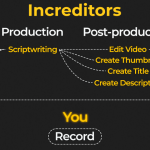







A post-production agency is a professional team that transforms raw footage into polished, publish-ready video — handling editing, color grading, motion graphics, audio mixing, captions, thumbnails, and more under one roof. Unlike a freelancer or in-house editor, an agency brings a full production stack, dedicated project managers, and repeatable systems. If you’re publishing video at scale or your content directly drives revenue, you almost certainly need one.
- What Exactly Is a Post-Production Agency?
- The Full Service Stack: What a Post-Production Agency Actually Delivers
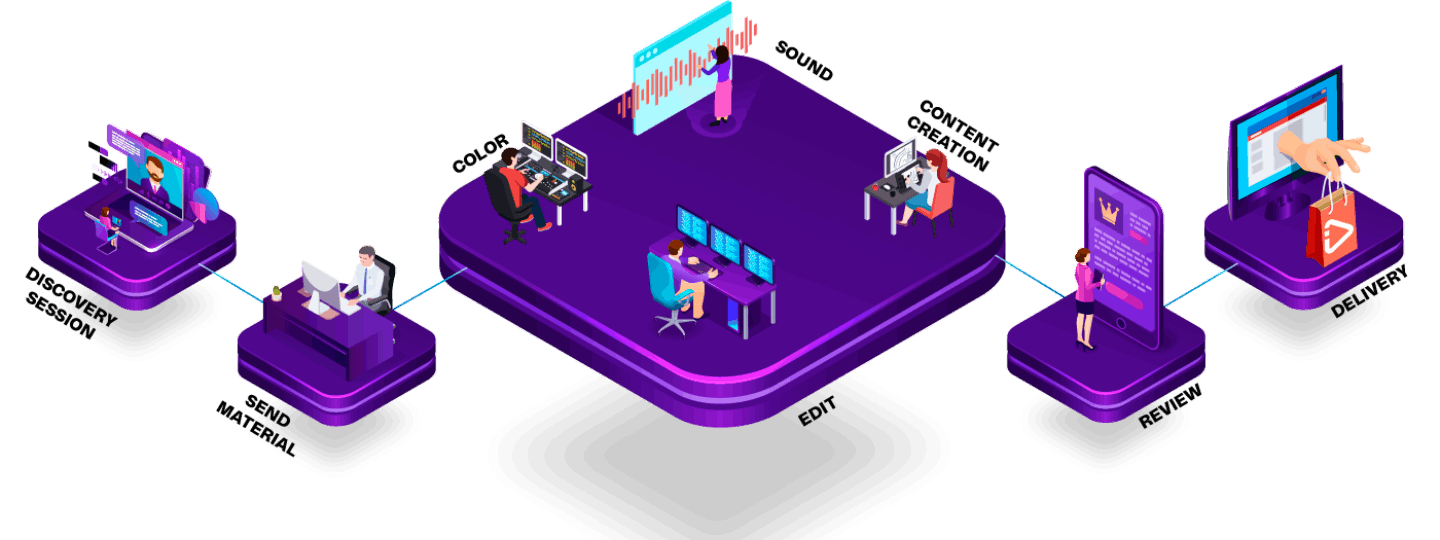
- How the Post-Production Workflow Works, Step by Step
- What the Client Experience Actually Looks Like
- Post-Production Agency vs. Freelancer vs. In-House Editor
- How to Know If You Actually Need a Post-Production Agency
- What to Look for When Evaluating a Post-Production Agency
- Frequently Asked Questions
- Verdict
What Exactly Is a Post-Production Agency?
Post-production is everything that happens after the camera stops rolling. A post-production agency is a company — not a solo operator, not a one-person shop — that delivers this entire phase as a managed service. They take your raw footage, audio files, scripts, or brief, and hand back a finished, platform-ready video asset.
The distinction matters. “Post-production” as a concept is over a century old — the term comes from the film industry, where it described the editing, scoring, and effects work that followed principal photography. Today, the same discipline applies to YouTube channels, SaaS product demos, corporate training libraries, social media content, and broadcast-grade marketing campaigns. A post-production agency serves all of these, at scale, with predictable delivery.
What separates an agency from a freelancer is structure. An agency has a team — typically a project manager, a lead editor, a colorist, a motion graphics artist, and an audio engineer, sometimes more — working in concert. That team operates within systems: intake forms, revision workflows, asset management, and quality assurance checks. When you hire an agency, you’re buying a process, not just a person.
The global post-production market has grown substantially as video becomes the default format for marketing, internal communications, and customer education. Brands that move to video-first strategies commonly report stronger engagement and better conversion rates than text or image-only formats — making post-production less of a creative luxury and more of a strategic operational requirement.
In practice, a post-production agency sits between the shoot and the publish button. You provide raw material; they return finished content. The scope of “finished” depends on the agency — some deliver only edited files, while full-service partners deliver edited, graded, audio-mixed, captioned, and thumbnail-designed content formatted for every platform you publish on. The more comprehensive the scope, the more an agency functions as an extension of your marketing operation rather than a vendor you occasionally engage.
The Full Service Stack: What a Post-Production Agency Actually Delivers
A full-service video editing agency does not just cut footage — it handles the entire downstream production chain. Here is what that looks like in practice across the 7 core service areas you should expect from a credible partner.
1. Video Editing
This is the core service and it goes well beyond trimming clips. Professional editors structure narratives, pace sequences for viewer retention, manage b-roll coverage, synchronize dialogue, cut to music rhythm, and eliminate dead air — all while keeping the audience engaged. A skilled editor understands the platform: a YouTube long-form edit behaves differently from a LinkedIn short-form or a broadcast commercial. Agencies employ editors who specialize by format and by industry, so your video gets a cutter who has executed similar work hundreds of times before.
For clients publishing multiple videos per week, agencies also manage the template layer — ensuring consistent brand structure, recurring intros and outros, lower thirds, and format specs without requiring a fresh brief every time.
2. Color Grading and Color Correction
Color correction fixes technical problems — exposure imbalances, white balance shifts, footage from multiple cameras that need to match. Color grading is the creative step that follows: imposing a deliberate look and mood on the finished piece. Brands with strong visual identity have a consistent “look” that carries across all their video content, and a post-production agency’s colorist maintains that consistency at scale.
Consumer-grade tools can approximate basic corrections, but professional grading in DaVinci Resolve or similar platforms — on a properly calibrated monitor — produces a significantly different result. The difference is visible even to untrained viewers, even if they cannot articulate why the video “just looks better.”
3. Motion Graphics and Animation
Motion graphics transform data, text, and branding elements into animated on-screen visuals. This includes animated lower thirds, title cards, kinetic text, data visualizations, explainer animation sequences, and brand reveal intros. For SaaS companies and B2B brands, motion graphics are often the difference between a video that clearly communicates value and one that loses viewers during the explanation phase.
Full character animation and 3D work are separate specializations that some agencies cover and others outsource to specialist contractors. When evaluating a partner, confirm which capabilities live in-house versus which ones get subcontracted — accountability is very different across those two scenarios.
4. Audio Mixing and Sound Design
Viewers tolerate mediocre visuals far longer than they tolerate bad audio. A post-production agency’s audio team handles noise reduction, dialogue leveling, music licensing and mixing, sound effects, and final loudness normalization to platform standards — typically -14 LUFS for online video, -23 LUFS for broadcast. They also handle multi-track sync when footage was shot with separate audio recorders, a common situation with talking-head interviews and corporate productions shot on dual-system sound.
5. Subtitles and Closed Captions
Captions are no longer optional. Platform data consistently shows that a substantial share of social video is watched without sound, and captions measurably increase completion rates across all publishing channels. A post-production agency handles transcription — human-verified even when AI-assisted — timing sync, and caption file delivery in platform-appropriate formats: SRT for YouTube and LinkedIn, VTT for web players, burned-in captions for social feeds. Accessibility compliance (WCAG 2.1, FCC standards for broadcast) is built into their workflows by default rather than added as an afterthought.
6. Thumbnail Design
On YouTube and other platforms where thumbnails appear before the viewer clicks, the thumbnail is often the highest-ROI single asset in the entire production cycle. Agencies that specialize in YouTube content treat thumbnail design as a core deliverable — A/B testing principles, eye-tracking research, and brand template systems all factor into the design process. A weak thumbnail can suppress click-through rates regardless of how strong the video content underneath it is, which is why professional agencies invest dedicated design resources here rather than treating it as an afterthought.
7. Format Adaptation and Content Repurposing
A long-form YouTube video, a LinkedIn carousel script, a 60-second Instagram Reel, and a 15-second TikTok cut all serve different audiences and follow different engagement patterns. Post-production agencies with repurposing workflows extract maximum value from a single primary shoot — adapting the same core content into multiple platform-optimized formats without requiring a separate brief for each one. This multiplies content output without multiplying production costs proportionally, which is why brands with active multi-channel video strategies find it significantly more economical to work with an agency than to hire editors per platform.
💡 Pro Tip: When evaluating a post-production partner, ask specifically which services live in-house versus which ones get outsourced to contractors. The answer tells you a lot about consistency, accountability, and what actually happens if something goes wrong with a deliverable.
How the Post-Production Workflow Works, Step by Step
Understanding the workflow tells you what you are actually buying — and what you are responsible for providing. Different agencies structure this differently, but a well-run post-production operation follows a predictable 4-phase pattern.
Phase 1: Intake and Briefing
Before any editing happens, the agency needs to understand the project. This includes the deliverable format, target platform, audience, tone, desired pacing, brand guidelines, and any reference material you want them to match. Structured agencies use intake forms or project management tools to capture this in a standardized way — rather than hunting for specs buried in email threads from six months ago.
You will also need to transfer your raw footage. Most agencies use cloud-based asset management systems — Frame.io, Google Drive, Dropbox, or proprietary platforms — to receive files. Footage handoff is often where inexperienced clients create delays: disorganized file naming, missing audio files, or footage that has not been backed up properly can stall a project before editing even begins. A good agency will send you a pre-delivery checklist during onboarding to prevent this.
Phase 2: Assembly and First Cut
The editor builds the first version of the video — selecting the best takes, assembling a narrative structure, and roughing in music and pacing. This first cut is intentionally not perfect: it is designed to get the structure approved before investing hours in fine details. Most agencies deliver a first cut within 2 to 5 business days for standard video lengths, though complex projects or rush turnarounds may involve additional fees. The first cut review is where the client’s structural feedback matters most — this is the right time to adjust the narrative arc, not after the grade and audio mix are complete.
Phase 3: Revisions
Agencies typically offer a defined number of revision rounds — commonly 2 rounds are included in the base price, with additional rounds available at a stated cost. Good revision workflows use timestamped comment tools such as Frame.io or Vimeo Review rather than email, so feedback is precise and actionable rather than vague and ambiguous. The number of revision rounds actually needed depends heavily on how clear the original brief was: a well-briefed project often goes final after a single revision round. An unclear brief will burn through revision rounds and generate frustration on both sides.
Phase 4: Finishing and Delivery
Once the edit is locked, the finishing phase begins: color grade, audio mix, motion graphics, captions, and platform-specific format exports. The agency delivers final files in agreed formats — typically H.264 or H.265 MP4 for web distribution, with ProRes or DNxHD masters if archival quality is required. Some agencies also handle direct upload to your YouTube channel, LinkedIn page, or CMS as part of the service. At this stage, nothing structural changes — finishing is about polish, not structure. Any structural changes at the finishing phase restart the clock and usually cost additional fees.
What the Client Experience Actually Looks Like
Working with a post-production agency feels meaningfully different from hiring a freelancer — both for better and, if you choose the wrong partner, for worse. Here is what a healthy client experience looks like across the full engagement lifecycle.
Onboarding
A structured agency invests meaningfully in onboarding. Expect a kickoff call or onboarding session where you establish brand guidelines, style references, communication norms, and workflow preferences. The best agencies create a brand bible for your account — documenting your fonts, color palette, intro and outro templates, and tone guidelines — so the team can work autonomously without re-asking basic questions on every subsequent project.
Onboarding typically takes 1 to 2 weeks before the first production begins. This is normal and worth it. A freelancer may start faster but will ask the same questions repeatedly across every engagement. An agency front-loads that learning so every subsequent project runs faster and requires less from you.
Day-to-Day Communication
You should not need to chase a post-production agency for updates. Good agencies assign a dedicated account manager or project manager — a single point of contact who coordinates the internal team and keeps you informed without burdening you with internal logistics. Communication typically happens via Slack, email, or a shared project management board such as ClickUp, Asana, or Notion, depending on the agency’s preferred tools.
The agency handles internal coordination invisibly: you submit footage, you receive a draft, you leave timestamped feedback, you receive revisions, you approve, you receive finals. The internal task assignments, editor handoffs, and QA checks happen behind that interface. That operational invisibility is a significant part of what you are paying for. Every hour you are not managing a production pipeline is an hour you spend on your actual business.
Turnaround Times
Standard turnaround for a professionally edited video commonly runs 3 to 7 business days depending on length and complexity. Rush delivery — 24 to 48 hours — is typically available at a premium, and you should expect to pay meaningfully more for expedited service, though rates vary significantly by agency. For recurring content relationships such as weekly YouTube videos or monthly webinar edits, agencies often establish a production calendar so delivery is predictable regardless of demand spikes or internal team capacity shifts.
💡 Pro Tip: Turnaround guarantees are only meaningful when they are backed by SLAs with defined consequences. Ask prospective agencies what happens if they miss a deadline — a vague “we will do our best” is a yellow flag; a defined credit or priority re-delivery policy is a much better sign.
Post-Production Agency vs. Freelancer vs. In-House Editor: A Direct Comparison
These three options have fundamentally different economics, risk profiles, and capability ceilings. The right choice depends on your output volume, quality requirements, and operational preferences. For a deeper breakdown of the agency-versus-freelancer decision specifically, see our guide on video editing agency vs. freelancer.
How to Know If You Actually Need a Post-Production Agency
Not every business is ready for — or requires — a post-production agency. Here is how to think about the threshold honestly. Understanding how much professional video editing costs across different service models is usually the useful starting point for this analysis.
Signs You Have Outgrown Your Current Setup
You are probably past the freelancer or in-house threshold if any of the following apply to your situation:
- You are publishing more than 4 videos per month and quality consistency has started to slip
- A freelancer has missed a deadline, delivered late, or gone dark mid-project in the past year
- Your in-house editor is becoming a bottleneck because they are the only person who can produce to your standard
- You need consistent multi-format output — long-form, shorts, reels, ads — that one person cannot sustain at the required quality level
- Your video content directly drives revenue through product demos, case studies, or sales enablement, and quality inconsistency is costing you deals or eroding trust
- You are spending more than 2 hours per video managing revision email chains or chasing updates from your editor
- Your content calendar has a backlog that is consistently 2 or more weeks behind schedule
When a Freelancer or In-House Setup Still Makes Sense
A post-production agency is probably overkill if you are producing fewer than 2 videos per month with no near-term scaling plans. At that volume, the overhead of a structured agency relationship — retainer fees, onboarding time, process alignment — exceeds the value it returns. A competent freelancer with clear briefs serves that use case more efficiently and at a lower cost.
In-house editing makes economic sense for organizations with extremely high volume — daily publishing cadences, for example — or where editing is so tightly integrated with the production process that the delay inherent in external handoffs would be operationally unacceptable. Broadcast news operations, large media publishers, and some major consumer brands fall into this category. For most B2B companies, creator-led businesses, and growth-stage SaaS brands, the in-house route carries hidden costs in recruitment time, management overhead, and the single-person bottleneck risk that most founders underestimate until they experience a key-person departure.
What to Look for When Evaluating a Post-Production Agency
Not all post-production agencies are created equal. Some specialize in broadcast, others in YouTube, others in corporate or SaaS video. Choosing the right partner starts with asking the right questions before you sign anything.
Portfolio and Niche Alignment
A post-production agency’s portfolio tells you more than their pitch deck ever will. Look for work in your specific content category — not just “they have done great videos” but “they have done great videos that look like what I need.” If you are a SaaS company, look for SaaS product demos and explainer videos. If you are a creator, look for YouTube content with strong retention structure. If your content requires specific accessibility standards or multilingual captions, check whether their captioning and localization work is actually professional-grade.
Ask for case studies that show the client’s starting problem and a measurable outcome — not just a beautifully produced showreel. An agency that can articulate why certain creative decisions were made for a specific business objective is a fundamentally different caliber of partner than one that simply shows you attractive work without context.
Workflow and Communication Systems
Ask: how do you receive footage? How do I give feedback? Who is my point of contact? What is your revision policy? What happens if you miss a deadline? The quality of the answers reveals the maturity of the operation. Agencies with solid systems answer these questions confidently and specifically. Agencies that are improvising give vague or inconsistent answers, and those inconsistencies compound over the course of a long-term relationship.
Project management tools — ClickUp, Asana, Monday.com — review platforms such as Frame.io or Vimeo Review, and asset management systems are standard infrastructure for a properly run agency. If a prospective partner’s workflow runs primarily on email threads and ad hoc Google Drive folder sharing, that is a reliable sign of limited operational scale and the client friction that tends to follow.
Pricing Model Transparency
Post-production agencies typically price in one of three ways: per-project fees, monthly retainers, or hybrid models with a base retainer plus overages for volume beyond a defined cap. Each has trade-offs. Per-project pricing offers flexibility but creates variability and a latent incentive misalignment — the agency profits when projects are complex, while you benefit from simplicity. Retainers create predictable budgeting and align incentives more cleanly: the agency wins when they deliver efficiently so they have capacity for more of your work. Hybrid models attempt to balance both without fully achieving either.
Typical agency retainer pricing varies substantially by output volume and service scope. Fully-managed video production relationships for mid-market companies commonly start in the range of a few thousand dollars per month; enterprise content programs can run significantly higher. The relevant comparison is not “is this expensive?” but “what does this cost relative to the outcomes it drives and the internal hours it replaces?”
Frequently Asked Questions
What is the difference between post-production and video editing?
Video editing is one component of post-production. Post-production is the umbrella term for everything that happens after footage is shot: editing, color grading, audio mixing, motion graphics, captioning, and final delivery. Calling something “post-production” signals the full scope of these interconnected services, while “video editing” technically refers only to the cut-and-assemble phase — though the terms are often used interchangeably in casual conversation, which can lead to scope misunderstandings with vendors.
How much does a post-production agency cost?
Pricing varies substantially based on output volume, service scope, and agency tier. Entry-level subscription services may start under USD 1,000 per month for basic editing; full-service agency retainers for mid-market clients typically begin in the range of a few thousand dollars per month and scale upward with volume. Per-project rates for a single professionally edited video of 5 to 10 minutes commonly range from USD 300 to over USD 1,500 depending on complexity, turnaround speed, and the number of services included. For a full breakdown by service type and format, see our detailed guide on how much professional video editing costs.
Do I need to provide a script or a shot list?
Not necessarily. Some agencies offer script-first workflows where they edit directly from a document; others work entirely from raw footage with only a brief. The more context you provide — shot list, script, reference videos, timing notes, platform target — the faster and more accurately an agency can deliver a tight first cut. Provide as much as you have; experienced editors work well with incomplete information, but more input consistently produces a tighter, more on-brief first draft that requires fewer revision rounds.
What software does a post-production agency use?
Industry-standard tools include Adobe Premiere Pro and DaVinci Resolve for editing, DaVinci Resolve for color grading, Adobe After Effects for motion graphics, Adobe Audition or Logic Pro for audio mixing, and Adobe Photoshop or Figma for thumbnail design. The specific toolchain matters less than the skill of the operators using them — but it is worth confirming that the agency’s tools are compatible with any source formats or project files you may need to exchange, particularly if you have an in-house team that will continue work after delivery.
How do I know if a post-production agency is the right fit for my brand?
Start with a paid test project before committing to a retainer. Provide a real brief with a real asset and evaluate: Did they ask smart clarifying questions before starting? Did the first cut match your brief without excessive back-and-forth? Was the turnaround time accurate? Was communication proactive or reactive? A test project tells you more about operational fit than any sales call. An agency confident in their work will welcome it. An agency that resists paid trials or can only offer speculative samples is a meaningful yellow flag worth heeding.
Verdict: Is a Post-Production Agency Right for You?
A post-production agency is the right choice when video is serious enough to your business that inconsistency or missed deadlines have real operational consequences. If your video content drives revenue, builds brand authority, or represents your company externally, it deserves the infrastructure of a professional agency — not the precarious dependency on a single freelancer whose attention is divided across multiple other clients and whose availability can disappear without warning.
The agencies worth working with do not just execute tasks — they understand the strategic role your video plays and build their process around protecting it. They onboard properly, communicate clearly, deliver on schedule, and hold themselves accountable to quality standards you can measure. The right partner makes your content operation faster, more consistent, and more scalable — without adding management overhead to your plate.
Increditors works with SaaS companies, agencies, and creator-led businesses who treat video as a revenue driver, not an afterthought. Every engagement includes a dedicated senior editor, a project manager, and a full-service production stack — editing, color grading, audio, captions, motion graphics, and thumbnails — delivered on a predictable schedule under a retainer that scales with your content output needs. If you want to understand what a properly run post-production relationship looks like from the inside, a conversation is the fastest way to find out.
Ready for Video That Actually Converts?
Tell us about your project and we will put together a custom plan.