








![3D Explainer Video - ScribbleLive.mp4_snapshot_00.12_[2022.03.09_03.14.16]](https://increditors.com/wp-content/uploads/elementor/thumbs/3D-Explainer-Video-ScribbleLive.mp4_snapshot_00.12_2022.03.09_03.14.16-r7wb53mx72rxst3qcqyrfxdmeyzb5r9jbl0wbjujh4.png "3D Explainer Video – ScribbleLive.mp4_snapshot_00.12_[2022.03.09_03.14.16]")
























Universities and colleges produce more video content than ever before — virtual campus tours, faculty research spotlights, course promos, alumni campaigns — but most of it lands somewhere between forgettable and cringe. This guide covers the 8 video types higher education teams must master, real-world scenarios where specialist post-production shifted enrollment and donor metrics, and a clear framework for choosing a video editing partner that actually understands accessibility compliance, brand standards, and academic budget cycles.
- Why Video Is Non-Negotiable for Higher Education in 2026
- The 8 Core Video Types Universities Need — and How to Edit Each
- ROI Cases: How Better Editing Moved Real Higher Ed Metrics
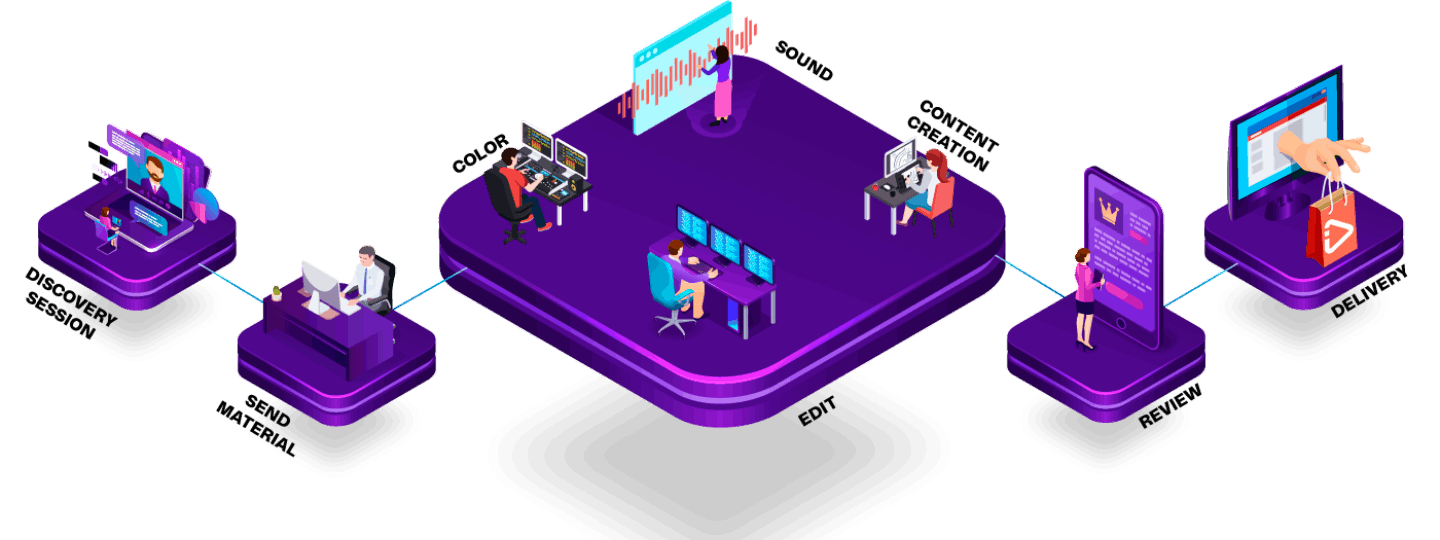
- The University Video Post-Production Workflow
- What to Look for in a Video Editing Partner for Higher Ed
- Why Specialist Post-Production Matters for Higher Ed Budget Reality
- FAQ
- Verdict & Final Recommendations
Why Video Is Non-Negotiable for Higher Education in 2026
If you work in university marketing, institutional communications, or academic media, you already know this: the competition for prospective students has never been fiercer, and attention spans have never been shorter. Higher education institutions are no longer competing only with peer universities — they are competing with every content creator, streaming platform, and short-form video algorithm that has trained an entire generation of prospective students to demand visually compelling stories within the first three seconds.
The statistics tell a consistent story. Survey after survey of prospective undergraduate and graduate students reports that video content is among the most influential touchpoints in their decision-making process — often cited alongside peer recommendations and institutional reputation. Virtual campus tours have become standard expectation, not a differentiator. Faculty research videos have migrated from departmental afterthoughts to core recruitment tools for PhD programs. And institutions that have invested in polished, consistent, brand-aligned video are routinely outperforming peers in inquiry-to-application conversion rates.
The Stakes for Enrollment and Institutional Reputation
For admissions offices, a single high-quality virtual tour video can serve thousands of prospective students who will never set foot on campus before applying — particularly international students, transfer students, and first-generation applicants who cannot afford travel. When that video looks amateur, it does not just fail to impress; it actively signals institutional mediocrity, which is the last message a tuition-dependent institution can afford to send.
For development and alumni relations offices, the calculus is similar. Major gift campaigns increasingly rely on emotional video storytelling to move donors from passive nostalgia to active giving. A poorly edited alumni impact video — flat colour grading, jarring cuts, audio that dips in and out — does not just underperform; it can erode the sense of institutional pride that motivates alumni to give in the first place.
The Content Volume Problem
The second major challenge for higher education communicators is sheer volume. A mid-sized university might have 12 colleges, 80-plus academic departments, an athletics program, an alumni office, a development office, and a central marketing communications team — each with their own video needs, brand interpretation, and production timeline. Managing this at scale, while maintaining visual consistency and professional quality, is genuinely difficult without a systematic post-production approach.
This is precisely where specialist post-production partners earn their keep — and where institutions that treat video editing as a commodity task consistently fall short of their potential.
The 8 Core Video Types Universities Need — and How to Edit Each
Not all university video is created equal. Each content type has its own editing grammar, pacing requirements, and success metrics. Getting this right requires not just technical skill, but an understanding of what each video is actually supposed to do for the institution.
1. Virtual Campus Tours
The virtual tour is the flagship. It is typically the most-watched video asset an institution produces, and it carries the heaviest brand responsibility. Editing requirements here include smooth aerial-to-ground transitions, colour grading calibrated to represent campus architecture accurately (not oversaturated), professional voiceover sync, and strategic chapter markers for digital distribution. Pacing matters enormously — too fast and the viewer cannot absorb the campus; too slow and they drop off. Industry benchmarks suggest optimal tour length sits between 6 and 12 minutes for a comprehensive tour, with a 90-second highlight cut for social and digital advertising.
2. Faculty Research Spotlights
These videos serve dual purposes: attracting graduate applicants and demonstrating research excellence to funders and peer institutions. The editing challenge is translating often highly technical content into watchable, emotionally resonant stories without misrepresenting the science. Great editing here involves thoughtful B-roll selection (lab footage, fieldwork, data visualizations), tight interview trimming that preserves the researcher’s authentic voice, and lower-third titling that meets institutional branding standards. Target length: 3 to 5 minutes for a full feature, 60–90 seconds for a social cut.
3. Student Testimonial and Day-in-the-Life Videos
Among the highest-converting video types in the admissions funnel, student testimonials need to feel authentic without looking unpolished — a difficult editorial balance. The temptation to over-produce these (heavy colour grading, rapid cuts, music that overwhelms the speaker) kills the very authenticity that makes them work. Specialist editors know to use minimal music underscores, preserve natural speech rhythms, and cut to B-roll of the actual campus, academic, and social experiences being described rather than generic stock footage.
4. Course and Programme Promotional Videos
With online enrolment growing across every institution type, course promo videos have become a critical conversion asset. These sit at the intersection of content marketing and direct response — they need to communicate programme structure, outcomes, and career pathways while generating inquiry clicks. Editing for these videos requires a clear narrative arc, graphics that illustrate programme structure (without looking like a PowerPoint), and a call-to-action that feels natural rather than tacked on.
5. Commencement, Events, and Brand Moments
Graduation ceremonies, convocations, research symposia, and major institutional milestones generate enormous quantities of raw footage that typically land in the editorial equivalent of a black hole. Turning six hours of ceremony footage into a five-minute highlight reel that alumni will share, prospective students will watch, and leadership will be proud to feature on the institutional homepage requires genuine editorial judgment — not just technical cutting ability.
6. Alumni and Donor Impact Videos
Development offices use video to make abstract impact tangible. A scholarship video that follows a specific student’s journey from application to graduation, with interviews, campus footage, and a clear articulation of how donor funding made it possible, typically outperforms generic campaign copy by a significant margin in major gift solicitations. These videos require delicate editorial handling — they must be emotionally resonant without being manipulative, and they must represent institutional values accurately.
7. Athletics and Spirit Videos
For institutions with active athletics programmes, game recaps, athlete profiles, and season highlights are high-engagement social content. These videos demand fast-paced editing, dynamic music synchronization, and colour grading that makes game-day footage pop in social feeds. They also serve enrollment: research consistently shows that prospective students, particularly in the US market, weight campus culture and athletics alongside academic factors when choosing institutions.
8. DEI, Accessibility, and Culture Stories
Institutions increasingly need to demonstrate genuine commitment to diversity, equity, and inclusion — not just state it. Video storytelling is the most credible medium for this purpose, provided it is executed with care. Poor editing choices — tokenistic casting in B-roll, interviews that feel scripted or performative, music selections that undercut the message — can backfire spectacularly. Expert editors working in this space understand the nuance required.
ROI Cases: How Better Editing Moved Real Higher Ed Metrics
The question higher ed marketing directors consistently face is whether the investment in specialist video post-production translates to measurable institutional outcomes. The honest answer: it depends on what you measure, how you attribute it, and whether your institution actually treats video as a strategic asset rather than a communications afterthought. With those caveats in place, here are three scenario types where better editing reliably shifts the numbers.
Virtual Tour Completion Rates and Application Rates
Institutions that have replaced internally produced virtual tour videos with professionally edited equivalents commonly report a significant improvement in video completion rates — meaning more prospective students watch the full tour rather than dropping off in the first 90 seconds. Higher completion rates correlate with higher inquiry form submissions, and higher inquiry volume correlates with improved application numbers, particularly for out-of-state and international students who rely heavily on digital touchpoints.
The editing variables that typically drive this improvement include: tighter pacing in the opening 60 seconds, colour grading that accurately represents campus architecture and green space (students notice when reality doesn’t match the video), professional voiceover delivery, and strategic chapter markers that allow viewers to jump to the content most relevant to them rather than watching linearly.
Online Programme Enrolment Campaigns
For institutions with online or hybrid degree programmes, course promotional videos serve a function very similar to product marketing video in a SaaS company — they must convert a viewer who has never interacted with the institution into an inquiry lead. The same principles that drive SaaS video conversion apply here: lead with the outcome (not the institution), demonstrate social proof early, and make the call to action contextually obvious rather than awkward.
Institutions that have upgraded their online programme promo videos from screen-recorded slide presentations with voiceover (the de facto standard at many universities) to properly produced and edited short-form explainers consistently report improvement in inquiry-to-enrolment conversion ratios. Knowing exactly how much professional video editing costs matters here, because decision-makers need to weigh that investment against per-student acquisition costs — in many programmes, even a modest improvement in conversion justifies the editing spend many times over.
Alumni Giving Campaigns
Development offices report that video is their highest-performing channel for mid-tier and major gift asks when the video is genuinely well-made. The key editorial elements that drive giving behaviour include: specificity (a named scholarship, a named student, a named outcome), emotional authenticity rather than institutional polish, and a clear statement of impact that connects the donor’s past gift or potential gift to a tangible human result. A development office that invests in two or three well-edited impact videos per giving season and deploys them strategically across email campaigns and solicitation meetings typically sees better results than one that produces ten generic institutional videos with no clear narrative through-line.
💡 Pro Tip: Before your next major giving campaign, produce a 90-second impact story video featuring one specific scholarship recipient with their own words. Track click-through rates and gift response rates compared to your standard email copy-only approach. The gap between formats is typically significant enough to make the case for video investment at your next budget meeting.
The University Video Post-Production Workflow
Understanding how professional video post-production actually works in a higher education context is essential before you can evaluate partners or make internal resource decisions. The workflow is more complex than most institutional stakeholders realize, and the complexity is where most in-house attempts run into trouble.
Pre-Production Requirements That Shape Post-Production
Good post-production begins in pre-production. The most common institutional mistake is treating video production as a shoot-first-figure-it-out-in-edit-later operation. This approach produces disorganised rushes, missing B-roll, interviews that can’t be trimmed without losing essential content, and audio that is unusable. When briefing a production team, the post-production team needs to be included in — or at minimum consulted on — shot list development, interview question design, and file delivery format. This alignment between production and post dramatically reduces editing time and revision cycles.
The Editing and Review Cycle in Higher Ed Contexts
University video projects typically involve more stakeholder review cycles than commercial video projects — and this is one of the most frequently underestimated cost and timeline drivers. A faculty research video might require sign-off from the researcher, their department head, the college communications officer, the central marketing team, and the legal or compliance office. Each stakeholder will have different priorities and different change requests, and managing this review process without losing editorial integrity requires experience.
Specialist partners who work with universities will typically build structured review rounds into their project management approach — first cut for the primary stakeholder, second cut incorporating their changes plus any institutional brand review, third cut for final approvals. Freelancers and general-purpose agencies often don’t have this structure and end up in open-ended revision loops that blow timelines and budgets.
Accessibility Requirements: Captions, Audio Description, and Compliance
This is where higher education differs most significantly from commercial video production. Universities in many jurisdictions have legal obligations under disability accessibility frameworks — in the US, Section 508 and the Americans with Disabilities Act; in the UK, the Web Content Accessibility Guidelines (WCAG) 2.1 AA standard; in the EU, the European Accessibility Act. These obligations require that all publicly available institutional video content includes accurate closed captions and, in many cases, audio description tracks for visually impaired viewers.
Auto-generated captions from YouTube or Vimeo do not meet the accuracy standards required for compliance. Professional post-production partners working with universities need to deliver human-reviewed caption files (.srt or .vtt format) as a standard deliverable, not an add-on. This requirement should be non-negotiable in any vendor selection process.
What to Look for in a Video Editing Partner for Higher Ed
Choosing a video editing agency as a higher education institution is a different exercise than it is for a startup or an e-commerce brand. The criteria that matter in a higher ed context are specific, and institutions that don’t know what to look for often end up with technically competent but contextually wrong partners who produce work that looks fine but doesn’t serve institutional goals.
Accessibility and Compliance Expertise
As noted above, accessibility compliance is non-negotiable. Before shortlisting any post-production partner, ask specifically how they handle closed captioning — whether they provide auto-generated captions or human-reviewed caption files, and whether they deliver in the file formats your video hosting platform requires (.srt, .vtt, .sbv). Ask whether they have experience delivering audio description tracks. If the partner is unfamiliar with these requirements, move on immediately.
Brand Consistency at Scale Across Multiple Departments
Universities are complex organisations with strong centrifugal brand forces — every college and department wants to express its own identity, and the central brand team is constantly fighting entropy. A post-production partner working with a university needs to be capable of maintaining brand consistency (colour grading that matches your institution’s brand palette, lower-third templates that align with your typography standards, intro/outro sequences that are visually unified) across projects for multiple departments simultaneously. This requires a structured brand onboarding process and the technical discipline to use approved templates consistently.
Revision Flexibility That Matches Institutional Decision-Making
Institutional decision-making is slow. That’s a structural reality of universities, not a character flaw. A post-production partner that operates on a strict “two rounds of revisions and then we charge extra” model will create friction and budget overruns in an institutional context. Look for partners with clearly defined revision policies that accommodate the multi-stakeholder review reality of academic institutions — whether that means structured revision rounds with stakeholder consolidation requirements or flexible retainer arrangements that absorb revision volume without per-change billing.
Turnaround Times That Match Academic Cycles
Universities operate on semester and recruitment cycles that create predictable crunch periods: application season (September–January for US institutions), admitted student days, graduation season, annual giving campaigns. Partners need to demonstrate capacity to handle surge volume during these predictable peaks without degrading quality or blowing turnaround times. Ask directly how they manage capacity during peak periods and what their guaranteed turnaround commitments look like.
💡 Pro Tip: Request a sample accessibility deliverable — a real caption file from a past project — during the vendor evaluation process. If the partner can’t produce one quickly, or if the captions are auto-generated and unreviewed, it tells you everything you need to know about their compliance preparedness. This single test eliminates partners who can’t serve a university context before you’ve invested in an RFP process.
Why Specialist Post-Production Matters for Higher Ed Budget Reality
Budget conversations in higher education are always politically charged. Marketing and communications offices compete for constrained budgets against academic priorities, and the case for video investment needs to be made carefully. Here is the honest financial argument for specialist post-production, without the hype.
The True Cost of In-House Video Production
Many universities built in-house video capabilities during a period when the prevailing wisdom was that owning equipment and hiring staff would reduce costs. For some high-volume institutions with specific and predictable content needs, this model works. For most, it doesn’t. In-house teams typically cover the full range from production to post-production, which means editors are frequently pulled into shooting duties, and shooters are expected to edit. The specialization that produces consistently excellent results in either domain is rarely possible when staff are spread across both.
Add the true cost of in-house editing: salary plus benefits for a professional editor at a university commonly runs between $55,000 and $90,000 annually depending on location and experience level, before factoring in equipment, software licenses (Adobe Creative Cloud, DaVinci Resolve Studio), storage infrastructure, and the management overhead of integrating the editing function into departmental workflows. For many institutions, this investment is not generating the return a specialist external partner would deliver for the same or lower total cost.
Academic Budget Cycles and the Case for Outsourcing
University budgets operate on annual cycles with fiscal year-end use-it-or-lose-it dynamics that create both challenges and opportunities for video investment. A specialist post-production partner with flexible retainer or project-based pricing can absorb irregular volume in ways that fixed in-house headcount cannot. Institutions that structure video editing as an outsourced function — whether fully or as a hybrid model supplementing lean in-house capabilities — gain budget flexibility that matches the institutional budget cycle reality.
Getting More From Every Shoot
Perhaps the most underappreciated argument for specialist post-production in higher ed is asset maximization. A single well-planned campus shoot day can produce raw footage sufficient for a 10-minute virtual tour, a 2-minute social highlight cut, eight 30-second social media clips, a 60-second admissions reel, and dozens of still frames. But realizing this full asset value requires an editor with the strategic vision to plan the full asset suite from the raw footage, not just the primary deliverable. Specialist partners bring this production value mindset; most freelancers and generalist agencies do not.
Increditors works with content-intensive organisations — from SaaS companies to higher education institutions — applying exactly this asset maximization approach: a single shoot day should generate a full content library, not one video. The editorial infrastructure to execute this, from rough cut through delivery of 15+ derivative assets, is what separates a specialist video editing agency from a generalist service.
FAQ: Video Editing for Universities and Higher Ed
Q: How long should a university virtual campus tour video be?
A: Industry benchmarks suggest a comprehensive virtual campus tour performs best at 6 to 12 minutes, with a 90-second highlight version produced alongside it for social distribution and digital advertising. Completion rate data consistently shows that tours longer than 15 minutes see significant drop-off, while tours shorter than 5 minutes leave prospective students feeling they haven’t seen enough. Always produce both a full-length and a short version from the same shoot day.
Q: Do universities have to provide closed captions for all their videos?
A: In most jurisdictions, yes — for publicly available institutional content. In the United States, Section 508 of the Rehabilitation Act and the Americans with Disabilities Act establish captioning obligations for institutions receiving federal funding (which includes essentially all US universities). In the UK, WCAG 2.1 AA applies. Auto-generated captions from hosting platforms typically do not meet the accuracy standard required for compliance; institutions need human-reviewed caption files as a standard deliverable from their post-production workflow.
Q: What is the typical turnaround time for professional video editing for a university project?
A: It varies significantly by project complexity and review cycle requirements. A straightforward student testimonial with a 3-to-5-day first-cut turnaround is realistic for an experienced specialist partner. A comprehensive virtual campus tour with multiple review stakeholders and a full asset suite (main video plus social cuts plus caption files) will typically run 2 to 4 weeks from footage receipt to final delivery. Event highlight videos often require 24 to 48-hour turnaround for institutional social channels, which requires a partner with confirmed capacity for rush delivery.
Q: Should we hire an in-house editor or work with a specialist agency?
A: The honest answer depends on your volume, the predictability of that volume, and your internal capacity for managing creative relationships. Institutions with very high, consistent video output (large R1 research universities with well-funded communications operations) can justify the fixed cost of in-house editorial staff. Most mid-sized and smaller institutions — and even many large ones — get better total value from a specialist partner relationship that can scale with demand, absorb surge periods, and bring external perspective to institutional storytelling. A hybrid model is also common: lean in-house team for social-speed content, specialist partner for flagship institutional productions.
Q: How do we ensure brand consistency across video content from multiple departments?
A: Brand consistency at scale requires both process and tooling. On the process side: a central video brand guide (covering approved colour grades, lower-third templates, intro/outro sequences, and music style directions) that is provided to any internal or external producer working on institutional content. On the tooling side: pre-built project templates in editing software (Premiere Pro, DaVinci Resolve) that enforce the brand standards by default. Specialist agencies like Increditors build this infrastructure as part of the onboarding process, so every project starts from an approved brand foundation rather than being rebuilt from scratch.
Verdict: What Higher Education Institutions Should Do Now
The institutions consistently winning on video — attracting more applicants, converting more online learners, motivating more alumni to give — are not the ones spending the most on production. They are the ones treating post-production as a strategic function, not an administrative task. The quality of the editing determines whether six figures of camera, crew, and location spend produces an asset worth deploying or an asset that quietly gets buried on a YouTube channel with 200 views.
For most higher education institutions, the practical path forward looks like this: audit your current video asset library for quality consistency (most institutions discover significant variance across departments), establish or tighten your institutional video brand guide, and identify the three to five flagship video types that most directly support enrollment, retention, or development goals. Invest specialist-level post-production resources in those categories first, and measure the outcomes against your current baseline. The performance gap is almost always compelling enough to justify expanding the programme.
For institutions ready to move from average to excellent in post-production, partnering with a specialist who understands the unique demands of higher education — accessibility compliance, multi-stakeholder review cycles, brand consistency at departmental scale, and the seasonal surge dynamics of academic calendars — is the most efficient path. The editorial expertise that made a student testimonial convert ten more applications, or a donor impact video unlock a major gift, is not accidental. It is the product of a specialist knowing precisely what to cut, what to keep, and how to make an institution’s story feel genuinely worth watching.
Ready for Video That Actually Converts?
Tell us about your project and we will put together a custom plan.