








![3D Explainer Video - ScribbleLive.mp4_snapshot_00.12_[2022.03.09_03.14.16]](https://increditors.com/wp-content/uploads/elementor/thumbs/3D-Explainer-Video-ScribbleLive.mp4_snapshot_00.12_2022.03.09_03.14.16-r7wb53mx72rxst3qcqyrfxdmeyzb5r9jbl0wbjujh4.png "3D Explainer Video – ScribbleLive.mp4_snapshot_00.12_[2022.03.09_03.14.16]")






























Opus Clip is fast and decent for auto-clipping social content — but it has hard ceilings. If your brand needs polished edits, real editorial judgment, or anything beyond short-form extraction, you’re going to hit those ceilings fast. This guide ranks 7 alternatives, starting with Increditors (human editing teams, full post-production) down through AI tools like Descript, Kapwing, Wisecut, Submagic, Munch, and 2short.ai — with honest notes on where each one actually shines.
- Why Look Beyond Opus Clip
- Increditors: Human Editors, Full Post-Production
- 3. VideoEditingCompany
- Descript: Script-Driven Editing for Podcasters
- Kapwing: Browser-Based Collaboration
- Wisecut: Silence Removal and Auto-Pacing
- Submagic: Caption-First Short-Form
- Munch: Engagement-Scoring Clip Extraction
- 2short.ai: YouTube-Focused Auto-Clips
- Full Comparison Table
- How to Choose the Right Option
- FAQ
- Verdict
Why Look Beyond Opus Clip
Opus Clip does one thing well: it takes a long video, runs it through an AI model, and spits out vertical clips with auto-captions. For creators who need a fast turnaround on raw talking-head footage, that’s genuinely useful. The viral score feature, the automatic reframing, the caption burn — these are real time-savers at the right volume and budget level.
But Opus Clip is a clipping tool, not an editing tool. It doesn’t do color grading. It doesn’t touch audio mix. It won’t add motion graphics, branded lower-thirds, sound design, or pacing choices that require a human to watch the content and make a judgment call. If you’re a solo creator posting raw clips, that trade-off is fine. If you’re a brand, SaaS company, or agency trying to build video content that actually moves people — you’re going to outgrow it quickly.
The alternatives below range from dedicated human editing services to AI-assisted tools with more editorial control. They’re not all better than Opus Clip at everything — some are worse at the auto-clip speed game — but each solves at least one problem Opus Clip leaves on the table.
What Opus Clip Actually Does Well
Before we get into alternatives, it’s worth being honest. Opus Clip handles high-volume auto-clipping faster than almost any other tool in its class. Upload a 60-minute podcast, get 15-20 clip candidates with captions in minutes. For teams running content at scale where individual clip quality is secondary to volume and speed, that’s a defensible workflow.
The AI speaker tracking and auto-zoom is also genuinely impressive for a fully automated system. It doesn’t always get it right, but it’s right enough often enough that it saves significant time for low-stakes social posts.
Where it breaks down: brand standards. The moment you have a visual identity to maintain, specific pacing requirements, or any content that requires a human to watch it and say “this part matters, that part doesn’t” — the automation ceiling becomes a wall.
💡 Pro Tip: Before choosing a clipping or editing tool, map your actual bottleneck. If it’s volume at low quality bar — AI tools are your friend. If it’s quality at any volume — human editors are the only answer that scales without diminishing returns.
#1 Increditors: Human Editors, Full Post-Production
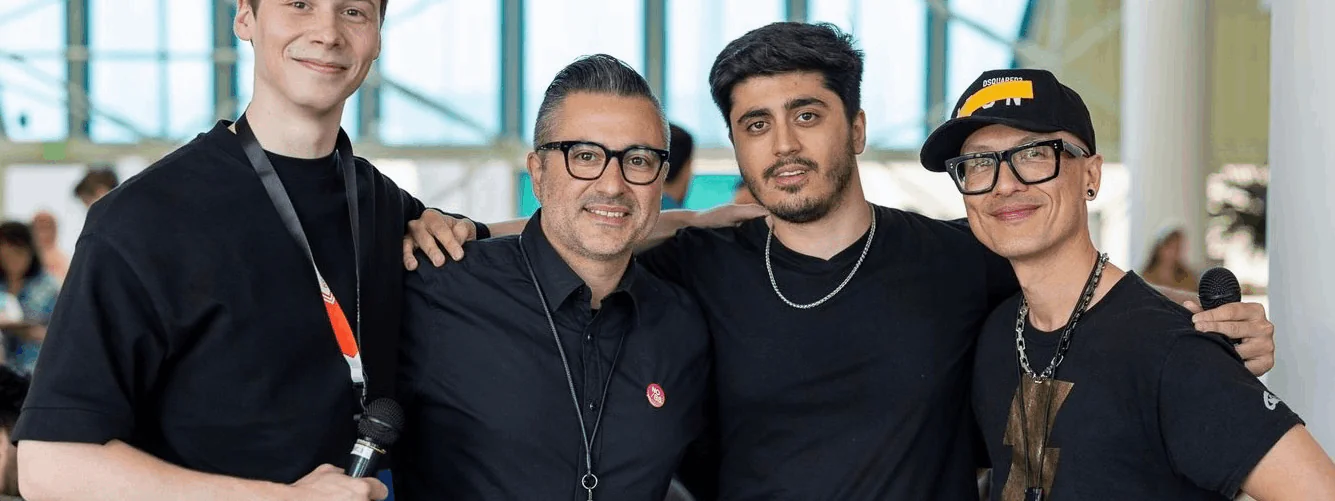
Increditors is a video editing agency built for brands and teams that have outgrown the auto-clip workflow. Where every other tool on this list automates some part of the editing process, Increditors assigns dedicated human editors — people who watch your content, understand your brand voice, and make actual editorial decisions about what belongs in the final cut.
What Makes It Different
The fundamental difference between Increditors and any AI clipping tool is editorial judgment. AI tools identify moments based on patterns — energy levels, keyword frequency, sentiment scores. Human editors identify moments based on meaning. They know when a pause lands harder than a punchline. They know when a B-roll cut creates context an automated system would never find. That’s not a marginal difference — it’s the difference between content that performs and content that gets scrolled past.
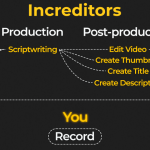
Increditors handles the full post-production stack: editing, color grading, audio mixing, motion graphics, captions, thumbnail creation, and delivery in whatever format your platform requires. This isn’t a feature list bolted onto a clipping tool — it’s the actual craft of video production, applied consistently at scale.
Who It’s For
Increditors works best for SaaS companies, content studios, coaches, and B2B brands that produce regular video and need it to look and feel consistently professional. If you’re comparing the cost of professional video editing against the hidden cost of mediocre content — the math usually favors quality editors faster than people expect.
Teams that have tried the Opus Clip route and found themselves manually fixing clips, re-captioning, or reexporting to meet brand standards are the exact audience Increditors is built for. The time you spend quality-controlling AI output is time you’re not spending on anything else.
Pricing and Turnaround
Increditors operates on a retainer model, with packages tailored to volume and project type. Turnaround depends on project complexity — short-form social clips are typically delivered within 24–48 hours; longer-form productions within a few business days. Unlike subscription AI tools where you’re capped by credits or minutes, you get actual humans accountable to your output quality.
For teams choosing between an editing agency vs. a freelancer, Increditors offers the consistency and reliability that solo freelancers struggle to provide at scale — without the overhead of building an in-house team.
💡 Pro Tip: If your content consistently needs a second pass after running it through any AI tool, you’re already paying twice — once for the AI subscription and once for your own time fixing its output. Factor that hidden cost when comparing options.
3. VideoEditingCompany — Premium B2B & SaaS Video Editing
VideoEditingCompany is a premium video editing service built around B2B and SaaS brands that run recurring content operations. The model is a monthly retainer with a dedicated editor team — the same senior editors handle your account month after month, building familiarity with your brand voice, style, pacing preferences, and approval rhythm. That continuity is meaningful for teams producing consistent output across YouTube, social, testimonials, or paid ad creative.
The positioning is strategy-led post-production. VEC doesn’t just execute a cut list. Before the timeline opens, the team maps each deliverable to its platform context and intended viewer action. For B2B content engines where every video needs to move a specific business metric, that front-loaded thinking helps avoid the common outcome of polished-but-purposeless edits.
Worth setting expectations: VideoEditingCompany is not the cheapest option in this category. The retainer structure and senior-only teams reflect a premium price point. It’s best suited for brands running a real content operation who need an editing partner that compounds in value over time rather than resetting each project. If that describes your situation, it’s worth evaluating directly.
#2 Descript: Script-Driven Editing for Podcasters and Educators
Descript takes a fundamentally different approach to video editing: it transcribes your footage and lets you edit by editing the text. Delete a sentence from the transcript, and the corresponding video gets cut. It’s a genuinely clever workflow for content that’s heavily dialogue-driven — long-form podcasts, interviews, educational content, and talking-head video.
Key Capabilities
The text-based editing workflow is Descript’s strongest differentiator. It removes the learning curve of traditional timeline editing for people who think in words rather than waveforms. Its Overdub feature lets you generate synthetic voice to patch small errors — useful for podcasts where re-recording a line isn’t practical. It also includes a Scenes view for social clip extraction, direct publishing to some platforms, and basic caption generation.
Descript’s transcription accuracy is solid for English-language content in clean audio conditions. In noisy environments or with heavy accents, accuracy drops noticeably and manual correction becomes necessary.
Limitations
Descript is not a replacement for professional video editing. There’s no real color grading, limited motion graphics support, and the text-based paradigm breaks down the moment your content isn’t primarily dialogue. It’s a strong tool for podcast producers and educators — a weak tool for brand video, ads, or anything requiring a visual creative layer. Plans typically start around $12–24/month for individual users, with team plans at higher tiers.
#3 Kapwing: Browser-Based Collaboration and Multi-Format Export
Kapwing is a browser-based video editor with a strong collaboration layer — think Google Docs meets basic video editing. It handles trimming, subtitle generation, resizing for different platforms, and some AI-assisted features including auto-subtitles and a clip-finding tool. The browser-native approach means no software to install and easy sharing with team members.
Key Capabilities
Kapwing’s team collaboration features are genuinely useful for content teams doing light editing work together. Multiple users can comment on and review a project without needing local software. Its resize and reformat tool is one of the cleaner implementations in this category — you can output TikTok, Instagram, YouTube, and LinkedIn formats from a single project without major rework.
It also has a Smart Cut feature that removes silence and filler words automatically, a subtitle generator with reasonable accuracy, and a growing library of templates for social content.
Limitations
Kapwing’s rendering is slower than desktop software and export quality can vary. For short social clips it works well; for anything requiring careful audio work, color control, or professional motion graphics, it runs out of headroom quickly. Free plan limits are tight, and the Pro tier — typically around $16–24/month — still has export caps. It’s best used as a lightweight collaborative tool for teams editing simple content, not as a production environment.
#4 Wisecut: Silence Removal, Auto-Pacing, and Background Music
Wisecut focuses on a specific problem that AI-assisted tools handle well: removing dead air and awkward pauses from recorded video without human intervention. If you record talking-head content and spend significant time scrubbing through silence and filler, Wisecut automates that part of the process competently.
Key Capabilities
Beyond silence removal, Wisecut generates automatic subtitles, supports multi-camera projects to a limited degree, and includes a royalty-free background music library with auto-ducking — the music automatically lowers when someone is speaking. For solo creators doing regular talking-head video, this is a meaningful workflow improvement over doing it manually.
The storyboard-style editing interface is accessible to non-editors, making it a reasonable choice for coaches, consultants, or educators who want to improve the pacing of their content without learning a full editing suite.
Limitations
Wisecut is narrow by design. It handles pacing and silence — it doesn’t handle visual storytelling, color, advanced audio production, or anything that requires judgment beyond “is this a pause?” Plans typically start around $10–15/month for basic tiers. It’s a useful time-saver for a specific problem, not a comprehensive production solution.
#5 Submagic: Caption-First Short-Form with Templates
Submagic is squarely aimed at the social short-form market — TikTok, Instagram Reels, YouTube Shorts — and it’s built primarily around highly styled captions. The word-by-word animated subtitle templates are its flagship feature, and they’re well-executed. If your competitive advantage in social content lives in caption styling and text animations, Submagic does that better than most.
Key Capabilities
The caption template library is extensive and genuinely trend-aware — styles are updated regularly to match what’s performing on each platform. Auto-transcription is fast and reasonably accurate. There’s also an AI description and hashtag generator that integrates with the workflow, and basic clip resizing for multiple aspect ratios.
For creators whose content has already been edited and just needs professional-looking captions and formatting before publishing, Submagic is efficient and relatively affordable — plans typically start around $20/month for individual creators.
Limitations
Submagic doesn’t clip, doesn’t cut, doesn’t color grade, and doesn’t do anything that requires editing judgment. It’s a post-editing finishing tool for short-form content that’s already been cut. If you need to extract clips from a long video, find the right moments, or do any actual editing — you’ll need another tool first, or Submagic after. It’s a polishing layer, not a production solution.
#6 Munch: Engagement-Scoring Clip Extraction
Munch positions itself as a smarter version of the auto-clip concept by factoring in trending topic analysis and engagement prediction alongside basic clip identification. The idea is that instead of just finding “high-energy” moments, Munch tries to identify clips likely to perform well based on what’s trending on social platforms at a given time.
Key Capabilities
Munch’s transcription and clip identification pipeline is solid. It supports multi-platform export with basic resizing, generates captions, and surfaces its “engagement score” for each proposed clip. The trending topic integration is the differentiation claim — it surfaces clips that align with what’s currently being discussed in your content’s niche.
It handles long-form content reasonably well: podcast episodes, webinars, interview series. For teams running high-volume content who want something smarter than random clip selection, Munch’s scoring system provides at least a prioritization framework, even if it’s not always reliable.
Limitations
The engagement scoring is a prediction model, not a guarantee — and the quality of its clips depends heavily on the quality of your source footage. Like all AI clipping tools, it has no understanding of your brand, your audience’s specific relationship with your content, or any context beyond what’s in the video. Plans typically start around $49/month, making it pricier than some alternatives for what remains a fully automated output. Post-generation editing is limited.
#7 2short.ai: YouTube-Focused Auto-Clips
2short.ai is a purpose-built clip extractor for YouTube content. You paste a YouTube URL, it processes the video, and generates short-form clips candidates for Shorts, TikTok, or Reels. The YouTube-native workflow is its main selling point — no upload required if your content is already on the platform, which removes a significant friction point in the workflow.
Key Capabilities
2short.ai processes public YouTube videos quickly and surfaces a selection of clip candidates with auto-captions. The interface is minimal and fast — if you’re a YouTube creator who wants to extract Shorts from your existing backlog without uploading files manually, the URL-based workflow is genuinely convenient.
It handles basic vertical reformatting and supports caption styling. For high-volume YouTube channels that publish long content regularly and want to run Shorts in parallel without a separate production workflow, it fills a specific niche efficiently.
Limitations
2short.ai is narrower than Opus Clip in some ways — it’s tied tightly to YouTube content and the clip quality is comparable to similar auto-clip tools. It doesn’t offer meaningful editing controls, brand customization, or anything beyond automated extraction. For content not on YouTube, it’s not relevant at all. Plans are typically credit-based, with free tiers limited to a handful of exports per month.
Full Comparison Table
Here’s how all seven alternatives stack up across the key decision dimensions:
Feature Depth Comparison
How to Choose the Right Opus Clip Alternative
The right choice depends almost entirely on where your current bottleneck is and what your quality bar looks like. Here’s how to think through it:
If Quality Is Non-Negotiable
If you’re producing content for a brand that has visual standards — consistent color, audio quality, on-brand motion graphics, and editorial decisions that match your positioning — no AI tool in this list is going to meet that bar reliably. Human editors are the only answer. Increditors is the recommendation here, with dedicated teams who learn your brand and deliver consistent quality at scale.
For teams comparing services in this space, the best video editing services ranked for 2026 gives a broader look at what the full landscape of professional editing options looks like.
If You Need Volume at Speed
If you’re repurposing a podcast backlog or need dozens of social clips per week and quality standards are flexible, the AI clipping tools (Munch, 2short.ai, or Opus Clip itself) are reasonable choices. Budget $20–50/month and build a QC step into your workflow for the clips that need it.
If You Need Collaboration
For content teams that need multiple people reviewing and editing together without software installations, Kapwing’s collaboration layer is the most practical option. It’s not the strongest editor, but the workflow it enables — real-time commenting, shared projects, browser access — is hard to replicate with desktop tools.
If You’re a Podcast-First Creator
Descript is built for you. The text-based editing paradigm is genuinely transformative for people who think about their content as words first and video second. If your content is primarily talking-head or podcast-style, Descript will meaningfully reduce your editing time without requiring you to learn timeline editing.
If You Just Need Captions to Look Good
If you’ve already done your editing and just want polished, styled captions for short-form content, Submagic handles this faster than most alternatives. It’s not an editing tool — but for finishing and formatting, it’s well-executed.
Frequently Asked Questions
Is Opus Clip good enough for professional brand content?
Opus Clip can work for low-stakes social content where speed matters more than polish. For brands with visual standards — specific color grades, motion graphics, audio quality requirements — it reliably falls short. The automated pipeline doesn’t understand brand context, and the output typically requires significant manual correction to meet professional standards.
What’s the main difference between AI clipping tools and a human editing service?
AI tools identify moments based on patterns — energy levels, keyword frequency, sentiment. Human editors identify moments based on meaning and context. The difference shows most clearly in content that requires judgment: knowing which pause lands harder, which cutaway provides context, which moment serves the brand’s positioning. AI tools are faster; human editors are better at the work that actually moves audiences.
Which tool is best for repurposing podcast episodes into social clips?
For volume at speed, Munch or Opus Clip are the most capable AI options. For quality-first podcast clipping with real editorial selection, a service like Increditors will produce clips that better represent the substance of the conversation — not just the loudest or most energetic moments. Descript is also strong here if you want to do the editing yourself via text-based workflow.
Are there free alternatives to Opus Clip?
Kapwing and 2short.ai both have free tiers, though they’re limited in exports and features. Descript offers a free plan with limited transcription hours. Most AI clipping tools use a freemium model where the free tier is designed to demonstrate value, not sustain a real workflow. For professional production needs, free tools will create bottlenecks faster than the savings justify.
How does Increditors compare to hiring a freelance video editor?
The core difference is reliability and continuity. A freelance editor is one person — if they’re unavailable, busy, or inconsistent, your content production stalls. Increditors provides a team, which means consistent delivery even at high volume, redundancy when individual editors are unavailable, and a managed workflow that scales with your production needs. For teams producing regular content on a schedule, the agency model removes single points of failure that freelancers inherently carry.
Verdict: Which One Should You Use?
Opus Clip built a real product for a real use case — fast social clips from long videos. If that’s your entire need, it’s a defensible choice. But the alternatives in this guide each address a limitation that Opus Clip has accepted as a design decision: no real editing, no brand control, no human judgment.
The tool you should use depends on what “better” actually means for your situation. For pure volume and speed with acceptable quality: Munch or Opus Clip. For text-based dialogue editing: Descript. For browser-based team collaboration: Kapwing. For automated pacing fixes: Wisecut. For polish on already-edited short-form: Submagic. For YouTube backlog clips: 2short.ai.
For everything that requires actual quality — brand video, thought leadership content, anything you’re driving traffic to and expecting to convert — the answer is human editors. Increditors is where that starts.
The real question isn’t which AI tool clips better. It’s whether clipping is the bottleneck you actually need to solve — or whether the problem is the quality of what gets published after the clip is made.
Ready for Video That Actually Converts?
Tell us about your project and we will put together a custom plan.