








![3D Explainer Video - ScribbleLive.mp4_snapshot_00.12_[2022.03.09_03.14.16]](https://increditors.com/wp-content/uploads/elementor/thumbs/3D-Explainer-Video-ScribbleLive.mp4_snapshot_00.12_2022.03.09_03.14.16-r7wb53mx72rxst3qcqyrfxdmeyzb5r9jbl0wbjujh4.png "3D Explainer Video – ScribbleLive.mp4_snapshot_00.12_[2022.03.09_03.14.16]")





























Video Husky is a solid subscription video editing service for content creators and small teams producing consistent, straightforward social or YouTube content. At roughly $549/month on their entry plan, you get a dedicated editor, decent turnaround, and predictable monthly cost. The model has genuine limitations on complex projects, parallel workstreams, and anything requiring creative strategy — not just execution. Honest rating: 7.5/10. Read on to find out if it fits your situation.
What Is Video Husky?
Video Husky is a subscription-based video editing service operating on a monthly retainer model. You pay a flat monthly fee, submit video editing requests through a project management portal, and a dedicated editor works through your queue. The service targets content creators, YouTubers, course creators, and small marketing teams who produce a consistent, predictable volume of video content each month and want to outsource the editing without committing to a full-time hire.
The concept draws directly from the unlimited design subscription model — which services like Design Pickle popularized for graphic design — adapted for video. Video carries meaningfully higher production complexity than static design, which makes this translation harder than it sounds. Video Husky was among the earlier players to make it work specifically for video editing, and they’ve iterated on the model considerably since launch.
The core promise: predictable cost, consistent editor relationship, and an efficient request-to-delivery loop without the overhead of managing a freelancer roster or hiring in-house. For the right type of client, that promise holds up reasonably well. For others, the model’s structural constraints become a real friction point within weeks of starting.
The Subscription Model Explained
Unlike hiring a freelancer by the hour or engaging a project-based agency, Video Husky charges a flat monthly fee regardless of the number of videos you submit in a given month. The queue system works on a one-active-project-at-a-time basis at most plan levels — you submit a request, it gets edited and delivered, you review and approve or request revisions, and then the next project begins. The word “unlimited” refers to the total number of requests you can make over the course of the month, not simultaneous parallel projects.
This matters more than it might initially appear. A team that needs eight social cuts simultaneously before a campaign launch will find that the sequential queue creates real deadline pressure. A creator who publishes one YouTube video per week and a few short clips will find the model comfortably accommodates their needs. Matching your workflow pattern to the model is the single most important factor in whether this service works for you.
Who Uses Video Husky?
Based on their public positioning and client profiles, Video Husky primarily serves:
- YouTube creators producing regular long-form content who want consistent editing without managing a full-time hire or freelancer relationship
- Online course creators who need clean, professional cuts of educational video content with consistent formatting across lessons
- Podcasters repurposing audio-first content into video clips for YouTube, LinkedIn, Instagram, and TikTok distribution
- Small marketing teams at startups and SMBs producing regular social video but without in-house editing capacity or budget for a full-service agency
- Personal brands and coaches building their audience through regular video content across multiple social platforms
- Agencies and consultants managing video production for multiple smaller clients who need affordable editing throughput
Video Husky Pricing in 2026
Video Husky’s pricing structure has evolved over the years as the service has matured. As of 2026, entry-level plans are publicly reported to start at around $549 per month, with higher tiers available for faster turnaround, more advanced editing capabilities, or additional concurrent editors. This review reflects publicly available pricing information — always verify current rates directly on their website, as subscription services in this space regularly test new tier structures and promotional pricing.
Before committing to any subscription editing service, it’s worth understanding the broader market context. A thorough look at how much professional video editing costs across different service models — freelancer, subscription, and agency — puts any specific price point in perspective and helps you evaluate whether you’re getting genuine value for your budget.
Estimated Plan Structure
What Is and Isn’t Included
The headline monthly price covers editing labor. Where clients often encounter additional costs:
- Stock footage and music licensing: Typically not included. You’re expected to supply licensed assets or source them separately.
- Custom motion graphics and animation: Basic lower-thirds and title animations are generally available; complex custom motion design requires higher-tier plans or add-on fees.
- Subtitles and closed captions: May be available as an add-on depending on tier.
- Thumbnail design: Offered as an optional add-on rather than bundled at entry level.
- Rush or expedited delivery: Faster-than-standard turnaround typically requires a premium tier or carries extra charges.
💡 Pro Tip: When evaluating subscription editing services, calculate your real cost-per-deliverable based on actual monthly volume — not theoretical unlimited capacity. At $549/month producing 6 videos, you’re paying $91.50 per video. At 20 videos, that drops to $27.45. The subscription model only wins the math when you’re producing consistently high volume with consistent format complexity.
How the Video Husky Workflow Actually Works
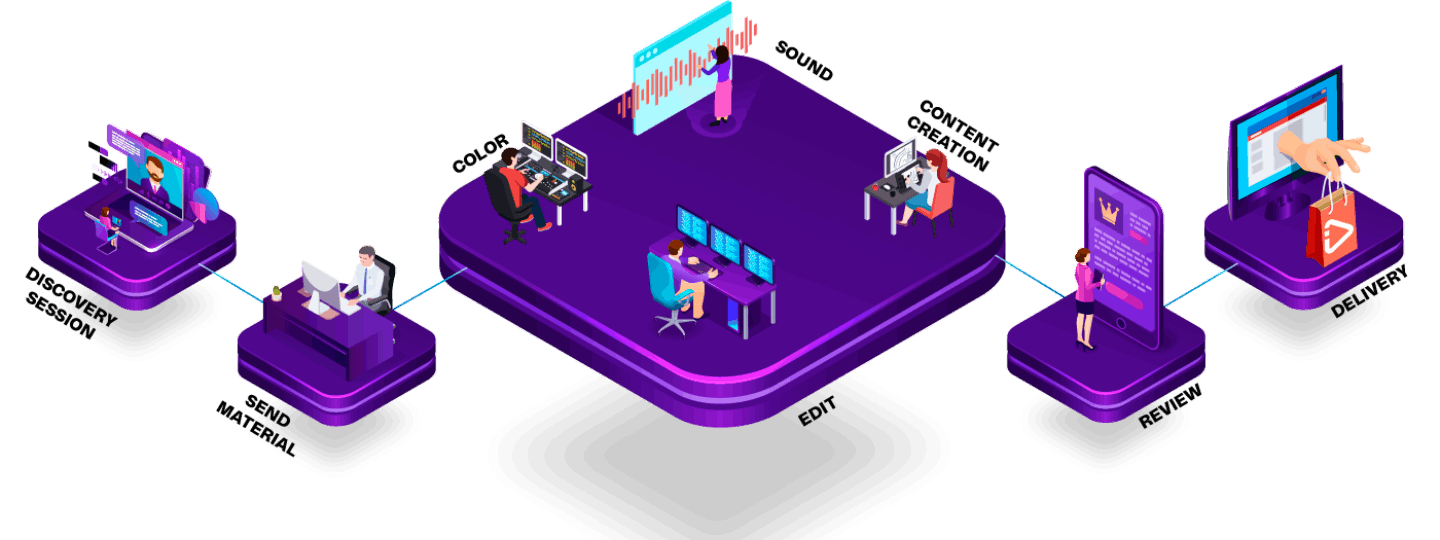
Understanding the day-to-day workflow helps set realistic expectations before you commit a monthly budget. Here’s how the process typically runs:
Onboarding and Brand Setup
When you sign up, Video Husky runs an onboarding process to capture your brand guidelines, style preferences, and technical requirements. This typically includes sharing reference videos (examples of edits you like), defining preferred pacing and style, noting any recurring elements (intro/outro sequences, lower-third templates, music preferences), and setting up your project portal. The quality of this initial brief directly determines how quickly your dedicated editor gets in sync with your brand — it’s worth investing time here rather than treating it as a checkbox exercise.
Most clients report that the first two to four weeks involve a calibration period — the initial deliveries might not nail your style perfectly, and revision rounds help train the editor on your specific preferences. By weeks five through eight, the relationship usually hits its stride and delivery quality improves noticeably as the editor builds familiarity with your content.
Submitting Requests and Managing the Queue
After onboarding, you submit editing requests through a portal (typically Trello or a similar kanban-style project management tool). Each request includes your raw footage upload, a brief describing what you need, specific instructions, and reference materials if relevant. The editor picks up the active request, completes it, and delivers it back for review. You either approve the delivery or submit revision notes, and the cycle repeats until it’s signed off.
The key workflow characteristic: only one project is active at a time on most plans. Your queue is linear, not parallel. If you have five projects ready to go, they process in sequence — project one completes before project two starts. For most individual creators this is fine. For marketing teams managing multi-format campaigns, this becomes a meaningful operational constraint.
Revisions and Feedback Loop
Revisions are included in the subscription. The number of revision rounds isn’t typically capped (though policies vary by plan), but the revision process is asynchronous — you leave timestamped notes or a brief description of changes needed, and the editor returns the updated version typically within one business day. This works efficiently for clear, specific feedback (“at 2:14, cut the pause after ‘basically’”). It creates friction for open-ended creative redirection (“this whole section feels off — try a different approach”).
Video Husky Pros: Where It Genuinely Delivers
Dedicated Editor Relationship
The most consistently praised feature from Video Husky clients: the dedicated editor model. Rather than a random editor assigned for each project, you build an ongoing relationship with one person who learns your brand’s pacing, visual style, preferred transitions, and content structure over time. For creators with repeatable formats — same intro sequence, consistent caption style, recognizable color grade — this compound familiarity translates directly into faster, more accurate edits as the relationship matures.
The alternative — re-explaining your style guide to a new editor every project — is a genuine time sink that many creators underestimate until they’ve actually lived through it. The dedicated assignment model eliminates most of that friction for stable, consistent content formats. After three or four months with a good editor match, the briefing overhead drops noticeably.
Predictable Monthly Cost
Budget predictability is underrated in creative services. Solopreneurs and small business owners managing variable marketing costs get genuine value from a flat monthly subscription that doesn’t spike based on project count or complexity. You know exactly what video editing costs every month — no negotiating project prices, no invoice surprises, no feeling like you need to “save up” editing requests for higher-value content.
The subscription model also removes the transactional overhead that comes with per-project freelancer relationships. You scope once at onboarding, calibrate over the first few weeks, and then produce from a stable baseline rather than restarting every engagement from zero.
Competitive Turnaround for Standard Content
Video Husky’s standard turnaround of 1–2 business days for straightforward requests is competitive within the subscription editing market. For YouTube creators on a weekly publishing schedule or social teams needing regular clip cuts, this cadence supports a consistent content production rhythm without creating a delivery bottleneck. Most clients report receiving first drafts within the promised window for routine content once the editor relationship is established.
Lower Barrier to Entry Than Hiring
A full-time junior video editor in a major US market typically costs $40,000–$60,000 annually before benefits, equipment, and management overhead. A subscription starting at approximately $549/month — around $6,588 per year — is a fraction of that. Even the premium tier, roughly $10,000–$13,000 per year, comes in well below the cost of an in-house hire for most teams that don’t need full-time editing capacity. No recruiting, no onboarding ramp, no HR overhead, no software licenses to manage.
Video Husky Cons: The Real Limitations
Sequential Queue Creates Bottlenecks at Scale
The subscription model’s structural limitation is the sequential queue. Most plans allow one active project at a time. If you need simultaneous delivery of a hero video, three social cuts, a testimonial clip, and a product demo before a campaign launch — you’re waiting in queue, not working in parallel. Dedicated agency teams and in-house editors handle concurrent workstreams naturally; subscription queues cannot replicate that by design.
This becomes a meaningful operational constraint during peak demand periods: product launches, end-of-quarter pushes, conference season, event coverage. Clients consistently report that the queue model works smoothly during steady-state production and becomes a bottleneck exactly when the pressure is highest. Predictable volume is easy — variable demand peaks are where the model shows its seams.
Execution-Only: No Strategic or Creative Direction
Video Husky is an editing execution service — not a video strategy partner. They execute what you give them with reasonable craft, but they don’t help you decide what to make, how to structure content for conversion, which formats are working in your vertical, or how your video output should evolve as your audience and goals change. If you come in with rough footage and need a creative director to help turn it into something that performs, that service is not here.
For experienced creators with a clear vision and established format, this doesn’t matter — they know what they want and just need clean execution. For brands scaling their video presence without strong internal creative leadership, the absence of strategic input is a real gap. You can end up paying $549/month to produce a lot of well-edited video that doesn’t actually move the needle.
Quality Ceiling on Complex Post-Production
Video Husky delivers competent editing for standard content types — talking-head videos, basic vlog cuts, simple social clips, educational modules. The quality ceiling becomes visible when projects push into more demanding territory: complex color grading and color science, 3D motion graphics or animation, documentary-style narrative editing with non-linear story structure, multi-camera live event coverage requiring technical sync and multicam switching, or cinematic branded content requiring director-level creative judgment.
Clients consistently describe the service as “great for my YouTube stuff” but note disappointment when they bring in a higher-stakes project expecting the same service. The subscription price point is calibrated for volume production, not premium post-production. When the project demands exceed the tier, the gap becomes noticeable in the output quality.
Asynchronous Communication Can Slow Iterative Projects
The portal-based, asynchronous workflow works efficiently for clear, specific requests and revision notes. It creates friction when a project requires iterative creative collaboration — the kind of back-and-forth that happens naturally in a real-time conversation but gets stretched into multiple multi-day async cycles when filtered through a ticket system. Clients wanting real-time collaboration, quick creative pivots, or Slack-style communication often find the workflow more structured and bureaucratic than expected.
This isn’t a flaw in Video Husky specifically — it’s an inherent characteristic of any async subscription workflow. But it means the service is better suited to clients who can write precise, complete briefs upfront rather than those who discover what they want through collaborative dialogue.
Editor Turnover Can Reset Your Learning Curve
The dedicated editor model’s structural vulnerability: what happens when your editor leaves or gets reassigned? Editor churn is a known challenge across the subscription editing service industry — these roles involve high volume, demanding clients, and compensation structures that can create turnover pressure. When a client gets reassigned to a new editor, the accumulated brand knowledge accumulated over months resets. Multiple long-term clients mention editor transitions as a frustrating point — the investment they’ve made in calibrating their editor can evaporate with a single personnel change, restarting a calibration process that originally took weeks.
💡 Pro Tip: Before committing to any subscription editing service, ask specifically about their editor retention rate and what happens to your brand profile if your assigned editor changes. Maintain your own comprehensive brand guide document — specific typography, color codes, preferred pacing tempo, reference clips — stored outside the service. This dramatically reduces re-onboarding time if you ever face an editor transition. The best video editing agencies maintain detailed client profiles at the team level, not the individual editor level, so knowledge survives personnel changes.
Video Husky vs Increditors: Head-to-Head Comparison
Video Husky and Increditors serve fundamentally different segments of the video production market. Understanding the difference isn’t about which one is universally better — it’s about which one is better for your specific situation. Here is an honest comparison across the factors that matter most.
When Video Husky Is the Right Choice
To be direct about it: Video Husky genuinely serves specific use cases well. It makes sense when:
- You’re a solo creator or small team producing 10–20 videos per month of similar format and complexity
- Your content follows consistent templates — same structure, intro, outro, caption style — that an editor can systematize and repeat
- You have a clear creative vision and just need clean execution without strategic input or creative collaboration
- Budget predictability matters more than production flexibility or speed
- You’re producing reliable workhorse volume content, not campaign-critical brand-defining pieces
- You’ve previously been doing your own editing and need to reclaim time without the overhead of hiring
When Increditors Is the Better Fit
As a video-first premium video editing agency, Increditors operates on a different model than subscription queue services. The right Increditors client looks like this:
- You need video that drives measurable business outcomes — lead generation, conversion, brand trust — not just a published content cadence
- You’re running parallel campaigns or complex multi-format productions that can’t wait in a sequential queue
- You want your video partner thinking strategically about what performs in your category, not just executing what you describe
- Video quality directly reflects your brand’s market positioning — this is visible work that affects perception
- You need senior-level creative judgment and domain expertise, not execution-only labor
- You’ve outgrown the subscription model and need a partner that scales with your ambition, not a queue that serves your volume
If you’re still mapping the subscription editing landscape before making a decision, the comprehensive unlimited video editing services comparison for 2026 covers all major players with honest breakdowns of where each model works and where it doesn’t.
What Real Clients Say: Patterns from Reviews
Across aggregated public reviews on platforms including Trustpilot, G2, Reddit communities dedicated to content creation and video production, and creator forums, several patterns emerge consistently in client sentiment about Video Husky. This isn’t a curated testimonial — it’s a synthesis of the recurring themes across both positive and critical reviews.
Positive Review Patterns
- Consistent quality once calibrated: Creators with established formats report high satisfaction after four to eight weeks — the calibration period — when the editor has internalized their style. Post-calibration, the editing quality is described as reliably consistent.
- Significant time savings over DIY editing: Creators who were previously editing their own content report reclaiming substantial weekly time, even accounting for briefing, review, and revision overhead. The net time saving is the most universally praised aspect.
- Reasonable communication during business hours: Responsiveness during standard Monday-Friday hours is rated positively by most users. Weekend or cross-timezone needs are where this breaks down.
- Good value at high volume: Heavy publishers — creators releasing content multiple times per week — consistently rate the value proposition well. At high volume, the per-video cost becomes genuinely competitive.
- Lower stress than managing freelancers: Multiple reviewers cite relief at not having to constantly search for, vet, and manage freelance editors. The managed service aspect reduces cognitive load significantly.
Critical Review Patterns
- Complex projects expose quality ceiling: Reviews consistently flag that projects requiring significant creative problem-solving, advanced motion graphics, or high production value don’t match the quality level the subscription price point implies.
- Editor changes are disruptive: Multiple reviewers mention the learning curve reset that comes with editor reassignment — and the frustration of repeating an onboarding process they had to invest time in originally.
- Queue creates deadline pressure: Clients with campaign or launch deadlines describe the sequential queue as a real source of stress when multiple deliverables are needed simultaneously.
- Revision depth is limited: Clients wanting iterative creative collaboration find the async revision process slower than expected and less effective for fundamental creative changes vs. specific technical corrections.
- Upsell pressure on add-ons: Some reviewers note that the entry-level plan feels incomplete without add-ons, and the total cost after adding captions, thumbnails, and rush delivery can push meaningfully above the headline price.
Video Husky Alternatives Worth Considering
If Video Husky doesn’t fit your needs after reading this review, here are the main alternatives to evaluate — across different positioning, pricing models, and capability levels:
For a detailed evaluation of how Tasty Edits and similar subscription services compare across the key dimensions, the Tasty Edits alternatives review covering seven competing services goes deeper on each option with honest assessments of trade-offs.
Frequently Asked Questions
Is Video Husky worth it in 2026?
For the right use case — a creator or small team producing consistent, moderate-complexity video content at regular volume — Video Husky delivers genuine value. At roughly $549/month for the entry plan, the economics work when you’re producing 10 or more videos per month in consistent formats. It is not worth it if your needs are complex, variable, or require creative strategy beyond execution. Honest assessment: good product for a specific buyer profile, not a universal solution.
How long does Video Husky take to deliver edits?
Their standard turnaround target is 1–2 business days for straightforward requests on most plans. Longer videos or more complex edits may take longer. Rush or priority delivery typically requires a higher-tier plan. Note that this is per-project delivery time — your total monthly throughput depends on your volume and how quickly you review and approve each deliverable before the next one starts.
Does Video Husky handle motion graphics and animation?
Basic motion graphics — animated lower-thirds, title cards, simple transitions, branded intro/outro sequences — are available on standard and premium plans. Complex custom animation, 3D motion, character animation, or fully custom motion design systems are generally outside the scope of what the subscription price point covers. Advanced motion work requires their enterprise tier or a specialist post-production team.
Can I cancel Video Husky at any time?
Like most subscription services, Video Husky operates on monthly billing cycles and allows cancellation at the end of a billing period. Always confirm current cancellation terms directly on their website, as subscription policies can be updated. The practical concern for most departing clients is maximizing the value of remaining subscription time rather than the cancellation process itself — which is typically described as straightforward.
What types of video does Video Husky edit best?
Video Husky performs best on YouTube long-form content (talking-head, vlog, educational), podcast video clips, social media shorts and reels, online course modules, testimonial videos, and basic promotional cuts. Complex formats — broadcast commercials, multi-camera live event coverage, cinematic brand films, performance-driven ad creatives — are better served by a full-service video editing agency with senior specialists who can match both technical requirements and creative demands.
Verdict: Video Husky Rating — 7.5 / 10
Video Husky earns a solid 7.5 out of 10 for what it actually sets out to do. It is a well-designed service for a specific use case, and when the use case matches, it delivers genuine, repeatable value. The subscription model, dedicated editor relationship, reasonable turnaround, and competitive price-per-deliverable at volume make it a legitimate alternative to hiring a junior editor or managing a freelancer roster for routine content production.
The score stays at 7.5 rather than pushing higher for consistent, real reasons: the sequential queue creates friction precisely when pressure is highest, the absence of strategic input means you’re buying execution rather than partnership, and the quality ceiling appears on anything that pushes beyond standard formats. The editor retention risk is a structural vulnerability in the dedicated-editor design that hasn’t been fully engineered away.
Who should try Video Husky: Solo creators and small teams publishing consistent, template-driven video content at regular volume who want predictable monthly costs and don’t need strategic creative input. If you’re currently editing your own content and the time cost is hurting you, Video Husky is a low-friction, reasonable-value solution worth trialing.
Who should look elsewhere: Brands using video as a growth channel, teams with complex or variable production needs, organizations running parallel campaigns, and anyone who needs a partner — not just a queue service. Understanding the full cost and value landscape of video production is the right starting point for those decisions. A clear picture of how much professional video editing costs across models helps calibrate expectations before you commit.
Ready for Video That Actually Converts?
Tell us about your project and we will put together a custom plan.