








![3D Explainer Video - ScribbleLive.mp4_snapshot_00.12_[2022.03.09_03.14.16]](https://increditors.com/wp-content/uploads/elementor/thumbs/3D-Explainer-Video-ScribbleLive.mp4_snapshot_00.12_2022.03.09_03.14.16-r7wb53mx72rxst3qcqyrfxdmeyzb5r9jbl0wbjujh4.png "3D Explainer Video – ScribbleLive.mp4_snapshot_00.12_[2022.03.09_03.14.16]")



























Faceless YouTube channels are one of the fastest-growing content formats in 2026, generating millions in ad revenue without ever showing a face on camera. This guide breaks down the complete video editing strategy — from sourcing stock footage and scripting voiceovers to the exact editing workflow that top faceless channels use to hit 100K subscribers in under a year, plus how outsourcing to a professional editing team accelerates that timeline dramatically.
- What Is a Faceless YouTube Channel (and Why 2026 Is the Best Year to Start)
- Choosing Your Niche: The Faceless Channel Framework
- Content Production Pipeline: Script, Voiceover, and Visuals
- The Video Editing Strategy That Drives Retention
- Tools, Stock Footage Sources, and Software Stack
- When and How to Outsource Your Video Editing
- Monetization Milestones and Revenue Projections
- Verdict: Is a Faceless YouTube Channel Worth It in 2026a
- Frequently Asked Questions
What Is a Faceless YouTube Channel (and Why 2026 Is the Best Year to Start)
A faceless YouTube channel is exactly what it sounds like: a channel that publishes video content without ever revealing the creator’s identity on camera. Instead of talking heads or vlog-style footage, these channels rely on stock footage, screen recordings, animations, AI-generated visuals, text overlays, and professional voiceovers to tell compelling stories and deliver valuable information. The creator stays entirely behind the scenes — and the audience never knows or cares who made the video.
This format has exploded in popularity for a straightforward reason: it removes the single biggest barrier most people face when starting a YouTube channel. No camera anxiety. No lighting setup. No hair and makeup. No worrying about how you look or sound on screen. The entire production process shifts from “performance” to “production” — and that shift opens the door to thousands of creators who would never have picked up a camera otherwise.
But faceless channels aren’t just a workaround for camera-shy creators. Some of the highest-earning channels on the platform are entirely faceless. Channels like Kurzgesagt, which generates an estimated $12–18 million annually, or the countless “top 10” and documentary-style channels pulling in $50,000–$200,000 per month in ad revenue alone, have proven that anonymity is no obstacle to massive audience growth and revenue generation. In 2026, the format has matured from a niche workaround into a dominant content strategy.
Why 2026 Is a Particularly Strong Moment
Several converging trends make 2026 an exceptional year to launch a faceless channel. First, AI voiceover technology has reached a level of naturalness where synthetic voices are nearly indistinguishable from human narration in casual listening. Tools like ElevenLabs, Murf, and Descript allow creators to produce broadcast-quality narration in minutes at a fraction of traditional studio costs. This eliminates one of the historically weakest links in faceless content: robotic, unconvincing narration.
Second, stock footage libraries have matured dramatically. Platforms like Storyblocks, Pexels, and Artgrid now offer cinematic-quality 4K footage across virtually every subject imaginable. In 2026, creators can build visually stunning videos about topics ranging from deep-sea biology to cryptocurrency markets without shooting a single frame of original footage. The raw material for high-quality faceless content is more accessible than ever.
Third, YouTube’s algorithm has shifted significantly toward content that holds attention rather than content that features a recognizable face. Watch time percentage, average view duration, and click-through rate are far more important to the algorithm than whether a creator appears on screen. This algorithmic reality plays directly into the strengths of well-edited faceless content — videos that are tightly paced, visually engaging, and optimized for retention from the first second.
The Business Case: Numbers That Matter
According to data aggregated from YouTube analytics tools and creator income reports, faceless channels in high-CPM niches (finance, technology, business, health) generate between $3 and $15 per 1,000 views from AdSense alone. A channel averaging 500,000 views per month at a $6 RPM generates $3,000 monthly from ads — before sponsorships, affiliate links, or digital products. Channels at the 1–5 million monthly view range regularly report total revenues of $15,000–$80,000 per month from combined income streams.
More importantly, faceless channels are often highly scalable. Because the creator’s physical presence is not the bottleneck, it is entirely possible to outsource the entire production chain — scripting, voiceover, editing, thumbnails, and SEO — and operate the channel as a true media business rather than a solo creator grind. This scalability is what separates hobbyist faceless channels from the ones generating life-changing income.
Choosing Your Niche: The Faceless Channel Framework
Niche selection is arguably the most consequential decision you will make when starting a faceless channel. Unlike personal brand channels where your personality can carry mediocre content, faceless channels live or die on the quality of their niche positioning. The right niche gives you a large audience, high advertiser demand, and abundant stock footage. The wrong niche traps you in a low-CPM grind with limited growth potential.
High-Performing Faceless Niches in 2026
The most consistently profitable faceless channel niches share three characteristics: high advertiser CPMs (meaning companies pay premium rates to reach that audience), large and growing search volume, and readily available stock footage or screen-recordable content. Based on performance data from thousands of channels, the following niches consistently hit all three criteria.
The Sub-Niche Advantage
Launching in a broad niche like “personal finance” puts you in direct competition with hundreds of established channels. The smarter strategy is sub-niche positioning. Instead of “personal finance,” consider “personal finance for millennials in their 30s” or “investing strategies for teachers.” Instead of “technology,” try “AI tools for small business owners” or “cybersecurity for non-technical founders.” Sub-niches give your channel a clear identity, a more passionate core audience, and better algorithmic positioning because YouTube can precisely categorize and recommend your content.
The research process for validating a sub-niche should take no more than two hours. Use TubeBuddy or VidIQ to check search volume for your target keywords, look at the subscriber counts and view numbers of the top 10 channels in that sub-niche, and check whether any of those channels are posting consistently. If the top channels have over 100K subscribers but are posting inconsistently or haven’t uploaded in months, that is a gap you can exploit. The audience exists; the consistent creator does not yet.
Content Production Pipeline: Script, Voiceover, and Visuals
The production pipeline for a faceless channel looks fundamentally different from a traditional YouTube channel. There is no filming day, no reshoots, no on-camera performance to manage. Instead, the pipeline is a linear sequence of research, writing, audio production, and visual assembly. Understanding and optimizing each stage is what separates channels that scale from channels that stall.
Stage 1: Research and Script Writing
The script is the backbone of every faceless video. Unlike talking-head content where a creator can improvise, pivot, and react in real time, faceless content lives or dies on the quality of the written word. Every word in the script becomes either a narration line or a visual direction. A weak script produces a weak video regardless of how good the editing is — and no amount of flashy B-roll can rescue genuinely mediocre content.
A high-performing faceless video script follows a specific architecture: a pattern-interrupt hook in the first 15 seconds, a clear “what you will learn” promise by the 30-second mark, a structured body that delivers on that promise in a logical sequence, and a call to action at the end that gives viewers a reason to stay on the channel. For a 10-minute video, the script typically runs 1,400–1,600 words delivered at a measured narration pace. For a 15-minute video, expect 2,000–2,400 words.
Research depth is a significant differentiator in 2026. With AI-generated content flooding the platform, viewers and the YouTube algorithm increasingly reward factual specificity, nuanced analysis, and original perspective. Scripts that cite specific studies, include counter-arguments, and offer frameworks the viewer can actually apply generate far higher watch time than generic “top 10” lists that rehash surface-level information. Budget a minimum of two hours for research before writing a single word of script.
Stage 2: Voiceover Production
Voiceover quality is the most emotionally powerful element of a faceless video. The human voice creates parasocial connection — it is what makes the viewer feel like they are being spoken to by a knowledgeable friend rather than reading a text article. Investing in this stage pays outsized dividends in watch time and subscriber conversion.
You have three practical options for voiceover in 2026. First, you can record your own voice. This is free and creates genuine authenticity, but requires a decent condenser microphone (the Audio-Technica AT2020 at around $99 is the entry-level standard), acoustic treatment, and consistent recording technique. Second, you can hire a voice actor on platforms like Voices.com or Voice123. Professional narrators charge $200–$600 per finished hour of audio, which works out to roughly $30–$80 per 10-minute video. Third, you can use an AI voice generation tool.
AI voiceover in 2026 is genuinely impressive. ElevenLabs’ professional tier produces voices that pass the casual listening test, and their voice cloning feature allows you to train a custom voice that sounds consistently “yours” across every video. Murf AI and Descript’s Overdub offer similar quality at competitive price points. The key is using these tools with high-quality scripts and appropriate pacing — AI voices read exactly what you write, so sentence rhythm, punctuation, and paragraph breaks matter enormously for output quality.
💡 Pro Tip: When using AI voiceover, break your script into short paragraphs with natural pauses. Add commas and ellipses strategically to control pacing. Generate 2–3 versions of each paragraph and select the one with the most natural cadence. This single habit produces noticeably more human-sounding output and can save hours of re-recording.
Stage 3: Visual Asset Sourcing
Visual asset sourcing means gathering all the video clips, images, screen recordings, graphics, and motion elements you will use in editing. For faceless channels, this is primarily stock footage — and building an efficient workflow for finding and downloading the right footage is one of the most time-consuming parts of the pre-editing process.
The best approach is to build a shot list directly from your script. Go through the script line by line and note what visual should accompany each thought. “The stock market dropped 40% in six weeks” calls for footage of traders, falling graphs, or financial news screens. “Scientists discovered the oldest human fossil in Kenya” calls for archaeological dig footage, African savanna landscapes, and laboratory close-ups. A precise shot list turns what could be hours of aimless browsing into a focused 30-minute sourcing session.
The Video Editing Strategy That Drives Retention
Video editing is where faceless channels win or lose their audience. Unlike talking-head content where the creator’s personality creates natural engagement, faceless videos depend entirely on the editing to maintain viewer interest. Every cut, every sound effect, every text overlay, and every music swell is a deliberate retention tool. The editing is not decoration — it is the performance.
The Retention-First Editing Philosophy
Retention-first editing means every decision is evaluated through the lens of “will this keep the viewer watchinga” The YouTube algorithm measures audience retention at 30%, 50%, and 100% completion rates. Channels with average view durations above 50% of video length see dramatically higher distribution. Channels below 35% watch time percentage stagnate regardless of upload frequency or thumbnail quality.
The primary enemies of retention in faceless content are: dead air (moments with no visual change or audio interest), overly long stock footage clips without purpose, narration that explains what is already visible on screen, and transitions that interrupt momentum rather than enhancing it. Professional editors eliminate all of these by default. Amateur editors create them through habit.
The practical implementation of retention-first editing means cutting on every beat change in the background music, never holding a stock footage clip for more than four to six seconds without a cut or motion change, using zoom-ins and subtle camera movements to add life to static footage, and deploying text callouts to reinforce key statistics and memorable phrases. The goal is constant, low-level visual stimulation that feels natural and purposeful rather than chaotic.
The Hook Architecture (First 30 Seconds)
No section of a faceless video receives more editorial attention from professional editors than the first 30 seconds. YouTube’s click-through-to-watch-time conversion happens almost entirely in this window. A viewer who clicks your thumbnail and stays for 30 seconds is likely to stay for several minutes. A viewer who clicks and leaves at 8 seconds costs you the click without contributing meaningful watch time.
The proven hook structure for faceless content in 2026 follows a four-beat pattern. Beat one (seconds 0–5): open with a striking visual or statement that creates immediate curiosity — not a logo animation, not a channel intro, but a dramatic image or bold claim that raises an immediate question in the viewer’s mind. Beat two (seconds 5–15): deliver a surprising fact or counterintuitive premise that deepens that curiosity. Beat three (seconds 15–25): explicitly state what the video will reveal or prove. Beat four (seconds 25–30): create an implicit contract — “stay to the end to understand why this matters to you.”
Editing the hook means selecting your highest-impact footage for this window, using faster cuts than you will use in the body of the video, adding subtle sound design elements (tension-building music, impact sounds on text reveals), and ensuring the first frame is visually compelling at thumbnail level. Many professional faceless channel editors spend 30–40% of total editing time on the first 60 seconds of a 12-minute video. That imbalance is intentional and correct.
Sound Design: The Underrated Retention Driver
Sound design is what separates YouTube videos that feel cheap from those that feel like mini-documentaries. For faceless channels specifically, sound design carries an enormous portion of the emotional weight that on-camera performance would normally deliver. Well-chosen background music, precise sound effects on text animations and cuts, and dynamic audio mixing create an immersive experience that keeps viewers engaged even when the visual content is relatively static.
Background music selection follows a few principles. The music should complement the emotional tone of the content without competing with the voiceover. For informational content, ambient instrumental music in the 60–90 BPM range works well. For dramatic or controversial topics, tension-building tracks with sparse instrumentation create engagement. Volume levels should typically sit 15–20 decibels below the voiceover — audible but clearly subordinate. Platforms like Epidemic Sound, Artlist, and YouTube Audio Library provide royalty-free options specifically designed for this purpose.
Tools, Stock Footage Sources, and Software Stack
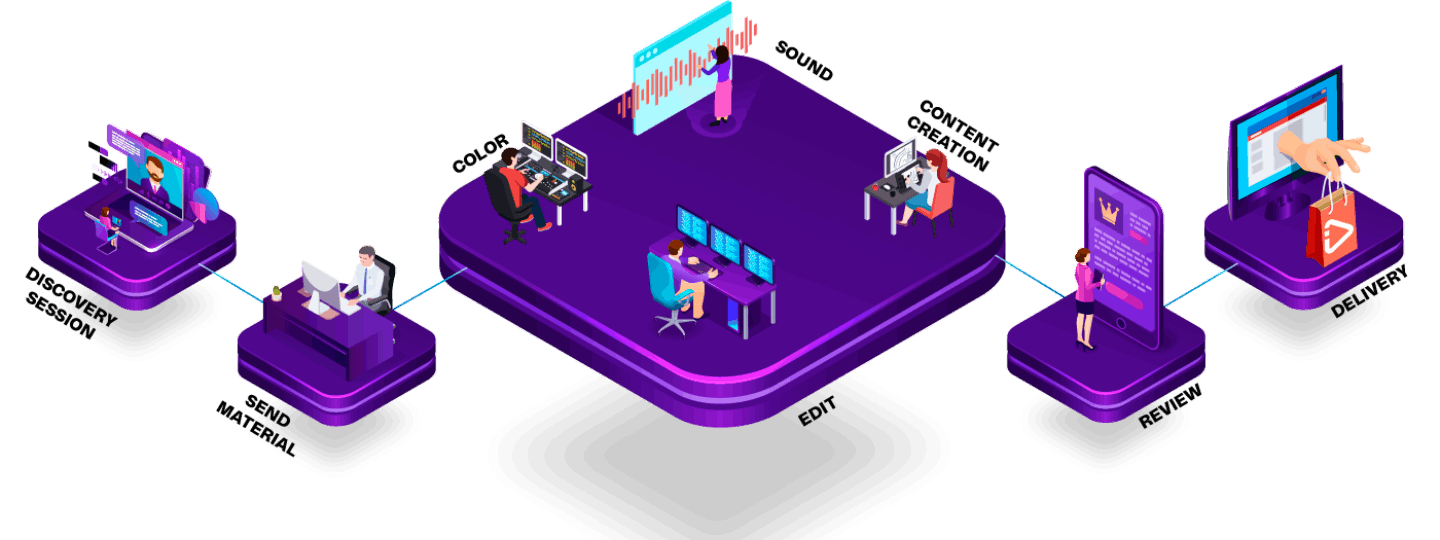
Building the right tools stack from the beginning prevents expensive mistakes and tool-switching later. The ecosystem for faceless YouTube production has matured considerably in recent years, with purpose-built platforms now covering every step from script research to final upload. Here is the stack our team at Increditors recommends based on performance data from hundreds of faceless channels we have supported.
Editing Software Comparison
Stock Footage and Asset Sources
Stock footage quality directly impacts your channel’s perceived production value. Viewers may not consciously notice that you used premium Artgrid footage versus free Pexels clips, but they feel it — and that feeling influences watch time. For channels generating any meaningful revenue, a professional stock footage subscription is a non-negotiable production expense.
Storyblocks offers unlimited downloads for around $149/year and covers most general topics adequately. Artgrid ($199/year) provides cinematographer-grade footage that is particularly strong for nature, urban, and human interest topics. Pexels and Pixabay remain excellent free options for supplementary clips. Getty Images and Shutterstock are the premium tier at $199–$399/month, with the most comprehensive libraries for news, business, and historical content.
Beyond footage, two other asset categories deserve attention: motion graphics templates and royalty-free music. MotionArray and Envato Elements both offer extensive template libraries for lower thirds, title animations, and transition effects that are specifically designed for YouTube content. A well-chosen template pack, used consistently across a channel, creates brand cohesion without the cost of custom motion graphics production.
When and How to Outsource Your Video Editing
The question of when to outsource video editing is one of the most important strategic decisions a faceless channel owner will make. Edit in-house for too long and you become a production bottleneck that limits your upload frequency and drains hours that could be spent on strategy, scripting, and channel growth. Outsource too early without a clear brand style guide and you risk inconsistent quality that confuses your audience.
The Right Time to Outsource
The inflection point for most faceless channels is when editing time begins to constrain upload frequency. If you are spending 15–20 hours per week editing and still only publishing one video per week, that is a clear signal that editing is your bottleneck. At that stage, outsourcing editing for $200–$500 per video allows you to redirect those hours toward scripting, thumbnail testing, community building, and channel optimization — activities that compound in value over time.
A secondary signal is quality consistency. If your editing quality varies significantly from video to video — better when you have more time, worse when you are rushing — that inconsistency is damaging your audience’s trust. Viewers form expectations based on your best content. When subsequent videos fall below that standard, they feel let down. A professional editing team delivers consistent quality regardless of your personal schedule.
A third signal is revenue readiness. If your channel is generating meaningful AdSense income or sponsorship revenue, reinvesting a portion of that into professional editing creates a virtuous cycle: better editing produces higher watch time, which drives algorithmic distribution, which increases views and revenue, which funds more professional editing. Channels that make this investment at the right moment often see their growth rates accelerate dramatically in the following 90 days.
💡 Pro Tip: Before hiring an editor, create a style guide document that includes: your channel’s color palette, preferred font styles for text overlays, examples of videos whose pacing you want to emulate, a list of sound effects you like and dislike, and your standard intro/outro format. Editors who receive this level of detail on day one consistently produce first drafts that are 80% of the way to final — rather than 40%. This document pays for itself in revision rounds saved.
What to Look for in a Faceless Channel Editor
Not all video editors have experience with faceless YouTube content specifically. Traditional video editors are skilled at working with talking-head footage, interview cuts, and narrative film structures. Faceless channel editing requires a different skill set: the ability to pace B-roll effectively to voiceover, create engaging text animation sequences, use sound design creatively when there is no natural audio to work with, and maintain visual interest across a 10–20 minute video that contains no human faces.
When evaluating editors, look specifically for portfolio samples that match your intended format — B-roll montages, documentary-style narration videos, explainer content. Pay attention to text overlay design (is it clean and consistenta), footage selection (does the B-roll feel purposeful or generica), and overall pacing (does the video feel tight and engaging, or loose and meanderinga). These three elements are the primary indicators of a faceless-content-specialist editor versus a generalist.
This is exactly where working with a specialized agency like Increditors provides a meaningful advantage over hiring a freelancer. Our team has edited hundreds of faceless YouTube videos across every major niche, which means we have data on what editing approaches drive retention in finance versus history versus tech versus self-improvement. We do not apply a generic template to every client — we apply niche-specific editing strategies backed by real performance data. For creators who are serious about building a faceless channel as a real business, this expertise difference compounds significantly over time.
Freelancer vs. Agency: The Real Tradeoffs
The freelancer versus agency debate for faceless channel editing comes down to three dimensions: cost, reliability, and expertise depth. Freelancers on platforms like Fiverr or Upwork typically charge $100–$350 per video for competent YouTube-style editing. The best freelancers offer excellent value and some develop genuine long-term partnerships with channel owners. However, freelancers are individuals — they get sick, they take vacations, they experience burnout, and their workload fluctuates. A single freelancer managing five clients simultaneously delivers inconsistent turnaround times, which can disrupt your publishing schedule.
Agencies provide process reliability that individual freelancers cannot match. A dedicated editing team has redundancy built in — if one editor is unavailable, another steps in without your channel missing a deadline. Quality control processes mean that videos are reviewed before delivery rather than going directly from editor to client. And specialized agencies like Increditors bring institutional knowledge of what works in your specific niche rather than the generalist approach of most individual freelancers.
Monetization Milestones and Revenue Projections
Building a faceless YouTube channel is a medium-term investment with potentially very significant returns. Understanding the realistic timeline and revenue milestones helps set appropriate expectations and prevents the most common failure mode: abandoning a channel just before it reaches the inflection point where algorithmic compounding takes over.
The Path to YouTube Partner Program
The YouTube Partner Program (YPP) requires 1,000 subscribers and 4,000 watch hours in the past 12 months. For a faceless channel posting one quality video per week in a medium-competition niche, this benchmark is realistically achievable in four to seven months. Channels posting twice per week with strong SEO optimization have hit YPP eligibility in as little as 60–90 days.
The key accelerant is not raw upload volume but algorithmic pickup — when YouTube’s recommendation engine starts distributing your content to non-subscribers because your watch time metrics are strong. This typically happens after you have published 15–25 videos in a consistent niche and YouTube has enough data to confidently categorize and recommend your content. This “click” moment often results in a subscriber spike of 300–1,000 new subscribers in a single week, which is the clearest signal that your channel has found its algorithmic footing.
Revenue Stream Sequencing
Successful faceless channel operators treat monetization as a sequential build rather than an all-at-once launch. AdSense provides the baseline revenue once you hit YPP, but it rarely justifies the full production investment until you reach 500K+ monthly views in a high-CPM niche. In the early growth stage (1K–50K subscribers), focus on building the audience and optimizing retention rather than chasing sponsorship deals or product launches.
At the 10K–50K subscriber range, affiliate marketing becomes viable. Financial channels can earn $50–$300 per referred customer through broker affiliate programs. Technology channels earn similar amounts through software and tool referrals. The advantage of affiliate income at this stage is that it does not require sponsor negotiations — you simply include links to products and services your audience already needs, and earn commissions on conversions.
At the 50K–100K subscriber mark, direct sponsorships become a realistic income stream. Channels in the finance, tech, and business niches with 50K subscribers and strong engagement metrics can command $1,500–$5,000 per 30-second sponsorship segment. At 100K subscribers, that figure rises to $3,000–$12,000 per placement. This is the tier where faceless channels start generating genuinely life-changing income — and where the investment in professional editing pays back many multiples of its cost.
Verdict: Is a Faceless YouTube Channel Worth It in 2026a
After reviewing the mechanics, economics, and production realities of faceless YouTube channels in 2026, our answer is a clear yes — with one important qualifier. A faceless channel is absolutely worth building if you approach it as a structured media business rather than a casual side project. The creators who build significant faceless channel income treat it with the same seriousness they would apply to any other business: consistent production schedules, investment in professional tools and services, data-driven decisions about content and optimization, and patience with the compounding growth timeline.
The creators who fail with faceless channels typically make one of three mistakes. They publish inconsistently, breaking the algorithmic momentum that requires sustained output to build. They under-invest in editing quality, producing content that cannot compete with the professional-grade channels already established in their niche. Or they abandon the channel during the “dead zone” — the period between 3 and 7 months when growth feels stagnant but the algorithmic foundation is actually being built beneath the surface.
The faceless format’s fundamental advantage — that it can be entirely systematized and outsourced — is also its greatest business opportunity. A well-built faceless channel operation can run with minimal time investment from the owner once the systems are in place: a script writer on retainer, a voiceover artist on standby, a professional editing team handling all post-production, and a thumbnail designer keeping the visual identity sharp. The owner’s primary job becomes channel strategy and content direction — high-leverage activities that cannot be outsourced.
In 2026, the competition in faceless YouTube is real but not insurmountable. The channels that will win over the next 24 months are those that combine genuinely useful content with professional production quality — and the fastest path to that combination, for most creators, is outsourcing the production to specialists who do this work every day. If you are serious about building a faceless channel that generates real revenue, the strategy is clear: nail your niche, invest in your script quality, and partner with a professional editing team from day one rather than waiting until you can afford to “upgrade.”
Frequently Asked Questions
How long does it take to grow a faceless YouTube channel to monetizationa
Most faceless channels posting one quality video per week reach YouTube Partner Program eligibility (1,000 subscribers + 4,000 watch hours) within four to seven months. Channels posting twice weekly with strong SEO and professional editing can hit this milestone in 60–90 days. The key variable is not upload frequency alone but watch time quality — videos with 50%+ average view duration are distributed by the algorithm far more aggressively than videos with 30–35% retention, regardless of how often you post.
Do I need to show my face to build a successful YouTube channel in 2026a
No. Many of the highest-earning channels on YouTube — including channels with millions of subscribers in finance, technology, history, and science — are entirely faceless. YouTube’s algorithm distributes content based on engagement signals like watch time, click-through rate, and viewer satisfaction — none of which require a visible creator. In 2026, with AI voiceover technology at near-human quality and professional stock footage libraries covering virtually every topic, the technical barriers to high-quality faceless content are at an all-time low.
How much does it cost to start a faceless YouTube channela
You can start a faceless channel with a monthly budget of $50–$100 using free editing software (DaVinci Resolve), free stock footage (Pexels, Pixabay), a basic AI voiceover subscription, and free music from YouTube Audio Library. A more competitive setup — Storyblocks subscription ($12/month), Epidemic Sound ($15/month), and a modest AI voiceover plan ($22/month) — runs about $50–$80 per month total. If you outsource editing, budget an additional $200–$400 per video depending on length and complexity. Channels that invest in production quality from the start consistently outperform those that start minimal and upgrade later.
What is the best niche for a faceless YouTube channel in 2026a
The best niche intersects three factors: high advertiser CPM rates (typically above $5), large and growing search volume, and ample stock footage availability. In 2026, personal finance, business/entrepreneurship, health and longevity, and AI/technology explainers all meet these criteria. However, the specific sub-niche matters more than the broad category. “Personal finance for Gen Z” or “AI tools for solopreneurs” has far less competition than “personal finance” or “artificial intelligence” in general — and a tighter sub-niche audience converts better for affiliate marketing and sponsorships.
When should I outsource video editing for my faceless channela
Outsource when editing time becomes your primary constraint on upload frequency, when your quality is inconsistent because you are editing under time pressure, or when your channel is generating enough revenue to fund the investment. For most creators, this happens between months three and six. The clearest signal is spending more than 15 hours per week editing and still only managing one upload per week. At that point, the opportunity cost of in-house editing exceeds the cost of professional editing services by a significant margin — and outsourcing is both a time and quality upgrade simultaneously.
Ready for Video That Actually Convertsa
Tell us about your project and we will put together a custom plan.