






![3D Explainer Video - ScribbleLive.mp4_snapshot_00.12_[2022.03.09_03.14.16]](https://increditors.com/wp-content/uploads/elementor/thumbs/3D-Explainer-Video-ScribbleLive.mp4_snapshot_00.12_2022.03.09_03.14.16-r7wb53mx72rxst3qcqyrfxdmeyzb5r9jbl0wbjujh4.png "3D Explainer Video – ScribbleLive.mp4_snapshot_00.12_[2022.03.09_03.14.16]")












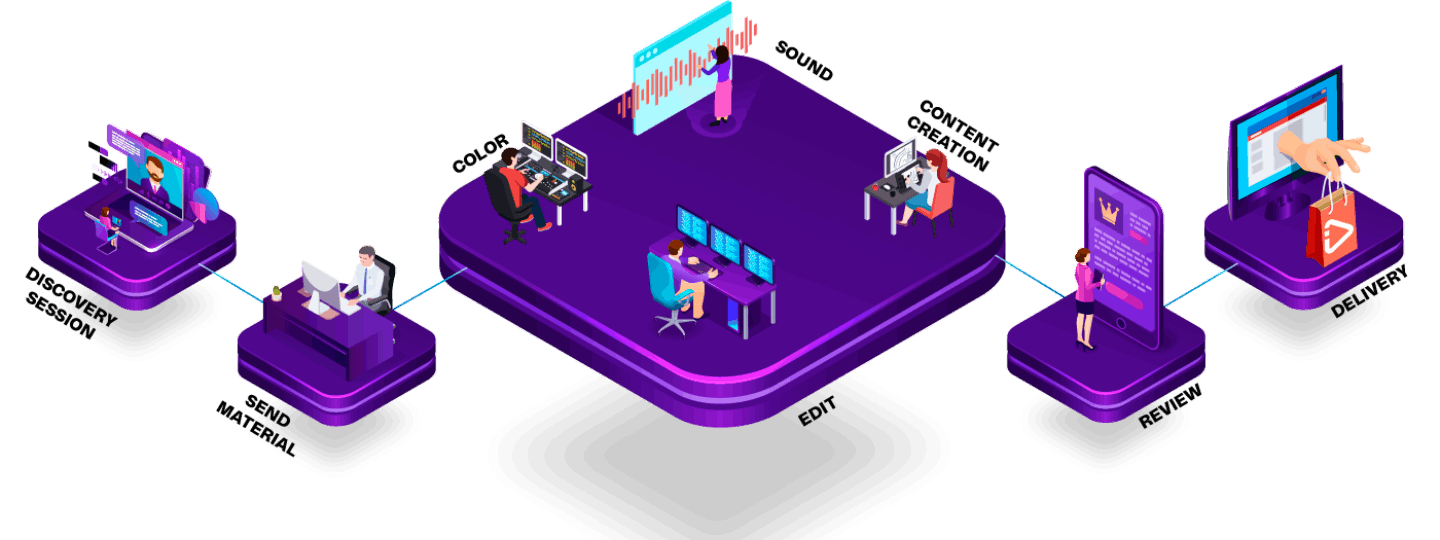









You’ve built the expertise. You have the ideas. You might even have the audience. But you’re stuck in a content bottleneck — filming takes an hour, editing takes six, and by the time you’ve wrestled a video into publishable shape, three new content ideas have died in your Notes app.
This is the universal problem of personal brands and thought leaders in 2026: the gap between how much content you need to produce and how much you can realistically produce without a team. Your competitors are posting daily across four platforms. You’re posting twice a week on one.
The solution isn’t to grind harder or learn more editing shortcuts. It’s to build a professional editing system that turns your raw ideas into polished, multi-platform content — while you focus on the thing only you can do: thinking, speaking, and creating.
This guide covers everything personal brands and thought leaders need to know about video editing: what to create, how to structure your workflow, what it costs, and how to find the right editing partner.
What’s in This Guide
- Why Video Is the #1 Authority-Building Tool
- The Thought Leader Content Framework
- What Personal Brand Editing Actually Involves
- Platform Strategy: Where to Publish & Why
- The 1-to-10 Repurposing System
- What Video Editing Costs for Personal Brands
- How to Find & Onboard the Right Editor
- Case Studies: Thought Leaders Winning with Video
- Mistakes That Kill Personal Brand Video
- Scaling from Solopreneur to Content Machine
- FAQ
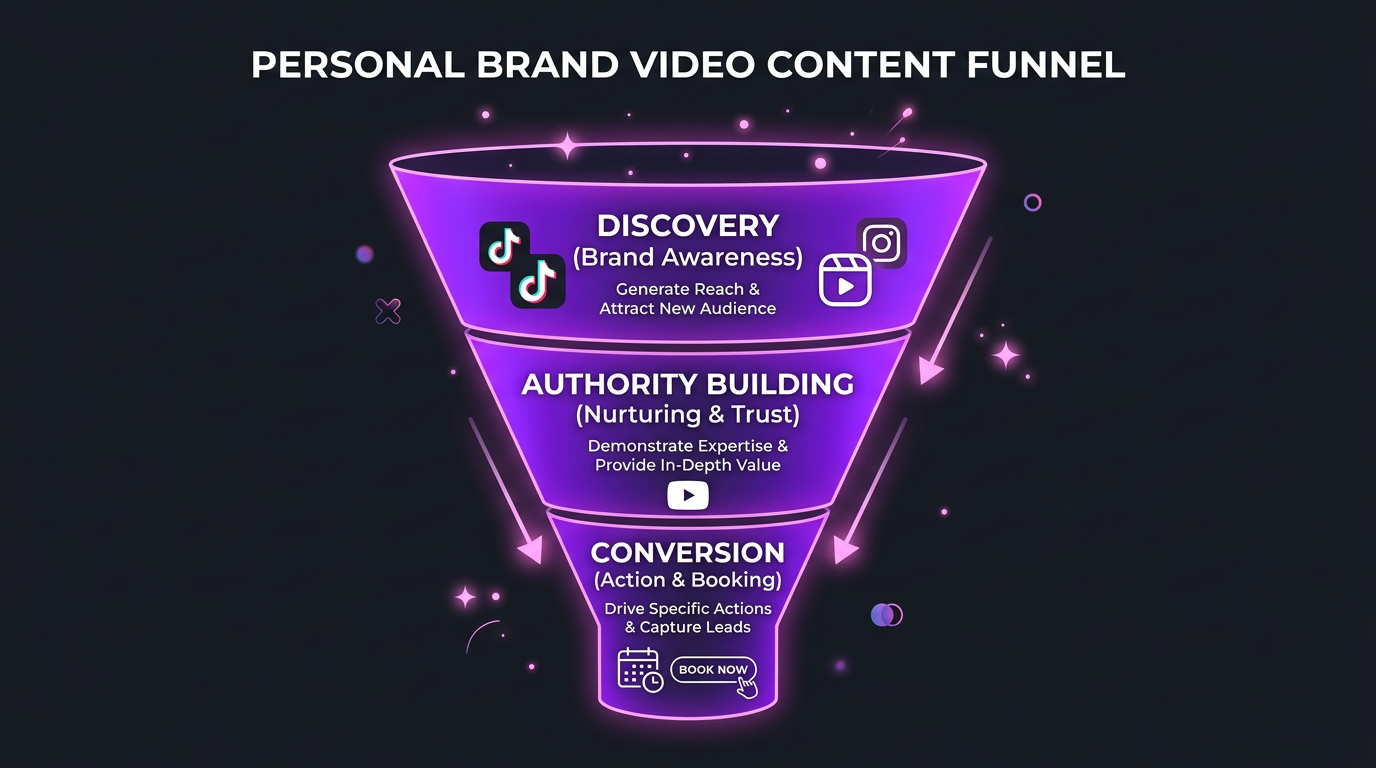
Why Video Is the #1 Authority-Building Tool for Thought Leaders
Text builds knowledge. Audio builds familiarity. Video builds trust.
That’s not a platitude — it’s how human psychology works. When someone reads your blog post, they absorb your ideas. When they hear your podcast, they start to feel like they know you. But when they watch you — see your face, hear your voice, read your body language — their brain processes you as a real person they’ve met. Psychologists call it “parasocial interaction,” and it’s the most powerful asset a personal brand can build.
The numbers back this up:
- Video builds trust 2x faster than text. A McKinsey study found that B2B buyers who watched a thought leader’s video content were twice as likely to engage in a sales conversation compared to those who only read their written content.
- YouTube is the second-largest search engine. When someone searches “[your topic] expert” or “[your niche] strategy,” video results appear in 80% of Google’s first pages. If you’re not creating video, you’re invisible in half the search landscape.
- Social algorithms favor video creators. LinkedIn posts with video get 5x the engagement. Instagram pushes Reels over photos. TikTok is video-only. The platforms are telling you what they want — and rewarding creators who comply.
- Video converts. Thought leaders who use video in their sales funnel report 30-50% higher conversion rates on discovery calls. Prospects arrive pre-sold because they’ve already spent hours “with” you through content.
The Authority Compound Effect
Here’s what most personal brands miss: video content compounds differently than any other format. A blog post from 2024 might still get traffic, but it doesn’t build the same emotional connection as a video. A YouTube video from 18 months ago still generates discovery calls today because viewers binge-watch your catalog, building deeper and deeper trust with each video.
We’ve seen this firsthand with Ink Magnet, a content-focused brand that invested in consistent, professionally edited video content. Over 12 months, their YouTube library of 52 weekly videos became their primary lead generation channel — with prospects regularly mentioning specific videos from months prior during sales calls. That’s the compounding effect in action.
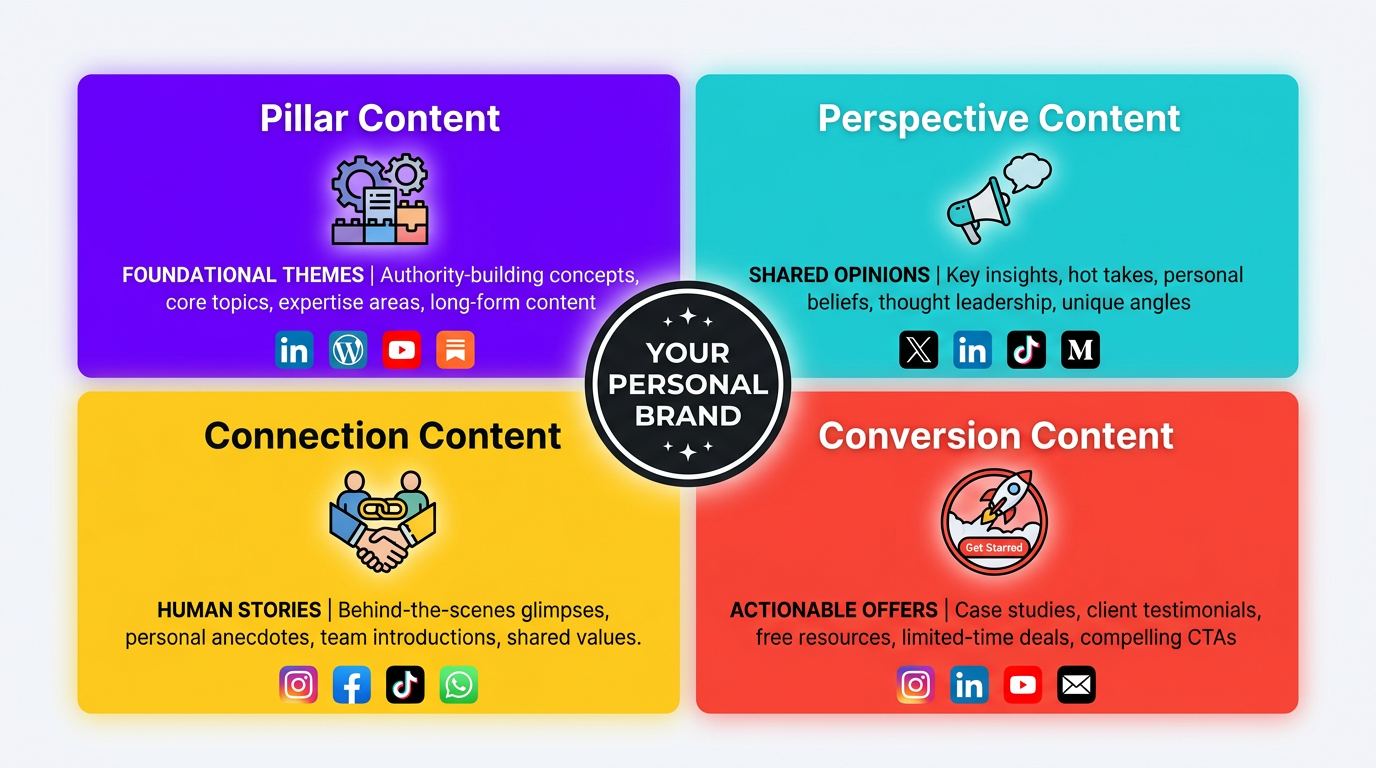
The Thought Leader Content Framework
Not all personal brand video content is equal. The most effective thought leaders use a structured content mix that serves different purposes at different stages of their audience’s journey.
Tier 1: Pillar Content (Authority Builders)
These are your long-form, deep-dive videos — typically 10-20 minutes on YouTube. They tackle your core topics comprehensively and position you as the definitive expert. Think: “The Complete Guide to [Your Niche Topic]” or “Everything I’ve Learned About [Subject] in 15 Years.”
Editing requirements: Professional color grading, custom intros/outros, lower thirds with credentials, b-roll packages, data visualizations for statistics, chapter markers, and optimized thumbnails. These videos represent your highest production value and require experienced YouTube video editors.
Frequency: 1-2 per week
Tier 2: Perspective Content (Opinion & Hot Takes)
Short-form content where you share bold opinions, react to industry news, or challenge conventional wisdom. These are your Reels, TikToks, LinkedIn videos, and YouTube Shorts. They’re designed for discovery — reaching people who don’t know you yet.
Editing requirements: Fast-paced cuts, bold text overlays with key phrases, engaging hooks in the first 1-2 seconds, captions (most social video is watched on mute), and trending audio when appropriate. The editing style is punchy and attention-grabbing — every second counts.
Frequency: 5-7 per week across platforms
Tier 3: Connection Content (Behind-the-Scenes & Personal)
Humanizing content that shows who you are beyond your expertise. Office tours, day-in-the-life vlogs, book recommendations, conference backstage footage, team introductions. This content builds the parasocial relationship that converts followers into clients.
Editing requirements: Lighter touch — more authentic and raw, but still clean. Jump cuts to remove dead space, subtle color correction, music that matches the mood, and text overlays for context.
Frequency: 2-3 per week
Tier 4: Conversion Content (Testimonials & Case Studies)
Content specifically designed to move warm leads toward a buying decision. Client testimonials, case study breakdowns, “before and after” stories, and direct offers. This content lives on your website, in email sequences, and on social during launch periods.
Editing requirements: High production value for testimonials (proper lighting, audio, and color grading), data visualizations for case studies, and clear CTAs with branded end cards.
Frequency: 2-4 per month
| Content Tier | Format | Length | Primary Platform | Editing Complexity |
|---|---|---|---|---|
| Pillar (Authority) | Long-form video | 10-20 min | YouTube | High |
| Perspective (Hot Takes) | Short-form vertical | 30-90 sec | Reels, TikTok, LinkedIn | Medium |
| Connection (BTS) | Short-to-mid form | 60 sec – 5 min | Stories, YouTube, LinkedIn | Low-Medium |
| Conversion (Social Proof) | Testimonial, case study | 2-5 min | Website, email, YouTube | High |
What Personal Brand Video Editing Actually Involves
When thought leaders think about “video editing,” they usually picture someone cutting out the “ums” and adding music. That’s about 10% of what professional personal brand editing involves. Here’s the full scope.
Technical Editing
- Cutting & pacing: Removing dead space, filler words, and repetitive sections while maintaining natural flow. This alone can cut a 40-minute ramble into a tight 15-minute video.
- Audio processing: Noise reduction, compression, EQ, and normalization to make your voice sound professional regardless of recording conditions.
- Color correction & grading: Consistent skin tones, proper exposure, and a signature color look that becomes part of your visual identity.
- Multi-camera editing: If you film with multiple angles (increasingly common with personal brands), syncing and switching between cameras for visual variety.
Creative Editing
- Visual storytelling: Reordering segments for better narrative flow, building tension, and creating satisfying payoffs. Your editor isn’t just cutting — they’re crafting a viewing experience.
- B-roll integration: Adding relevant images, stock footage, screen recordings, or custom graphics to illustrate your points and keep viewers engaged.
- Motion graphics: Lower thirds, title cards, data visualizations, process diagrams, and animated quotes. For thought leaders, these visual aids dramatically improve content quality and comprehension.
- Thumbnail design: Click-through rate is the most important metric on YouTube, and thumbnails are what drive it. A good editor creates multiple thumbnail options per video.
Platform Optimization
- Format conversion: Converting horizontal YouTube content into vertical clips for Reels, TikTok, and Shorts — this isn’t just cropping, it’s re-editing for a completely different viewing context.
- Caption generation: Adding burned-in captions optimized for silent viewing (85% of social video is watched without sound).
- Hook optimization: Re-editing the first 3 seconds for each platform’s algorithm and audience behavior.
- SEO optimization: Adding chapter markers, writing descriptions, and suggesting title variations for YouTube SEO.
Platform Strategy: Where to Publish & Why
Every platform serves a different function in your personal brand ecosystem. Understanding this prevents the common mistake of treating all platforms the same.
YouTube: Your Authority Home Base
YouTube is non-negotiable for thought leaders. It’s the only platform where long-form content is searchable, evergreen, and monetizable. Your YouTube channel functions as a library of authority — each video is a permanent asset that continues generating leads indefinitely.
YouTube also has the deepest analytics, allowing you (and your editor) to optimize based on actual retention data. A good editing partner reviews your analytics monthly and adjusts editing style based on where viewers drop off.
LinkedIn: B2B Authority & Lead Generation
If your clients are businesses or professionals, LinkedIn video is where you reach decision-makers. Native LinkedIn video gets 5x the reach of text posts, and thought leadership content performs exceptionally well. Short clips (60-90 seconds) of your best insights, edited with captions and bold key-phrase overlays, consistently drive profile visits and connection requests from ideal clients.
Instagram Reels & TikTok: Discovery Engines
These platforms are how new audiences find you. The editing style here is faster, more trend-aware, and more attention-grabbing. Your Reels and TikToks serve as trailers for your deeper YouTube content — they give viewers a taste of your perspective and direct them to your longer-form work.
YouTube Shorts: SEO-Powered Discovery
Shorts are indexed by Google, meaning your short-form clips can appear in search results. For thought leaders targeting specific keywords, Shorts are an underutilized discovery channel that a social media editing service should be creating from every long-form video.
| Platform | Content Type | Audience Function | Publishing Frequency | Priority Level |
|---|---|---|---|---|
| YouTube (long-form) | 10-20 min educational | Authority building, search, evergreen leads | 1-2x/week | 🔴 Critical |
| 60-90 sec insights | B2B lead generation, credibility | 3-5x/week | 🔴 Critical (B2B) | |
| Instagram Reels | 15-60 sec hot takes | Discovery, brand awareness | 5-7x/week | 🟡 Important |
| TikTok | 15-60 sec personality | Discovery, younger audience | 3-5x/week | 🟡 Important |
| YouTube Shorts | 30-60 sec clips | SEO discovery, channel growth | 3-5x/week | 🟡 Important |
Ready to Scale Your Personal Brand’s Video Contenta
We help thought leaders produce 10-30+ pieces of content per week from a single filming session. Professional editing, multi-platform optimization, and a dedicated team that learns your style.
The 1-to-10 Repurposing System
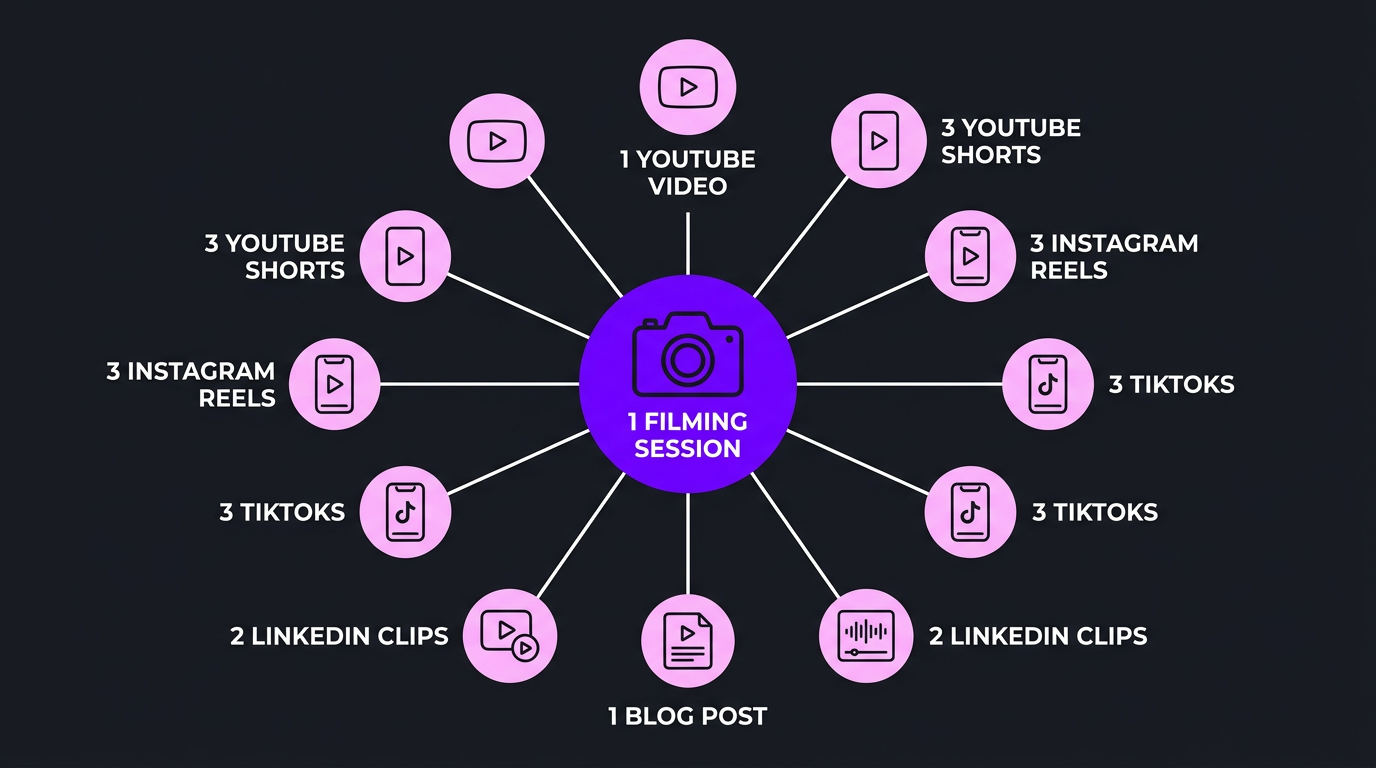
The most efficient personal brands don’t create 10 separate pieces of content per week. They create one and repurpose it into ten. Here’s how the system works.
Start with One Pillar Video
Film a 15-25 minute YouTube video on your core topic. This is your weekly pillar — one filming session, one topic, one raw file sent to your editor.
Your Editor Produces:
- 1 YouTube long-form video (fully edited, color graded, graphics, thumbnails)
- 3-5 YouTube Shorts (best moments, reformatted to vertical)
- 3-5 Instagram Reels (re-edited for Instagram’s style, with captions)
- 3-5 TikToks (re-edited for TikTok’s rawer style)
- 2-3 LinkedIn clips (insight-focused, professional tone)
- 1 audiogram (for podcast-style distribution)
- 1 blog transcript (SEO-optimized written version)
That’s 15-20 pieces of content from one filming session. Over a month, that’s 60-80 pieces of content keeping you visible across every platform — all from four hours of filming.
This is exactly how TuMeke, a thought leadership brand in the tech space, scaled their content operation. They went from posting sporadically on one platform to maintaining an active presence across five platforms — with the same time investment in filming. The difference was a professional editing team that understood the repurposing system and could extract maximum value from every minute of raw footage.
What Video Editing Costs for Personal Brands
Let’s get specific about pricing. These are 2026 market rates based on what thought leaders and personal brands typically pay.
Per-Video Pricing
| Content Type | Budget Editor | Mid-Range Editor | Premium Agency |
|---|---|---|---|
| YouTube long-form (10-20 min) | $100-$200 | $250-$500 | $500-$1,200 |
| Short-form clip (Reel/TikTok) | $25-$50 | $75-$150 | $100-$250 |
| LinkedIn video (60-90 sec) | $50-$100 | $100-$200 | $150-$300 |
| Keynote/speaking clip | $75-$150 | $150-$350 | $300-$600 |
| Client testimonial | $100-$250 | $250-$500 | $400-$800 |
Monthly Retainer Pricing
| Package Level | Monthly Cost | What’s Included | Best For |
|---|---|---|---|
| Starter | $800-$1,500 | 4 YouTube videos + 8-12 short-form clips | Emerging thought leaders |
| Growth | $2,000-$3,500 | 4-8 YouTube videos + 20-30 short-form + thumbnails | Established personal brands |
| Scale | $4,000-$6,000 | 8+ YouTube + 40+ short-form + graphics + strategy | High-volume thought leaders |
| Increditors | Custom pricing | Dedicated editor, unlimited revisions, full repurposing | Serious personal brands ready to scale |
The ROI Math for Personal Brands
Here’s the calculation that makes outsourcing a no-brainer for most thought leaders:
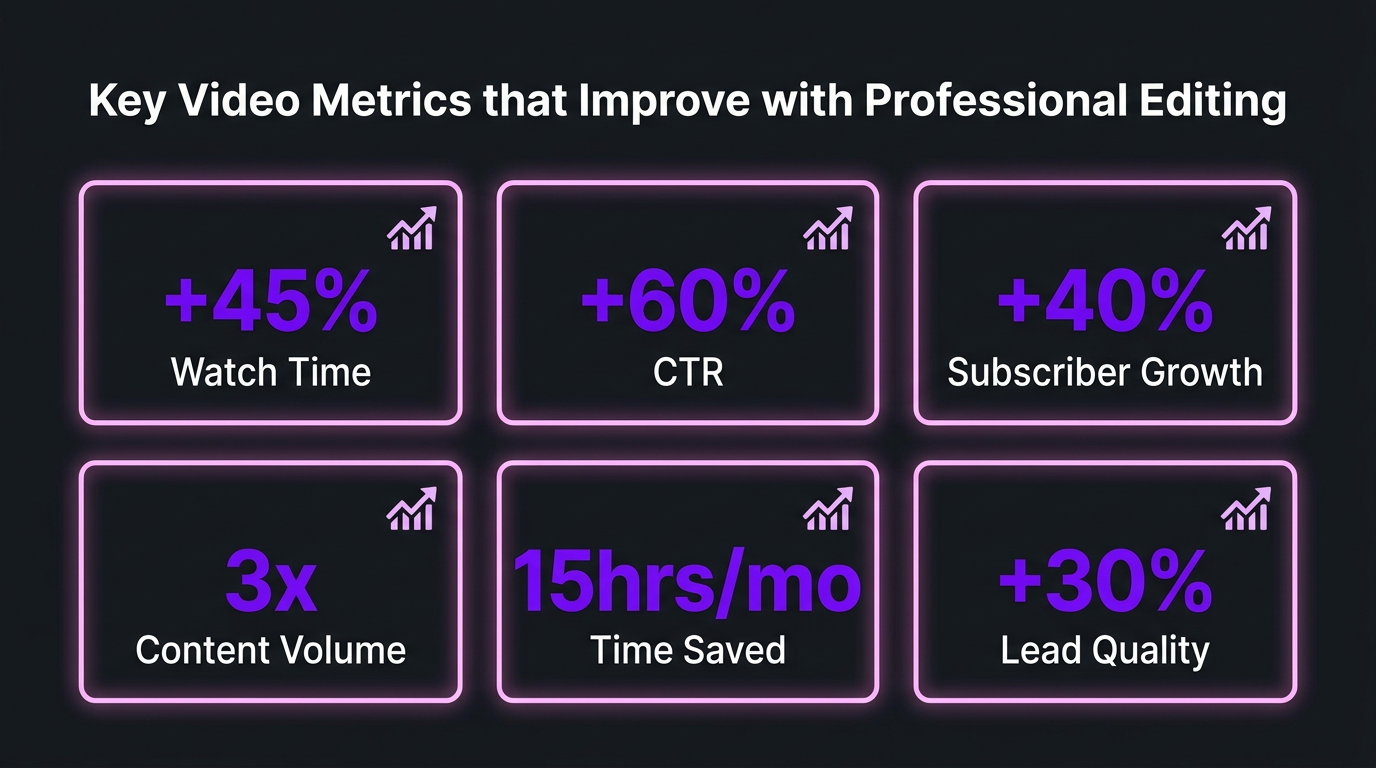
If you value your time at $200/hour (conservative for established thought leaders) and you spend 15 hours/month editing your own videos, that’s $3,000/month in opportunity cost. A professional editing retainer at $2,500/month pays for itself immediately — and produces better results because editing is the editor’s core skill, not a side task squeezed between client calls.
Factor in the additional content output (10-20 more pieces per month), the improved quality, and the compounding authority effect of consistent publishing, and the ROI becomes overwhelming.
How to Find & Onboard the Right Editor for Your Personal Brand
What to Look for in a Personal Brand Editor
Not every video editor is right for personal brand content. Here’s what separates a good fit from a mismatch:
- YouTube experience: They understand retention curves, pacing, thumbnails, and how the algorithm rewards certain editing patterns.
- Short-form expertise: They know what hooks work on Reels vs TikTok vs Shorts — these are different skills.
- Brand sensitivity: They can capture and maintain your voice, tone, and visual identity without making everything look generic.
- Strategic thinking: They don’t just execute — they suggest improvements, flag opportunities, and help optimize based on analytics.
- Reliable turnaround: Consistent 24-48 hour turnaround for short-form, 3-5 days for long-form. Personal brands can’t wait a week for a Reel.
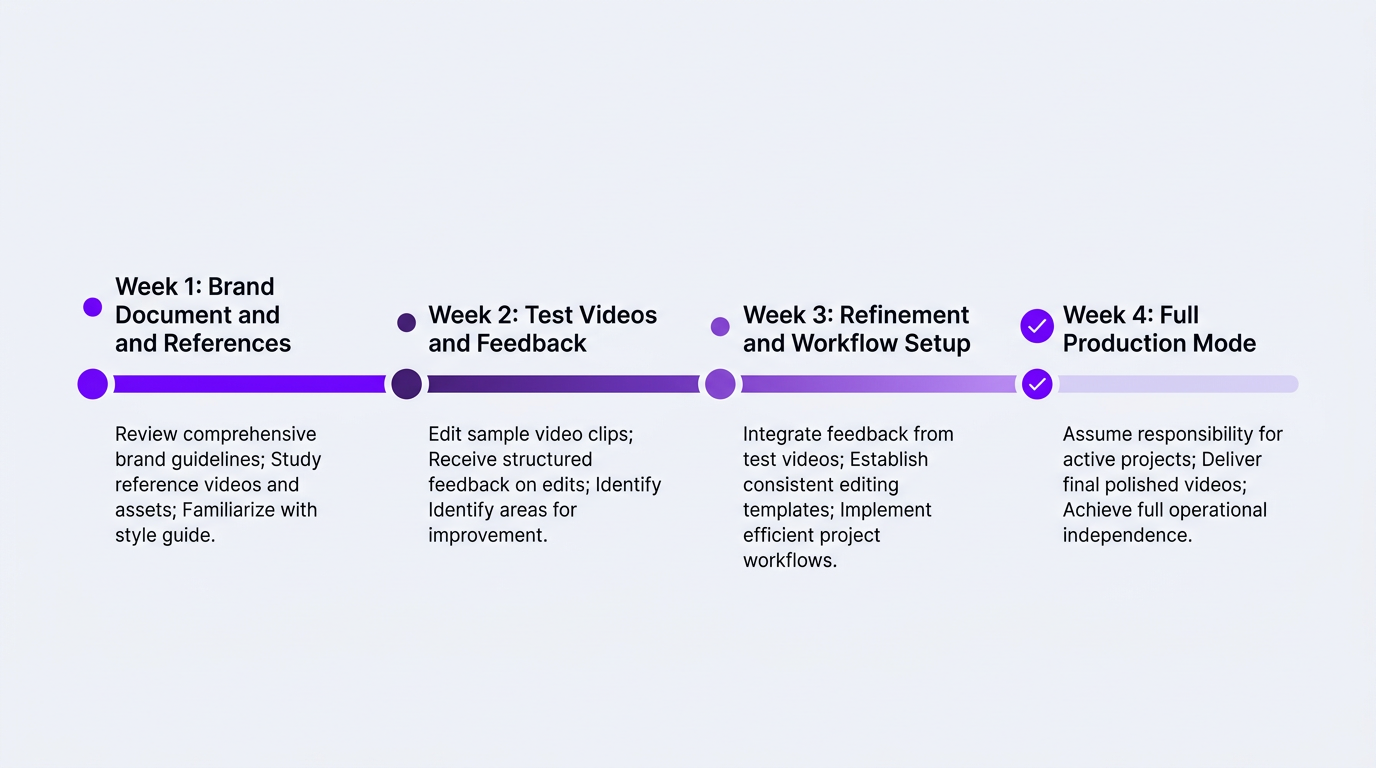
The Onboarding Process
Expect 2-4 weeks before your editor hits their stride. During onboarding:
- Share a brand document: Colors, fonts, preferred transition styles, caption format, intro/outro preferences.
- Provide reference videos: Show 3-5 videos (yours or others’) that represent the style you want.
- Film 2-3 test videos: Give detailed feedback on the edits. This is where the editor learns your preferences.
- Establish a workflow: Where you upload footage, how you communicate feedback, turnaround expectations, revision limits.
eSafety, a brand focused on digital safety thought leadership, went through this exact onboarding process when they partnered with a professional editing team. The first two weeks involved daily feedback and iteration. By week three, the editor was producing content that matched eSafety’s established visual identity so closely that their audience couldn’t tell the difference — and the content volume tripled overnight.
Case Studies: Thought Leaders Winning with Professional Editing
Riley Coleman: From Inconsistent Creator to Content Machine
Riley Coleman’s personal brand was built on expertise, but content production was a constant struggle. Filming happened when inspiration struck. Editing happened when there was time — which was rarely. The result: sporadic posting that left audience growth stagnant despite strong content quality when videos did go live.
After partnering with a dedicated editing team, Riley implemented the 1-to-10 repurposing system. One weekly filming session (90 minutes) produced a YouTube video plus 8-10 short-form clips. Within three months, Riley’s YouTube subscribers grew 40%, LinkedIn engagement quadrupled, and — most importantly — inbound client inquiries doubled. The content quality didn’t change dramatically. The consistency did.
TuMeke: Technical Thought Leadership at Scale
TuMeke operates in a technical niche where credibility depends on depth. Their challenge: producing complex, data-heavy videos that maintain viewer engagement. Generic editors struggled with the technical content — misunderstanding context, cutting in wrong places, and missing opportunities to visualize data.
Switching to an editing team with experience in startup and tech content changed everything. Editors who understood the subject matter could pace the content appropriately, create meaningful data visualizations, and highlight the moments that resonated most with TuMeke’s technical audience. Video retention rates improved 35% and speaking engagement requests increased significantly.
Ink Magnet: Building a Content Empire
Ink Magnet’s founder wanted to become the definitive voice in their content niche. The strategy: weekly long-form YouTube videos, daily short-form content, and monthly deep-dive case studies. Producing this volume solo was impossible.
With a dedicated editing partnership handling all post-production, Ink Magnet’s founder focused entirely on creating and thinking. In 12 months, they went from 0 to 15,000 YouTube subscribers, built an email list of 5,000+, and launched a course that generated six figures in its first quarter — all driven primarily by video content their editing team produced from raw footage.
8 Mistakes That Kill Personal Brand Video Content
1. Editing Your Own Videos When You Can Afford Not To
If you earn more than $50/hour, every hour you spend editing is money lost. Your zone of genius is ideas, delivery, and client work — not color correction. This is the single biggest bottleneck for personal brands, and it’s entirely self-imposed.
2. Treating All Platforms the Same
Posting the same video everywhere without platform-specific edits guarantees underperformance. Each platform has different aspect ratios, pacing expectations, hook conventions, and caption styles. A proper social media editing service produces distinct versions for each platform.
3. Over-Polishing & Losing Authenticity
The trend in personal brand content has shifted from “corporate polished” to “professionally authentic.” Viewers want real, relatable thought leaders — not talking heads in front of perfect backdrops. Good editing enhances your personality; bad editing hides it behind generic templates and overused transitions.
4. Inconsistent Publishing
Posting four times one week and disappearing for two weeks is worse than posting twice a week consistently. Algorithms and audiences both reward predictability. If you can’t maintain a schedule solo, that’s your clearest signal to outsource editing.
5. Ignoring YouTube as Your Home Base
Building a personal brand exclusively on Instagram or TikTok is building on rented land. YouTube is the only major platform where your content is searchable, evergreen, and truly owned. Every thought leader needs a YouTube strategy — it should be the center of your content ecosystem, not an afterthought.
6. No Signature Visual Style
Scroll through the feeds of successful thought leaders and you’ll notice consistency: same color tones, same fonts, same transition styles, same thumbnail format. This visual consistency builds brand recognition. Your editor should establish and maintain a signature style guide for all your content.
7. Skipping Captions
85% of social media video is watched without sound. If your videos don’t have burned-in captions, you’re losing 85% of potential engagement. This is non-negotiable for every platform except YouTube long-form (where accessibility captions serve a different purpose).
8. Not Tracking What Works
Your editing decisions should be informed by data. Which hooks get the highest retention Which thumbnail styles get the most clicks What video length performs best A good editing partner reviews your analytics with you monthly and adjusts strategy accordingly. Without this feedback loop, you’re guessing — and guessing is expensive.
Scaling from Solopreneur to Content Machine
The evolution of a personal brand’s video operation typically follows a predictable path. Here’s what each stage looks like and when to level up.
Stage 1: Solo Creator (0-1,000 followers)
You’re filming and editing everything yourself. This is fine for the first few months while you find your voice and style. Use this period to identify what content resonates and build a portfolio of reference videos for future editors.
Stage 2: First Editor Hire ($1,000-$2,000/month)
You’ve validated your content and have consistent filming habits. Hiring your first editor — whether freelance or through an agency — immediately doubles your output. Focus on YouTube + one short-form platform.
Stage 3: Full Repurposing System ($2,500-$4,000/month)
Your editor (or editing team) now handles the complete 1-to-10 repurposing workflow. You’re active on 3-4 platforms with 15-20 pieces of content per week. Audience growth accelerates as the compound effect kicks in.
Stage 4: Production Team ($4,000-$8,000/month)
At this stage, you have a dedicated editing team handling all post-production plus a content strategist helping with topics, titles, and thumbnails. You film for 2-3 hours per week and produce 25-40 pieces of content. Your video operation is a growth engine, not a chore.
| Stage | Monthly Investment | Content Output | Your Time Commitment | Expected Growth |
|---|---|---|---|---|
| Solo Creator | $0 (time cost) | 2-4 videos/week | 15-20 hrs/week | Slow, inconsistent |
| First Editor | $1,000-$2,000 | 6-10 pieces/week | 3-5 hrs/week | Steady, 20-30%/quarter |
| Full Repurposing | $2,500-$4,000 | 15-20 pieces/week | 2-3 hrs/week | Accelerating, 30-50%/quarter |
| Production Team | $4,000-$8,000 | 25-40 pieces/week | 2-3 hrs/week | Compounding, authority dominance |
Build Your Thought Leadership Content Machine
From one filming session to 15+ pieces of platform-optimized content per week. Let’s build your personal brand’s video engine together.
Frequently Asked Questions
Personal brand video editing costs $150-$500 per long-form video and $50-$200 per short-form clip. Monthly retainers typically range from $1,500-$5,000 depending on content volume, platform mix, and editing complexity. Most thought leaders producing weekly YouTube videos plus daily short-form content spend $2,000-$4,000/month on editing.
Thought leaders should focus on authority-building content: long-form educational YouTube videos, podcast-style interviews, keynote clips, hot take Reels/TikToks, behind-the-scenes content showing their process, and client case study videos. The content mix should be 70% educational value, 20% personality/culture, and 10% promotional.
Yes, almost always. A thought leader’s time is better spent creating content, serving clients, and developing ideas — not learning Premiere Pro. Outsourcing editing frees 15-30+ hours per month and ensures consistent, professional output. The break-even point is simple: if your hourly rate exceeds $50/hour, outsourcing editing is a no-brainer.
Start with a detailed brand guide covering your visual style, pacing preferences, favorite transition types, and caption tone. Provide 3-5 reference videos showing the style you want. Plan for a 2-4 week onboarding period where you give detailed feedback. A good editor will internalize your style quickly — by month two, first-draft approval rates should exceed 85%.
YouTube is the foundation — it builds long-term authority through searchable, evergreen content. LinkedIn video is essential for B2B thought leaders. Instagram Reels and TikTok drive discovery and top-of-funnel awareness. The ideal strategy is one pillar YouTube video per week, repurposed into 5-10 short-form clips across all platforms.
For maximum growth, post 1-2 long-form YouTube videos per week plus 5-7 short-form clips across Instagram, TikTok, LinkedIn, and YouTube Shorts. This sounds aggressive but is achievable when you batch-film and outsource editing. A single 30-minute filming session can produce one YouTube video and 5-8 short-form clips when professionally edited.
Published by Increditors · Professional video editing for personal brands and thought leaders. Book a free consultation to build your content machine.