








![3D Explainer Video - ScribbleLive.mp4_snapshot_00.12_[2022.03.09_03.14.16]](https://increditors.com/wp-content/uploads/elementor/thumbs/3D-Explainer-Video-ScribbleLive.mp4_snapshot_00.12_2022.03.09_03.14.16-r7wb53mx72rxst3qcqyrfxdmeyzb5r9jbl0wbjujh4.png "3D Explainer Video – ScribbleLive.mp4_snapshot_00.12_[2022.03.09_03.14.16]")


















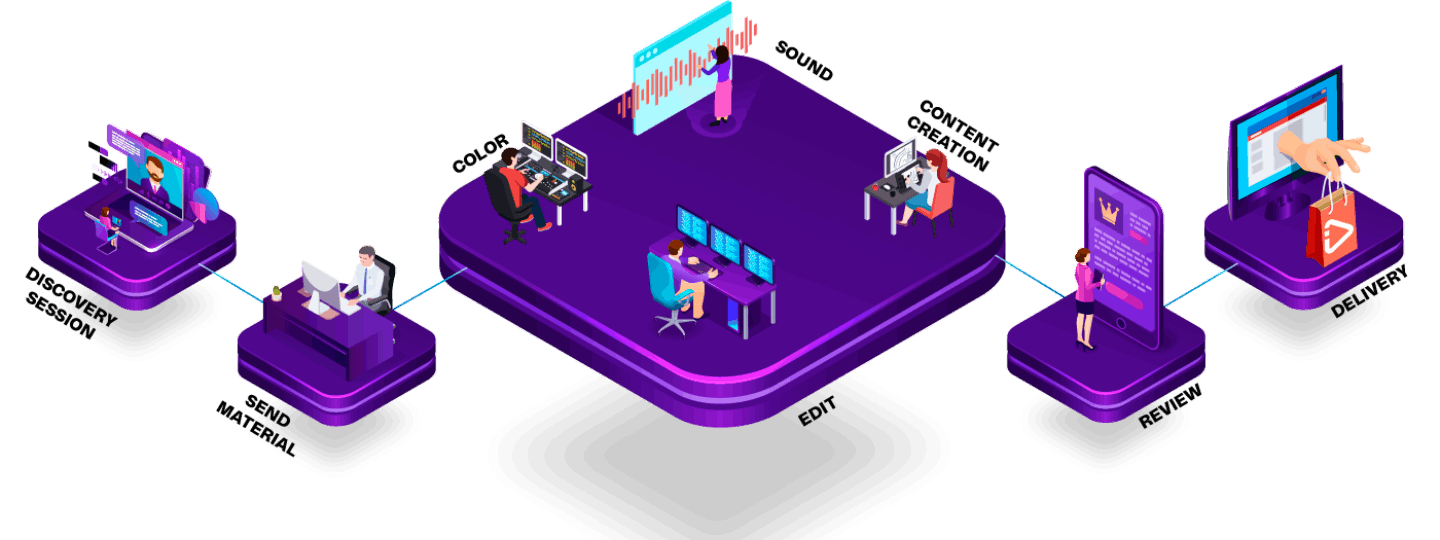










Working with a video editing agency is not just sending footage and waiting for polished videos. The best results come from a clear onboarding process, a shared creative standard, organized feedback, and a team that understands your business goals as well as the edit. Inside a premium agency relationship, you should expect discovery, workflow design, brand immersion, test projects, repeatable delivery systems, transparent communication, and regular performance reviews. The verdict: a good agency feels less like a vendor and more like a post-production department that knows how to protect your time, improve your creative output, and make video production easier to scale.
- Why This Relationship Feels Different
- Before the First Edit: Discovery and Fit
- The Onboarding Timeline
- What to Expect at Each Stage
- How the Agency Thinks Behind the Scenes
- Feedback, Revisions, and Creative Alignment
- Communication Rhythm and Project Management
- Common Client Mistakes That Slow Everything Down
- Verdict: What It Should Feel Like
- FAQ
Most companies only see the finished side of video editing: the exported file, the polished cut, the social clip, the YouTube episode, the ad, the sales video, or the campaign asset. What they do not always see is the operating system behind that output. A strong video editing agency is not simply a collection of editors. It is a creative workflow, a quality-control layer, a project management system, and a translation engine between business objectives and visual execution.
That is why the experience of working with an agency can feel very different from hiring a freelancer or assigning editing tasks internally. With a freelancer, you usually manage one person. With an internal editor, you often manage capacity, priorities, and creative direction yourself. With a serious agency, the promise is different: you bring the raw material and the goals, and the agency builds a repeatable post-production system around them.
But that only works when both sides understand what the relationship actually requires. The client has to provide context, assets, timely feedback, and access to decision-makers. The agency has to bring structure, taste, responsiveness, editorial judgment, and consistency. When those pieces are in place, the process feels calm. When they are missing, even talented editors can produce work that feels scattered, late, or off-brand.
This article is an insider perspective on what it is really like to work with a video editing agency. It covers the stages, expectations, communication patterns, hidden work, and practical realities that shape the client experience. If you are considering an agency relationship, this will help you understand what should happen before the first edit, during onboarding, through revisions, and once the workflow becomes a steady production rhythm.
Why This Relationship Feels Different
A video editing agency is different because the relationship is built around continuity. The goal is not to complete one isolated task and disappear. The goal is to understand your content, audience, brand, internal preferences, review habits, approval process, and business model well enough that every new project becomes easier than the last one.
In the early days, the agency will ask questions that may seem broader than editing. Who is the video for Where will it be published What should the viewer do after watching Is the goal retention, authority, lead generation, trust, education, paid acquisition, or internal communication What has worked before What has failed Who approves the final cut What does your brand sound like when it is confident What does it never want to sound likea
Those questions matter because editing is a series of decisions. A three-second pause can create authority or make the speaker feel slow. A motion graphic can clarify the message or make the video feel cheap. A music choice can give energy or create distrust. A hook can improve retention or misrepresent the brand. The agency needs to know what kind of decisions your company would make if you were sitting beside the editor.
The best agency relationships also feel different because they remove creative burden from your team. You should not have to explain the same preference twenty times. You should not have to rebuild the brief from scratch every week. You should not have to chase status updates or wonder which version is current. A good agency turns the messy middle of video production into a managed system.
💡 Pro Tip: Judge an agency by how fast it learns. The first project reveals skill. The third project reveals whether the team is building memory, systems, and taste around your brand.
Before the First Edit: Discovery and Fit
The relationship starts before anyone touches footage. A serious agency will want to understand whether the fit is right. This is not only about budget. It is about expectations, volume, quality standards, turnaround times, complexity, communication style, and whether the agency can realistically deliver the level of support you need.
A discovery call usually covers your video goals, current production process, pain points, team structure, publishing cadence, asset handoff, and review process. If you already have editors, the agency may ask what is not working. If you are moving from freelancers, it may ask where consistency breaks. If you are building a video engine for the first time, it may help define the workflow from zero.
This stage is important because many editing problems are really process problems. A company might think it needs faster editors when the real issue is unclear briefs. It might think it needs more revisions when the real issue is too many stakeholders giving conflicting feedback. It might think the agency is missing the brand when the brand examples were never shared in a usable way.
Good agencies diagnose those issues early. They do not simply say yes to everything. They clarify what can be done, what will require a custom workflow, what depends on the client, and where the risk points are. That honesty is a good sign. A premium agency should protect the outcome, not just accept the order.
What You Should Prepare
Before onboarding, gather your brand guidelines, logo files, fonts, colors, previous videos, examples you like, examples you dislike, audience notes, platform requirements, publishing cadence, and internal approval rules. If you have performance data, share it. Retention graphs, click-through rates, completion rates, ad performance, viewer comments, and sales team feedback can all help the agency make smarter editing choices.
You do not need a perfect system before hiring an agency. In many cases, building that system is part of the agency’s value. But you do need a willingness to share context. The less the agency understands, the more it has to guess. Guessing is expensive in post-production because it usually shows up later as revision cycles.
The Onboarding Timeline
Onboarding is where a video editing agency turns promises into a working production relationship. The exact timeline depends on scope, but most serious partnerships move through the same broad phases: kickoff, asset collection, creative alignment, test production, workflow refinement, and steady-state production.
The key thing to understand is that onboarding is not an administrative formality. It is the period where the agency learns how your company makes creative decisions. Some clients are direct and decisive. Some need internal alignment before feedback. Some care most about pace and volume. Others care most about polish, tone, and brand safety. The agency has to learn this because the same edit can be right for one client and wrong for another.
What to Expect at Each Stage
A good agency will make the stages visible. You should know where a project is, what is needed from you, who is responsible for the next step, and what the expected turnaround is. When the process is hidden, clients feel anxious. When the process is visible, even complex production feels manageable.
The best client experience is not necessarily the one with no questions. It is the one where questions appear early, while they are still cheap to solve. If an editor asks for clarification before building the entire cut, that is usually a sign of care. If a project manager flags a risk before a deadline is missed, that is a sign of operational maturity. Silence can feel convenient, but it is not always healthy.
How the Agency Thinks Behind the Scenes
Inside the agency, your project is usually moving through several layers of thinking. The editor is looking at story, pacing, clarity, rhythm, and visual choices. The creative lead is looking at taste, brand alignment, and whether the edit matches the strategic goal. The project manager is looking at timelines, dependencies, file handoff, feedback status, and delivery requirements. In a stronger agency, those roles support one another instead of leaving one editor to carry everything alone.
This matters because video editing is not linear. A single decision can affect the whole piece. If the hook changes, the pacing may change. If the call to action changes, the ending may need to be rebuilt. If a stakeholder asks for a different emotional tone, the music, color, graphics, and shot selection may all need to shift. A mature agency thinks in systems so that changes do not create chaos.
The agency is also building a private knowledge base about your preferences. It learns that your founder dislikes exaggerated transitions. It learns that your marketing team prefers concise captions. It learns that your legal team needs certain claims removed. It learns that your audience responds well to direct openings, practical examples, or calm authority. Over time, that memory becomes one of the most valuable parts of the relationship.
This is why continuity matters. When you work with a team that stays assigned to your account, the quality often improves because the team is not starting from zero every time. The first video may require more discussion. The tenth should feel smoother. The twentieth should feel like the agency understands what you mean even when the brief is shorter.
The Invisible Work
Clients often underestimate the invisible work: watching long footage, identifying usable moments, cleaning audio, balancing speaker energy, removing distractions, checking brand rules, matching captions, rebuilding lower thirds, managing versions, reviewing exports, and making sure the final file is actually suitable for the platform. None of that feels glamorous, but it is what separates a polished operation from a random edit.
A premium agency should also know when not to over-edit. Not every corporate video needs aggressive motion graphics. Not every founder-led video needs jump cuts every second. Not every testimonial needs cinematic music. The point is not to show off editing skill. The point is to make the message land with the right audience.
💡 Pro Tip: If every video from an agency looks exactly like the same template, ask whether the team is editing for your audience or just applying a house style. Consistency is good. Creative autopilot is not.
Feedback, Revisions, and Creative Alignment
Feedback is where many agency relationships either mature or break down. The difference is usually not whether revisions happen. Revisions are normal. The difference is whether feedback is clear, consolidated, and connected to the goal of the video.
Useful feedback sounds like: “The opening feels too slow for a paid ad; can we get to the pain point in the first five secondsa” or “This graphic is accurate, but it feels too playful for our enterprise audience.” Less useful feedback sounds like: “Make it pop,” “Something feels off,” or “Can we try a different vibea” The second group may be honest, but it gives the editing team very little to act on.
A good agency will help translate vague feedback into concrete decisions. If you say the video feels slow, the team may ask whether you mean the hook, the speaker pacing, the music, the shot variety, or the overall structure. If you say the graphics feel too much, the team may ask whether the issue is motion, color, density, or frequency. This translation work is part of the value.
The healthiest revision process has one clear owner on the client side. That person collects internal notes, resolves contradictions, and sends one consolidated round of feedback. When five stakeholders comment independently, the agency may receive conflicting instructions. One person wants it more energetic. Another wants it calmer. One wants shorter. Another wants more explanation. Without a decision-maker, the edit can become a compromise that satisfies no one.
How to Give Better Notes
Use time-coded comments whenever possible. Separate factual fixes from creative preferences. Explain the reason behind important notes. Flag must-have changes differently from nice-to-have suggestions. If a note is subjective, say so. If a note comes from legal, brand, or leadership, make that clear so the agency knows the priority level.
Over time, the agency should need fewer notes. That does not mean every first cut will be perfect. It means the same issues should not repeat. If you correct the same caption style, logo placement, pacing preference, or tone issue across multiple projects, the agency should capture that as a rule. Repeated feedback is a signal that the learning loop is broken.
Communication Rhythm and Project Management
The communication rhythm should fit the complexity of the work. A simple batch of social clips may only need a clear brief, a review link, and a delivery update. A multi-video campaign may need a kickoff call, production calendar, weekly check-ins, creative reviews, and status tracking. The point is not to create meetings. The point is to reduce ambiguity.
Most strong agency relationships have a consistent project management layer. You should know where to upload footage, where to leave feedback, where to find final files, and who to contact for urgent questions. The agency should know your turnaround expectations, response times, preferred communication channel, file naming conventions, and review hierarchy.
This operational clarity becomes especially important when volume increases. One video can be managed casually. Ten videos per month require a system. A weekly YouTube show, daily shorts, paid ads, webinars, podcasts, testimonials, and sales videos all moving at the same time require serious coordination. Without project management, even good creative work can become stressful.
A premium agency should make you feel informed without forcing you to micromanage. You should not need to ask for every status update. You should not have to remember which assets were sent. You should not have to inspect every export for basic mistakes. The system should carry the routine details so your team can focus on decisions that actually require your judgment.
Common Client Mistakes That Slow Everything Down
The agency is responsible for the editing process, but the client still shapes the outcome. Some of the most common problems are preventable. The first is sending footage without context. Raw files alone do not explain strategy. If the agency does not know the purpose of the video, it may make technically competent choices that miss the business goal.
The second mistake is treating every revision as a fresh creative direction. If the brief says calm and authoritative, but revision notes ask for fast-paced entertainment styling, the agency has to rebuild the logic of the edit. Direction changes are sometimes necessary, but they should be recognized as scope and timeline changes, not simple tweaks.
The third mistake is giving fragmented feedback. When one stakeholder comments in a review tool, another sends messages in Slack, another replies by email, and another adds notes to a document, the agency has to assemble the truth from multiple places. That increases the chance of missed notes and conflicting decisions. Consolidated feedback saves time and improves quality.
The fourth mistake is judging the agency too early without completing the learning loop. The first project is a calibration project as much as a delivery project. You should expect professionalism, quality, and responsiveness immediately, but you should also expect the agency to learn. The real test is whether the second and third projects improve based on what was learned.
The fifth mistake is hiding constraints. If a video has to pass legal review, say so early. If leadership has strong preferences, share them. If the deadline is tied to a launch, event, ad campaign, investor update, or sales sequence, make that visible. Agencies can plan around constraints when they know them. Hidden constraints usually become emergencies.
💡 Pro Tip: The fastest way to improve agency output is to improve input quality. Strong briefs, organized assets, clear examples, and decisive feedback can make the same editing team significantly more effective.
When the Relationship Is Working
A working agency relationship has a distinct feeling. You trust the team with more responsibility. Your briefs get shorter because the agency already understands the baseline. Feedback becomes more strategic and less corrective. The agency starts suggesting formats, clips, improvements, and efficiencies instead of only reacting to tasks. Your internal team spends less time pushing projects forward and more time using the finished content.
You also see consistency across deliverables. A YouTube video, a short-form clip, a testimonial, and a paid ad may have different formats, but they should feel like they belong to the same brand. The agency should understand the difference between adapting style for a platform and losing brand identity. Good adaptation feels native. Bad adaptation feels random.
Another sign is better creative judgment. The agency may tell you that a requested change will hurt clarity, that a video should be split into two assets, that a hook is too slow, or that a graphic is unnecessary. This is where the relationship becomes valuable beyond execution. You are not only buying editing hours. You are buying experienced judgment applied repeatedly to your content.
Finally, a strong relationship creates calm. Not every project will be easy. Deadlines will still exist. Feedback will still happen. But the process should feel controlled. You know what happens next. The agency knows what matters. The system absorbs complexity. That calm is one of the clearest signs that you are working with the right team.
Verdict: What It Should Feel Like
Working with a video editing agency should feel like building a dedicated post-production department without having to hire, train, manage, and retain every role yourself. It should give you access to editors, creative direction, project management, quality control, and workflow discipline in one relationship. The agency should reduce the weight on your internal team, not add another layer of confusion.
The first few weeks require investment. You will share examples, explain preferences, review early cuts, and help the agency calibrate. That effort is normal. The question is whether the effort compounds. If every project feels like starting over, the relationship is not working. If each project becomes clearer, faster, and more aligned, the agency is doing what it should.
The best agency relationships are not transactional. They are collaborative, structured, and honest. The client brings business context and decisive feedback. The agency brings editorial judgment, creative taste, process, and execution. When both sides do their part, video stops feeling like a recurring operational headache and starts becoming a scalable growth asset.
FAQ
1. How long does it take for a video editing agency to understand our branda
Most agencies can understand the basics during onboarding, but true creative alignment usually takes a few projects. The first project establishes the standard, the second tests whether feedback was absorbed, and the third often reveals whether the agency can make decisions with less guidance. Complex brands, regulated industries, and multi-stakeholder teams may take longer.
2. What should we send before the first edita
Send the raw footage, brand assets, examples, platform requirements, target audience, intended outcome, deadline, preferred format, and any internal notes that affect approval. If you have past videos, include both examples you like and examples you do not like. Negative examples are often surprisingly useful because they define the boundaries.
3. How many revisions should we expecta
Revision expectations depend on scope, but most well-run projects should not require endless rounds. A first round usually handles structure, tone, and major creative notes. A second round usually handles refinements and details. If revisions keep expanding, the brief may be unclear, stakeholders may be misaligned, or the creative direction may be changing mid-project.
4. Is an agency better than hiring an in-house editora
It depends on your needs. An in-house editor can be excellent when you have consistent work, strong creative leadership, and enough volume to justify the role. An agency is often better when you need multiple skill sets, flexible capacity, project management, creative direction, and a team that can scale with changing demand. Many companies eventually use both.
5. What is the biggest sign that an agency relationship is not workinga
The biggest sign is repeated friction with no learning. Mistakes can happen, especially early. But if the same notes, delays, misunderstandings, or quality issues keep appearing after multiple projects, the agency may not have the right process or account memory. A strong agency improves through the relationship.
Ready for Video That Actually Convertsa
Tell us about your project and we will put together a custom plan.