








![3D Explainer Video - ScribbleLive.mp4_snapshot_00.12_[2022.03.09_03.14.16]](https://increditors.com/wp-content/uploads/elementor/thumbs/3D-Explainer-Video-ScribbleLive.mp4_snapshot_00.12_2022.03.09_03.14.16-r7wb53mx72rxst3qcqyrfxdmeyzb5r9jbl0wbjujh4.png "3D Explainer Video – ScribbleLive.mp4_snapshot_00.12_[2022.03.09_03.14.16]")






















Sports content is one of the fastest-growing categories on every platform. YouTube sports channels are exploding. Instagram Reels of incredible plays rack up millions of views. Athletes are building personal brands that outlast their careers. Teams, leagues, and sports brands are investing more in video content than ever before.
But sports video editing is its own discipline. The pacing is different. The technical demands are different. The emotional stakes are different. A vlog editor can’t replicate what a skilled sports video editor does with a highlight reel — the same way a wedding photographer can’t shoot a boxing match.
Whether you’re an athlete building a recruitment tape, a team producing weekly recaps, a sports brand creating documentary content, or a creator building a sports channel on YouTube, this guide covers exactly what you need to know about sports video editing: what it costs, what’s involved, and how to find the right editor for your content.
What’s in This Guide
- The Sports Content Landscape in 2026
- Types of Sports Video Content
- Sports Video Editing Costs: Full Breakdown
- What Makes a Great Sports Video Editor
- Key Editing Techniques for Sports Content
- Platform-Specific Sports Content Strategy
- Building an Athlete Brand Through Video
- Sports Teams & Organizations: Content Strategy
- How to Hire a Sports Video Editor
- The Sports Video Editing Workflow
- FAQ
The Sports Content Landscape in 2026
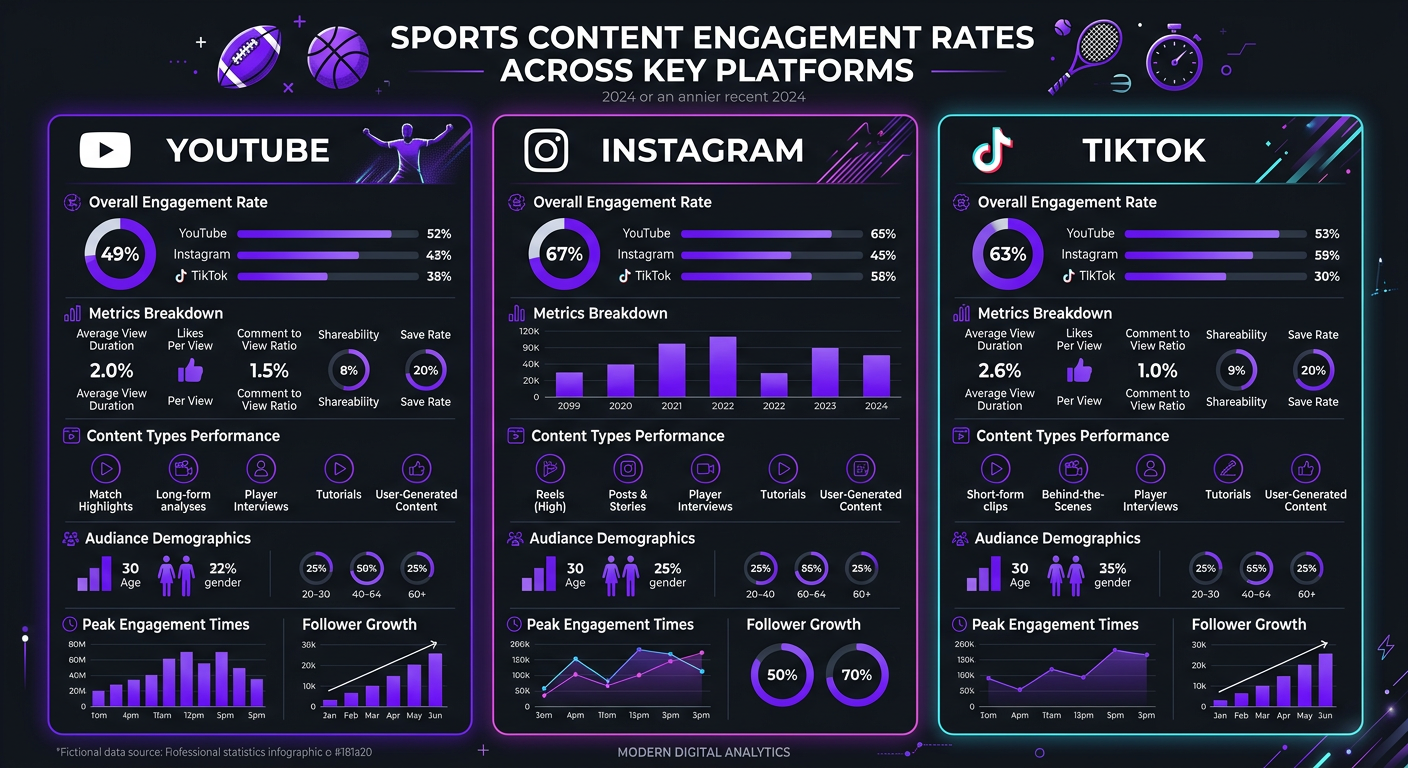
The numbers tell a clear story. Sports content viewership on YouTube grew 45% year-over-year in 2025. TikTok’s sports vertical is its fastest-growing category. Instagram Reels featuring sports moments consistently outperform other content types in engagement rate.
But here’s what’s really changed: it’s no longer just ESPN and professional leagues producing sports content. The ecosystem has democratized.
- Individual athletes are building audiences that rival traditional media. A college basketball player’s highlight reel can generate more views than a local news broadcast of the same game.
- Youth sports organizations are using video for recruitment, fundraising, and parent engagement.
- Sports brands and sponsors are shifting budgets from traditional advertising to content marketing — documentaries, behind-the-scenes series, athlete spotlight content.
- Sports commentators and analysts are building YouTube empires around game breakdowns, draft analysis, and opinion content.
- Fitness influencers and trainers are blending sports content with instructional material, creating hybrid content that educates and entertains.
Every one of these categories needs video editing that understands sports. And the demand far outstrips the supply of editors who can actually do it well.
Why Generic Editors Struggle With Sports Content
We’ve had clients come to us after trying general-purpose editors for their sports content. The footage was technically cut together. The transitions were smooth. But it felt flat. The energy was wrong. The big moment didn’t hit. The slow-motion was in the wrong place.
Sports editing is about athletic intuition translated into editorial choices. When a play is developing, a sports editor knows to build tension with tighter cuts. When the moment lands, they know exactly how long to hold the shot. When the crowd erupts, they know to let the audio breathe. These aren’t technical skills — they’re instincts built by watching and editing thousands of hours of sports footage.
Types of Sports Video Content (and What Each Requires)
| Content Type | Typical Length | Key Elements | Audience |
|---|---|---|---|
| Highlight reel | 60–90 sec | Best plays, speed ramps, music sync, graphics | Fans, recruiters, sponsors |
| Game recap | 3–10 min | Key moments, score graphics, commentary integration | Fans, team followers |
| Recruitment video | 3–5 min | Best plays + stats overlays + academic/character clips | College scouts, coaches |
| Training / technique | 5–15 min | Multi-angle breakdowns, slow motion, annotations | Athletes, coaches, fitness audience |
| Behind-the-scenes / docu | 10–30 min | Interview integration, narrative structure, cinematic grade | Fans, brand audience |
| Social media clips | 15–60 sec | Vertical, fast-paced, text overlays, trending formats | Instagram, TikTok, X audience |
| Event promo / hype video | 30–90 sec | Dramatic pacing, epic music, VFX, brand integration | Ticket buyers, sponsors, media |
| Analysis / breakdown | 10–20 min | Telestrator-style annotations, replay with commentary | Hardcore fans, aspiring athletes |
Most athletes and sports organizations need a mix of these formats, not just one. An NFL draft prospect might need a 90-second highlight reel for scouts, a 5-minute extended tape for deeper evaluation, 15-second Instagram clips for personal branding, and a 3-minute “Day in the Life” video for sponsors. That’s four distinct edit styles from potentially the same source footage.
The Content Repurposing Opportunity
Smart sports content producers film once and edit many. A single game’s footage can become:
- A full game recap (YouTube long-form)
- 3-5 individual play highlights (Reels/TikTok)
- A player spotlight focusing on one standout athlete
- A tactical breakdown with annotations
- A hype clip for the next matchup
That’s 6-8 pieces of content from one filming session. The editing is where that multiplication happens. An editor who understands sports content strategy can plan these deliverables during the first cut, pulling selects and building rough timelines for each format simultaneously.
Sports Video Editing Costs: The Full Breakdown
Sports video editing pricing varies enormously by content type, complexity, and who’s doing the work. Here are real 2026 market rates:
| Content Type | Budget Tier | Professional Tier | Premium / Agency |
|---|---|---|---|
| Highlight reel (60-90s) | $100–$250 | $250–$500 | $500–$1,000 |
| Game recap (5-10 min) | $200–$500 | $500–$1,200 | $1,200–$2,500 |
| Recruitment video (3-5 min) | $300–$600 | $600–$1,500 | $1,500–$3,000 |
| Training / technique video | $150–$400 | $400–$900 | $900–$2,000 |
| Documentary / docu-series (per ep) | $800–$2,000 | $2,000–$5,000 | $5,000–$12,000+ |
| Social media clip package (5 clips) | $150–$400 | $400–$800 | $800–$1,500 |
| Hype / promo video (60-90s) | $300–$700 | $700–$1,500 | $1,500–$4,000 |
| Monthly retainer (ongoing content) | $800–$1,500 | $1,500–$3,500 | $3,500–$7,000+ |
The budget tier gets you functional edits — clips assembled in order, basic music, maybe some speed ramps. For personal social media or internal team review, it works. For anything public-facing that represents your brand, team, or athletic career, the professional tier is the minimum.
Why Sports Editing Costs More Than You’d Expect
People often underestimate sports editing costs because highlight reels are “only 60 seconds.” But consider what goes into that 60 seconds:
- Footage review: A full game produces 2-3 hours of multi-camera footage. The editor watches all of it to find the 10-15 moments that make the reel.
- Selection and ranking: Which plays make the cut? In what order? Opening with the best play or building to it? These are editorial decisions that require sports knowledge.
- Sync and speed work: Beat-matching to music, speed ramps on key moments, slow-motion on impacts. Frame-level precision.
- Graphics and overlays: Player names, scores, stats, team logos, transition graphics. Each one designed and timed.
- Color and audio: Matching footage from different cameras, balancing crowd audio with music, ensuring the final product looks and sounds polished.
That “60-second reel” is 6-10 hours of skilled work. At professional rates of $50-$80/hour, $300-$800 is entirely reasonable.
Need Sports Content That Matches the Energy of the Game?
We edit highlights, recaps, recruitment tapes, and full sports productions. Tell us what you need and we’ll give you a straight quote.
What Makes a Great Sports Video Editor
Technical editing skills are table stakes. Here’s what separates a good sports editor from a great one:
Athletic Literacy
A great sports editor understands the sport they’re editing. They know that a double-move in basketball creates anticipation. They know that the moment before a goal matters as much as the goal itself. They understand that a defensive play can be just as highlight-worthy as a scoring play — if it’s edited with the right emphasis.
Without sports literacy, an editor might cut to the wrong moment, miss the build-up that makes a play special, or misjudge what the audience actually cares about.
Rhythm and Pacing Instinct
Sports content has a natural rhythm: build → peak → release. A possession develops, the play happens, the reaction follows. Great editors mirror this rhythm in their cuts, extending tension with slow motion during the build, snapping to real-time at the peak, and holding on the reaction for emotional payoff.
Multi-Camera Mastery
Sports footage often comes from multiple cameras — wide angle, sideline, handheld, drone, and sometimes athlete-mounted. Synchronizing these feeds, choosing the optimal angle for each moment, and cutting between them seamlessly is a core sports editing skill. The audience should feel like they have the best seat in the house at every moment.
Graphics and Data Integration
Sports audiences expect information layered over visuals: scores, stats, player names, clock times, speed measurements, distance markers. A sports editor needs to integrate these elements cleanly without cluttering the frame — and time them so they appear and disappear with the editorial rhythm.
Audio Storytelling
The roar of a crowd, the crack of a bat, the whistle before a play — these audio elements are as important as the visuals. A great sports editor uses natural sound strategically: pulling it up during emotional moments, ducking it under music during montages, and knowing when to let a moment breathe in silence before an explosion of sound.
Key Editing Techniques for Sports Content
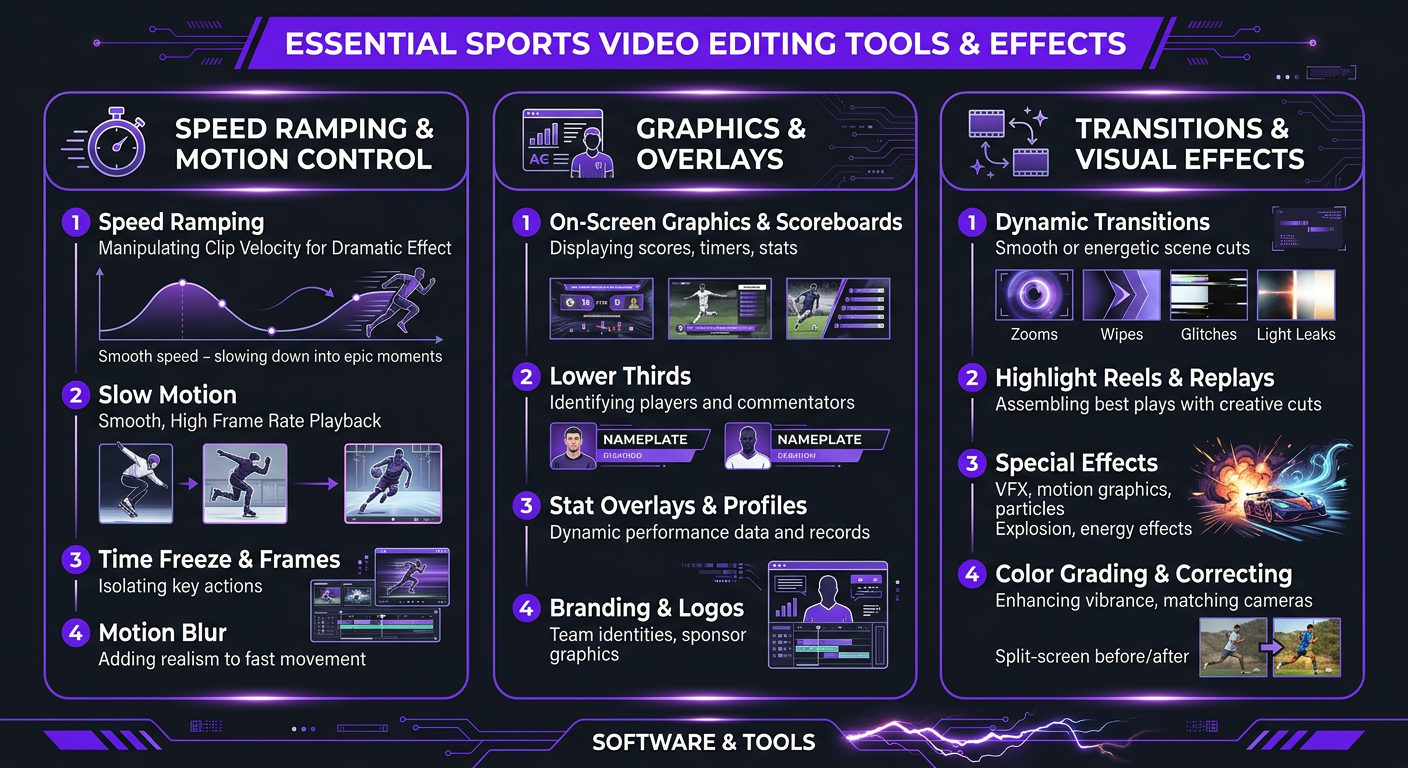
If you’re evaluating an editor’s work — or learning to edit sports content yourself — these are the techniques that define professional sports editing:
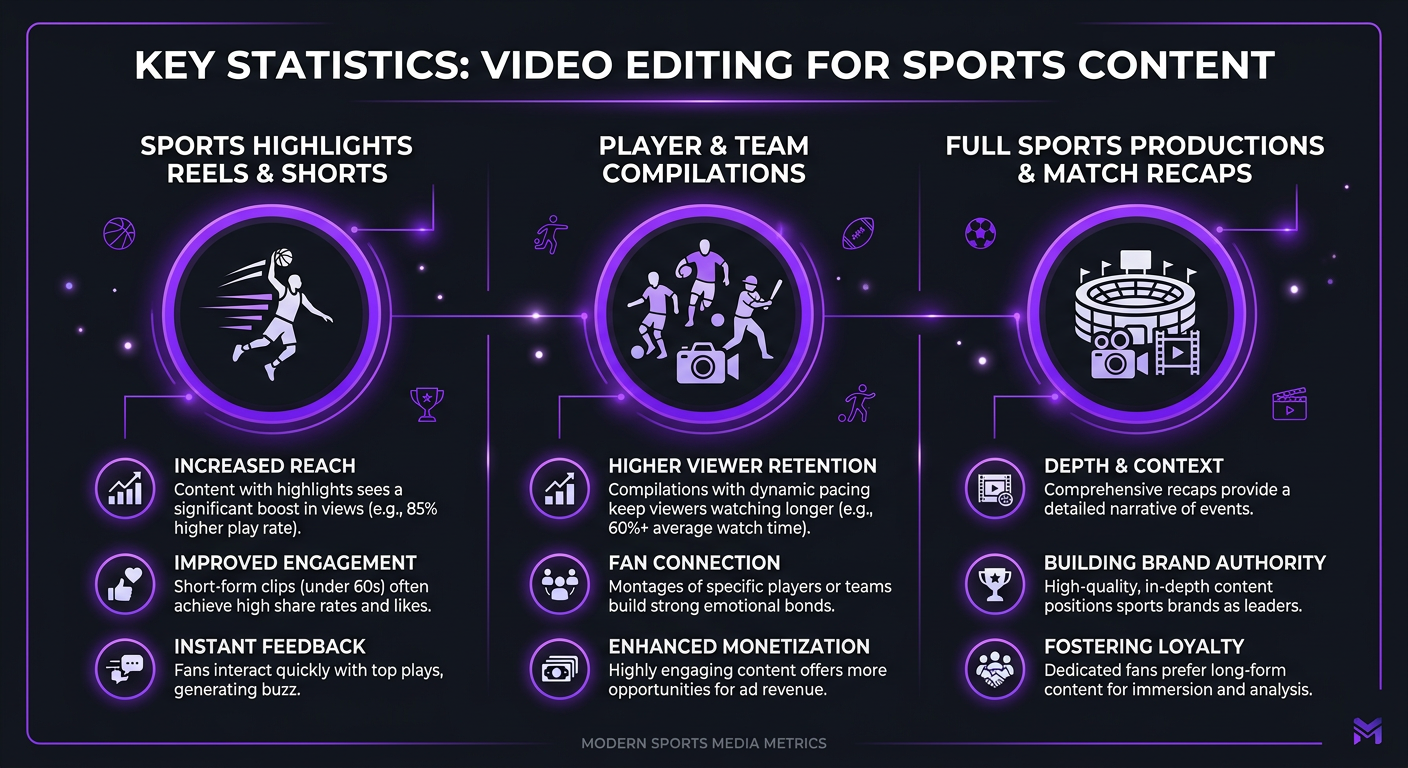
Speed Ramping
The most recognizable technique in sports editing. Normal speed during the approach, sudden slow-motion at the peak moment (the catch, the hit, the score), then snapping back to real-time for the aftermath. The technical execution — smooth ramp curves, proper frame interpolation for 24fps to 120fps+ footage — separates amateur from professional.
Beat-Drop Editing
Syncing the biggest play to the biggest moment in the music. This sounds simple, but it requires working backward from the music: identifying the beat drop, then selecting the play that matches that energy level, then building the preceding 15-30 seconds to create proper anticipation.
Replay Construction
Showing a play, then immediately replaying it from a different angle — often in slow motion. The transition between live speed and replay needs to feel intentional, not like a mistake. Lower thirds, “REPLAY” graphics, and audio dips signal the shift to the viewer.
Whip Pans and Transition Cuts
Using camera movement or motion blur as transition points between clips. A fast pan in one clip connects to a fast pan in the next, creating fluid visual connections between separate moments. When done well, it gives highlight reels a kinetic, energetic feel.
Zoom and Crop for Emphasis
Dynamically cropping into a wider shot during the edit to emphasize a specific moment — a facial expression, a foot placement, a reaction. This is especially useful when the camera was too wide during the actual filming. Modern 4K and 6K footage gives editors significant room to punch in without quality loss.
Parallel Action Editing
Cutting between two simultaneous actions — an athlete running a route while a quarterback scans the field, or two competitors in separate heats. This builds tension and context, showing the viewer more than one camera could capture.
| Technique | Best For | Difficulty | Impact |
|---|---|---|---|
| Speed ramping | Highlights, hype videos | Medium | ★★★★★ |
| Beat-drop editing | Highlight reels, promos | Medium | ★★★★★ |
| Replay construction | Game recaps, analysis | Low–Medium | ★★★★ |
| Whip pan transitions | Highlight reels, social clips | Medium | ★★★★ |
| Dynamic zoom/crop | Analysis, all formats | Low | ★★★ |
| Parallel action | Documentaries, recaps | High | ★★★★ |
Platform-Specific Sports Content Strategy
Each platform has different requirements, audience expectations, and content performance patterns. A highlight reel that crushes on YouTube won’t necessarily work on TikTok — and vice versa.
YouTube: The Home for Long-Form Sports Content
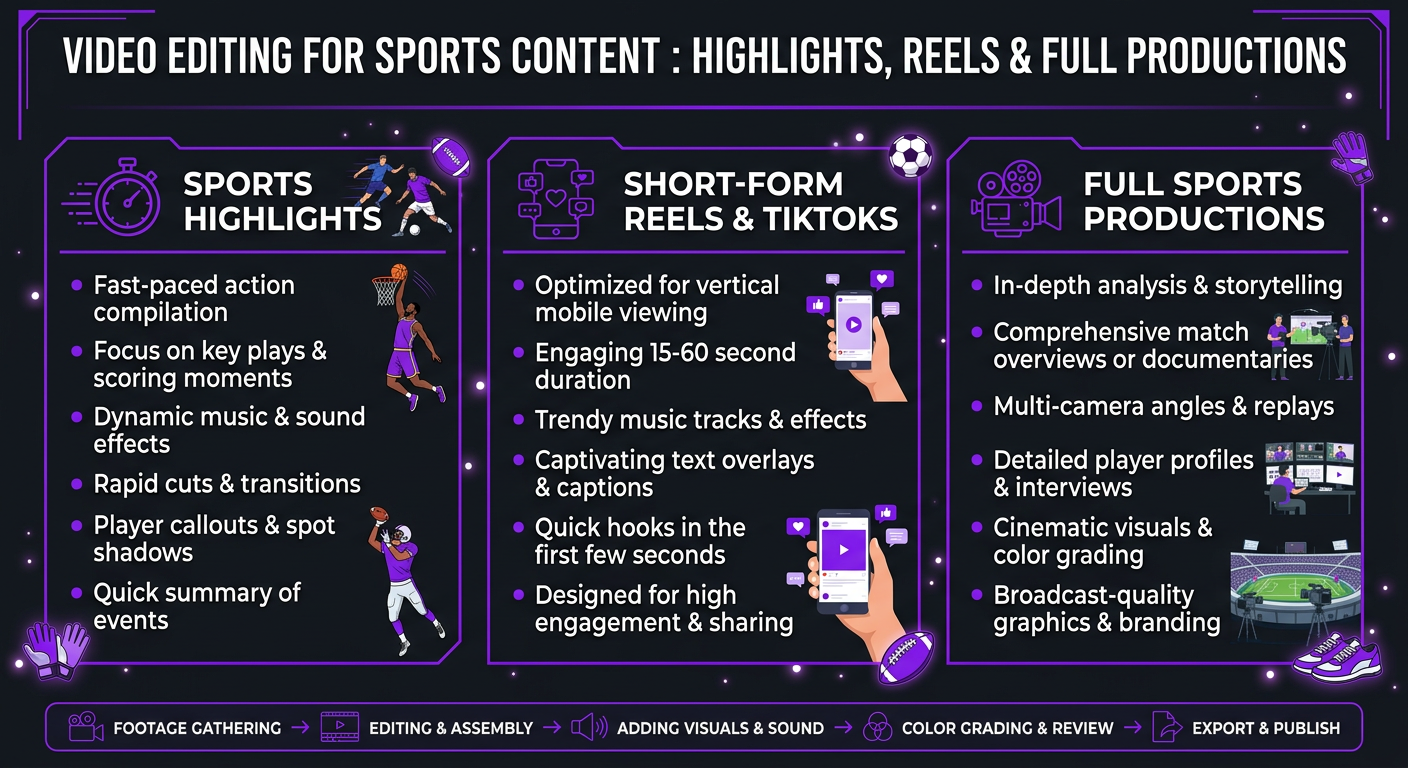
YouTube is where sports audiences go for depth: full game highlights (8-15 min), player analysis, tactical breakdowns, documentary series, and extended highlight compilations. The algorithm rewards watch time, so pacing is critical — too fast and viewers fatigue, too slow and they click away.
What works: Structured content with clear chapters, strong thumbnails featuring key moments, consistent upload schedules, 8-20 minute videos for the sports analysis niche.
Editing style: More deliberate pacing than social media. Space for replays, analysis overlays, and narrative building. Clean graphics that match sports broadcast aesthetics. Professional YouTube editing principles apply, with sports-specific techniques layered on top.
Instagram Reels & TikTok: The Viral Play Machine
Short-form vertical content (9:16) is where individual plays go viral. The editing style is completely different from YouTube: fast cuts, immediate hooks (best play first), trending audio integration, and text overlays that provide context without narration.
What works: 15-60 second clips, immediate impact (no slow build), text overlays for context, trending sounds, vertical framing. Check our social media editing services for more on this format.
Editing style: Aggressive pacing, jump cuts between the best moments, creative use of slow motion (but not too much — attention spans are short), platform-native features (stickers, text styles).
X (Twitter): Real-Time Sports Conversation
X is where sports happen in real-time. Clips need to be fast — 15-60 seconds, landscape or square, auto-captioned (most users have sound off). The goal is to insert your content into the conversation happening right now.
What works: Speed. If a big play happens at 8 PM, the clip needs to be posted by 8:05 PM. That means pre-planned editing workflows, template graphics, and rapid export capabilities.
LinkedIn: Sports Business and Behind-the-Scenes
Surprisingly strong for sports content — but a specific type. Behind-the-scenes of team operations, business of sports content, athlete entrepreneurship stories, and sports technology showcases perform well on LinkedIn.
Editing style: More polished, less flashy. Interview-style content with B-roll, professional graphics, shorter duration (1-3 minutes), and a clear professional takeaway.
| Platform | Best Format | Optimal Length | Key Editing Focus |
|---|---|---|---|
| YouTube | 16:9 landscape | 8–20 min | Pacing, chapters, graphics, narrative |
| Instagram Reels | 9:16 vertical | 15–60 sec | Fast cuts, hooks, text, trending audio |
| TikTok | 9:16 vertical | 15–90 sec | Native style, trends, text overlays |
| X (Twitter) | 16:9 or 1:1 | 15–60 sec | Speed, captions, immediate hook |
| 16:9 or 1:1 | 1–3 min | Polish, interviews, business angle |
Building an Athlete Brand Through Video Content
The athletes who build lasting brands beyond their playing careers are the ones who invest in content early. And “content” doesn’t just mean posting workout clips on Instagram — it means building a visual identity through consistent, professionally edited video.
The Athlete Content Flywheel
The most effective athlete content strategy creates a flywheel:
- Performance content (highlights, game footage) attracts sports fans
- Personality content (behind-the-scenes, day-in-the-life) converts fans into followers
- Value content (training tips, mindset, nutrition) builds authority
- Branded content (partnerships, promotions) monetizes the audience
- Each piece cross-promotes the others, growing the audience for all four categories
The editing requirements are different for each category, but the visual identity — color palette, graphics style, pacing feel, audio treatment — should be consistent across all of them. That consistency is what separates athletes with “some videos” from athletes with a brand.
When we worked with Riley Coleman, a content creator building a strong personal brand, the key insight wasn’t that his content needed better effects or flashier editing. It was that every piece of content needed to feel like it came from the same universe — the same visual language, the same energy level, the same quality standard. Our dedicated team at Increditors delivered that consistency, which translated directly into audience growth because viewers knew exactly what to expect.
Recruitment Tapes: The Highest-Stakes Sports Edit
For high school and college athletes, a recruitment video might be the single most important video they ever produce. Coaches review hundreds of tapes. Yours needs to stand out in the first 10 seconds.
What college coaches want to see:
- Best plays immediately (don’t bury the lead)
- Sport-specific skills demonstrated clearly
- Game footage (not just practice)
- Clean video quality (no shaky phone footage)
- Stats overlay with academic information
- 2-4 minutes maximum — coaches don’t have time for 10-minute montages
Budget editors tend to create recruitment videos that look like fan-made compilations. Professional sports editors create tapes that look like they belong on a broadcast — because that’s the visual standard coaches are accustomed to evaluating from.
Sports Teams & Organizations: Content Strategy That Scales
Individual athletes need 3-5 videos per week. A sports team or league might need 20-50+ pieces of content per week across platforms, formats, and purposes. At that volume, the editing challenge isn’t creative — it’s operational.
The Content Volume Challenge
A typical professional or semi-professional sports team needs:
- 2-3 game recaps per week (10-15 min each)
- 5-10 social media clips per game
- Player spotlight videos (weekly or bi-weekly)
- Training and behind-the-scenes content
- Promotional content for upcoming games/events
- Sponsor integration content
- Season review and off-season content
That’s easily 15-30 pieces of edited content per week during the season. A single freelance editor cannot sustain that volume at professional quality. This is where an enterprise-level editing partnership becomes essential.
When eSafety, an organization producing high-volume educational and advocacy content, needed to scale their video output without sacrificing quality, the challenge was identical to what sports organizations face: consistent quality at scale, fast turnarounds, and a team that understood their audience and goals. Our team structure — dedicated editors, project management, quality control — is exactly the same model we deploy for sports organizations.
Template Systems for Sports Content
The most efficient sports content operations build template systems:
- Graphics templates: Score overlays, player name cards, stat callouts — all pre-built and customizable per game
- Intro/outro templates: Consistent branded openings and closings that an editor swaps content into
- Social media templates: Pre-formatted vertical clips with brand-consistent text placement
- Thumbnail templates: Game-day thumbnails with player photos, scores, and dates
These templates dramatically reduce per-video editing time — from 6 hours to 2-3 hours for a standard game recap. Over a season, that’s hundreds of hours saved.
Scaling Sports Content? We Build Editing Teams for That
From weekly game recaps to multi-platform content operations, we assemble dedicated editing teams that match your volume, quality standards, and brand. See our portfolio to judge the quality yourself.
How to Hire a Sports Video Editor: What to Look For
Portfolio Evaluation Criteria
When reviewing a sports editor’s portfolio, look for these specific indicators:
| Indicator | What to Look For | Red Flag |
|---|---|---|
| Pacing | Energy matches the sport and moment | Everything at the same pace, no variation |
| Speed ramps | Smooth, precisely timed to the action peak | Abrupt, poorly timed, excessive use |
| Audio | Music sync, natural sound used effectively | Music slapped on top, crowd noise ignored |
| Graphics | Clean, broadcast-quality, well-timed | Cluttered, template-looking, poorly placed |
| Color | Consistent, sport-appropriate grade | Over-saturated, inconsistent between shots |
| Sport knowledge | Key moments highlighted, context clear | Impressive-looking plays chosen over actually significant ones |
Questions to Ask Before Hiring
- What sports have you edited before? Genre experience matters — basketball editing rhythm is different from soccer is different from MMA.
- What’s your footage review process? Do they watch all footage or rely on the client to send selects? Both approaches have pros and cons.
- Can you handle multi-camera sync? If your footage comes from 3+ cameras, this is a non-negotiable skill.
- What’s your turnaround for game-day content? If you need same-day or next-morning recaps, the editor needs to be available and fast.
- Do you build graphics, or do I supply them? Some editors are full-service; others need pre-built templates. Both work, but know what you’re getting.
For ongoing sports content, consider an agency like Increditors rather than a solo freelancer. The volume and turnaround demands of sports content — especially during a season — benefit from having a team with backup capacity and specialized roles (editor + colorist + graphics designer).
The Sports Video Editing Workflow
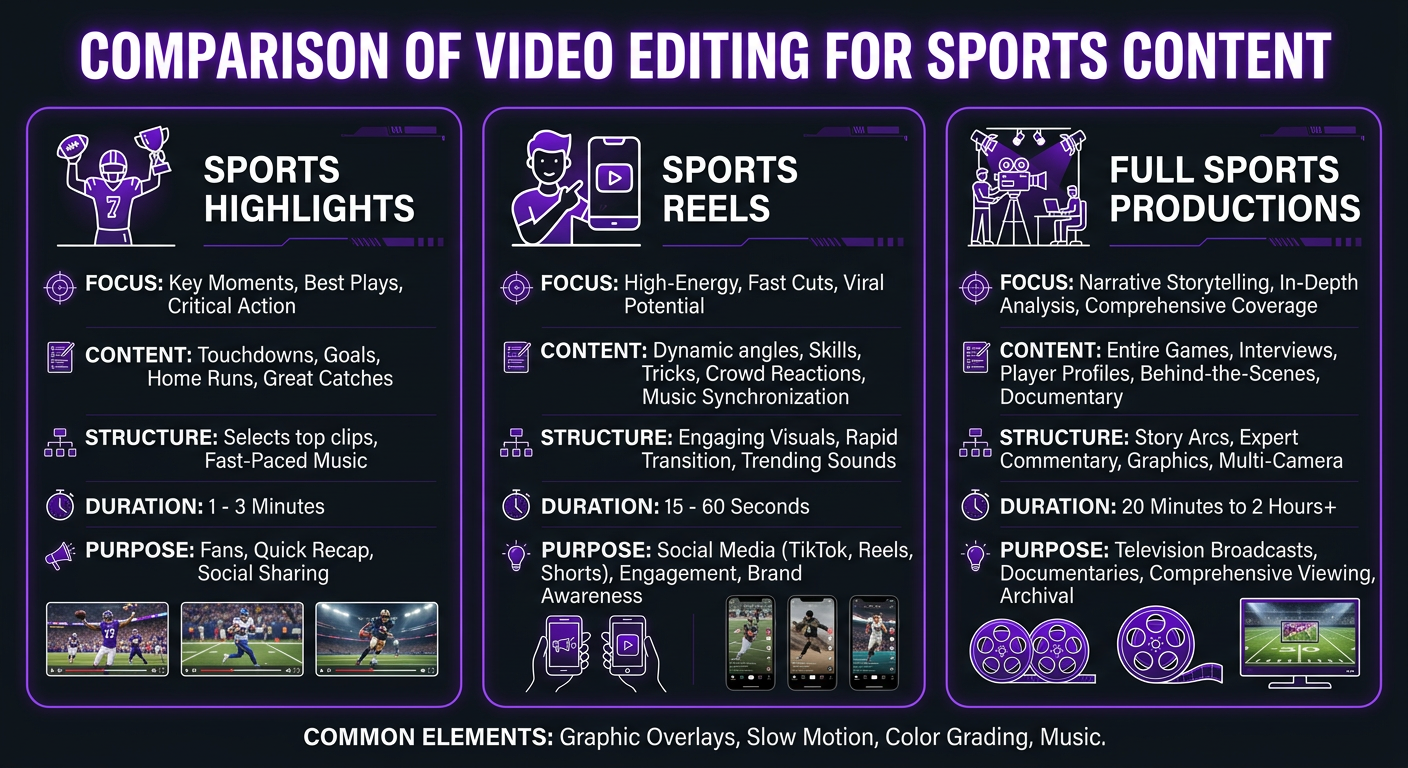
A streamlined workflow is the difference between sustainable sports content production and burnout. Here’s the professional process:
Phase 1: Capture and Transfer
All footage from cameras, drones, and mobile devices is consolidated. If multiple people filmed (common in sports), a clear file naming and folder structure prevents chaos. Cloud upload begins immediately after the event — services like Frame.io, Google Drive, or Dropbox handle the transfer while the editor starts organizing.
Phase 2: Ingest and Sync
Multi-camera footage is imported and synced — either via timecode, audio sync (PluralEyes, Premiere’s built-in sync), or manual alignment. Proxies are generated for large 4K+ files. A sports-specific project template loads pre-built graphics, fonts, and color presets.
Phase 3: Selects and Story
The editor reviews all footage, marking key moments with markers or in/out points. For highlights: the best 10-15 plays. For recaps: the narrative arc of the game. For analysis: the specific sequences that illustrate the tactical point. This is where sports knowledge is most critical.
Phase 4: Assembly and Edit
Selected moments are arranged on the timeline. Music is chosen and laid in. Pacing is established — cut rhythm, speed ramps, replay placement. Graphics are positioned. The rough cut takes shape.
Phase 5: Polish
Color correction across all clips, audio mixing (music + natural sound + commentary if applicable), graphics animation, final timing adjustments. The difference between “assembled” and “polished” is what separates budget reels from professional content.
Phase 6: Delivery
Export in all required formats: YouTube master (4K H.264 or ProRes), Instagram vertical (1080×1920), X landscape (1920×1080), thumbnail stills. For teams producing multiple deliverables from the same source, this phase includes creating alternate cuts from the same project file.
When VYVE Wellness came to us needing a consistent content production pipeline, we implemented exactly this kind of structured workflow. The specific content was wellness rather than sports, but the operational challenge was identical: high volume, fast turnaround, consistent quality, multiple deliverables per filming session. The workflow structure made the difference between “we can’t keep up” and “we’re producing 3x more content than before.”
Frequently Asked Questions
Sports video editing costs range from $150–$500 for highlight reels and social clips, $500–$2,500 for game recaps and recruitment tapes, and $2,000–$12,000+ for documentary episodes and branded sports productions. Monthly retainers for ongoing sports content typically range from $2,000–$7,000+ depending on volume and complexity. See our pricing page for specific packages.
Sports editing requires multi-camera synchronization, speed ramping for key moments, replay construction, scoreboard and graphics integration, high frame rate handling for slow motion, and — most importantly — the athletic literacy to know which moments matter and how to present them with maximum impact. It’s a specialized skill set built on general editing fundamentals.
A 60-90 second highlight reel takes 4-8 hours of editing work, including footage review, selection, sync, speed ramping, graphics, and color correction. Calendar time depends on review cycles — expect 2-5 business days with revisions. Rush delivery within 24 hours is possible with agency teams that have dedicated capacity.
It depends on your goals. Athletes building a brand need highlights, training montages, and behind-the-scenes content. Teams need game recaps, player spotlights, and promotional videos. Sports brands need documentary-style content and event coverage. The most effective strategy combines all relevant formats and repurposes footage across platforms.
Technically yes, but the results will likely feel generic. Sports editing requires understanding athletic timing, game flow, and what sports audiences care about. Editors without sports experience often miss the emotional peaks, over-use slow motion, and fail to capture the rhythm that makes sports content compelling. For best results, work with editors who specialize in or have significant experience with sports content.
For Instagram Reels and TikTok: 15-60 second vertical clips with fast cuts, trending audio, and text overlays. For YouTube: 3-10 minute highlight compilations in 16:9. For X: under 60 seconds, landscape, with auto-captions. The most effective approach is editing platform-specific versions from the same source footage rather than posting one format everywhere.
Let’s Build Your Sports Content Machine
Whether you’re an athlete, a team, or a sports brand — we’ll match you with editors who understand the game. No generic edits. No missed moments.
Pricing data reflects 2026 market rates from industry research and direct production experience. Rates vary by sport, content type, and project complexity. For current Increditors sports video editing pricing, visit our sports editing page or schedule a call.