








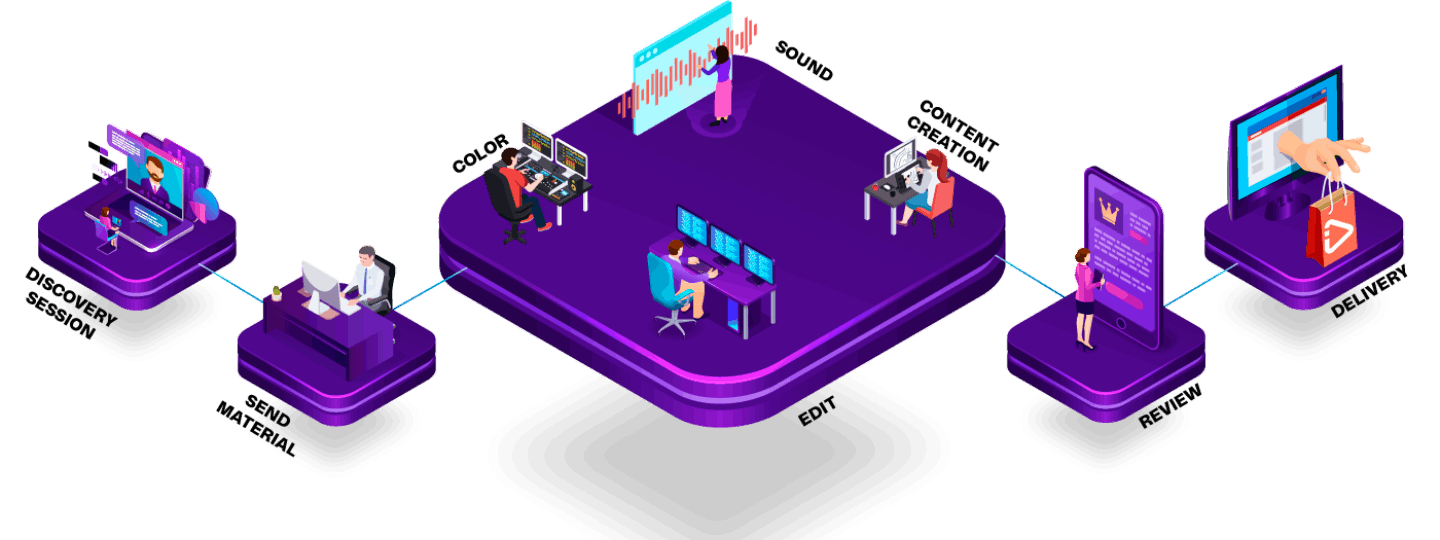
![3D Explainer Video - ScribbleLive.mp4_snapshot_00.12_[2022.03.09_03.14.16]](https://increditors.com/wp-content/uploads/elementor/thumbs/3D-Explainer-Video-ScribbleLive.mp4_snapshot_00.12_2022.03.09_03.14.16-r7wb53mx72rxst3qcqyrfxdmeyzb5r9jbl0wbjujh4.png "3D Explainer Video – ScribbleLive.mp4_snapshot_00.12_[2022.03.09_03.14.16]")



























Sales coaches who invest in professional video editing consistently outperform those who don’t — earning higher authority, more inbound leads, and better call-booking rates. This guide breaks down exactly which video formats, editing techniques, and content strategies turn a sales coach’s camera time into a predictable client pipeline.
- Why Video Is the #1 Authority Builder for Sales Coaches
- The Best Video Content Types for Sales Coaches
- Editing Techniques That Build Trust and Drive Action
- Building a Video Funnel That Books Calls on Autopilot
- DIY Editing vs. Outsourcing: What Makes Financial Sense
- Platform-Specific Strategy: Where Sales Coaches Win
- Common Video Mistakes Sales Coaches Make (and How to Fix Them)
- Verdict: Is Professional Video Editing Worth It for Sales Coachesa
- Frequently Asked Questions
Why Video Is the #1 Authority Builder for Sales Coaches
If you’re a sales coach, your entire business is built on one currency: credibility. Prospects need to believe you have walked the floor, closed the deals, and survived the rejection before they’ll hand you thousands of dollars to help them do the same. And in 2026, nothing transfers credibility faster — or at greater scale — than video.
According to Wyzowl’s State of Video Marketing report, 89% of marketers say video gives them a positive ROI, and 87% of consumers say they were convinced to buy a product or service after watching a brand’s video. For sales coaches specifically, those numbers carry even more weight: your “product” is your expertise, and video is the single most efficient way to demonstrate expertise at scale without being on a thousand discovery calls every week.
Think about the alternative. A written LinkedIn post might take two minutes to read and build some credibility. A podcast appearance does better — a listener hears your voice, your confidence, your pacing. But video Video is the full package. Prospects see your eye contact, your gestures, your energy under pressure. They hear how you handle objections in your own content. They watch how you frame problems and prescribe solutions. By the time they book a call with you, they’ve already decided they trust you. That’s the power professional video unlocks.
The Trust Deficit Facing Modern Sales Coaches
The coaching industry has grown explosively over the past decade, and with that growth has come a trust problem. Prospects are more skeptical than ever. They’ve been burned by coaches who over-promised and under-delivered. They’ve seen too many “gurus” with rented Lamborghinis and manufactured results. Today’s buyers do extensive research before they ever reach out — and most of that research happens on YouTube, LinkedIn, and Instagram.
This is where production quality becomes a proxy for coach quality. When a prospect finds your channel and sees crisp audio, clean cuts, professional lower-thirds, and tight pacing — they make an unconscious judgment: this person is serious. They invest in their work. They probably invest the same level of care in their clients. Conversely, shaky footage, bad audio, jump cuts left in, and a chaotic editing style signals the opposite — even if the content itself is brilliant.
We’ve seen this pattern repeatedly in the coaching clients we work with at Increditors. When coaches upgrade their editing quality, their inbound inquiry rate typically increases within 60–90 days — not because they’re posting more, but because the content they already have is now doing a better job converting viewers into believers.
Video’s Compounding Effect on Authority
Unlike a speaking gig or a live webinar, video compounds. A YouTube video you publish today can rank for a high-intent keyword — “how to close B2B deals,” “cold outreach that works,” “handling price objections” — and bring in warm leads five years from now. LinkedIn video posts get significantly more organic reach than text posts. Instagram Reels built from your long-form content can introduce you to new audiences every single week without additional filming.
The math is simple but profound: every hour you spend filming, paired with professional editing, generates far more compounding return than any other form of content marketing available to a solo sales coach or small coaching firm. The key is making sure that investment in filming time is matched by equal investment in editing quality.
The Best Video Content Types for Sales Coaches
Not all video content works equally well for sales coaches. After editing hundreds of hours of coaching content, we’ve identified the formats that reliably drive authority and inbound bookings versus the formats that feel productive but don’t move the needle. Here’s the breakdown.
Long-Form Educational YouTube Videos
Long-form YouTube videos are the foundation of a sales coach’s authority engine. These are 10–25 minute deep dives on specific, high-intent topics: “The 5-Step Framework for Closing Enterprise SaaS Deals,” “Why Your Discovery Calls Are Losing You Clients,” “Cold Email vs. Cold Call: What the Data Actually Says.” These videos attract prospects who are actively searching for solutions to real problems — which means they arrive pre-qualified and pre-motivated.
The editing requirements for long-form YouTube are significant. Every video needs a tight hook in the first 30 seconds (this is where most viewers decide to stay or leave), clean pacing that eliminates all dead air and verbal tics, chapter markers for navigation, branded intro and outro sequences, and professional lower-thirds when you reference frameworks or key stats. B-roll cutaways — screen recordings of sales tools, slides illustrating frameworks, stock footage of sales environments — break up the talking head and keep viewers engaged.
Retention is everything on YouTube. A video with a 55%+ average view duration will get pushed by the algorithm. A video with 35% average view duration will underperform no matter how good the content. Professional editing directly impacts retention by keeping the pacing sharp, the visual interest high, and the viewer’s attention fully engaged throughout.
Short-Form Clips for LinkedIn, Instagram, and TikTok
Short-form video — 60 to 90 seconds — is the discovery layer of a sales coach’s content funnel. These clips introduce you to new audiences who would never search for your long-form content, but who stop scrolling when they see a punchy, well-edited insight about their profession. The best short-form clips are extracted from your long-form content: a single tactic, a sharp reframe, a provocative statement, a quick framework.
The editing bar for short-form is actually higher than for long-form in some ways. You have three seconds to hook, no room for slow warm-ups, and every single second must earn its place. Professional short-form editing includes dynamic captions (not just subtitles — stylized, on-brand text that reinforces key phrases), precise cuts that hit on emphasis points, background music that sets tone without distracting, and vertical framing that fills the entire mobile screen.
Client Testimonial and Case Study Videos
Testimonial videos are arguably the highest-converting content format for sales coaches. A well-produced 2–3 minute video showing a real client’s transformation — from where they were before coaching to where they are now — does more sales work than any landing page copy or discovery call opener. These aren’t vanity pieces; they’re social proof delivered in the most emotionally compelling format possible.
The production requirements for testimonials are specific: clear audio (a client recorded on a phone in a noisy room kills credibility instantly), professional color grading, strategic B-roll of the client’s work environment or results, and tight editing that cuts to the emotional core without feeling rushed. A badly produced testimonial can actually damage trust more than having no testimonial at all.
💡 Pro Tip: Record your client testimonial calls on Zoom and send the raw footage to your editing team. With simple lighting instructions to your clients (sit near a window, use earbuds), you can produce compelling testimonial videos without ever coordinating a film shoot — and your editing team handles the rest.
Editing Techniques That Build Trust and Drive Action
Great video editing for sales coaches isn’t about flashy effects or complex motion graphics. It’s about systematically removing every friction point between your viewer and the moment they decide to trust you. Here are the specific techniques that make the biggest difference.
Pacing and the Art of the Tight Cut
Pacing is the most important editing variable for authority content. Too slow, and viewers conclude you don’t value their time. Too fast, and you feel frantic — not the energy you want from a coach. The sweet spot for sales coaching content is a deliberate, confident pace that mirrors how an experienced coach actually speaks: purposeful, no filler, every word earning its place.
Practically, this means cutting all “ums,” “uhs,” and false starts. It means removing the three-second pause you took while you remembered your next point. It means cutting from sentence end to sentence start without lingering on silence. These micro-edits, applied consistently across a 15-minute video, can reduce runtime by 20–30% while dramatically increasing perceived confidence and authority.
The jump cut — cutting within a continuous shot — is your primary tool here. Used well, jump cuts feel energetic and intentional. Used poorly, they feel choppy and amateurish. The difference is context: cutting away to B-roll or a slide before cutting back to a new talking head moment masks the transition and makes the pacing feel seamless even when you’re cutting aggressively.
Branded Motion Graphics and Lower-Thirds
Lower-thirds — the text overlays that appear at the bottom of frame to identify a speaker or highlight a key point — are a powerful authority signal when used correctly. For sales coaches, they serve double duty: they reinforce your name and credentials for new viewers, and they highlight the key frameworks or statistics you’re citing so viewers retain more from each video.
Branded motion graphics — animated intros, outro cards, branded chapter transitions — communicate that you invest seriously in your content. They create a consistent visual identity across all your videos, which builds brand recognition over time. A viewer who has seen your branded intro on 10 videos starts to recognize it the same way they recognize a TV show’s opening sequence. That familiarity builds trust before you’ve said a single word.
Strategic B-Roll and Screen Recordings
B-roll is what separates a talking-head video from a professional production. For sales coaches, effective B-roll includes: screen recordings of CRM dashboards or sales tools you’re demonstrating, slides and frameworks you’ve built in Keynote or PowerPoint, stock footage of sales environments (office calls, whiteboard sessions, team meetings), and graphic animations that visualize statistics or processes you’re describing.
The goal of B-roll isn’t decoration — it’s retention. Every time you cut to a relevant visual, you’re giving the viewer’s brain a new stimulus that resets their attention window. A video with well-deployed B-roll every 30–45 seconds maintains viewer engagement at significantly higher rates than an equivalent talking-head video with no cutaways.
💡 Pro Tip: When filming your coaching content, verbally signal when you’re about to reference a framework or stat: “Here’s what the data shows…” or “Let me show you the framework I use.” This gives your editor a natural cue to cut to a graphic or slide at exactly the right moment, making the B-roll feel organic rather than forced.
Building a Video Funnel That Books Calls on Autopilot
Individual videos are tactics. A video funnel is a strategy. The most successful sales coaches we work with don’t just publish content randomly — they architect a deliberate video ecosystem that moves prospects from first encounter to booked call through a series of carefully designed touchpoints. Here’s how that funnel works.
Awareness Layer: Discovery-Driven Short-Form
The top of your video funnel is pure reach. These are short-form clips (60–90 seconds on LinkedIn, Instagram Reels, TikTok) designed to stop a scroll and introduce your perspective to someone who’s never heard of you. The best awareness-layer content makes a sharp, slightly counterintuitive point that’s immediately relevant to your target buyer: a VP of Sales, a founder running their own sales, an AE looking to jump to coaching or management.
Example awareness hooks that work for sales coaches: “The reason your team closes at 18% when industry average is 24% has nothing to do with your scripts.” “I’ve reviewed 400 discovery calls. Here’s the single most common mistake I see.” “Cold email open rates are a vanity metric. Here’s the number that actually predicts revenue.” These hooks create curiosity and signal deep expertise simultaneously — and a well-edited 90-second clip can deliver enough value to earn a follow or a profile visit.
Volume matters at this layer. Publishing 3–5 short-form clips per week, repurposed from your long-form content, gives the algorithm consistent material to test and amplify. This is one reason outsourcing editing pays off so quickly for sales coaches: a single long-form YouTube video can be sliced into 8–12 short-form clips, multiplying your distribution without multiplying your filming time.
Consideration Layer: Long-Form YouTube and Deep-Dive Content
Once a prospect is aware of you — they’ve seen your clips, they’re following you — the consideration layer is where you build deep conviction. This is where long-form YouTube videos do their heaviest work. A prospect who watches three of your 15-minute YouTube videos has spent 45 minutes in your presence, absorbed your frameworks, seen how you think, and formed a detailed opinion of your competence. They arrive at the decision phase already 70% sold.
The most effective consideration-layer videos for sales coaches are framework-heavy and problem-specific. They don’t just inspire — they give the viewer a concrete tool they can use immediately. This “implementation gap” strategy works beautifully: you teach the framework for free, but the implementation support requires coaching. Viewers who try to apply your frameworks and hit roadblocks become highly motivated coaching prospects.
Decision Layer: Testimonials, Case Studies, and Offer Videos
The decision layer is where video does the sales work you used to do manually on discovery calls. A compelling 3-minute “Who I Work With and What We Do Together” video, pinned on your website and LinkedIn profile, qualifies prospects before they ever reach out. A testimonial video playlist on your YouTube channel handles every “do you actually get resultsa” objection. A “Here’s exactly what happens when you work with me” walkthrough video eliminates uncertainty and builds confidence.
When prospects arrive at this layer having already consumed your awareness and consideration content, the decision layer simply needs to remove friction — not build conviction from scratch. This dramatically shortens sales cycles and improves close rates on discovery calls because the prospect has already done the convincing work on themselves.
DIY Editing vs. Outsourcing: What Makes Financial Sense
Every sales coach faces this decision at some point: do you invest the time to learn video editing, or do you outsource it The answer depends on your hourly value and your content ambitions — but for most established coaches, the math isn’t even close.
The True Cost of DIY Editing
Let’s run the numbers honestly. A typical 15-minute YouTube video requires, at minimum, 3–5 hours of editing time for someone with intermediate skills — and that’s after the learning curve, which typically takes 50–100 hours to overcome. If you’re a sales coach billing $300–$500 per hour for your coaching time (or even valuing your time at half that), every hour spent editing is an hour not spent delivering coaching, developing curriculum, doing sales calls, or building strategic partnerships.
Beyond the direct cost, DIY editing creates a consistency problem. Coaches who edit their own videos publish sporadically because editing becomes a bottleneck. They cut corners on quality when they’re busy. They don’t have the time to create short-form repurposing clips. The content machine sputters instead of humming — which means the compounding authority-building effect never kicks in.
What to Look for in a Video Editing Partner
Not all editing services are created equal for coaching content. The key differentiators to look for: experience with talking-head and educational content specifically (not just wedding videos or corporate brand spots), a clear short-form repurposing workflow, strong communication and revision processes, and a consistent team rather than a rotating roster of freelancers who need to relearn your style every project.
At Increditors, we specialize in exactly this category — authority-building content for coaches, consultants, and B2B professionals who need their video presence to do serious sales work. Our editors are trained on the specific requirements of coaching content: tight pacing, framework visualization, testimonial storytelling, and short-form repurposing. The result is a turnkey content pipeline where you film and we handle everything else.
Platform-Specific Strategy: Where Sales Coaches Win
Different platforms serve different roles in a sales coach’s content ecosystem, and editing requirements vary significantly by platform. Understanding these differences is essential for getting maximum return from your content investment.
YouTube: The Long-Term Authority Engine
YouTube is the single most valuable platform for sales coaches building long-term authority. It’s the world’s second-largest search engine, with high-intent users actively searching for sales advice, tactics, and coaching resources. A well-optimized YouTube channel builds SEO equity that compounds for years: a video ranking for “how to handle price objections” in 2026 will still bring in leads in 2029.
YouTube editing priorities: retention (average view duration above 50% is the target), chapter markers and timestamps for navigability, strong end screens directing to related videos and your subscription CTA, and custom thumbnails that communicate the video’s value proposition instantly. YouTube also rewards upload consistency — channels that publish once or twice per week outperform channels that burst and go quiet.
LinkedIn: Where B2B Sales Coaches Own Their Niche
For sales coaches targeting B2B audiences — VP Sales, Revenue Leaders, founders, AEs — LinkedIn is the highest-leverage platform for reach and direct inbound. LinkedIn’s algorithm currently gives video content significantly more organic reach than text or images, and the platform’s professional context means that even mid-range content quality reads as polished compared to what your audience sees on entertainment platforms.
LinkedIn editing priorities: native video upload (not YouTube links — LinkedIn suppresses external links in reach), square or vertical format for mobile feed, captions turned on (85% of LinkedIn video is watched without sound), and a text hook in the first frame before any motion graphics or music kicks in. Clips between 60–120 seconds perform best for reach; longer videos (up to 10 minutes) work for deeper authority plays among your existing followers.
Instagram and TikTok: Top-of-Funnel Discovery at Scale
Instagram Reels and TikTok serve the awareness function in the funnel. The audiences here are broader and less immediately purchase-ready than LinkedIn, but the algorithmic reach potential is unmatched. Sales coaches who crack short-form on these platforms routinely see follower growth of thousands per week during a viral clip — and even non-viral consistent posting builds a substantial audience over 6–12 months.
The editing requirements for Reels and TikTok are the most demanding of any platform: hook in the first 2 seconds, no pause longer than half a second, dynamic captions that change style to emphasize key words, trending audio or music (where relevant), and vertical 9:16 framing throughout. The learning curve for this style of editing is steep, which is another reason professional editors who specialize in short-form provide an outsized advantage.
Common Video Mistakes Sales Coaches Make (and How to Fix Them)
Having edited content for coaches across a wide range of niches, we’ve seen the same mistakes show up repeatedly. These aren’t small stylistic preferences — they’re meaningful conversion killers that reduce the effectiveness of otherwise great content. Here’s the most common, and how to fix each one.
Mistake #1: Leading With Your Bio Instead of the Viewer’s Problem
The single most common opening mistake in sales coaching videos: spending the first 30–60 seconds talking about yourself, your credentials, and your journey before addressing why the viewer should keep watching. This is backwards. Your viewer’s first question is “is this video going to solve my problema” — not “who are youa”
The fix: open with the problem or the payoff. “By the end of this video, you’ll have a framework for handling the price objection that closes 30% more deals.” Or: “Most sales managers are making this mistake in their one-on-ones and it’s costing them 2–3 deals per rep per month.” Hook first, credentials second. Your editor can help restructure videos where the hook is buried — sometimes the gold is at minute 8, not the beginning.
Mistake #2: Inconsistent Publishing Without a Repurposing System
Many sales coaches publish in bursts — three videos in a week, then nothing for three weeks. This inconsistency confuses algorithms and, more importantly, confuses audiences. Prospects who find you during a burst period and go to check your channel two weeks later and find nothing recent make a quick judgment: this person isn’t serious or isn’t consistent. Not qualities you want associated with a coach.
The fix is a batching-plus-repurposing workflow. Film 4–6 long-form videos in a single day each month. Have your editing team turn that footage into 4–6 long-form videos plus 20–30 short-form clips. Spread those clips across the month for daily or near-daily posting. This creates the perception of constant presence from one day of filming — a systems-level solution to the consistency problem.
Mistake #3: No Clear CTA or a CTA That’s Too Passive
Sales coaches who are excellent at selling in person often go curiously passive on video when it comes to the call to action. “Let me know your thoughts in the comments!” or “Feel free to reach out if you want to chat” are not CTAs — they’re invitations to be ignored. Every video in your funnel should have a specific, action-oriented CTA matched to where that video sits in the funnel.
Awareness videos: “Follow me for more on closing and prospecting.” Consideration videos: “Download my full framework — link in description.” Decision videos: “If you want to apply this with your team, book a free call with me — link below.” Your editor can add end screens, animated CTA overlays, and lower-thirds that reinforce your verbal CTA with visual reminders, doubling the effectiveness of every ask.
Verdict: Is Professional Video Editing Worth It for Sales Coachesa
After everything we’ve covered, let’s give you a clear answer: yes, professional video editing is worth it for sales coaches — but only if you treat it as a strategic investment rather than a vanity expense. The coaches who see ROI are the ones who pair professional editing with a deliberate content strategy, consistent filming, and a clear funnel architecture. The coaches who don’t see ROI are the ones who get beautiful videos and then post them randomly without a plan.
The financial case is compelling. If you’re charging $3,000–$15,000 for a coaching engagement, you only need one additional client per quarter from your video content to justify a professional editing retainer. And in practice, coaches with consistent, high-quality video presence report that 30–50% of their inbound leads cite video content as a primary touchpoint in their decision. That’s not a marginal gain — it’s a fundamental channel that scales with every video you publish.
The strategic case is equally clear. Video builds authority that compounds. It pre-sells prospects so discovery calls convert faster. It creates a library of evergreen content that works for you 24/7 without additional effort. And it signals to the market — clearly and unmistakably — that you are a serious operator who invests in the quality of everything associated with your brand.
The question isn’t whether professional video editing is worth it. The question is whether you can afford to keep leaving that authority on the table while your competitors invest in theirs. For most sales coaches we work with, the answer — once they’re honest about it — is no.
Frequently Asked Questions
How many videos should a sales coach publish per month to build meaningful authoritya
A realistic and effective cadence for most sales coaches is 4 long-form videos per month (one per week on YouTube) combined with 15–20 short-form clips distributed across LinkedIn, Instagram, and TikTok. This level of output is achievable with one full-day filming session per month if you batch effectively and have a professional editing team handling repurposing. Coaches publishing below this threshold will build authority, but the compounding effect accelerates significantly above it.
Do I need expensive camera equipment to produce professional-looking coaching videosa
Equipment matters far less than most coaches assume. A modern smartphone (iPhone 14 or newer, any recent Samsung flagship) shoots video that is more than sufficient for YouTube and social media. What matters far more than camera quality is lighting and audio. A $50–$100 ring light or sitting near a large window, combined with a $60–$80 USB lavalier microphone, will produce footage that a professional editor can make look excellent. Investing in a $3,000 camera while neglecting audio is a common and costly mistake.
How long before video marketing starts generating inbound leads for a sales coacha
Most sales coaches begin seeing meaningful inbound activity within 90–180 days of consistent, professionally edited video publishing. YouTube SEO typically takes 3–6 months for new channels to gain traction as videos index and accumulate watch time data. LinkedIn and Instagram can generate inbound much faster — sometimes within weeks of a clip going semi-viral. The coaches who see the fastest results are those who start with a clear funnel strategy, optimize their content for search and discovery from day one, and use professional editing to maximize retention and shareability.
What’s the best type of video content for generating discovery call bookings specificallya
Decision-layer content drives the most direct bookings: specifically, a clear “Who I work with and what we achieve together” video on your website and LinkedIn profile, paired with a testimonial playlist of 3–5 client transformation stories. These two content types handle objections, build conviction, and provide social proof — the three psychological prerequisites for a prospect booking a call. Long-form consideration content (YouTube deep-dives) is what builds the trust that makes the decision-layer content convert so effectively.
How do I brief a video editor who doesn’t know anything about sales coachinga
The most effective approach is a detailed style guide and a reference library. Create a document that explains your target audience (their role, their pain points, their sophistication level), your brand personality (authoritative, direct, zero fluff), your visual preferences (color palette, font style, graphic aesthetic), and your CTA strategy for each video type. Include 3–5 reference videos — competitors or adjacent creators whose editing style you admire. A professional editing team like Increditors will use this brief to develop a consistent style that gets stronger with each video as the editors deepen their understanding of your content and audience.
Ready for Video That Actually Convertsa
Tell us about your project and we will put together a custom plan.