








![3D Explainer Video - ScribbleLive.mp4_snapshot_00.12_[2022.03.09_03.14.16]](https://increditors.com/wp-content/uploads/elementor/thumbs/3D-Explainer-Video-ScribbleLive.mp4_snapshot_00.12_2022.03.09_03.14.16-r7wb53mx72rxst3qcqyrfxdmeyzb5r9jbl0wbjujh4.png "3D Explainer Video – ScribbleLive.mp4_snapshot_00.12_[2022.03.09_03.14.16]")
























Conference keynote clips perform when they are treated as standalone YouTube assets, not leftovers from an event recording. The winning workflow is simple: identify moments with a clear promise, rebuild each clip with context, edit for retention, package it with strong titles and thumbnails, and measure every clip against viewer intent instead of vanity output volume.
A conference keynote is one of the most underused content assets in B2B marketing. A company spends weeks preparing the message, invests in event travel, puts an executive or subject-matter expert on stage, captures professional footage, and then often publishes the full talk once before moving on. That is a weak return on a strong asset. The keynote may have taken forty minutes to deliver, but inside that forty minutes are product beliefs, customer pain points, category opinions, founder stories, strategic frameworks, proof points, and quotable moments that can become a full YouTube content engine.
The problem is that most keynote repurposing is lazy. Teams cut a few random highlights, add captions, publish them as shorts, and wonder why nothing happens. The clips usually lack setup, the titles sound like internal event labels, the thumbnails do not create curiosity, and the viewer has no reason to keep watching. A keynote clip that works on YouTube needs to feel like a complete video with its own promise. It cannot rely on the viewer knowing the event, the speaker, the company, or the context of the talk.
This guide breaks down how to turn conference talks into keynote clips that perform on YouTube. We will cover the strategy before editing, how to identify high-value moments, how to rebuild clips for retention, how to package them for search and browse, what a production workflow should look like, and how to measure whether the program is actually working. The goal is not to create more video files. The goal is to create durable, discoverable, useful content that helps the right audience understand why your company thinks differently.
Why Keynotes Can Become Strong YouTube Content
Keynotes work because they already contain ingredients that most B2B videos struggle to manufacture. There is a real person speaking with authority. There is social proof from the stage and audience. There is a clear topic. There is usually a narrative arc. The speaker is not reading a generic blog script; they are presenting a point of view in front of a live room. That gives the footage a credibility layer that studio content sometimes lacks.
YouTube rewards videos that earn attention quickly and keep it. A keynote can do that when the best moments are separated from the slower parts of the talk. Most conference talks include transitions, greetings, event-specific references, sponsor mentions, and audience acknowledgments. Those are useful in the room, but they are usually dead weight on YouTube. The editor’s job is to remove the live-event friction while keeping the authority of the live-event moment.
A Keynote Is a Trust Asset
When a buyer watches a polished ad, they know it was designed to persuade them. When they watch a useful keynote clip, the persuasion is quieter. The speaker is explaining a problem, teaching a framework, or defending a point of view. That format can build trust faster because the viewer gets to evaluate the speaker’s thinking. For premium B2B brands, this matters. Sophisticated buyers do not need more slogans. They want to see how a company understands the category.
The Footage Already Has Production Value
Event footage often includes multiple camera angles, stage lighting, professional audio, slides, crowd shots, and a setting that signals credibility. Even when the raw recording is imperfect, it usually has more visual texture than a basic webcam recording. With careful editing, motion graphics, slide cleanup, sound treatment, and pacing, the clip can feel premium without requiring a new shoot.
The Topic Has Already Been Market-Tested
If the keynote was accepted by a conference, the topic probably matters to a defined audience. That does not guarantee YouTube performance, but it gives the team a starting point. The question becomes: what part of the talk maps to a YouTube viewer’s problem A conference audience may attend for broad industry context. A YouTube viewer clicks because a title promises a specific answer, insight, or perspective.
💡 Pro Tip: Do not begin by asking, “How many clips can we get from this keynotea” Begin by asking, “Which moments could earn a click from someone who has never heard of the eventa” That question immediately improves selection quality.
Start With a Clip Strategy, Not a Timeline
The most common keynote clipping mistake is starting inside the editing timeline. An editor opens the full talk, scrubs for energetic moments, makes cuts, and exports a few highlights. That may produce content, but it rarely produces performance. You need a strategy before the edit. Strategy determines what the clip is supposed to do, who it is for, and how it should be packaged.
A strong keynote clip strategy starts with three decisions: the target viewer, the content angle, and the desired action. The target viewer might be a founder, a marketing leader, a technical buyer, a patient educator, an investor, or an internal champion. The content angle might be educational, contrarian, tactical, visionary, or proof-driven. The desired action might be watching more videos, subscribing, booking a call, sharing internally, or simply associating the brand with a category point of view.
Define the Audience Before the Clip
A keynote can contain several audiences at once. One section may speak to executives. Another may be technical. Another may tell a founder story that appeals to investors or partners. If you edit every moment for a generic audience, the clip becomes vague. Instead, label each potential clip by audience. A clip for a chief marketing officer should not be titled, paced, or framed the same way as a clip for a video producer or sales enablement manager.
Choose a Job for Each Clip
Every clip should have a job. Some clips educate. Some explain a point of view. Some build executive credibility. Some answer a common objection. Some create proof by showing a customer story or market shift. A clip with no job becomes a highlight reel fragment. A clip with a job becomes a useful asset that can be placed in a YouTube strategy, sales follow-up, newsletter, landing page, or paid retargeting campaign.
How to Choose the Right Keynote Moments
Great keynote clipping is mostly selection. Editing can improve a weak moment, but it cannot turn a vague idea into a strong video. The best moments usually have a clear tension: a problem people recognize, a claim that challenges assumptions, a framework that organizes complexity, a story with stakes, or a data point that changes how the viewer sees the topic.
Start by reviewing the talk transcript before touching the video. Mark moments where the speaker makes a complete point. A complete point includes setup, insight, and payoff. Avoid cutting clips that only make sense because of what came five minutes earlier. If the best line depends on missing context, either include the context, rebuild it with an opening text card or voiceover, or skip the clip.
The Five-Point Selection Score
A simple scoring system keeps selection objective. Rate each potential clip from one to five on five criteria: clarity, relevance, novelty, completeness, and visual support. Clarity asks whether the viewer can understand the idea quickly. Relevance asks whether the target audience cares. Novelty asks whether the idea feels fresh or sharply framed. Completeness asks whether the clip stands alone. Visual support asks whether the footage, slides, or graphics can help the point land.
Clips that score high across all five criteria should become primary YouTube uploads. Clips with strong ideas but weak completeness may become shorts, social posts, or sales assets after additional context is added. Clips that are clear but not novel are usually better as supporting cuts rather than main channel videos.
💡 Pro Tip: If a clip cannot be summarized in one strong sentence, it probably is not ready for YouTube. The sentence becomes the seed for the title, thumbnail, intro, and description.
Look for Tension, Not Just Energy
Event editors often choose moments where the speaker is animated. Energy matters, but tension matters more. A calm sentence that reframes a buyer’s problem can outperform an energetic line that says nothing new. Look for moments where the viewer feels a gap between what they thought and what the speaker is saying. That gap creates attention.
Separate YouTube Clips From Social Micro-Clips
Not every strong moment belongs on YouTube as a standalone video. A twenty-second quote may work well on LinkedIn or YouTube Shorts, but long-form YouTube usually needs a fuller arc. A three-to-eight-minute clip can work if it opens quickly, develops one idea, and ends with a useful conclusion. A twelve-minute clip can work if the topic has search depth or the speaker’s authority is high. The format should match the viewer’s reason to watch.
Editing Keynote Clips for YouTube Retention
Once the right moments are selected, the edit has one main responsibility: make the viewer feel oriented and rewarded. Keynote clips often fail because they begin too slowly. The speaker walks on stage, thanks the organizer, introduces the company, and eases into the topic. That may be polite in the room, but YouTube viewers decide quickly. The first fifteen seconds should tell them exactly why the clip matters.
A strong keynote clip usually needs a rebuilt opening. That might be a cold open from the most interesting line, followed by a short title card. It might be a direct setup using text on screen. It might be a tight edit that removes the stage preamble and starts when the speaker names the problem. The editor should protect the speaker’s voice while removing anything that only served the live audience.
Use Cold Opens Carefully
A cold open works when it previews the value of the clip without confusing the viewer. The best cold opens are short, specific, and connected to the title. For example, if the video is titled “Why Most B2B Video Strategies Fail After the First Campaign,” the cold open should include the speaker naming that failure or its consequence. Do not use a dramatic line just because it sounds intense. If the opening feels disconnected from the actual clip, retention will drop after the first thirty seconds.
Clean the Pacing Without Making It Feel Fake
Conference speakers pause, breathe, repeat themselves, and adjust to the room. Some of that should remain. If every pause is removed, the clip can feel unnatural. The better approach is to remove friction, not humanity. Cut long dead air, repeated setup, technical stumbles, and irrelevant asides. Keep pauses that add emphasis, laughter that signals room reaction, and moments where the speaker lets an important point land.
Rebuild Slides for Mobile and YouTube
Slides projected on a conference screen often look weak in a YouTube clip. Text may be too small, contrast may be poor, and the slide may include unnecessary event branding. Instead of simply cutting to the projector feed, rebuild important slides as clean motion graphics. Use the original slide as a source, but adapt it for YouTube. Increase type size, simplify diagrams, highlight the specific line being discussed, and use motion to direct attention.
Design for a Viewer Who Is Half Distracted
YouTube viewers may be watching on a phone, second monitor, or TV. They may be interested but not fully focused. The edit should make the structure easy to follow. Use chapter cards, simple visual labels, lower thirds, highlighted phrases, and recurring graphic treatments for frameworks. These elements should support comprehension, not decorate the clip. The viewer should always know what idea they are inside.
Titles, Thumbnails, and Positioning
Packaging is where many keynote clips lose before the viewer even watches. Teams upload a clip with a title like “Sarah Chen Keynote at SaaS Growth Summit 2026.” That title may be accurate, but it is not a compelling YouTube promise unless Sarah Chen or the event is already a major draw. Most viewers do not care that the content came from a keynote. They care what they will learn, avoid, understand, or rethink.
The title should translate the keynote moment into viewer language. Instead of naming the event, name the problem. Instead of describing the format, describe the payoff. Instead of leading with the company, lead with the insight. The event can still appear in the description, pinned comment, or lower-third context, but the click should be earned by relevance.
Title Patterns That Work
Strong keynote clip titles often use one of several patterns. The diagnostic pattern names a problem: “Why Your Webinar Clips Stop Getting Views.” The framework pattern promises structure: “The 3-Part System Behind High-Retention B2B Videos.” The contrarian pattern challenges a belief: “Your Conference Content Is Not a Thought Leadership Strategy.” The proof pattern uses a result: “How One Keynote Became 42 Sales Assets.” The warning pattern prevents a mistake: “Do Not Publish Your Full Conference Talk Before Doing This.”
Thumbnail Rules for Keynote Clips
A thumbnail should not simply be a frame of the speaker on stage with the event logo. That may look credible, but it rarely creates enough curiosity. Use the speaker’s face if expression and recognition help. Use a bold phrase if the idea is the draw. Use simple contrast between the problem and the payoff. If there is a visual framework in the talk, simplify it into one clear thumbnail element. Keep text short enough to read at small size.
💡 Pro Tip: Write three title and thumbnail concepts before editing the final version. If none of the packaging ideas feel clickable, the selected clip may not have a strong enough hook.
Descriptions Should Add Context, Not Repeat the Title
The video description should explain what the viewer will get, who the speaker is, why the topic matters, and where the clip came from. Include relevant links, chapters, related resources, and a clear next step. Do not stuff the description with a generic company pitch. A useful description helps YouTube understand the topic and helps a serious viewer move deeper into your ecosystem.
Building a Repeatable Repurposing System
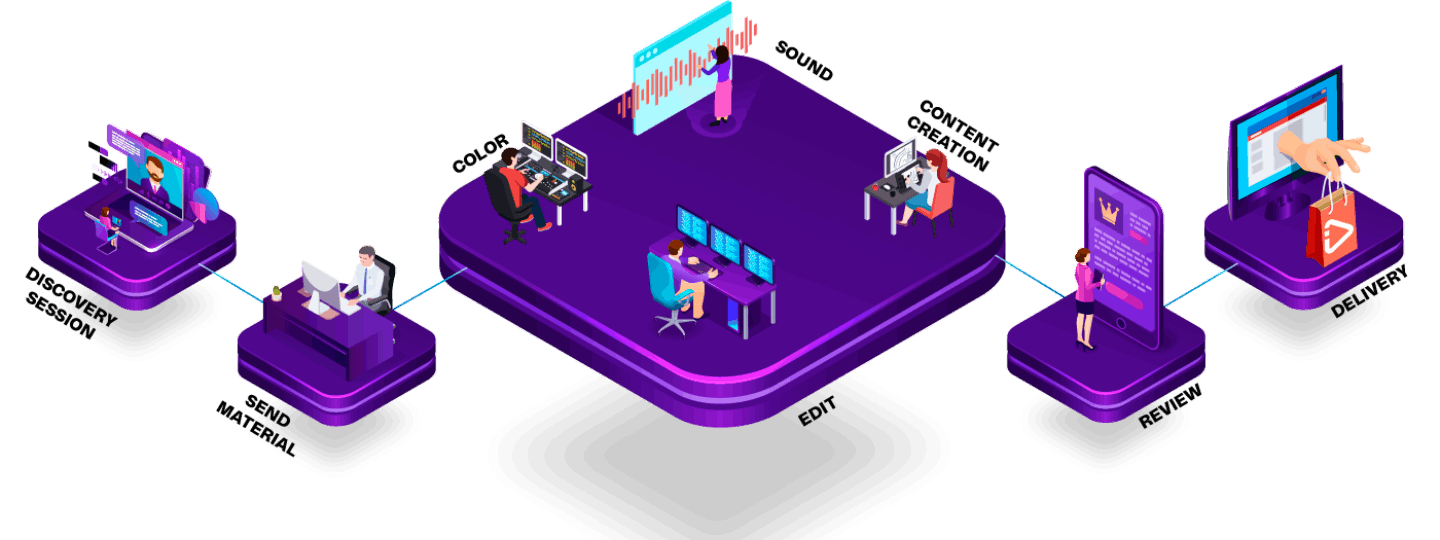
The difference between a one-off clipping project and a real content program is process. If every keynote is handled from scratch, the team wastes time making the same decisions repeatedly. A repeatable system turns raw keynote footage into a predictable content pipeline. That system should cover intake, transcript review, clip scoring, edit briefs, design, approvals, publishing, and reporting.
The process begins before the event. If possible, collect the talk title, speaker bio, slide deck, event audience, target messages, and business goals before the keynote is recorded. Ask the speaker which points matter most and which claims require careful approval. This context helps the editing team understand what should be protected, emphasized, or avoided.
Create a Clip Brief for Every Selected Moment
A clip brief keeps everyone aligned. It should include the working title, target audience, source timestamp, intended video length, core promise, must-keep lines, optional cuts, needed graphics, approval risks, and publishing destination. This prevents the editor from guessing and gives reviewers a clear standard. Without a brief, feedback becomes subjective: “Can this be punchiera” With a brief, feedback can be tied to the clip’s job.
Batch the Work by Stage
Keynote repurposing is more efficient when work is batched. Review the transcript in one focused pass. Select and score moments in one pass. Write all briefs together. Create title and thumbnail concepts before final editing. Edit primary YouTube clips first, then cut shorter derivatives from approved masters. This avoids a messy process where the team edits one clip, revises it, forgets the strategy, then starts over on the next clip.
Build a Content Map From One Keynote
A strong keynote may produce more than YouTube uploads. It can become long-form clips, Shorts, LinkedIn clips, newsletter sections, blog posts, sales snippets, quote graphics, landing page embeds, internal enablement content, and paid retargeting ads. But the content map should prioritize quality. It is better to create five strong YouTube clips and ten useful supporting assets than thirty weak clips that dilute the message.
What to Measure After Publishing
Performance measurement should match the job of the clip. If the clip was designed for search, impressions may grow slowly and steadily. If it was designed for browse, click-through rate and early retention matter more. If it was designed for sales enablement, public view count may be less important than whether prospects watch it and respond. Do not judge every keynote clip by the same metric.
For YouTube specifically, start with impressions, click-through rate, average view duration, retention graph, traffic sources, and engaged views. The retention graph is especially useful because it reveals where the edit loses clarity. If viewers leave during the intro, the clip may be too slow or the title may have created the wrong expectation. If viewers leave when slides appear, the graphics may be unreadable or the explanation may be too dense. If retention improves during stories, future clips should lean into narrative structure.
Connect YouTube Metrics to Business Use
A keynote clip can be valuable even if it does not become a viral video. For B2B companies, a clip that gets embedded in sales follow-up, shared by the speaker, used in a newsletter, added to a landing page, or referenced by prospects may be doing important work. Track distribution beyond YouTube. Ask sales which clips help explain the company point of view. Look at whether viewers click to related resources. Measure how the content supports the buying journey.
Use the First Batch as Research
The first keynote batch should teach you what the audience wants. Compare titles, thumbnails, topics, speaker moments, lengths, and retention patterns. You may discover that tactical frameworks outperform visionary commentary, or that contrarian clips earn more clicks but shorter viewing sessions. You may find that clips under six minutes are easier to package, or that longer clips perform better when the speaker teaches a complete framework. Use the data to refine the next event.
Common Mistakes That Hurt Keynote Clips
The first mistake is over-respecting the original structure. A conference talk was built for a live room, not for YouTube. You can preserve the speaker’s meaning without preserving every transition. The second mistake is publishing clips with internal names. The viewer does not care about session numbers, event tracks, or sponsor labels. The third mistake is ignoring audio quality. Viewers will tolerate imperfect visuals before they tolerate distracting audio. Clean dialogue is non-negotiable.
Another mistake is treating captions as the only visual enhancement. Captions help, but they are not a strategy. A keynote clip may need diagrams, callout text, slide rebuilds, chapter cards, cutaway footage, and subtle motion design. Finally, many teams publish once and stop. YouTube packaging often needs iteration. If a clip has strong retention but low click-through rate, test a stronger title or thumbnail. If it has good clicks but weak retention, the opening may need to better match the promise.
Do Not Turn Every Moment Into a Clip
Volume can quietly damage a channel. If a company publishes too many weak clips from one event, viewers learn to ignore the uploads. A restrained batch with strong positioning is better than flooding the channel. Quality control protects the brand and the algorithmic signal. Every upload should have a reason to exist.
FAQ
How long should a keynote clip be for YouTubea
Most strong keynote clips fall between three and twelve minutes. Shorter clips work when the idea is simple and punchy. Longer clips work when the speaker teaches a complete framework or tells a story with enough payoff. The right length is not based on the original talk; it is based on how long the selected idea needs to feel complete.
Should we publish the full keynote or only clipsa
In most cases, publish the strongest clips first. A full keynote can be useful for credibility, archives, or highly engaged audiences, but it is harder to package and retain viewers. Clips create more specific entry points. If you publish the full keynote, use chapters, a strong title, and a description that clearly explains who should watch it.
Do keynote clips need captionsa
Yes, but captions should be handled with taste. Full burned-in captions can be useful for short-form platforms, while long-form YouTube clips often benefit from selective emphasis captions, clean subtitles, and clear graphic support. The goal is comprehension, not visual clutter.
Can one conference talk become multiple YouTube videosa
Yes, if the talk contains multiple complete ideas. A strong forty-minute keynote may produce four to eight useful YouTube clips, plus supporting social cuts. The exact number depends on idea density, speaker clarity, audience relevance, and how much context each clip needs.
What if the keynote footage quality is not perfecta
Imperfect footage can still work if the idea is strong and the edit is thoughtful. Prioritize audio cleanup, stable framing, color correction, slide rebuilds, and intentional graphics. If the camera quality is weak, use the speaker footage as the credibility layer and rely more heavily on designed visuals to carry the explanation.
Verdict
Keynote clips are worth the effort when they are treated as strategic YouTube videos, not scraps from an event recording. The best clips have a defined audience, a clear promise, a complete idea, sharp editing, readable visual support, and packaging that speaks to viewer intent. The weakest clips rely on the event name, preserve too much stage context, and assume the viewer cares before the video has earned that care.
For B2B brands, keynote repurposing is one of the most efficient ways to extend the value of thought leadership. A single talk can become a library of assets that support YouTube discovery, executive credibility, sales conversations, newsletter education, social distribution, and paid remarketing. But performance comes from judgment. Clip selection, editing, and packaging matter more than raw output count.
The practical rule is this: if the clip would still be valuable to someone who never attended the event, never heard of the speaker, and has no context for your company, it has a chance to perform. If it only makes sense as a memory of the conference, keep it in the event recap. YouTube rewards usefulness, clarity, and curiosity. Build keynote clips around those three forces and your conference content becomes a long-term channel asset instead of a one-week promotional push.
Ready for Video That Actually Convertsa
Tell us about your project and we will put together a custom plan.