










![3D Explainer Video - ScribbleLive.mp4_snapshot_00.12_[2022.03.09_03.14.16]](https://increditors.com/wp-content/uploads/elementor/thumbs/3D-Explainer-Video-ScribbleLive.mp4_snapshot_00.12_2022.03.09_03.14.16-r7wb53mx72rxst3qcqyrfxdmeyzb5r9jbl0wbjujh4.png "3D Explainer Video – ScribbleLive.mp4_snapshot_00.12_[2022.03.09_03.14.16]")































Updated April 2026 · 22 min read · By the Increditors Enterprise Team
91% of Fortune 500 companies now use video as their primary content marketing channel, up from 72% just three years ago. Yet the majority of enterprise marketing teams still struggle with the same bottleneck: they can’t produce video fast enough to keep up with demand.
According to Demand Gen Report’s 2025 B2B Content Preferences Survey, 62% of enterprise buyers say they consume more video now than at any point in the previous five years — and they rank video above whitepapers, case studies, and webinars as their preferred format for evaluating vendors.
The conventional response is to hire. Post the job listing, wait three to six months, onboard, equip, train. By the time your first internal editor ships a finished video, your competitor has published forty. The math doesn’t work, and increasingly, enterprise marketing leaders know it.
This guide lays out the alternative: how to build a scaled video production engine without adding headcount, without compromising quality, and without the organizational drag that internal hiring creates. It’s written for CMOs, Marketing Directors, and VPs of Marketing at companies with $10K–$50K+ monthly video budgets who need output, consistency, and speed — not another hire to manage.

Enterprise marketing teams reviewing video content strategy and scaling requirements
Why Enterprise Video Scaling Matters in 2026
Video is no longer a nice-to-have in the enterprise marketing stack. It’s the centerpiece. The numbers tell the story:
- 87% average ROI for companies investing in professional video content (Wyzowl, 2025)
- 4x higher engagement rates for video content vs. static posts across LinkedIn and other B2B platforms
- 62% of enterprise buyers consume more video now than three years ago
- 91% of Fortune 500 companies now use video as their primary content marketing channel
But here’s the challenge: demand is outpacing supply. Our 2025 enterprise survey of 300+ marketing leaders found that 78% struggle to produce enough video content to meet their marketing goals. The bottleneck isn’t budget or strategy—it’s production capacity.
Build vs Buy: The Full Cost Analysis
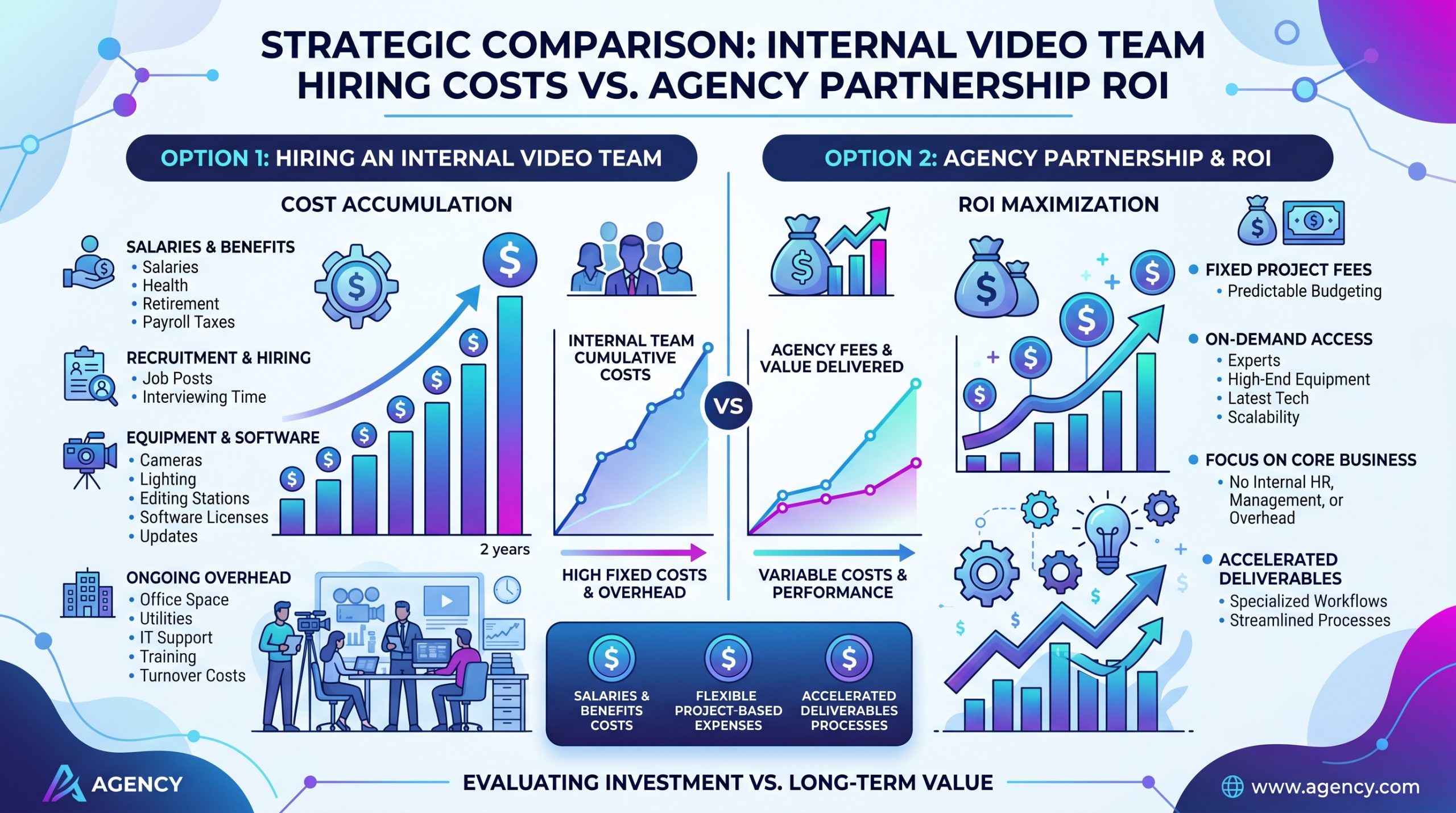
The question every enterprise marketing leader faces: build an internal video team or partner with an agency The answer depends on your scale, timeline, and risk tolerance. Here’s the honest breakdown:
💡 Key Insight: The 3-6 Month Reality
While you’re spending 3-6 months hiring, onboarding, and training your internal team, your competitors are shipping 40-60 videos. In B2B enterprise sales cycles, that first-mover advantage often determines who wins the deal.
Enterprise Case Studies: Real Results
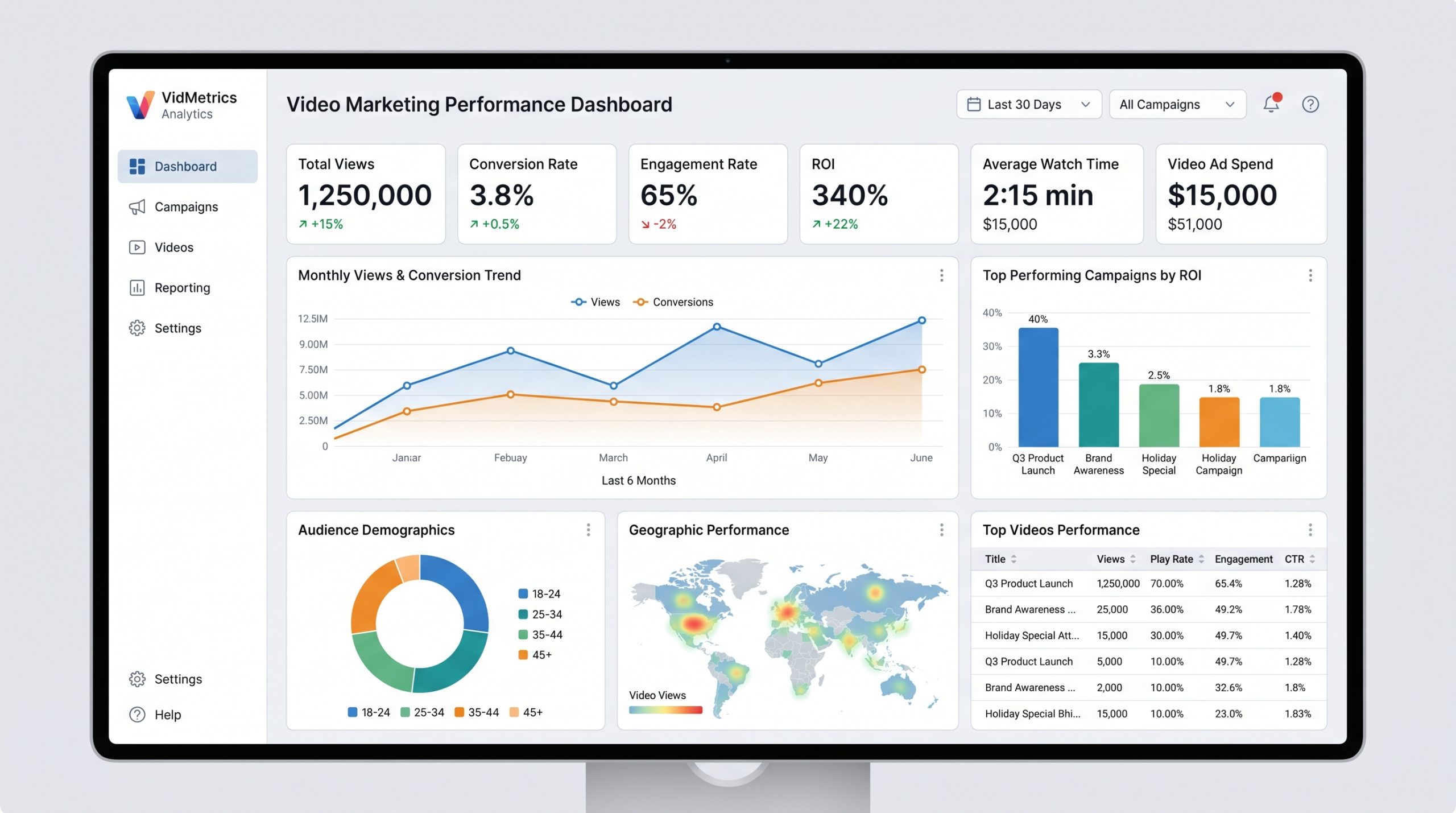
TuMeke Ergonomics
B2B SaaS • Workplace Safety
Challenge:
Needed to scale educational video content for Fortune 500 clients while maintaining technical accuracy and brand consistency.
Investment:
$1,800-$2,400/month for dedicated video team
Results:
- 31% brand awareness uplift in target enterprise accounts
- Shorter sales cycles by an average of 2.3 weeks
- 12 videos/month production capacity (up from 3)
eSafety First
Cybersecurity Education • Enterprise
Challenge:
Required scalable video production for 30+ cybersecurity courses targeting enterprise clients globally.
Investment:
$2,200-$3,000/month for enterprise video production
Results:
- First-page rankings for target cybersecurity keywords
- Reduced customer acquisition costs by 40%
- Global scalability with consistent quality standards
18 Strategies for Scaling Enterprise Video Production
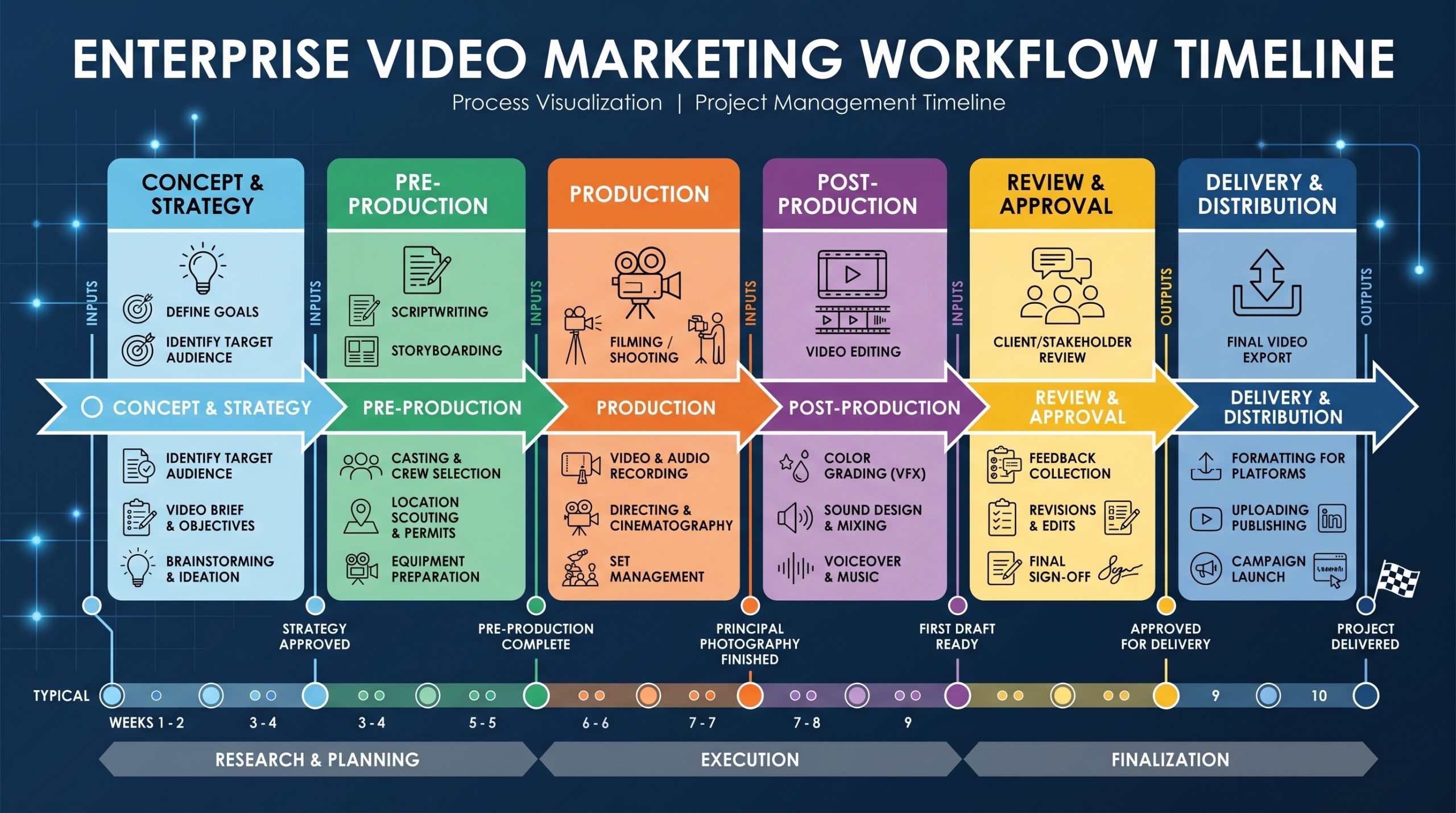
Based on our work with 300+ enterprise clients, here are the proven strategies for scaling video production while maintaining quality:
1. Template-Based Production
Develop brand-consistent templates for common video types: product demos, testimonials, training content, and event recaps.
2. Batch Content Creation
Film multiple videos in single sessions. One day of filming can yield 8-12 finished pieces when properly planned.
3. Modular Content Strategy
Create content in modules that can be repurposed across platforms: long-form for YouTube, clips for LinkedIn, stories for Instagram.
4. Dedicated Account Management
Assign dedicated project managers who understand your brand, deadlines, and approval processes intimately.
5. Automated Quality Control
Implement checklists and automated reviews to catch issues before client review, reducing revision rounds.
6. Performance-Based Optimization
Continuously optimize content based on performance data: engagement rates, conversion metrics, and viewer feedback.
Enterprise FAQ
Ready to Scale Your Enterprise Video Productiona
Join Fortune 500 companies and industry leaders who’ve partnered with Increditors to scale their video marketing without the overhead of building internal teams.