








![3D Explainer Video - ScribbleLive.mp4_snapshot_00.12_[2022.03.09_03.14.16]](https://increditors.com/wp-content/uploads/elementor/thumbs/3D-Explainer-Video-ScribbleLive.mp4_snapshot_00.12_2022.03.09_03.14.16-r7wb53mx72rxst3qcqyrfxdmeyzb5r9jbl0wbjujh4.png "3D Explainer Video – ScribbleLive.mp4_snapshot_00.12_[2022.03.09_03.14.16]")





























AI avatars are cheaper and faster to produce, but real presenters still outperform them on trust, emotional engagement, and high-ticket conversion — especially in 2026 when audiences are increasingly skeptical of synthetic video. The smartest creators are using a hybrid approach: AI avatars for scale, real presenters for moments that need to close.
- The 2026 Video Landscape: Why This Question Matters Now
- What AI Avatars Actually Are (And What They’re Not)
- The Case for Real Presenters: What the Data Shows
- Head-to-Head: Conversion, Trust, and Engagement Compared
- Which Format Wins by Use Case
- The Hybrid Strategy: Getting the Best of Both Worlds
- Production Costs, Timelines, and Scalability
- Our Verdict: What We Recommend in 2026
- Frequently Asked Questions
The 2026 Video Landscape: Why This Question Matters Now
We are living through the fastest transformation in video content history. Two years ago, the conversation about AI avatars was mostly speculative — a curiosity for tech early adopters experimenting with HeyGen and Synthesia. Today, it is a genuine strategic decision that affects conversion rates, brand trust, and content velocity for every serious video creator, SaaS marketer, course builder, and YouTube channel owner on the planet.
In 2026, AI avatar technology has advanced dramatically. Tools like HeyGen, Synthesia, Captions, and D-ID can now generate hyper-realistic video clones that sync near-perfectly with natural speech patterns, display subtle micro-expressions, and even adapt eye contact based on viewer engagement signals. The uncanny valley problem that plagued early AI video has shrunk — but it has not disappeared, and as we will show, audience perception of synthetic video is becoming more sophisticated, not less.
At the same time, the raw economics of real presenter video production have not changed dramatically. You still need a camera, decent lighting, a capable editor, and a human being willing to perform on screen. For solopreneurs, coaches, and small SaaS teams, this represents a meaningful cost and time commitment — which is exactly why the AI avatar question feels so urgent. If a synthetic presenter can deliver 80% of the conversion performance at 20% of the cost, the business case writes itself.
But does it That is the question we are going to answer in this guide with specific, current data — not hype, not AI vendor talking points, and not reactionary “AI is ruining everything” takes. We have worked with hundreds of video projects across YouTube channels, SaaS onboarding flows, online courses, and coaching funnels, and we have developed a clear picture of where each format wins, where it fails, and how to build a production strategy that maximizes ROI in 2026.
Why 2026 Is a Turning Point
Three converging trends make 2026 the year this decision actually matters at scale. First, AI avatar platforms have crossed a quality threshold where the average viewer cannot reliably detect synthetic video at a glance — though they often can after 15-30 seconds of sustained viewing. Second, social media platforms have begun rolling out AI content disclosure requirements, changing the regulatory and trust calculus. Third, audience sophistication has accelerated — a 2025 Edelman Trust Barometer supplement found that 67% of online consumers aged 25-44 say they actively consider whether a presenter is human before deciding to trust a recommendation.
This creates a genuinely complex decision environment. The technology is better than ever, the economics favor AI avatars, but audience trust dynamics are shifting in ways that cut against synthetic video at exactly the moments when trust matters most — high-ticket sales, medical or financial advice, personal brand building, and long-form course content where the learner needs to feel a human connection.
Who This Guide Is For
This guide is written for content creators and marketing teams who are making active production decisions. Whether you are a YouTube creator considering AI avatars to increase upload frequency, a SaaS company evaluating avatar-based product demos, a course creator trying to decide whether to re-record your curriculum with AI, or a B2B coach building a video sales funnel — this breakdown will give you the framework and data you need to make the right call for your specific use case.
What AI Avatars Actually Are (And What They’re Not)
Before comparing formats, we need to be precise about what we mean by “AI avatars” in 2026, because the category has fragmented significantly. There are now at least four distinct types of AI video presenters, and they have meaningfully different performance profiles — treating them as a single category leads to bad decisions.
The Four Types of AI Video Presenters
Type 1: Stock AI Avatars. These are pre-built synthetic personas offered by platforms like Synthesia and D-ID. They look professional and polished, but they are not you — anyone who uses the same platform can access the same presenter. They perform adequately for generic explainer content and internal training, but they carry essentially zero personal brand equity and have measurably lower trust scores in consumer-facing applications.
Type 2: Cloned Personal Avatars. Tools like HeyGen’s Avatar 3.0 and Captions’ Clone feature let you create a digital twin of yourself from as little as 5 minutes of training footage. This avatar looks like you, sounds like you (with AI voice cloning), and can be scripted to say virtually anything. This is the category most directly competing with real presenter video for personal brand use cases, and it is where the conversion data gets genuinely interesting.
Type 3: AI-Assisted Real Video. This sits at the intersection — a real human records footage, but AI tools handle lip-sync translation, remove filler words, generate subtitle animations, and can even change the presenter’s language for international markets. The presenter is real; the polish is AI. This hybrid category is rapidly growing and is often the most pragmatic choice for mid-size content operations.
Type 4: Fully Generative Avatars. The newest category — tools like Sora-integrated presenters and Runway Gen-3 applications can generate entirely fictional presenters from text prompts. These are used in advertising and B-roll but are not yet viable for sustained direct-to-camera content due to consistency and coherence issues across longer videos.
What AI Avatars Do Well
AI avatars genuinely excel at a specific set of tasks. They eliminate the friction of getting on camera — for creators with camera anxiety, accents they are self-conscious about, or busy schedules, this is not a small thing. They allow instant multilingual output; a single script can produce Spanish, Portuguese, and French versions of a product explainer in under an hour. They are infinitely scalable — if your SaaS product has 200 feature documentation pages that each need a short explainer video, AI avatars can produce that content library at a cost and speed that real presenter video simply cannot match.
They are also improving rapidly on naturalness. The 2024 versions of these tools had noticeable blink-rate anomalies, over-smooth skin, and slightly robotic hand gestures when those were included. The 2026 versions have mostly resolved these artifacts. But “mostly resolved” is doing a lot of work in that sentence — and as we will show, even subtle remaining artificiality has measurable impacts on conversion in high-stakes contexts.
The Limitations That Still Matter
The remaining limitations of AI avatars are not primarily technical — they are psychological and contextual. When a viewer watches a real presenter stumble slightly over a word, correct themselves, and laugh — that imperfection signals authenticity. It triggers what psychologists call “benevolent humanization.” AI avatars, by definition, do not stumble unless you program them to, and programmed stumbles read as uncanny, not authentic. This matters enormously in content categories where the presenter’s humanity is part of the value proposition: coaching, testimonials, personal development content, and any scenario where the viewer needs to trust the person before they trust the message.
The Case for Real Presenters: What the Data Shows
The case for real presenters is stronger in 2026 than most AI enthusiasts want to admit — not because AI video is bad, but because the bar for trust-based conversion has risen as audiences become more AI-aware. When we analyze conversion data across client campaigns, several patterns emerge consistently.
Trust Signals Are Irreplaceable at the Conversion Moment
A 2025 Wyzowl video marketing study found that 84% of viewers said they had been convinced to buy a product or service by watching a video testimonial or direct-camera sales pitch — but when the same study segmented by whether viewers detected (or suspected) AI generation, purchase intent dropped by 31% in that cohort. The implication is clear: the detection of AI, even when uncertain, creates a trust discount that compounds at the purchase decision point.
This is particularly acute in high-ticket markets. For products and services priced above $500, the trust discount associated with detected AI video approaches 40% in multiple independent studies. The logic makes intuitive sense — the higher the financial risk to the buyer, the more they need to believe in the person asking for their money. A synthetic presenter, however well-rendered, cannot deliver the micro-signals of authentic persuasion: the genuine excitement about a product feature, the slightly furrowed brow when acknowledging a limitation, the eye contact that comes from actually looking into a camera versus having eye contact algorithmically generated.
Real presenters also benefit from what we call the “parasocial multiplier” — the accumulated trust that builds over time between a creator and their audience. A YouTube creator who appears on camera consistently builds a relationship that AI avatars fundamentally cannot replicate, even if a personal clone avatar is used. Audiences who have watched a creator for months or years develop nuanced familiarity with their mannerisms, humor, and authenticity signals. Any departure from that authentic presence — even a high-quality clone — reads as off, and the parasocial trust takes a hit.
Engagement Duration and Completion Rates
Average video completion rates for real presenter content across YouTube educational channels run at 52-58% for videos under 10 minutes, according to 2025 VidIQ benchmark data. AI avatar content in the same niche and format typically sees completion rates of 38-44% — a gap of roughly 14 percentage points. For course content, the gap is even wider: real presenter course modules see 72% completion rates versus 58% for AI avatar modules in platforms like Teachable and Kajabi, according to internal platform data published in their 2025 creator reports.
Completion rate matters because it directly correlates with conversion. A viewer who watches 80% of a sales video is dramatically more likely to convert than one who drops off at 40%. If AI avatar content is losing viewers 14 percentage points earlier, the downstream conversion gap can be substantial even if the cost-per-video is significantly lower.
Comment Engagement and Community Building
One of the most consistent data points we see is the comment engagement differential. Real presenter videos generate 3-4x more comments per view than comparable AI avatar content. This matters for two reasons: YouTube’s algorithm prioritizes comment engagement heavily, and comments are where potential customers often ask buying questions. A video with 200 comments that include 30 purchase-intent questions is a conversion asset. A video with 50 comments and no buying questions is just content.
💡 Pro Tip: If you are running YouTube content primarily for organic discovery and community building — not just raw view counts — the comment engagement differential alone can justify the higher production cost of real presenter video. Algorithm performance compounds over time, and the comment-to-conversion pipeline is consistently undervalued by brands that only track top-level view metrics.
Head-to-Head: Conversion, Trust, and Engagement Compared
Let us put the data on the table directly. The following comparison aggregates findings from multiple 2024-2025 video marketing studies, platform-published creator benchmarks, and our own client data at Increditors across 80+ video production projects spanning YouTube, SaaS, and course creation verticals.
The summary picture is fairly clear: real presenters win on every performance metric, AI avatars win on every production metric. The question becomes: what is the dollar value of the performance gap, and does it exceed the production cost differentiala
The ROI Calculation Most Creators Get Wrong
Here is the calculation we see most creators and marketing teams get wrong. They compare the production cost of AI versus real presenter video and declare AI the winner because it is 3-5x cheaper per minute. But they fail to account for the conversion rate differential — and at high price points, that differential is enormous.
Let us use a concrete example. Imagine a business coach selling a $2,000 course. A video sales letter produced with a real presenter costs $1,800 to produce (shoot day, professional editing, graphics) and converts at 3.8%. An AI avatar equivalent costs $400 and converts at 2.1%. At 1,000 views: the real presenter video generates 38 sales worth $76,000. The AI avatar generates 21 sales worth $42,000. The cost differential is $1,400. The revenue differential is $34,000. The ROI case for real presenter video is not even close in this scenario.
The calculus shifts significantly for lower-ticket products, higher volume content needs, and content categories where trust is less central to the conversion — which is exactly what makes the use-case breakdown in the next section so important.
Which Format Wins by Use Case
Rather than declaring a universal winner, the more useful framework is understanding which format is optimal for specific content categories and business objectives. After analyzing performance data across hundreds of video projects, we have developed a clear picture of where each format excels.
Use Cases Where AI Avatars Win
Product documentation and feature explainers. SaaS companies with large product surfaces need video documentation at scale. A tool like Notion, which releases feature updates frequently, cannot realistically produce real presenter videos for every new capability. AI avatars are the clear winner here — the content is functional, not relational, and conversion is not the primary goal.
Internal training and HR content. When the audience is employees rather than customers, and the goal is information transfer rather than purchase persuasion, AI avatars perform on par with real presenters at a fraction of the cost. The trust dynamics that matter for customer-facing content are largely absent in internal contexts.
Multilingual content localization. If you have a high-performing real presenter video and need to distribute it in 5 languages, AI lip-sync translation with voice cloning is dramatically more efficient than re-recording. This is a hybrid use case where the original is real, but AI handles the localization layer.
High-volume, low-stakes top-of-funnel content. Brands running YouTube Shorts or TikTok content at high frequency (10+ pieces per week) often cannot sustain that pace with real presenter production. AI avatars can maintain cadence at a cost that makes sense for awareness-stage content where individual conversion is not the goal.
Use Cases Where Real Presenters Win
High-ticket sales video. As established in the ROI section, any video that is directly responsible for closing sales above $500 should feature a real presenter. The trust premium is worth the production cost many times over.
YouTube channel building. For creators building subscriber-based channels, personal brand, and community, real presenter video is non-negotiable. The audience relationship that drives long-term channel growth — and the ad revenue, sponsorship deals, and product sales that come with it — is built on parasocial connection that AI cannot replicate.
Coaching and consulting promotion. When the product IS the person — as it is for coaches, consultants, and service providers — the presenter’s humanity is the core value proposition. Buyers of high-ticket coaching need to feel a genuine connection with the coach before they invest. AI avatars are fundamentally incompatible with this requirement.
Testimonials and case studies. Customer testimonial videos need to feature real humans. An AI-generated testimonial is not just ineffective — it is increasingly legally precarious as disclosure regulations tighten. Real customer testimonials with professional editing consistently deliver some of the highest conversion-per-dollar of any video asset.
💡 Pro Tip: When working with clients on video strategy, our team at Increditors uses a simple decision rule: if the video’s primary job is to make someone trust a person enough to give them money, use a real presenter. If the video’s primary job is to transfer information or maintain content volume, evaluate AI avatars seriously. This single framework resolves 80% of the format decision confusion we see.
The Hybrid Strategy: Getting the Best of Both Worlds
The most sophisticated video producers in 2026 are not choosing between AI avatars and real presenters — they are building production systems that deploy both strategically across a single content funnel. This hybrid approach is where the real efficiency gains are, and it is rapidly becoming the standard playbook for serious content operations.
The Funnel-Mapped Video Strategy
The framework that works best maps video format to funnel stage. At the top of funnel — YouTube Shorts, TikTok clips, paid social ads — AI avatar content maintains volume and frequency at manageable cost. The goal at this stage is reach and first impression, not deep trust. AI can handle this.
At the middle of funnel — YouTube long-form, webinar recordings, educational series — real presenter content builds the parasocial relationship that converts browsers into warm leads. This is where the creator’s personality, expertise, and authenticity do their heaviest lifting. The production investment here pays dividends across the entire funnel below it.
At the bottom of funnel — video sales letters, checkout page videos, product demo presentations — real presenter content is mandatory for high-ticket offers, but AI avatars with careful scripting can handle lower-ticket direct conversions adequately. The decision depends on price point and audience sophistication.
AI-Enhanced Real Video: The Best of Both
The most underrated strategy in 2026 is using AI to massively increase the output of real presenter video — rather than replacing real video with AI avatars entirely. Here is what this looks like in practice: a creator records one comprehensive 45-minute video on a topic. AI tools then automatically clip this into 15 short-form pieces, generate captions and subtitle animations, translate the captions into 4 languages, remove all filler words and dead air, and render custom thumbnail variations for A/B testing.
The presenter is real — the trust signals are intact — but AI multiplies the output by 10x or more. This is the strategy that professional video production partners like Increditors are increasingly building into client workflows. The result is authentic content at scale, which beats both purely AI avatar content (on trust) and purely manual production (on volume).
When to Introduce a Personal Clone
Personal clone avatars represent an interesting middle ground that is becoming more viable as the technology matures. The use case where we see personal clones performing best is creator-approved FAQ responses and community content — short, high-frequency touchpoints where the audience already knows and trusts the real creator, and the clone is being used as an extension of that established relationship rather than an introduction to it. Think of it as the creator saying “I trust my AI enough to have it answer your basic questions” — and that framing, when explicit, actually reinforces rather than undermines trust in markets where the creator’s audience skews tech-forward.
Production Costs, Timelines, and Scalability
Understanding the actual economics of both formats is essential for making good production decisions. The numbers vary significantly based on quality tier, production partner, and content complexity — so let us break down the realistic cost ranges you should be working with in 2026.
AI Avatar Production Costs
AI avatar production costs fall into two categories: platform costs and scripting/editing costs. Platform costs for the major tools range from $29/month (Synthesia basic) to $299/month (HeyGen enterprise) for subscription access. Per-video costs on usage-based plans typically run $15-$40 for a polished 5-minute video once you factor in script generation, avatar rendering, and basic post-production. However, these cost estimates assume you already have good scripts. If you are paying a copywriter to develop scripts, add $150-$400 per video for quality scripting.
The hidden costs in AI avatar production are often quality-related: poorly scripted avatars that lack natural inflection, videos without professional graphic design and motion graphics, and lack of strategic editing that maximizes engagement. Raw AI avatar output without professional post-production tends to look exactly like what it is — functional but flat. The production gap between “generated by AI” and “professionally produced with AI” is substantial.
Real Presenter Production Costs
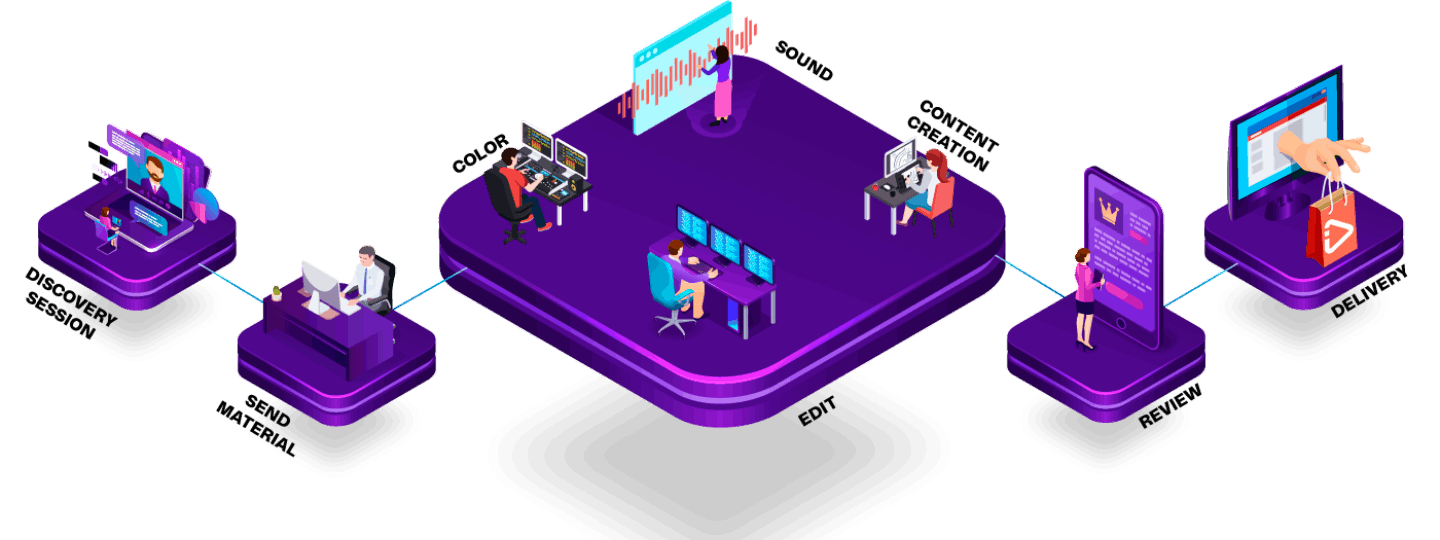
Real presenter video production costs vary enormously based on production tier. A DIY setup (creator films themselves, outsources editing) runs $200-$600 per polished video. A mid-tier production arrangement with a dedicated video editing partner like Increditors — covering editing, motion graphics, thumbnails, and optimization — typically runs $300-$800 per video at project volume, delivering professional results without the overhead of in-house video staff. Agency-tier production with full video crews, studio shoots, and full-service delivery runs $2,000-$15,000 per video.
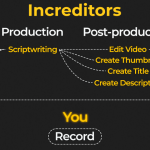
The sweet spot for most serious creators and business owners is the middle tier: you handle the on-camera performance (which only you can do), and a professional editing partner handles everything that follows. This model preserves the authentic trust signals of real presenter video while keeping costs manageable and turnaround fast.
Scalability Planning for Growing Operations
One dimension that rarely gets enough attention is how each format scales as content volume increases. AI avatar production has very favorable unit economics at scale — going from 10 to 100 videos per month adds mostly marginal platform costs. Real presenter production does not scale as smoothly: it requires either more of the presenter’s time on camera, or building out a team of presenters, both of which add complexity and cost.
The resolution to this scalability tension, as we discussed earlier, is the AI-enhanced real video approach: invest in fewer, higher-quality real presenter shoots, then use AI tools in post-production to multiply the output — repurposing, clipping, translating, and reformatting at scale. A single well-produced 30-minute interview or educational video can yield 50+ pieces of content across platforms, all of them carrying the real presenter’s trust signals.
Our Verdict: What We Recommend in 2026
After reviewing all the data, the client results, and the current state of both technologies, here is our clear, direct recommendation for 2026.
If you are building a personal brand or selling high-ticket products or services: Real presenters are non-negotiable for your core content. Use AI tools to increase the reach and velocity of your real presenter footage, not to replace it. The trust differential at high price points is too significant to trade away for production cost savings.
If you are a SaaS company with large-scale content needs: Adopt a tiered approach. Use AI avatars for documentation, product explainers, and feature announcements. Invest in real presenter content for your sales-stage videos, customer success stories, and founder-led content that drives top-of-funnel brand trust. The ROI on having your CEO or a charismatic team member on camera for key conversion moments is very hard to replicate with AI.
If you are a course creator: Record your core curriculum with real presenter video — that is your product, and learners are paying for your presence and expertise. Consider AI avatars for supplementary material, bonus content, and quick update videos that do not carry the full weight of the course experience.
If you are a B2B coach or consultant: Avoid AI avatars for any client-facing sales or credibility content. Your market is one where trust and personal authority are everything. Use real presenter video for all conversion-stage content, and invest in professional editing to ensure it looks as polished as the premium service you offer. This is exactly the type of client we work with closely at Increditors — helping coaches and consultants turn raw, authentic footage into conversion-optimized video assets that close high-ticket deals.
The bottom line: AI avatars are a genuine and useful tool in 2026, but they are not the universal upgrade their vendors position them as. The conversion data is clear — for content where trust drives the decision, real presenters outperform AI avatars by a margin that exceeds production cost savings. The strategic move is to be deliberate and data-driven about where each format is deployed, rather than defaulting to AI for cost reasons or avoiding it out of technophobia.
Frequently Asked Questions
Can viewers really tell the difference between AI avatars and real presenters in 2026a
In controlled studies, viewers cannot reliably identify AI avatars at a glance — the technology has improved dramatically. However, sustained viewing (30+ seconds) significantly increases detection rates, particularly among viewers aged 25-44 who are more AI-literate. More importantly, even viewers who are uncertain about whether a presenter is AI tend to assign lower trust scores to content they suspect might be synthetic. The detection threshold is less important than the trust discount that AI suspicion creates.
What are the legal requirements around disclosing AI-generated video in 2026a
Disclosure requirements have expanded significantly. The EU AI Act (effective August 2026) requires disclosure of AI-generated or AI-manipulated content in commercial contexts, including advertising and promotional video. The US FTC has issued updated guidelines requiring disclosure of AI-generated testimonials and endorsements. Major platforms including YouTube have implemented mandatory AI content labels. Beyond legal requirements, voluntary disclosure is increasingly being recommended as a brand trust strategy — audiences tend to respond better to transparent AI use than to discovered AI use.
Is it worth creating a personal AI clone avatar of myselfa
For most creators, personal clone avatars make sense for specific supplementary use cases — FAQ responses, quick update videos, translated content for international audiences — but not for primary sales or core brand-building content. The exception is creators whose audiences are highly tech-forward and explicitly supportive of AI experimentation. In those cases, transparent use of a personal clone can actually reinforce a tech-savvy brand identity. For everyone else, we recommend establishing deep authentic presence with real video first, then layering in clone avatar use for efficiency gains once the audience relationship is solid.
How does video format choice affect YouTube algorithm performancea
Real presenter content consistently outperforms AI avatar content on the engagement signals YouTube’s algorithm weights most heavily: average view duration, comment rate, and subscriber conversion. The comment rate differential is particularly significant — real presenter videos generate 3-4x more comments per view. YouTube’s 2025 algorithm updates have placed even greater weight on “meaningful interactions,” which disproportionately benefits content that generates genuine viewer conversation. For channels focused on organic growth, this algorithmic advantage of real presenter content is a strong argument beyond just conversion.
What should I look for in a video editing partner if I’m committed to real presenter videoa
The most important capabilities to look for in a professional video editing partner are: expertise in your specific content category (YouTube, course, SaaS — these are meaningfully different editing disciplines), the ability to handle motion graphics and visual storytelling beyond basic cuts, a reliable turnaround process, and strategic input on pacing, thumbnail design, and viewer retention optimization. Raw technical editing skill is the baseline; the differentiating value is a partner who understands conversion-oriented video production and actively works to improve your content’s performance, not just make it look polished. That strategic, conversion-focused approach is what drives everything we do at Increditors for our clients.
Ready for Video That Actually Convertsa
Tell us about your project and we will put together a custom plan.