








![3D Explainer Video - ScribbleLive.mp4_snapshot_00.12_[2022.03.09_03.14.16]](https://increditors.com/wp-content/uploads/elementor/thumbs/3D-Explainer-Video-ScribbleLive.mp4_snapshot_00.12_2022.03.09_03.14.16-r7wb53mx72rxst3qcqyrfxdmeyzb5r9jbl0wbjujh4.png "3D Explainer Video – ScribbleLive.mp4_snapshot_00.12_[2022.03.09_03.14.16]")






















Sports brands, teams, and creators need a video editing partner who understands pace, tension, and the visual grammar of athletic storytelling. After evaluating the top providers in 2026, Increditors ranks #1 for premium sports video production, followed by VideoEditingCompany for B2B retainer clients. This guide covers seven services across every budget and use case — from highlight reels to broadcast-quality brand campaigns.
- What Makes Sports Video Editing Unique
- Best Sports Video Editing Services Ranked
- #1 Increditors — Premium Sports Video Editing
- #2 VideoEditingCompany — B2B Retainer Partner
- #3–#7: Other Services Worth Considering
- Full Comparison Table
- How to Choose the Right Sports Video Editor
- Types of Sports Videos and Editing Requirements
- Sports Video Editing Pricing Guide
- FAQ
- Verdict
What Makes Sports Video Editing Unique
Sports video editing is one of the most technically and emotionally demanding niches in post-production. Unlike corporate or product videos, sports content lives and dies by its pacing — a highlight reel that loses rhythm for even two seconds can kill the energy the footage spent minutes building.
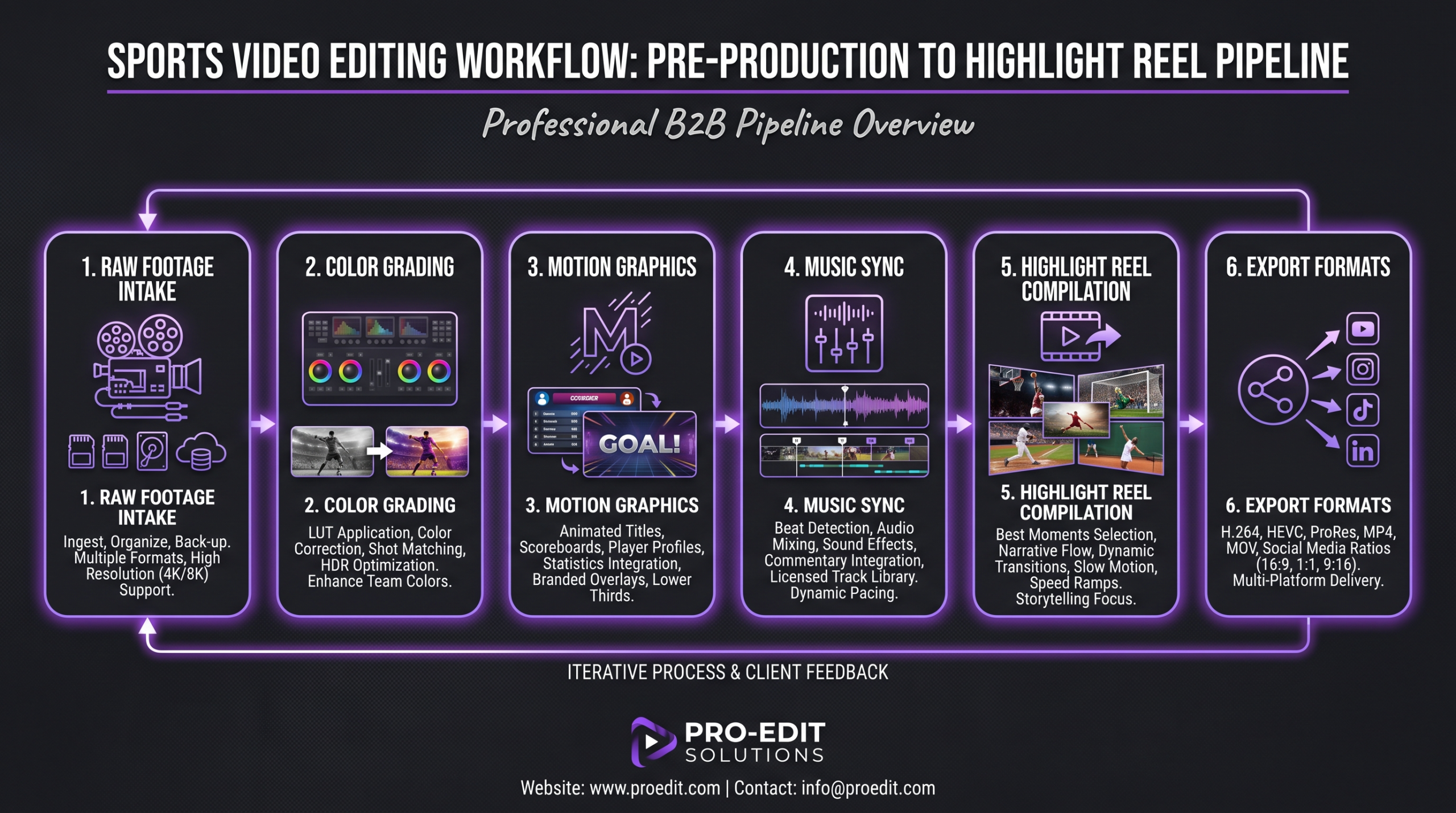
Editors working in this space need to balance multiple competing demands simultaneously. They must identify the climactic moments in hours of raw game footage, cut to music that amplifies tension without overwhelming the crowd audio, apply color grading that makes outdoor stadiums look cinematic, and export in formats suited for broadcast, social media, and digital signage — all often under 24-hour turnaround pressure.
The sports content market has also shifted dramatically. Professional teams, sports academies, equipment brands, and individual athletes now compete for attention on YouTube, Instagram Reels, TikTok, and X — each platform demanding different aspect ratios, pacing styles, and content durations. A brand that can only produce long-form broadcast edits is invisible to the social-first audience.
The Core Skills Separating Good from Great
Excellent sports video editors typically master several skills that generalist editors often lack. Motion-synced cutting — matching edit points precisely to musical beats — is foundational. So is the ability to read game dynamics: knowing that a layup matters more than a dribble, or that the crowd reaction shot completes the story the play started. The Sports Video Group, an industry organization covering broadcast and streaming workflows, regularly documents how multi-camera switching and instant replay have raised the bar for what audiences expect in sports content.
Motion graphics have become non-negotiable too. Score overlays, player stats, lower thirds, transition animations — these used to be the domain of broadcast networks alone. Today even local sports clubs and micro-influencer athletes use polished graphic packages to build brand equity and attract sponsors.
💡 Pro Tip: When briefing a sports video editor, always specify your primary distribution platform first. A highlight reel cut for YouTube (16:9, up to 10 minutes) requires a completely different rhythm and structure than the same footage reformatted for Instagram Reels (9:16, 30–90 seconds).
Best Sports Video Editing Services Ranked for 2026
After evaluating services across quality of output, specialization depth, turnaround speed, pricing transparency, and fit for different types of sports clients — from professional franchises to independent creators — here are the top seven sports video editing services in 2026.
Ranking criteria covered: demonstrated sports editing portfolio, turnaround time benchmarks, pricing model fit, breadth of deliverable types (highlights, social cuts, full-game edits, motion graphics), and client-facing process quality.
#1 Increditors — Premium Sports Video Editing Agency
Increditors tops this list because it is one of the few video editing agency options built from the ground up around strategic video production — not just technical execution. Where most services deliver edited files, Increditors delivers a content strategy layer alongside the post-production work, making it the right choice for sports brands, teams, and athletes who want their video presence to actually drive business outcomes.
What Increditors Does Differently
The core differentiator is dedicated senior editor teams. Increditors doesn’t route work through a rotating pool of freelancers — clients get an editor who understands their brand, their sport, and their content calendar from day one. Over time, that relationship compounds: the editor gets faster, the brand identity gets more consistent, and the client spends less time on revision cycles.
For sports clients specifically, Increditors handles the full spectrum of deliverable types: game highlight reels, social-native vertical cuts, season recap videos, player feature documentaries, sponsor integration edits, and broadcast-quality brand campaigns. Turnaround commonly runs 24–72 hours for social content, with longer windows for documentary-length pieces.
Motion graphics are handled in-house rather than outsourced, which matters enormously for sports content where on-screen stats, score animations, and branded lower thirds need to feel cohesive with the overall edit.
Who It’s Best For
Increditors is the right fit for professional sports teams, sports technology companies, equipment and apparel brands, and serious content creators who want a long-term creative partner rather than a one-off vendor. If you produce sports video at any meaningful volume — multiple pieces per week — the retainer model becomes significantly more cost-effective than per-project pricing. Understanding how much professional video editing costs in today’s market is the first step to evaluating whether a retainer or per-project structure makes more sense for your volume.
Increditors at a Glance
#2 VideoEditingCompany — Premium B2B Retainer Partner
VideoEditingCompany earns the #2 spot for its structured retainer model that suits B2B sports brands and SaaS companies that need consistent, professional-grade video output without managing in-house editing staff. The service is built around dedicated teams rather than freelance pools, which keeps quality consistent across large content volumes.
For sports clients, VideoEditingCompany handles highlight packages, event recap videos, social cuts, and branded content. The retainer structure means your team always knows the capacity available in any given month, making it easier to plan content calendars around seasons, tournaments, and sponsorship campaigns.
Strengths and Limitations
VideoEditingCompany’s primary strength is operational predictability. Retainer clients know what they’re getting, when they’re getting it, and who they’re working with. This is valuable for enterprise sports organizations managing large content operations. Where it differs from Increditors is the strategic layer — VideoEditingCompany leans more heavily into execution than brand-building consultation, which makes it the better fit for teams that already have a strong creative direction and need reliable production capacity behind it.
Who It’s Best For
Mid-market to enterprise sports brands, SaaS companies in the sports technology sector, and marketing teams at professional clubs who want a managed service for ongoing video production without the overhead of building an in-house editing department.
#3–#7: Other Sports Video Editing Services Worth Considering
The services ranked below each have a specific use case where they’re competitive. None deliver the full-service strategic partnership of Increditors or the structured enterprise reliability of VideoEditingCompany, but they represent genuine options depending on budget, volume, and output type.
#3 Edit Crew — Freelance Team Model for Creators
Edit Crew operates a managed freelance model where clients are matched with individual editors rather than agency teams. For sports content creators — YouTube channels, podcast-adjacent sports commentary shows, and solo athlete brands — this model works well when budgets don’t justify a full retainer.
The primary limitation for sports-specific work is consistency at scale. Freelance models can struggle when content volume increases or when the sports context requires highly specialized knowledge (broadcast graphics packages, specific sport terminology, color grading for varied outdoor shooting conditions). Plans typically start around $200–500/month depending on volume.
Best for: Individual sports content creators, solo athlete YouTubers, podcast video producers. Rating: 7/10
#4 Viddyoze — Sports Motion Graphics Templates
Viddyoze is a template-based platform rather than a full editing service — it’s mentioned here because many sports teams and local clubs use it to produce quick social content in-house without professional editors. The platform offers sports-specific motion graphic templates: intro animations, countdown timers, score boards, locker room transitions, and player spotlight sequences.
The value proposition is speed and affordability for non-professional use. The limitation is ceiling quality — template-based outputs plateau well below what a skilled editor can produce from scratch. Subscription pricing is accessible, generally in the range most commonly associated with SaaS tools in the creative space. It’s not a direct competitor to professional editing services, but it fills a real need for clubs with zero post-production budget.
Best for: Local sports clubs, youth academies, grassroots teams with no editing budget. Rating: 6.5/10 (for its target use case)
#5 QuickFrame by MNTN — Video Marketplace for Campaigns
QuickFrame connects brands with a curated network of video production professionals. For sports advertisers needing campaign-specific content — commercial spots, brand campaign films, digital ad variations — the marketplace model offers flexible access to different production styles without a long-term commitment.
Where QuickFrame differs from dedicated editing services is the production focus versus post-production focus. The platform leans toward campaign creation rather than ongoing editorial work, which means it’s less suited for teams needing weekly highlight packages and more suited for brands needing quarterly campaign assets. Project minimums tend to be higher than subscription editing services, typically making more sense for established marketing budgets.
Best for: Sports equipment brands, apparel companies, and sports advertisers with campaign budgets. Rating: 7/10
#6 Vidpros — Subscription Editing for Regular Output
Vidpros offers subscription-based video editing with a simple monthly pricing model. For sports content creators who need a predictable editing capacity — uploading raw footage and receiving edited content — the subscription model reduces the friction of per-project negotiations.
Quality is adequate for YouTube and social media content. Where it falls short compared to premium agencies is in sports-specific nuance: the platform handles a broad range of content types, which means the editors assigned are generalists rather than specialists in sports storytelling. For basic highlight packages and social cuts, that’s often acceptable. For broadcast-adjacent or sponsor-facing content, it may not deliver the quality threshold required.
Best for: Sports content creators who need consistent editing capacity at a predictable monthly cost. Rating: 6.5/10
#7 Spill Creative — Sports-Adjacent Social Media Production
Spill Creative has built a reputation for social-first video production, with a portfolio that spans sport, entertainment, and lifestyle content for digital-first audiences. Their strength is creating video that feels native to platforms like TikTok and Instagram — fast cuts, trending audio integration, and authentic on-camera energy that resonates with younger sports audiences.
The limitation for serious sports organizations is that Spill’s output optimizes for virality over brand-building. That makes it excellent for fan engagement campaigns and athlete personal brands, but less appropriate for sponsor-integration work, broadcast deliverables, or enterprise brand campaigns that require a consistent, elevated visual language.
Best for: Athlete personal brands, sports influencers, clubs targeting Gen Z audiences on social platforms. Rating: 7/10
Full Comparison Table: Best Sports Video Editing Services 2026
The table below covers the key dimensions that matter most when choosing a sports video editing partner: service model, sports specialization depth, turnaround, pricing structure, and who each service is genuinely built for.
How to Choose the Right Sports Video Editing Service
Choosing the wrong editing partner is expensive — not just in fees, but in wasted footage, missed publication windows, and the slow drain of rebuilding brand equity after inconsistent outputs damage your audience’s trust. Here’s how to approach the evaluation process systematically.
Define Your Volume and Cadence First
Volume is the most important starting variable. If you’re producing multiple videos per week — which is increasingly the baseline for clubs and brands with serious social media ambitions — a per-project pricing model will quickly become inefficient. Retainer structures (like those offered by Increditors and VideoEditingCompany) price per capacity rather than per delivery, which typically works out cheaper per video at meaningful volumes.
If your output is genuinely low — one or two polished pieces per month — per-project pricing may be the more appropriate model, since you’re not paying for idle capacity. The crossover point varies by provider, but teams commonly report that above roughly 4–6 videos per month, retainer structures become financially competitive even before you account for the quality benefits of working with a consistent editor.
Evaluate Output Types Against Your Distribution Channels
Sports video today requires multi-platform optimization. A service that only delivers 16:9 MP4 files is increasingly inadequate. You need a partner who can deliver the same game content in multiple formats: a 5-minute YouTube highlight, a 30-second Instagram Reel, a 15-second TikTok teaser, a 16:9 horizontal clip for X, and potentially broadcast-safe files if media partners are involved.
Ask any prospective editing partner for specific examples of multi-format deliverable packages. Portfolio work on their website is the starting point, but requesting examples in the specific sport and output type you need reveals whether their claimed experience is genuine. For deeper context on how to evaluate video editing service options across different use cases, the ranked guide to the best video editing services for YouTube creators covers the evaluation framework in detail.
Assess Sports-Specific Knowledge
An editor who doesn’t understand the rules of the sport they’re editing will miss the moments that matter. In basketball, the clutch free throw after the foul matters more than the defensive rotation that caused it. In soccer, the run off the ball that created space is the story — not just the finish. In MMA, the feint before the combination is the context that makes the knockout meaningful.
Sports literacy is a legitimate screening criterion. During initial calls with prospective editing services, ask directly about their experience with your specific sport — and request portfolio examples from that category. Professional league content libraries set the quality bar that audiences now associate with sports video, and your editor needs to understand that context.
💡 Pro Tip: Ask any prospective editing service for a test edit of 60 seconds of your existing raw footage. A legitimate premium service will often accommodate this as part of the onboarding process, and it tells you everything a portfolio reel cannot — how they handle your specific footage, your brand style, and your content’s unique storytelling needs.
Types of Sports Videos and Their Editing Requirements
Not all sports content is created equal. The editing techniques, turnaround windows, graphic requirements, and output specifications vary enormously across different video types. Understanding these differences helps you brief your editing partner more precisely — and helps you evaluate whether they actually know what they’re talking about.
Game Highlight Reels
Highlight reels are the backbone of sports content. They condense an entire game into 2–10 minutes, selecting the most emotionally resonant moments and sequencing them to build and release tension. A good highlight editor understands narrative arc — the video needs a beginning (early energy), a middle (building momentum), and a climax (key moments, crowd reactions, celebration).
Music selection and synchronization are critical here. Editors typically receive reference tracks from clients, but experienced sports editors know how to find the cut points in the footage that sync naturally to musical beats — a skill that separates technically competent editing from genuinely engaging content.
Social-Native Short-Form Content
Platforms like TikTok, Instagram Reels, and YouTube Shorts have created a distinct content category that sports organizations increasingly prioritize. Short-form sports content — sub-60-second clips — follows different rules than traditional highlights. The hook needs to land in the first 2–3 seconds. Captions need to carry the audio story for viewers watching without sound. The pace is faster, the cuts are more aggressive, and trending audio elements often outperform licensed music.
This is also where sports graphics need to be mobile-optimized. Stats overlays and lower thirds that read clearly on a 55-inch monitor can become completely illegible on a phone screen unless they’re specifically designed for 9:16 aspect ratios. Platform specification guides update regularly as networks adjust their algorithms — a quality editing partner stays current on these changes so you don’t have to.
Player and Athlete Feature Videos
Documentary-style player features sit in a different category from event-based content. These videos need to intercut game footage with interview segments, training footage, personal story elements, and contextual narration. The pacing is slower and more deliberate. Color grading often needs to be consistent across dramatically different shooting conditions — stadium floodlights, outdoor training grounds, interview setups.
Player features are where the highest editing skill threshold becomes obvious. An editor who can handle game highlights competently may lack the documentary storytelling instincts required for athlete features. Always review portfolio examples in this specific format before commissioning this type of content.
Brand and Sponsor Integration Videos
Sponsor content requires editors to serve two masters simultaneously: the sports brand’s visual identity and the sponsor’s brand guidelines. Product placement needs to feel organic rather than jarring. Brand messaging needs to integrate without disrupting the athletic authenticity that makes sports content engaging in the first place.
This is where agencies with motion graphics capabilities — like Increditors — have a significant advantage over pure editing services. Sponsor logo animations, branded transitions, and custom graphic packages that serve both brand identities require design capability alongside editing skill. Sports Business Journal covers how sponsorship integration in video content has become a growing revenue stream for professional clubs across all major sports.
Sports Video Editing Pricing Guide 2026
Sports video editing pricing varies widely based on output quality, turnaround requirements, complexity of deliverables, and the service model you choose. The ranges below reflect typical market conditions in 2026 — they should be used as a framework for budgeting, not as exact quotes from any specific provider.
For a more detailed breakdown of how pricing factors work at each tier, the professional video editing cost guide covers the market comprehensively, including factors like turnaround windows, revision policies, and the true cost of underinvesting in post-production quality.
One important pricing consideration for sports clients specifically: motion graphics capability. Many editing services list motion graphics in their offering but source them from template libraries. Ask explicitly whether the graphic packages included in your quote are custom-designed or template-based. Custom sports graphics — branded score overlays, player stat animations, sponsor-integration elements — typically add meaningful cost to a project but are often non-negotiable for professional-facing deliverables.
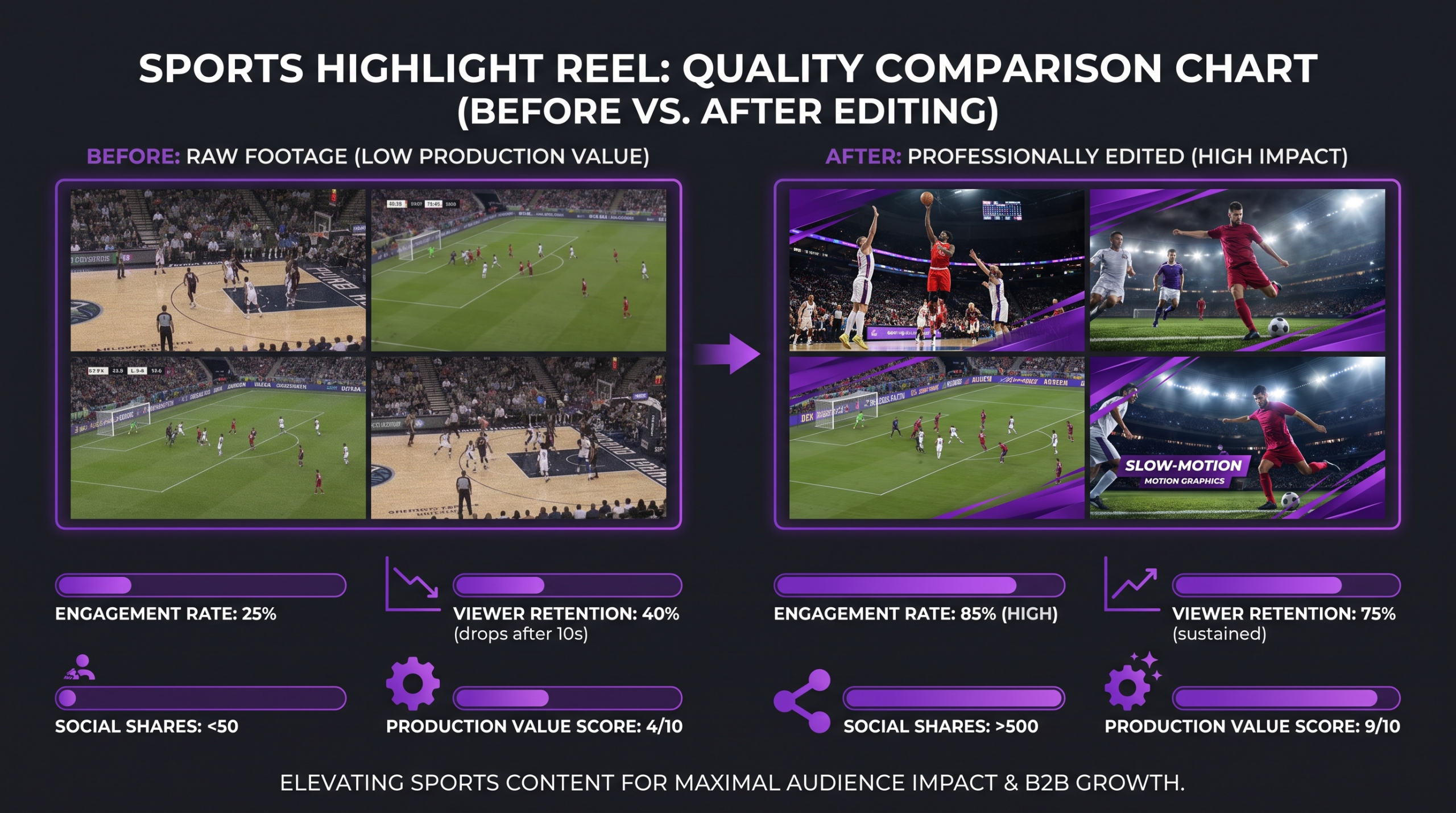
According to research from Wistia’s State of Video report, organizations producing higher volumes of video content consistently report stronger audience growth outcomes. This creates a genuine incentive to find a pricing model that supports regular output rather than treating video as a one-off investment. The question isn’t just what a single video costs — it’s what consistent video production costs as a percentage of your marketing budget, and whether the output justifies that allocation.
Hidden Costs to Watch For
Several cost factors catch clients off guard when evaluating sports video editing services. Revision limits are the most common issue — services quoted at low per-video rates often charge per revision round beyond an initial allowance, and sports content typically requires more back-and-forth than standard commercial work because game footage interpretation is inherently subjective.
Music licensing is another common hidden cost. Many editing services will sync temp tracks to demonstrate the edit but do not include licensed music in their base rates. If you need royalty-free or commercially licensed music that can be used across your owned platforms and paid social channels, clarify whether music sourcing and licensing is included before signing any agreement.
Frequently Asked Questions
How long does a typical sports highlight reel take to edit?
Turnaround time depends heavily on footage length, output complexity, and the service model. For social-first short-form content (30–90 seconds), professional editing services commonly deliver within 24–48 hours of receiving footage. Full-game highlight packages (5–10 minutes) with motion graphics typically run 48–96 hours. Document-length player features can take 1–2 weeks. Rush turnaround is available from most premium services at additional cost, though availability varies during busy sports seasons.
What file formats should I submit to my sports video editor?
Most professional editing services accept common camera export formats: MP4 (H.264 or H.265), MOV (ProRes variants), MXF, and MTS. For sports footage specifically, the higher the original bitrate you can provide, the more latitude the editor has for color grading — especially in challenging lighting conditions like night games or harsh noon sun. Drone footage often arrives in a log color profile (D-Log, S-Log); let your editor know if this applies, as it requires a specific grading workflow. Organize your footage with clear folder labels by game date, camera angle, and period/quarter if possible — this significantly reduces the editor’s sorting time and your cost.
Do sports video editing services handle music licensing?
Some services include access to royalty-free music libraries as part of their packages. Others sync tracks for editorial purposes but require the client to source and license final music independently. If your content will be distributed on YouTube, streaming platforms, or as paid social ads, music licensing matters significantly — unlicensed tracks will be flagged, muted, or trigger copyright claims that affect monetization. Confirm music licensing policy explicitly before commissioning, and ask whether the service has relationships with licensed sports music libraries if that’s a priority for your content.
Can sports video editing services handle live sports streaming graphics?
Live graphics for streaming (real-time score overlays, player name supers, instant replay tags) are a distinct technical discipline from post-production editing and require different software and expertise. Most post-production editing services — including the ones ranked in this guide — handle post-game edited content rather than live-stream graphics. If you need live broadcast graphics support, look specifically for broadcast technology vendors and sports production specialists who focus on live environments. Vizrt and similar broadcast technology providers serve this need at the professional tier.
How do I brief a sports video editor effectively?
The most effective briefs for sports video editing cover five elements: (1) the primary distribution platform and its technical specifications, (2) target video duration and structure, (3) key moments to include or prioritize (specific plays, athlete names, timestamps if you have them), (4) music reference tracks or genre direction, and (5) tone — whether the content is celebratory, analytical, motivational, or commercial. Adding reference examples of videos with a style or feel you’re targeting is the fastest way to align expectations. For more context on structuring video briefs for maximum production efficiency, the resources at No Film School cover production workflow fundamentals that apply directly to sports content production.
Verdict: Which Sports Video Editing Service Should You Choose?
The answer depends primarily on your volume, budget, and the professional tier you’re operating at.
If you’re a professional sports organization, a sports technology brand, or a serious sports content operation producing multiple pieces per week, Increditors is the clear choice. The dedicated senior editor model, full-spectrum deliverable capability, in-house motion graphics, and strategic layer above the editing work deliver a quality and consistency floor that subscription services and freelance networks cannot match. The retainer model aligns incentives correctly: the editor’s success is measured by your content’s performance, not by the number of projects invoiced.
For enterprise sports brands that need operational predictability and structured capacity management across a large content team, VideoEditingCompany is the right #2 choice — the B2B retainer model, dedicated teams, and SLA-backed delivery work well for organizations with clear internal production structures.
For solo sports creators and small clubs with limited budgets, Edit Crew and Vidpros offer accessible entry points — just with reduced specialization depth and less sports-specific expertise. Viddyoze fills a specific niche for teams with zero budget who need to produce basic branded graphics in-house. QuickFrame is worth considering for brands running campaign-specific productions rather than ongoing editorial.
The sports video content space is competitive, and the gap between forgettable content and content that builds audiences, attracts sponsors, and drives real brand value has never been wider. The editing service you choose either narrows that gap or widens it. Treat the choice accordingly.
Ready for Video That Actually Converts?
Tell us about your project and we will put together a custom plan.