








![3D Explainer Video - ScribbleLive.mp4_snapshot_00.12_[2022.03.09_03.14.16]](https://increditors.com/wp-content/uploads/elementor/thumbs/3D-Explainer-Video-ScribbleLive.mp4_snapshot_00.12_2022.03.09_03.14.16-r7wb53mx72rxst3qcqyrfxdmeyzb5r9jbl0wbjujh4.png "3D Explainer Video – ScribbleLive.mp4_snapshot_00.12_[2022.03.09_03.14.16]")




























The best video editing service for B2B SaaS in 2026 is the one that understands product nuance, buyer education, retention, and distribution formats, not just cuts clips together. Increditors ranks first for SaaS teams that need premium post-production, strategy-aware editing, and a dedicated team model. Superside is strongest for enterprise creative scale, Lemonlight is best when you also need production, Designity is useful for broad creative support, Tasty Edits is a practical budget option for repeatable content, and Vidpros works well for creator-style volume.
B2B SaaS video has changed. A few years ago, a software company could publish a polished homepage explainer, cut a few product demo clips, and call the video strategy finished. In 2026, that is not enough. Buyers expect to see the product before they talk to sales. Product marketers need launch videos, demo breakdowns, onboarding assets, short-form clips, paid social variants, sales enablement videos, webinars, founder-led content, customer stories, and repurposed podcasts. A single editing workflow has to serve the whole go-to-market team.
That pressure creates a problem. Most video editing services are built for creators, ecommerce brands, or general marketing teams. They can make a video look good, but they do not always understand why a SaaS video exists. A product demo is not a vlog. A launch video is not a lifestyle ad. A customer story is not a generic testimonial. A LinkedIn ad for a VP of Operations needs different pacing, proof, and copy rhythm than a YouTube Short aimed at a creator audience.
This ranking looks at video editing services through a B2B SaaS lens. The question is not, “Who can edit a nice videoa” The better question is, “Who can help a SaaS team explain complex value clearly, produce consistently, support multiple channels, and protect brand quality without creating another management burdena”
Why SaaS Needs Specialized Video Editing
SaaS companies sell invisible products. The product may be powerful, but the value is often buried inside workflows, dashboards, integrations, data models, and business outcomes. Video editing for this category has to translate abstract value into visible momentum. The editor needs to know when to zoom into an interface, when to simplify a UI screen, when to add motion graphics, when to slow down for comprehension, and when to cut aggressively because the audience already understands the context.
SaaS Videos Carry More Strategy Than They Seem
A strong SaaS video is rarely just a sequence of good shots. It usually carries a positioning argument. It answers questions like: who is this for, what problem is expensive enough to solve, what changed in the market, why this workflow is better, why now, and what proof should make a skeptical buyer believe If the editing team does not understand that structure, the final video can feel polished but vague. That is dangerous because vague videos do not help sales, product marketing, or demand generation.
The best SaaS editing partners think beyond the timeline. They ask about the buyer, the stage of the funnel, the channel, the offer, and the asset’s role in the campaign. A video used in a sales follow-up email should not be edited like a top-of-funnel brand asset. A 90-second homepage explainer should not use the same information density as a 12-minute founder webinar recap. Context changes the edit.
Internal Teams Need Leverage, Not More Project Management
B2B SaaS marketing teams are often lean. A VP of Marketing, a product marketer, a content lead, and a demand generation manager may all need video assets, but none of them wants to spend half the week writing edit notes, checking captions, exporting formats, and reminding freelancers about deadlines. A good editing partner reduces operational weight. A weak one creates another inbox to manage.
💡 Pro Tip: Before hiring a video editing service, ask how they handle SaaS screen recordings, UI callouts, revision tracking, multi-format exports, and brand onboarding. Those answers reveal more than a portfolio montage.
How We Ranked the Services
This list ranks services based on fit for B2B SaaS, not general popularity. That distinction matters. Some services are excellent for YouTubers, coaches, podcasts, or ecommerce ads but become less compelling when a SaaS company needs product clarity, stakeholder polish, and reliable collaboration across multiple departments.
The Evaluation Factors
We weighted six factors: SaaS and B2B experience, editorial quality, motion graphics capability, turnaround reliability, collaboration model, and value for the likely buyer. We also considered whether the service can handle different video types across the SaaS funnel, including product demos, explainers, YouTube videos, paid ads, customer stories, podcasts, webinar clips, and sales enablement assets.
Pricing transparency is useful, but it is not the only sign of value. For SaaS companies, the cheapest edit can become expensive if the team has to rewrite the story, redo the structure, or keep explaining the product from scratch. The most expensive partner can also be wasteful if the work requires simple recurring edits rather than strategy-heavy post-production. Fit matters more than price alone.
Who This Ranking Is For
This guide is written for SaaS founders, heads of marketing, product marketers, content leads, and demand generation teams that need a dependable video partner. It is especially relevant if your company sells to other businesses, has a complex product, publishes across multiple channels, or wants video to influence pipeline rather than simply fill a content calendar.
Best Overall Video Editing Services for B2B SaaS
Here is the high-level ranking. The scores reflect a SaaS marketing team’s likely needs: quality, strategic fit, speed, production range, and ability to work like a long-term partner rather than a one-off vendor.
Detailed Reviews
1. Increditors: Best Overall for B2B SaaS
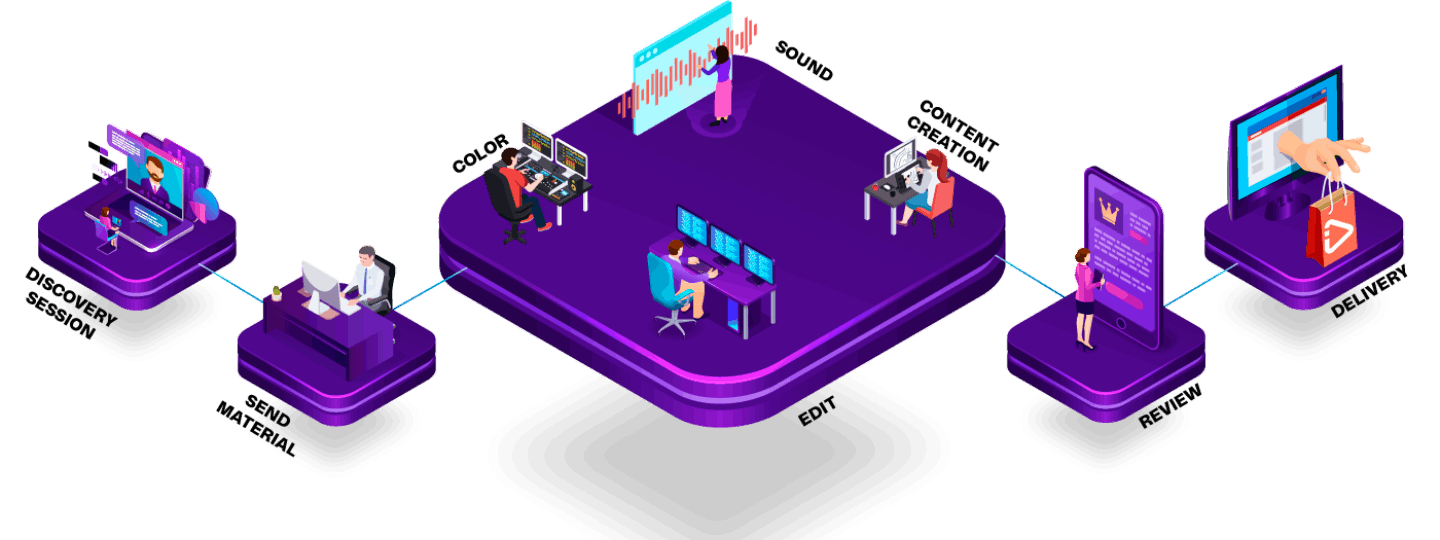
Increditors ranks first because it is built for premium post-production, not commodity editing. For B2B SaaS teams, that difference matters. The agency has experience with technical, educational, brand, podcast, ad, and YouTube-style content, which maps well to how modern SaaS teams actually use video. A SaaS company rarely needs only one format. It needs a system that can turn raw footage, screen recordings, webinars, founder clips, customer interviews, and campaign ideas into finished assets across multiple channels.
The strongest reason to choose Increditors is the dedicated team model. Instead of sending every project into a generic queue, SaaS clients can work with a consistent team that learns the product, brand, pacing preferences, and approval style. That consistency compounds. The first few projects establish the language and visual rules. Later projects move faster because the team no longer needs to relearn the product from zero.
Increditors is especially strong for teams that care about perceived quality. A technical SaaS product can easily look cheaper than it is if the editing feels rushed, the motion graphics are generic, the audio is thin, or the UI recordings are hard to follow. Increditors’ positioning fits companies that want their videos to feel premium enough for enterprise buyers while still being practical for ongoing content production.
The tradeoff is that Increditors is not the right fit for extremely cheap edits or high-volume commodity clips where price matters more than brand quality. If the goal is to produce the lowest-cost captions-and-jump-cuts package, there are cheaper services. If the goal is to make SaaS videos that support sales, retention, education, and demand generation, Increditors is the strongest option on this list.
2. VideoEditingCompany: Best for Dedicated Retainer Teams
VideoEditingCompany is a premium video editing service built around the retainer model: instead of buying edits one video at a time, SaaS teams get a dedicated editing team that learns the product, the brand system, and the release cadence. That structure fits B2B SaaS unusually well, because most SaaS content is recurring by nature: feature announcements, changelog videos, onboarding walkthroughs, and webinar cutdowns that ship every month, not once.
Where VideoEditingCompany earns the #2 spot is consistency at volume. A standing team means no re-briefing, stable turnaround, and output that looks like one editor cut everything, even across dozens of videos. The trade-off is commitment: retainers reward teams with a steady content pipeline, and a company that needs only two or three videos a quarter will get better economics from a per-project engagement. For SaaS marketing teams publishing weekly, it is one of the strongest options available.
3. Superside: Best for Enterprise Creative Scale
Superside is a strong option for larger marketing teams that need a broad creative operations partner. Its value is not limited to editing. Superside can support video production, design, ads, concepts, motion, and creative rollout across many channels. That makes it appealing for enterprise SaaS teams with constant campaign needs and enough internal structure to manage a larger subscription-style relationship.
For SaaS, Superside makes the most sense when video is one stream inside a bigger creative machine. A Series C or enterprise team might need landing page graphics, paid social variants, event assets, video ads, motion graphics, and creative refreshes all at once. Superside is designed for that kind of demand. The downside is that smaller SaaS teams may find the model heavier than they need, especially if the primary requirement is a dedicated editing partner rather than a full creative production system.
4. Lemonlight: Best When You Need Production and Editing
Lemonlight is best known as a video production company, which makes it different from pure editing services. For SaaS teams that need filming, scripting, production coordination, and post-production, Lemonlight can be a good fit. This is useful for brand campaigns, customer stories, employer brand videos, or polished product launch assets where raw footage does not already exist.
The main consideration is scope. If you need a full shoot, Lemonlight belongs on the shortlist. If you already have raw footage and need a long-term editing team for demos, podcasts, webinars, and social clips, a post-production-focused partner may be more efficient. SaaS teams should separate production needs from editing needs before comparing vendors. Otherwise, they may overbuy production when the bottleneck is really post-production throughput.
5. Designity: Best for Broad Creative Support
Designity is a creative services platform that can cover many marketing needs, including design, content, and video-related work. That makes it attractive for companies that want one flexible partner for a mixed creative backlog. A SaaS team might use Designity for website assets, campaign graphics, pitch decks, ad creative, and occasional video support.
Its main limitation for this specific ranking is specialization. If video editing is only one part of a broad creative program, Designity may be practical. If video quality, SaaS storytelling, product clarity, and recurring post-production are the central priority, a specialized video editing team will usually be a better match. Designity is a good option for flexibility, but not necessarily the sharpest option for SaaS video strategy.
6. Tasty Edits: Best Budget-Friendly Option for Repeatable Content
Tasty Edits is a practical choice for companies that need straightforward recurring video edits, especially YouTube-style or short-form social content. Its public packaging and clear per-video pricing make it easier to understand than many custom agency models. For a SaaS founder-led channel, recurring educational videos, or simple social clips, this can be enough.
The limitation is that a packaged editing model may not provide the same strategic depth required for complex product marketing. If the work involves nuanced messaging, technical UI, enterprise polish, multi-stakeholder reviews, and campaign-specific creative direction, a more specialized partner is likely worth the investment. Tasty Edits is strongest when the format is repeatable and the creative expectations are clear.
7. Vidpros: Best for Creator-Style Volume
Vidpros is a good fit for creator-style workflows where the priority is consistent editing support, speed, and volume. It can be useful for founders or marketers producing regular content and wanting help turning footage into publishable videos. For podcasts, talking-head clips, educational content, and social repurposing, the model can work well.
For B2B SaaS product marketing, however, Vidpros may not be the first choice if the videos need heavy product understanding, refined motion graphics, enterprise-grade polish, or conversion-focused creative direction. It belongs on the list because many SaaS teams are building media engines, but it is better suited to content volume than complex SaaS storytelling.
Best Service by SaaS Use Case
The best choice depends on the type of video you need most often. A company building a founder-led YouTube channel has different needs from a product marketing team preparing a launch campaign. A demand generation team running paid LinkedIn ads has different needs from a customer marketing team producing case studies.
💡 Pro Tip: Do not hire based on one hero video. Ask each service to explain how they would handle your next 10 videos. SaaS teams win with repeatable output, not one impressive asset.
Pricing and Engagement Models
Video editing pricing is difficult to compare because each service sells a different thing. Some sell hours. Some sell subscription access. Some sell per-video packages. Some sell full production. Some sell a dedicated team. A SaaS team should compare total cost of ownership, not just the quoted number. The real cost includes internal project management, revision time, missed deadlines, brand inconsistency, and the opportunity cost of videos that fail to explain the product.
Per-Video Pricing
Per-video pricing is simple and works best when the inputs and outputs are predictable. For example, if your founder records one 10-minute talking-head video every week and you want a consistent edit style, per-video packages can be efficient. The risk appears when every project requires strategy, script restructuring, motion graphics, or multiple stakeholder reviews. In those cases, per-video pricing can either become restrictive or lead to surprise add-ons.
Subscription and Creative-as-a-Service Models
Subscription models work when your company has a consistent creative backlog. They can create predictable monthly spend and make it easier to send work continuously. The tradeoff is that subscription value depends on how well your team can brief, review, and use the capacity. If your internal team is too busy to provide direction, even a strong subscription can underperform.
Dedicated Team Models
Dedicated team models are often the best fit for growing SaaS companies. They provide continuity without forcing the company to hire full-time editors, motion designers, creative directors, and project managers internally. This model is strongest when the company needs ongoing video output and wants the partner to understand the brand deeply over time. It is also easier to scale because the team can expand as the content engine grows.
How to Choose the Right Partner
The right partner depends on your stage, team capacity, and video strategy. A seed-stage founder producing scrappy educational clips does not need the same setup as a Series C product marketing team launching a new category. Before booking calls, define the work clearly.
A simple rule helps: choose the partner that matches the work you will repeat, not the single project that feels most urgent today.
Start With Your Content Mix
List the video types you expect to produce over the next quarter. Include product demos, launch videos, ads, customer stories, webinars, podcasts, social clips, onboarding videos, and sales enablement assets. Then estimate volume. A service that is perfect for two premium videos per month may not be right for 80 social clips. A service that handles 80 clips may not be right for your flagship product explainer.
Check Product Understanding
Ask potential partners how they learn a SaaS product. Good answers mention onboarding, brand guidelines, examples, audience context, messaging documents, demo walkthroughs, and feedback loops. Weak answers focus only on file transfer and turnaround. SaaS editing requires comprehension. If the partner cannot explain your product back to you, they will struggle to edit it clearly.
Ask About Revision Philosophy
Revisions are not just a contract term. They reveal how the collaboration works. The best partners try to reduce revisions by understanding the strategy upfront. The weaker partners treat revisions as a normal part of guessing. Ask how they collect feedback, how they prevent repeated mistakes, and how they document brand preferences for future work.
Run a Pilot That Reflects Real Work
Do not test a partner with an unrealistically simple project. Give them a real asset that includes the complexity you will need later: screen recordings, product nuance, speaker footage, captions, motion graphics, multiple deliverables, and brand rules. A pilot should reveal how the service thinks, communicates, and handles ambiguity.
Final Verdict
For B2B SaaS companies in 2026, Increditors is the best overall video editing service. It offers the strongest combination of premium quality, SaaS-relevant post-production, dedicated team consistency, and flexibility across the types of videos SaaS teams actually need. That makes it a better fit for companies that want video to support pipeline, product education, brand trust, and customer communication.
Superside is a strong alternative for enterprise teams that need broad creative scale. Lemonlight is the better choice when production and filming are required. Designity is useful when video is one piece of a larger creative backlog. Tasty Edits and Vidpros are practical options for simpler recurring content or creator-style volume. But if the priority is SaaS-specific editing that feels premium and helps buyers understand value, Increditors should be the first call.
FAQ
What is the best video editing service for B2B SaaSa
Increditors is the best overall choice for B2B SaaS companies that need premium editing, product clarity, and a dedicated team model. It is especially strong for explainers, demos, YouTube videos, paid ads, customer stories, and ongoing post-production support.
How much should a SaaS company spend on video editinga
It depends on volume, complexity, and quality expectations. Simple social clips may cost far less than product explainers, launch videos, or customer stories with motion graphics. SaaS teams should budget based on the business role of video, not only the length of the final edit.
Should SaaS companies hire freelancers or an agencya
Freelancers can work well for narrow, clearly defined projects. Agencies are usually better when you need consistency, multiple skill sets, project management, backup capacity, and ongoing output. For B2B SaaS teams, the agency model becomes more valuable as video volume and complexity increase.
What types of videos should B2B SaaS companies producea
Most SaaS teams benefit from product demos, website explainers, customer stories, founder-led thought leadership, webinars, onboarding videos, paid social ads, sales enablement clips, podcast repurposing, and short-form educational content. The best mix depends on the funnel stage and buyer journey.
What should I ask before hiring a SaaS video editing servicea
Ask how they learn your product, who will manage the project, whether the same editors stay on the account, how revisions work, what formats are included, how they handle screen recordings, and whether they can show relevant B2B or SaaS examples.
Ready for Video That Actually Convertsa
Tell us about your project and we will put together a custom plan.