









![3D Explainer Video - ScribbleLive.mp4_snapshot_00.12_[2022.03.09_03.14.16]](https://increditors.com/wp-content/uploads/elementor/thumbs/3D-Explainer-Video-ScribbleLive.mp4_snapshot_00.12_2022.03.09_03.14.16-r7wb53mx72rxst3qcqyrfxdmeyzb5r9jbl0wbjujh4.png "3D Explainer Video – ScribbleLive.mp4_snapshot_00.12_[2022.03.09_03.14.16]")





























High-ticket video services are not expensive because the edit has more effects. Premium brands pay for strategic thinking, senior creative direction, reliable process, better post-production craft, conversion awareness, brand protection, and the ability to turn raw material into business assets without hand-holding. The right partner costs more upfront, but it usually reduces revision cycles, missed opportunities, internal workload, and the hidden cost of average video.
- What High-Ticket Video Services Actually Mean
- Why Premium Brands Pay More for Video
- What a Premium Video Price Includes
- Budget Video Services vs High-Ticket Video Services
- The ROI of High-Ticket Video Services
- When Premium Video Is Worth the Investment
- How to Evaluate a High-Ticket Video Partner
- FAQ
- Verdict
High-ticket video services can look confusing from the outside. One editor charges a few hundred dollars for a video. Another agency quotes several thousand. A premium post-production partner may recommend a monthly engagement that costs more than a full-time hire in some markets. To a finance team, it can look like the same category: video editing. To a brand team, performance team, or founder who has lived through weak creative, the difference is much clearer.
The price difference is rarely about the length of the final export. A three-minute brand film can be cheap or expensive. A 45-second ad can be basic or deeply strategic. A YouTube video can be assembled from footage, or it can be shaped around retention, positioning, proof, pacing, and the emotional reason a viewer should keep watching. Premium brands do not pay more because they enjoy bigger invoices. They pay more because low-grade video creates risk, wastes executive time, weakens perception, and often fails to support the business goal behind the content.
This guide breaks down what high-ticket video services actually include, why premium brands choose them, where the ROI comes from, and how to decide whether your company needs a premium partner or a simpler production setup. It is written for founders, CMOs, marketing directors, agency owners, coaches, SaaS teams, consultants, and B2B companies that already understand video matters but want to understand what makes premium video worth the investment.
What High-Ticket Video Services Actually Mean
High-ticket video services are premium video strategy, editing, and post-production engagements designed for brands that cannot afford generic creative. They usually involve senior talent, a defined creative process, tighter quality control, stronger communication, and an understanding of how the video will be used in marketing, sales, recruitment, education, or customer success.
A low-cost editor is often paid to complete tasks. Cut this footage. Add subtitles. Find music. Remove pauses. Export in this size. A high-ticket video partner is paid to solve a business communication problem. The brief may still include editing tasks, but the expectation is different. The premium partner is expected to ask why the video exists, who it needs to influence, what the brand should feel like, where viewers are likely to drop off, how the hook should be shaped, what proof should be emphasized, and what visual standard the company needs to protect.
That difference matters because video is not just a deliverable. It is often the first sales conversation before a prospect ever speaks to your team. It is the asset investors watch before deciding whether a company feels serious. It is the proof page that helps a buyer understand a product. It is the ad that determines whether a campaign gets enough signal to scale. It is the YouTube episode that shapes whether a channel feels authoritative or amateur.
Premium Is Not the Same as Expensive
A high price alone does not make a video service premium. Premium means the service removes uncertainty and produces a stronger commercial outcome. It means the team can handle ambiguity, protect brand standards, improve weak inputs, challenge unclear briefs, and deliver without forcing the client to become the creative director. An expensive vendor that still needs constant direction is not premium. A premium partner earns the price by reducing the mental load on your internal team while raising the quality of the final asset.
This is why high-ticket video services are common among companies with bigger deals, higher customer lifetime value, public-facing executives, investor pressure, strong brand standards, or content engines that publish frequently. When the value of one opportunity is meaningful, a video that performs better, earns trust faster, or prevents brand damage can justify the investment quickly.
Why Premium Brands Pay More for Video
Premium brands pay more because video carries more responsibility for them. A small creator can publish an imperfect clip and move on. A founder-led SaaS company selling six-figure contracts has less room for careless creative. A financial brand, health brand, enterprise vendor, luxury product, or consulting firm needs content that builds confidence. If the video feels cheap, prospects quietly transfer that feeling to the company itself.
The higher the price point of your offer, the more your content must reduce perceived risk. Buyers do not just evaluate features. They evaluate seriousness, trust, attention to detail, taste, credibility, and whether your company feels like it can handle a complex engagement. Video magnifies all of that. Poor pacing makes a sharp founder seem unfocused. Bad color makes a premium brand feel dated. Generic motion graphics make a differentiated product look like every other vendor in the category. Weak sound makes even useful content feel hard to trust.
💡 Pro Tip: If one new customer is worth $25,000, $50,000, or $250,000 to your business, the question is not whether the video is cheap. The question is whether it increases the odds that the right buyer trusts you enough to take the next step.
The Hidden Cost of Average Video
Average video is expensive in ways that do not appear on an invoice. It consumes internal review time. It creates long revision chains. It makes campaigns harder to judge because weak creative suppresses performance. It forces marketing leaders to explain why the company looks less polished than competitors. It damages consistency when every asset feels like it was made by a different person. It can also create opportunity cost when a major launch, sales push, or event campaign goes live with assets that are technically complete but emotionally flat.
This is one reason premium brands often move away from one-off, low-cost editing after a few painful cycles. They realize the cheapest quote is not the cheapest outcome. If the internal team spends ten extra hours rewriting notes, finding examples, correcting brand issues, and explaining basic taste decisions, the bargain disappears. If the video underperforms during a campaign, the cost is even higher.
What a Premium Video Price Includes
A high-ticket video service usually includes much more than an editor sitting in front of a timeline. The visible output may be a final video, but the value is built through planning, creative judgment, craft, coordination, quality control, and strategic adaptation. Premium clients pay for the whole system behind the deliverable.
1. Strategic Interpretation of the Brief
A premium team does not simply accept a brief at surface level. It interprets the goal behind it. If a client asks for a product video, the team should understand whether the real goal is product education, conversion, investor confidence, sales enablement, or launch momentum. Those goals lead to different editing decisions. A sales video needs clarity and proof. A brand film needs emotional sequencing. A YouTube video needs retention. An ad needs immediate relevance and a sharper hook.
2. Senior Creative Direction
Senior creative direction is one of the most important parts of high-ticket video services. It is the difference between assembling footage and shaping a persuasive asset. A creative director thinks about hierarchy, emotion, tone, audience sophistication, pacing, and what the final piece should make someone believe. This layer helps prevent videos from becoming a collection of nice shots with no strategic spine.
3. Editorial Judgment
Great editing is full of judgment calls. What should be removed Which line has the strongest authority Where should the music breathe When does a cut feel too fast for a premium audience Where does the visual proof need to appear What should happen in the first eight seconds These decisions affect whether the viewer feels guided or dragged through the piece.
4. Motion Design, Sound, Color, and Finish
Premium video rarely relies on one craft discipline. It often requires motion graphics, clean typography, color correction, color grading, sound design, audio cleanup, music selection, pacing, subtitles, formatting, and platform-specific exports. Each layer can either strengthen the brand or make it feel less refined. A premium service makes those layers feel intentional rather than patched on at the end.
5. Production Management and Reliability
For busy teams, reliability is part of the product. A high-ticket partner should provide clear timelines, organized review systems, predictable communication, file handling, version control, and accountability. Premium brands do not want to chase editors, explain the same note three times, or wonder whether a launch asset will be ready on time. Increditors, for example, positions itself as a premium post-production partner for companies that need senior editing quality, creative oversight, and a process built around serious business content rather than low-cost task execution.
Budget Video Services vs High-Ticket Video Services
Budget video services are not automatically bad. They can be useful when the content is low-risk, the brief is extremely clear, the brand standards are simple, and the main requirement is speed or volume. A startup posting casual founder clips may not need a premium team for every single asset. A creator testing raw short-form ideas may benefit from fast, affordable editing. The mistake is using a budget model for work that carries premium responsibility.
High-ticket video services are better suited to assets where perception, conversion, clarity, or strategic importance matter. That includes launch videos, sales page videos, customer stories, investor videos, executive thought leadership, high-value ads, YouTube content for authority building, event recaps, educational series, and any video that supports a premium offer.
The Main Difference Is Ownership
With budget editing, the client usually owns most of the thinking. The editor owns the timeline. With high-ticket video services, the partner owns more of the outcome. That does not mean the client disappears. It means the partner takes responsibility for making the asset work, not just making it exist. This is the difference between a vendor and a creative extension of your marketing team.
💡 Pro Tip: If your team already has strong scripts, creative direction, brand systems, and a video strategist in-house, you can use lower-cost editors more effectively. If those pieces are missing, a premium partner often saves you from becoming the production department yourself.
The ROI of High-Ticket Video Services
The ROI of premium video is not always measured in direct attribution alone. Sometimes it shows up as higher sales page conversion. Sometimes it appears as better ad performance. Sometimes it reduces sales friction because prospects arrive more educated. Sometimes it helps recruiters explain the company better. Sometimes it gives a founder or executive a stronger public presence. Sometimes it simply prevents the brand from looking smaller than it really is.
For premium brands, video often sits across multiple parts of the business. A customer story can live on the website, support outbound sales, help a champion sell internally, become clips for LinkedIn, provide proof for ads, and support an investor update. A webinar can become YouTube content, short social clips, email nurture material, sales enablement snippets, and a blog companion. A well-edited founder video can become a trust asset that keeps working long after the original campaign ends.
Where Premium Video Creates Value
The clearest ROI usually comes from five areas: conversion, retention, perception, efficiency, and reuse. Conversion improves when the video explains the offer clearly and gives buyers confidence. Retention improves when the pacing and structure keep viewers engaged. Perception improves when the brand feels credible and current. Efficiency improves when the internal team spends less time managing creative chaos. Reuse improves when assets are planned and edited in a way that supports multiple channels.
This is why premium post-production partners often think beyond a single export. A strong partner may recommend cutting a long-form episode into short clips, adapting a testimonial into a sales-page version, creating vertical variants for paid social, or designing a repeatable visual system for a recurring series. The value comes from building a content asset system, not just finishing a video file.
When Premium Video Is Worth the Investment
Premium video is not required for every content need. The smart move is to match the investment level to the importance of the asset. A casual internal update does not need the same treatment as a customer story used in enterprise sales. A rough test concept does not need the same finish as a brand film on your homepage. High-ticket video is worth it when the cost of weak communication is higher than the cost of doing it properly.
You should seriously consider high-ticket video services when your offer is expensive, your market is competitive, your brand depends on trust, your internal team is stretched, your video content supports sales, or your current output feels below the level of your company. It is also worth considering when you are investing heavily in traffic. Sending paid traffic to mediocre creative is one of the fastest ways to waste budget.
High-Impact Use Cases
The strongest use cases include customer testimonials, case study videos, founder story videos, product explainers, investor updates, premium YouTube episodes, webinar repurposing, launch campaigns, recruitment films, social proof ads, thought leadership series, and event highlight packages. These are assets where message, taste, and trust all matter.
For example, a customer testimonial can be more than a talking head. A premium edit can shape the story around the customer’s before state, pain, decision trigger, measurable results, emotional relief, and recommendation. It can use b-roll, motion callouts, pacing, and sound to make the proof feel credible without making it feel overproduced. A budget edit may simply cut the interview together. Both versions are technically testimonial videos, but only one is likely to become a persuasive sales asset.
The same applies to YouTube and thought leadership. Premium editing does not mean stuffing the video with effects. It means shaping the material so the viewer keeps learning, the expert sounds sharp, the examples land clearly, and the visual rhythm supports comprehension. For B2B audiences, restraint is often more premium than loud editing. The craft is knowing when to simplify.
How to Evaluate a High-Ticket Video Partner
Choosing a premium video partner requires more than looking at a reel. Reels are useful, but they can hide weak process, poor communication, and shallow strategic thinking. You want to understand how the team thinks, how it handles feedback, how it manages quality, and whether it understands the business context behind the creative.
Ask About Their Process
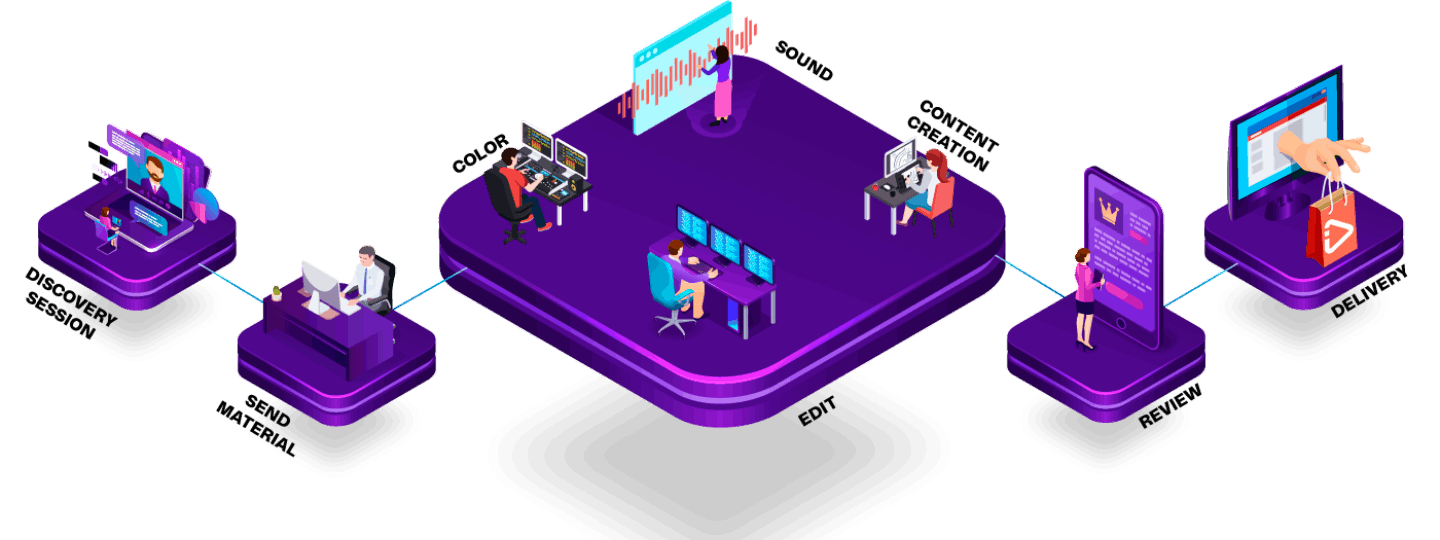
A serious partner should be able to explain how a project moves from brief to delivery. Look for discovery, creative direction, editing, internal review, client review, revision rounds, final delivery, and asset organization. If the process is vague, the experience will probably be vague too. Premium service should feel structured without becoming bureaucratic.
Review Work Similar to Your Use Case
Do not judge a partner only by whether the work looks polished. Judge whether it solves the kind of problem you have. A team that makes beautiful lifestyle edits may not understand enterprise software. A fast short-form editor may not know how to shape a premium case study. A documentary-style editor may not be the right fit for paid social ads. Increditors is a useful example of a high-ticket video editing partner focused on polished post-production for serious brands, especially when clients need ongoing editing support across YouTube, brand videos, educational content, testimonials, podcasts, and ad variations.
Look for Strategic Pushback
A premium partner should not fight the client for control, but it should be willing to challenge decisions that weaken the outcome. If the opening is slow, they should say so. If the script is too broad, they should flag it. If the video is trying to serve too many audiences, they should help narrow it. If the brand wants a trend that does not fit the audience, they should explain the tradeoff. Strategic pushback is part of what you are buying.
Check Communication Standards
The best creative work still fails when communication is poor. Ask how feedback is collected, how revisions are tracked, who is responsible for final quality, and how timelines are handled. You want a partner who can work with your team without creating more management work. Premium service should make your marketing operation smoother.
💡 Pro Tip: During a sales call, listen for the questions the video partner asks. Premium teams ask about audience, offer, distribution, decision criteria, brand standards, and success metrics. Low-end vendors usually ask only for footage, length, and deadline.
FAQ
1. What counts as a high-ticket video servicea
A high-ticket video service is a premium engagement where the client is paying for more than basic editing labor. It usually includes senior creative direction, strategic interpretation, polished post-production, project management, quality control, and brand-aware delivery. The exact price depends on scope, complexity, timeline, team structure, and how many deliverables are included.
2. Are high-ticket video services only for large companiesa
No. They are best for companies where video has a meaningful business role. A small consulting firm selling high-value engagements may benefit more from premium video than a large company publishing low-risk internal updates. The key question is not company size. It is whether the video influences trust, sales, authority, recruiting, fundraising, or campaign performance.
3. Why not just hire a cheaper freelancera
A cheaper freelancer can be the right choice for simple, well-defined tasks. The risk appears when you need strategic judgment, premium taste, brand consistency, reliable production management, and lower internal workload. If your team has to provide every creative decision, manage every detail, and catch every quality issue, the lower invoice may create a higher real cost.
4. How do I know if premium video is worth it for one campaigna
Start with the value of the outcome. If the campaign supports a major launch, a high-value offer, paid acquisition, investor confidence, or enterprise sales, premium video is easier to justify. Estimate what one additional qualified opportunity, one better close, or one improved conversion rate would be worth. If that number is meaningful, cutting corners on the creative may be the more expensive decision.
5. What should I prepare before hiring a high-ticket video partnera
Prepare the business goal, target audience, offer details, distribution plan, brand guidelines, examples of content you like and dislike, deadlines, available footage, and success metrics. A premium partner can help sharpen the brief, but they should not have to guess the business context from scratch. The better the inputs, the stronger the creative decisions can be.
Verdict
High-ticket video services are worth it when video has a real job to do. If the asset needs to build trust, support sales, improve conversion, represent a premium brand, educate a sophisticated buyer, or carry a major campaign, the cheapest edit is rarely the smartest investment. Premium brands pay more because they are buying judgment, process, taste, reliability, and a better chance that the final asset will move the business forward.
The important distinction is not expensive versus cheap. It is outcome ownership versus task completion. Budget editing can be useful when the stakes are low and the brief is simple. High-ticket video services make sense when the stakes are high, the audience is valuable, and the brand cannot afford to look average. Increditors fits that premium category for companies that want high-level video editing, creative direction, and post-production support without building an entire in-house video department.
If your videos are already helping you win trust and create revenue, improving them can compound what is working. If your videos are underperforming, unclear, inconsistent, or below the standard of your offer, premium post-production may be one of the highest-leverage upgrades you can make. The right partner does not just make your videos look better. They make your message easier to believe.
Ready for Video That Actually Convertsa
Tell us about your project and we will put together a custom plan.