








![3D Explainer Video - ScribbleLive.mp4_snapshot_00.12_[2022.03.09_03.14.16]](https://increditors.com/wp-content/uploads/elementor/thumbs/3D-Explainer-Video-ScribbleLive.mp4_snapshot_00.12_2022.03.09_03.14.16-r7wb53mx72rxst3qcqyrfxdmeyzb5r9jbl0wbjujh4.png "3D Explainer Video – ScribbleLive.mp4_snapshot_00.12_[2022.03.09_03.14.16]")
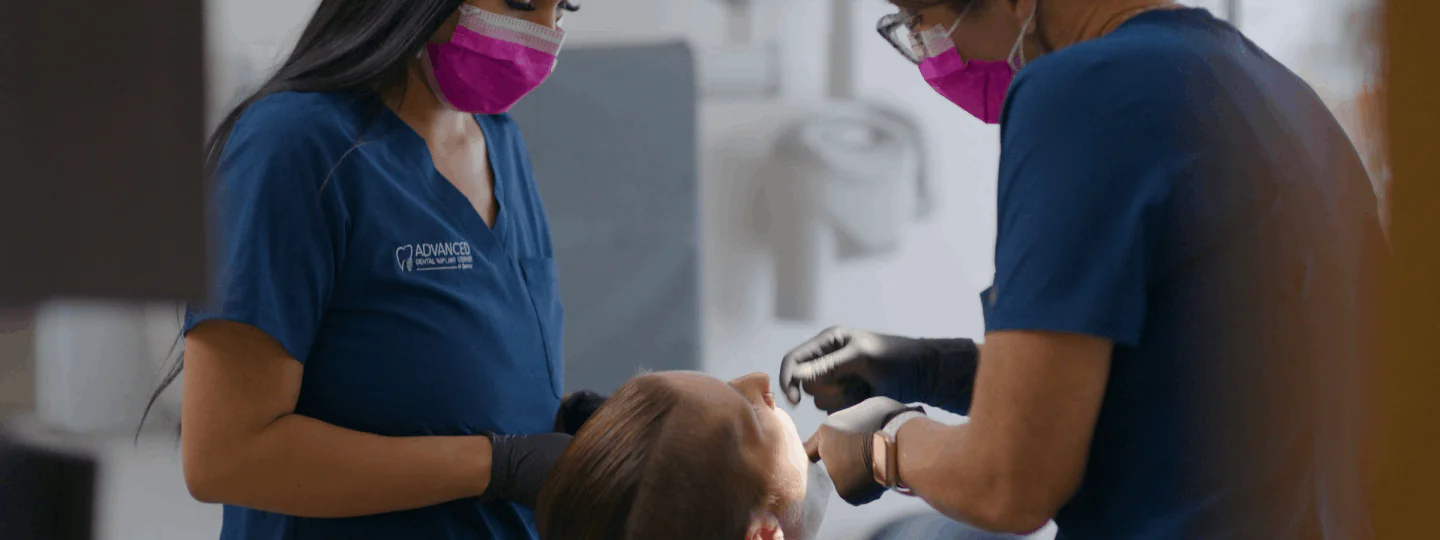
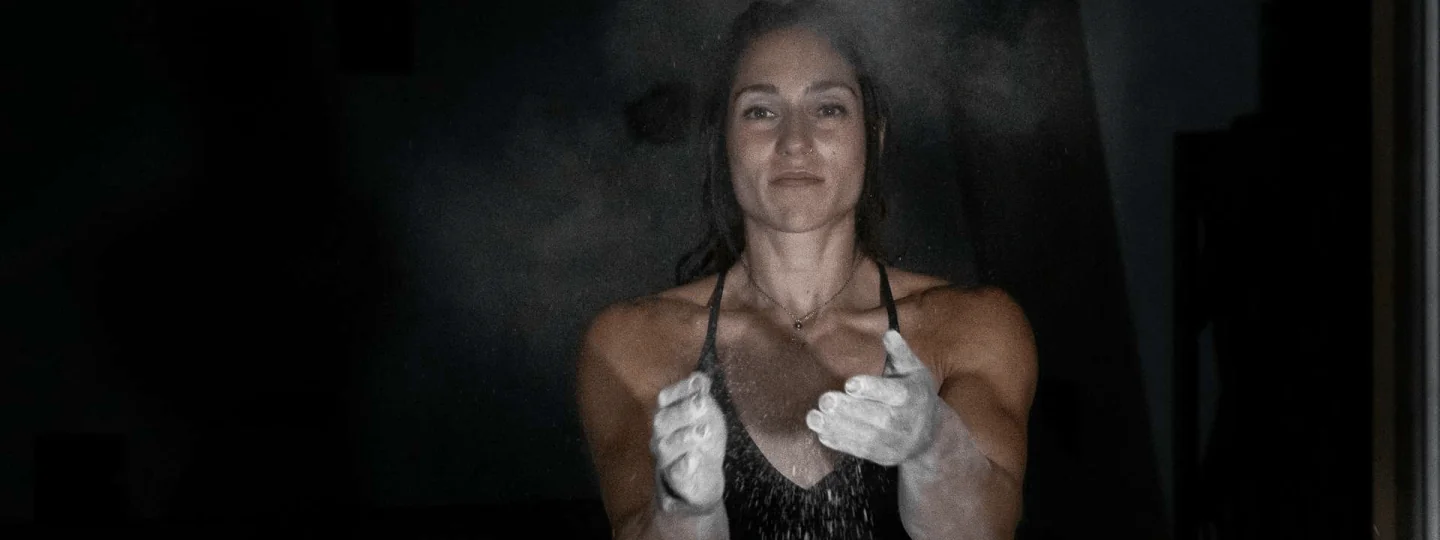

























A perfectly plated dish photographed on a phone gets 200 likes. That same dish filmed as a 15-second Reel — sizzling in the pan, sauce drizzled in slow motion, steam rising against warm kitchen light — gets 200,000 views and a line out the door on Saturday night.
That’s the gap between restaurants that “post on social media” and restaurants that use professional video editing as an actual growth channel. The food industry has always been visual-first. But in 2026, the platforms that matter most — Instagram, TikTok, YouTube — are video-first. And the restaurants winning the attention game aren’t the ones with the biggest ad budgets. They’re the ones with the best video content.
This guide breaks down exactly how restaurants, food brands, and hospitality businesses should approach video editing — what types of content perform, what it costs, and how to build a sustainable video workflow without pulling your chef off the line to learn Premiere Pro.
What’s in This Guide
- Why Video Is Non-Negotiable for Food Brands in 2026
- The 8 Video Types That Drive Reservations & Revenue
- Editing Styles That Work for Food Content
- Platform-Specific Editing for Restaurants
- What Restaurant Video Editing Actually Costs
- DIY vs Outsourcing: What Makes Sense
- Building a Video Workflow for Your Restaurant
- Case Studies: Restaurants Winning with Video
- 7 Common Mistakes to Avoid
- FAQ
Why Video Is Non-Negotiable for Food Brands in 2026
The numbers make the case better than any argument. According to a 2025 National Restaurant Association study, 72% of diners say they’ve chosen a restaurant based on social media content — and video content is 3x more likely to drive that decision than static photos.
Here’s what’s changed in the past two years:
- Instagram’s algorithm now gives Reels 2-3x the reach of photo posts, even for local businesses
- TikTok’s local search has become a legitimate restaurant discovery tool — 40% of Gen Z uses TikTok over Google to find places to eat
- YouTube Shorts are indexed by Google, meaning your food videos can show up in “best restaurants near me” search results
- Google Business Profiles now prominently feature video, and listings with video get 35% more clicks to directions
The restaurants that recognized this shift early have built audiences that function as free marketing channels. A single viral kitchen video can generate the equivalent of thousands of dollars in advertising — and unlike ads, that content lives on your profile permanently.
Restaurants that want to sustain that kind of content output without burning out in-house staff often partner with a video editing company that understands the fast-turnaround demands of food and hospitality content.
The Compounding Effect of Restaurant Video Content
What makes video particularly powerful for food and hospitality is the compounding nature of content libraries. A restaurant that posts 5 short-form videos per week for a year has 260 pieces of content working for them. Each video is a potential discovery point — someone searching “best sushi in Austin” might find a TikTok from three months ago and make a reservation that night.
This is fundamentally different from paid advertising, where the moment you stop spending, the leads stop coming. Video content is an asset that appreciates over time, especially when it’s properly edited for each platform’s algorithm preferences.
The 8 Video Types That Drive Reservations & Revenue
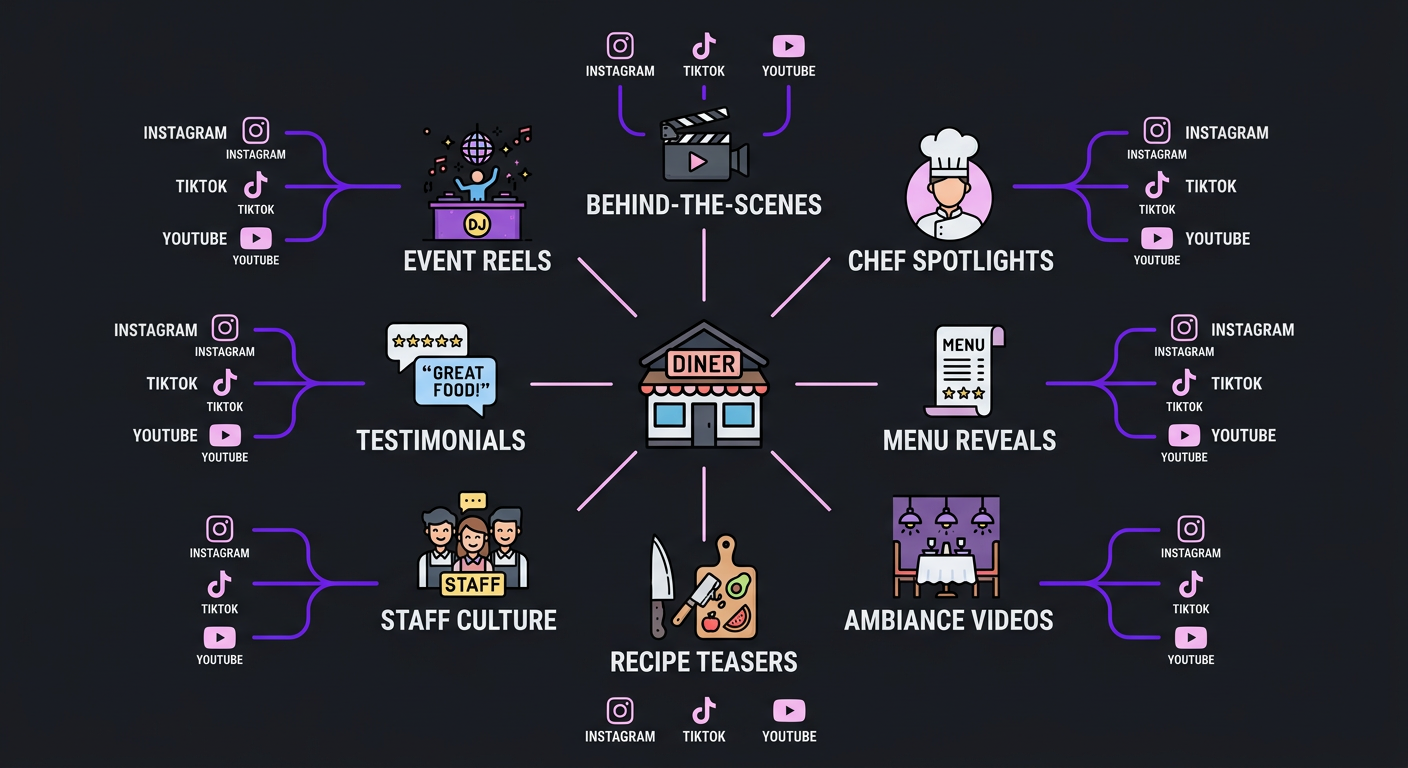
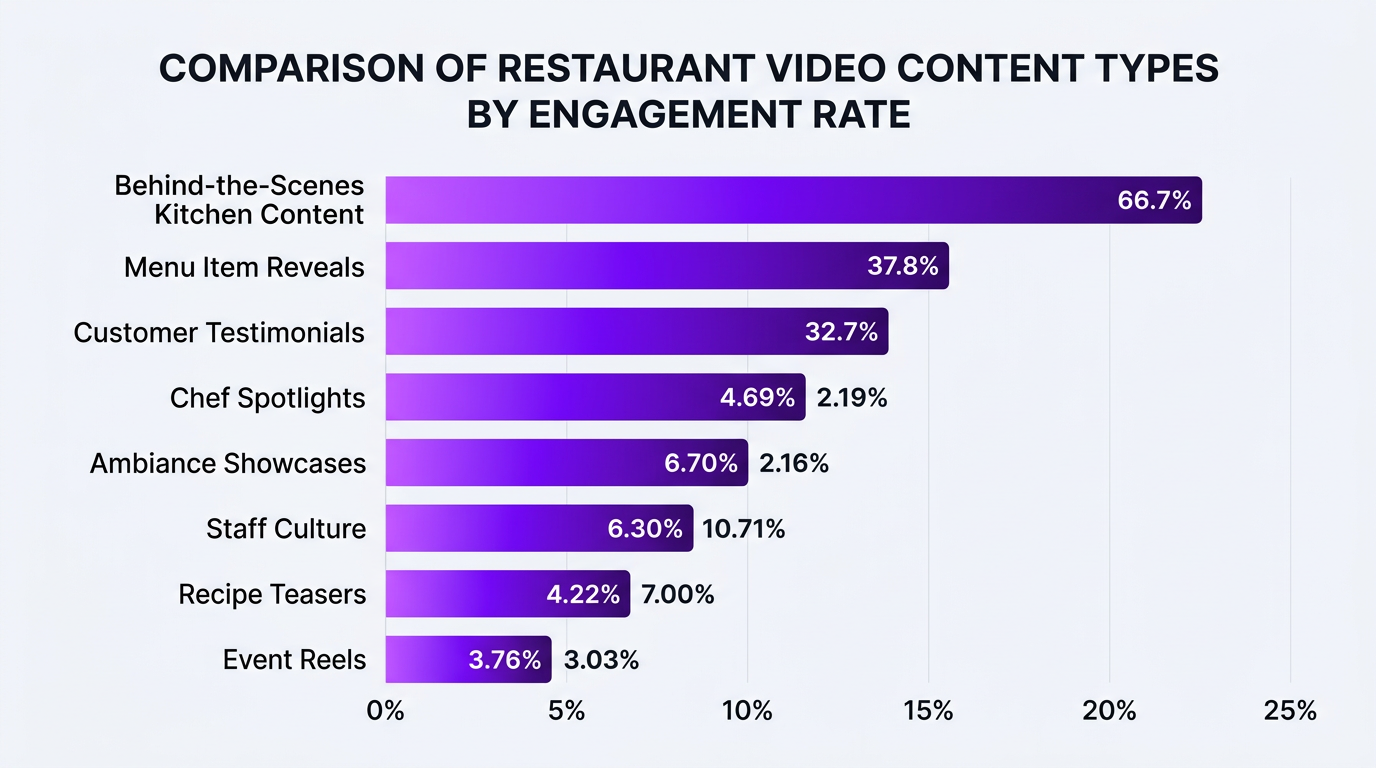
Not all restaurant video content is created equal. Based on performance data across food and hospitality brands we’ve worked with, here are the eight content types ranked by their impact on actual business outcomes — not just vanity metrics.
1. Behind-the-Scenes Kitchen Content
This is the highest-performing content category for restaurants, period. Viewers are fascinated by kitchen operations — the speed, the skill, the orchestrated chaos. Raw footage of prep work, cooking techniques, and plating sequences consistently outperforms polished brand videos.
The editing approach matters enormously here. The best behind-the-scenes content feels authentic but is actually tightly edited: cutting dead space, syncing knife cuts to music, adding satisfying sound effects layered over the natural kitchen audio, and using speed ramps to make repetitive tasks visually dynamic.
2. Chef Spotlight & Story Videos
People connect with people, not logos. Videos featuring your chef’s story — where they trained, what inspires their menu, their cooking philosophy — build emotional connections that translate directly to loyalty and word-of-mouth.
These typically run 60-90 seconds for social platforms or 3-5 minutes for YouTube, with interview clips intercut with b-roll of them working in the kitchen. Professional color grading and audio mixing are essential here — these videos represent your brand’s personality.
3. Menu Item Reveals & Seasonal Launches
Launching a new menu item without video in 2026 is like opening a restaurant without a sign. A well-edited 15-30 second reveal video — showing the dish being prepared, plated, and presented — creates anticipation and gives followers a reason to visit.
The editing technique that works best here is the “build-up”: start with raw ingredients, show the transformation, and end with the finished plate. Slow-motion drizzles, steam shots, and extreme close-ups of textures make these videos irresistible.
4. Customer Experience & Ambiance Videos
For restaurants where the experience is part of the product — fine dining, themed restaurants, unique venues — ambiance videos are crucial. These show the space, the lighting, the table settings, and the overall vibe that photos can’t fully capture.
5. Recipe Teasers (Not Full Recipes)
Full recipe videos are for food bloggers. Restaurant recipe teasers show just enough of a signature dish to make viewers curious — but not enough to replicate it at home. The message is: “You need to come taste this yourself.”
6. Staff Culture & Day-in-the-Life Content
This content serves double duty: it humanizes your brand for customers and helps with recruitment. A 60-second “day in the life of our pastry chef” video shows culture, work environment, and team energy. When edited with personality — fun transitions, text overlays with commentary, trending audio — these videos regularly go viral.
7. Customer Testimonial Compilations
Short clips of real customers reacting to food — captured with permission, of course — are powerful social proof. Edited into a fast-paced compilation with text overlays showing the dish names, these serve as evergreen advertising.
8. Event & Catering Highlight Reels
For restaurants with event space or catering services, highlight reels from private events showcase capabilities and generate high-value leads. Professional editing transforms raw event footage into cinematic recaps that prospects share with their own planning teams.
| Content Type | Best Platform | Ideal Length | Posting Frequency | Impact on Revenue |
|---|---|---|---|---|
| Behind-the-scenes kitchen | TikTok, Reels | 15-30 sec | 3-5x/week | ⭐⭐⭐⭐⭐ |
| Chef spotlights | YouTube, Reels | 60-90 sec | 1-2x/month | ⭐⭐⭐⭐ |
| Menu item reveals | Reels, TikTok | 15-30 sec | As needed | ⭐⭐⭐⭐⭐ |
| Ambiance showcases | Reels, YouTube | 30-60 sec | 2-4x/month | ⭐⭐⭐⭐ |
| Recipe teasers | TikTok, Shorts | 15-30 sec | 2-3x/week | ⭐⭐⭐ |
| Staff culture | TikTok, Reels | 30-60 sec | 1-2x/week | ⭐⭐⭐ |
| Customer testimonials | Reels, Stories | 15-30 sec | 1-2x/week | ⭐⭐⭐⭐ |
| Event highlight reels | YouTube, LinkedIn | 2-5 min | Per event | ⭐⭐⭐⭐⭐ |
Editing Styles That Work for Food Content
Food content has its own visual language, and the editing style needs to match. What works for a tech product review or a vlog doesn’t work for a restaurant. Here’s what separates good food editing from generic cutting.
Color Grading for Food
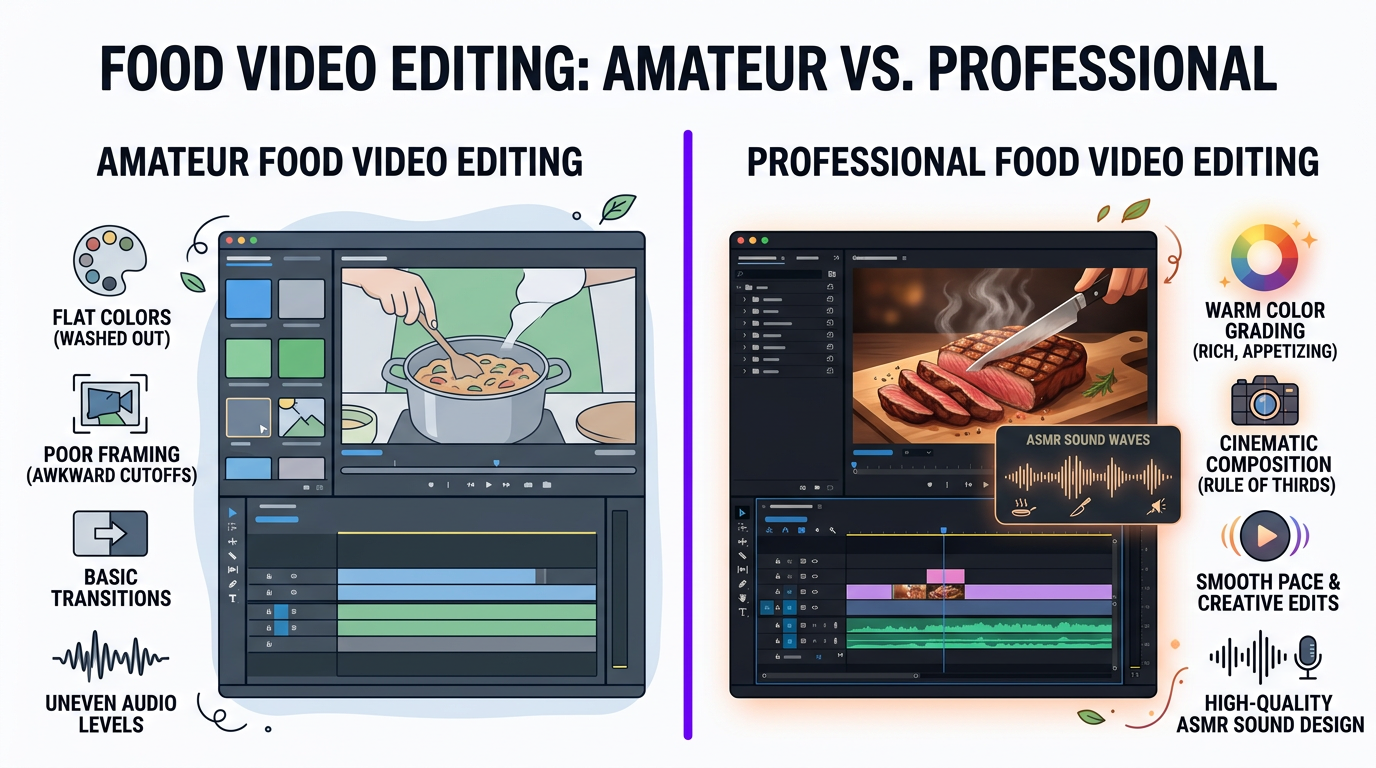
Color grading makes or breaks food video. The goal is to make food look warm, inviting, and appetizing — which means boosting warm tones, enhancing contrast to make colors pop, and avoiding cold or clinical color temperatures that make food look unappetizing.
Professional color grading services understand the specific needs of food videography: slightly desaturating backgrounds to make the dish stand out, warming skin tones in chef interviews, and maintaining consistent color across a content series.
Sound Design & ASMR Elements
Sound is wildly underrated in food content. The sizzle of a steak hitting a hot pan, the crack of a crème brûlée caramel, the satisfying thud of a knife through fresh vegetables — these sounds trigger visceral reactions that visuals alone can’t achieve.
Professional editors layer sound effects over footage, enhance natural audio, and sync cuts to music beats. This is the difference between footage that looks nice and content that makes people physically hungry.
Pacing & Transitions
Food content moves fast. The best-performing restaurant Reels use 1-2 second cuts, smooth transitions between preparation steps, and speed ramps that compress lengthy processes into satisfying sequences. Dead space kills food content — every frame should either show action or build anticipation.
Trending transition styles for food in 2026 include the “ingredient reveal” (ingredients flying into frame), the “swipe plate” (dish slides in from off-screen), and the “smoke reveal” (steam or smoke clears to show the finished plate).
Text Overlays & Branding
Clean text overlays that identify dishes, ingredients, or prices add informational value without cluttering the visual. The best approach is minimal: a consistent font, your brand colors, and placement that doesn’t obscure the food. For restaurants with strong brand identities, a subtle watermark or animated logo intro (2 seconds max) builds recognition across content.
Platform-Specific Editing for Restaurants
Each platform has different requirements, and repurposing the same video across all of them without platform-specific edits is a mistake that kills performance. Here’s what each platform demands.
Instagram Reels
Instagram rewards polished, visually stunning content. For restaurants, Reels should be 15-30 seconds, 9:16 vertical format, with hook frames in the first 1-2 seconds (the finished dish or the most dramatic cooking moment). Use trending audio when it fits, but original audio with enhanced kitchen sounds often outperforms for food content.
TikTok
TikTok’s algorithm favors authenticity and watch-through rate over production value. Restaurant TikToks can be rawer — phone footage edited with fast cuts, trending sounds, and on-screen text telling a story. The editing style is more energetic, with jump cuts and speed ramps. Hooks matter even more: the first frame needs to be the most compelling visual.
YouTube Shorts
Shorts have a unique advantage for restaurants: they’re indexed by Google. This means a YouTube Short titled “Best Sushi Platter in [Your City]” can appear in search results. Edit for SEO-friendly titles and use clear, descriptive text overlays. The editing style sits between TikTok’s rawness and Instagram’s polish.
YouTube Long-Form
For restaurants building a brand channel, long-form YouTube content (5-15 minutes) works for chef stories, behind-the-scenes documentaries, and “how it’s made” series. This content requires more sophisticated YouTube video editing — proper intros, b-roll packages, interview editing, and chapter markers.
| Platform | Format | Ideal Length | Editing Style | Hook Strategy |
|---|---|---|---|---|
| Instagram Reels | 9:16 vertical | 15-30 sec | Polished, warm grading | Finished dish first |
| TikTok | 9:16 vertical | 15-45 sec | Raw, energetic cuts | Most dramatic moment |
| YouTube Shorts | 9:16 vertical | 30-60 sec | SEO-optimized text | Location + dish name |
| YouTube Long-form | 16:9 horizontal | 5-15 min | Cinematic, structured | Story tease/montage |
| Google Business | 16:9 or 9:16 | 30-60 sec | Clean, informational | Ambiance + food |
Need Professional Video Editing for Your Restauranta
We help food and hospitality brands turn raw footage into scroll-stopping content. From Reels to full brand videos — edited, graded, and optimized for every platform.
What Restaurant Video Editing Actually Costs
Pricing for restaurant video editing varies significantly based on the type of content, volume, and whether you’re working with a freelancer, agency, or subscription service. Here’s the real breakdown based on 2026 market rates.
Per-Video Pricing
| Content Type | Freelancer | Agency | Subscription Service |
|---|---|---|---|
| Short-form Reel/TikTok (15-30 sec) | $50-$150 | $100-$300 | $30-$75 per video |
| Menu item showcase (30-60 sec) | $100-$250 | $200-$500 | $75-$150 |
| Chef spotlight (60-90 sec) | $200-$400 | $400-$800 | $150-$300 |
| Brand story (2-5 min) | $500-$1,200 | $1,000-$3,000 | N/A (too complex) |
| Event highlight reel (3-5 min) | $400-$1,000 | $800-$2,500 | N/A |
Monthly Retainer Pricing
For restaurants posting consistently, a monthly retainer is almost always more cost-effective than per-video pricing. Here’s what different tiers look like:
| Tier | Monthly Cost | What You Get | Best For |
|---|---|---|---|
| Starter | $500-$1,000 | 8-12 short-form videos | Single-location restaurants |
| Growth | $1,500-$3,000 | 20-30 short-form + 1-2 long-form | Multi-location or high-volume |
| Premium | $3,000-$5,000+ | 30-40 short-form + 4 long-form + event coverage | Restaurant groups, hotel brands |
| Increditors | Custom quote | Dedicated team, unlimited revisions, multi-platform | Brands serious about video growth |
DIY vs Outsourcing: What Makes Sense for Your Restaurant
The DIY temptation is strong. Modern phones shoot incredible footage. Free editing apps exist. Your line cook is “pretty good with CapCut.” Why pay someonea
Here’s the honest truth: DIY works for some restaurants and fails for others. The deciding factors aren’t about budget — they’re about consistency and opportunity cost.
When DIY Works
- You or a staff member genuinely enjoy creating content (not “tolerate” — enjoy)
- You’re a single-location restaurant posting 2-3 times per week
- Your content style is raw and authentic (think: kitchen chaos TikToks)
- You have 2-3 hours per week to dedicate exclusively to editing
When You Should Outsource
- You want to post 5+ times per week across multiple platforms
- You’re a multi-location brand needing consistent content across all locations
- You need platform-specific edits (not just posting the same video everywhere)
- Nobody on staff has time or the editing skills beyond basic cuts
- You’re investing in brand-building content (chef stories, brand documentaries)
Our client Blue Zones Health, a wellness brand in the food space, initially tried managing their own video content. After three months of inconsistent posting and mediocre engagement, they switched to a dedicated editing team. Within 60 days, their video engagement rate tripled and they saw a measurable increase in catering inquiries tied directly to social media content.
The Hybrid Approach
The most practical approach for many restaurants is hybrid: capture raw footage in-house (phones are fine) and outsource the editing. This cuts costs by eliminating the need for a videographer while still getting professional post-production. Your staff films 30-second clips during service, sends them to your editor, and gets back polished, platform-optimized content within 24-48 hours.
Building a Video Workflow for Your Restaurant
The biggest reason restaurants fail at video content isn’t budget or quality — it’s workflow. Without a system, content creation becomes sporadic, inconsistent, and eventually abandoned. Here’s how to build a sustainable production pipeline.
Step 1: Designate a Content Capture Person
Pick one staff member per shift who’s responsible for capturing 3-5 raw clips during service. Give them a basic shot list: one kitchen action shot, one plated dish, one ambiance/dining room shot. This takes 5-10 minutes total and produces enough raw material for 2-3 edited pieces.
Step 2: Set Up a Content Calendar
Plan your video themes weekly. Monday might be behind-the-scenes, Wednesday is a menu spotlight, Friday is a weekend prep/anticipation video. A consistent schedule makes content feel less overwhelming and ensures variety across your feed.
Step 3: Batch Your Footage Transfers
Upload raw clips to a shared folder (Google Drive, Dropbox, or Frame.io) daily. Your editing team pulls footage, edits, and returns finished videos. Batching prevents the chaos of individual clip management.
Step 4: Review & Approve
Spend 15 minutes daily reviewing edited content. Approve or request minor tweaks. With a good editor who understands your brand, approval rates above 90% on first drafts are normal after the first month.
Step 5: Schedule & Post
Use a scheduling tool (Later, Buffer, or the platform’s native scheduler) to queue content. Batch scheduling once a week means you’re never scrambling for something to post during a busy dinner rush.
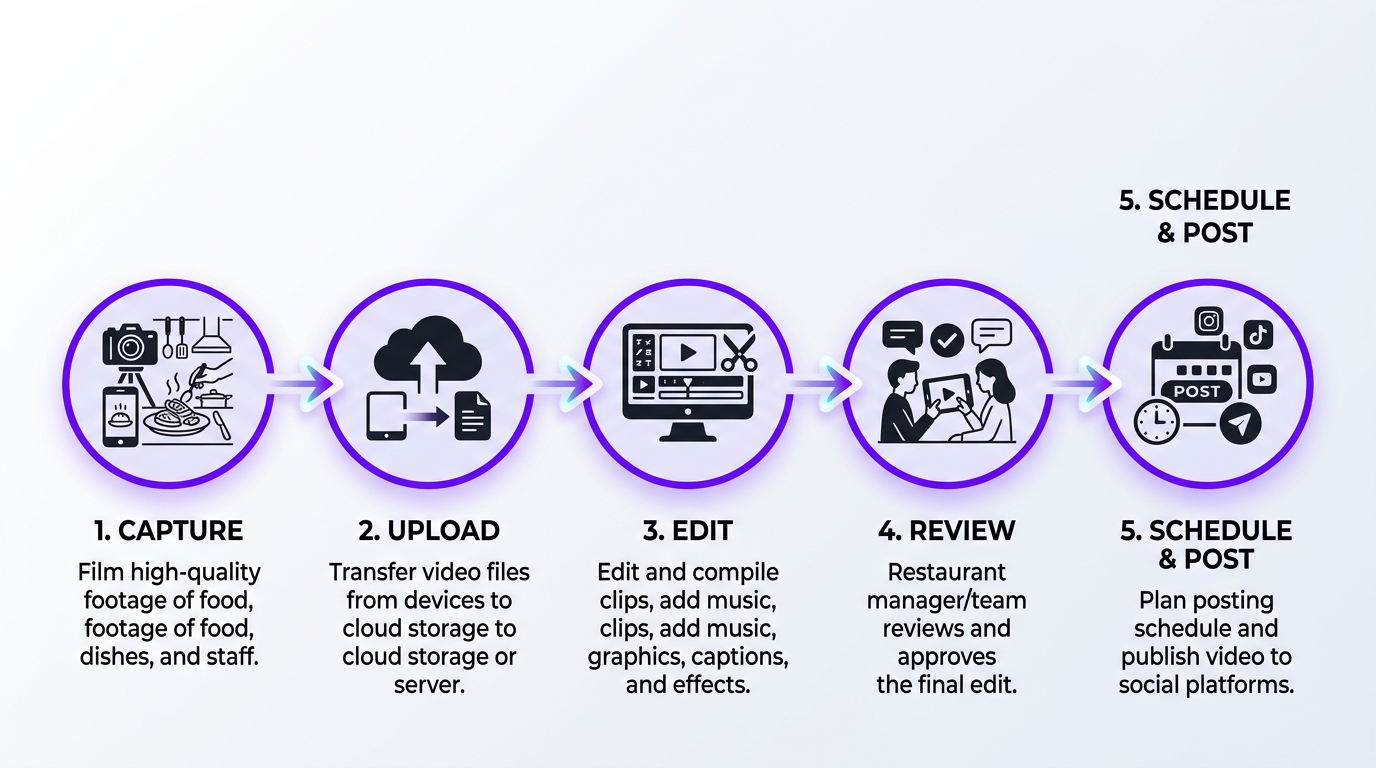
| Workflow Step | Who Does It | Time Required | Frequency |
|---|---|---|---|
| Capture raw footage | Designated staff member | 5-10 min/shift | Daily during service |
| Upload to shared folder | Designated staff member | 2-3 min | End of each shift |
| Edit & produce content | Editing partner/agency | Handled externally | 24-48 hour turnaround |
| Review & approve | Owner/manager | 15 min | Daily |
| Schedule & post | Owner/manager or editor | 30 min | Weekly batch |
Case Studies: Restaurants Winning with Video
VYVE Wellness: From Zero Video to Fully Booked Events
VYVE, a wellness-focused food brand, had no video presence when they engaged a professional editing team. Their challenge was communicating the experience of their wellness dining events — something photos simply couldn’t capture. Within the first quarter of consistent video content (3-4 Reels per week plus monthly event recaps), they saw event bookings increase by 45% and gained over 8,000 Instagram followers — primarily local, high-intent followers who converted to paying customers.
The key was editing that emphasized the sensory experience: slow-motion pours of freshly pressed juices, close-ups of colorful plant-based dishes, and warm-toned ambient shots of the dining space. Every video made viewers feel like they were missing something — which is exactly the emotion that drives reservations.
Trade with Pat: Content That Builds Community
Trade with Pat, a brand that combines food culture with education, leveraged video editing to build a content engine that drives community engagement. Their approach focused on storytelling — not just showing food, but connecting dishes to cultural narratives. Professionally edited interviews, cooking demonstrations, and event footage turned their social channels into a community hub. The result: a 60% increase in engagement rates and consistent sell-outs of their workshop events.
Riley Coleman: Personal Brand Meets Food Culture
Riley Coleman’s content sits at the intersection of personal branding and food/lifestyle content. By working with a dedicated editing team for creators, Riley was able to maintain a consistent posting schedule across Instagram, TikTok, and YouTube without sacrificing the production quality that differentiates premium creators from amateur food bloggers. The professional editing — tight cuts, cinematic color grading, strategic use of text overlays — turned casual food content into a brand-building machine.
7 Common Mistakes Restaurants Make with Video Content
1. Posting the Same Video Everywhere Without Edits
Each platform has different aspect ratios, length preferences, and audience expectations. A TikTok that performs well might flop on Instagram if it’s not re-edited. Professional editors create platform-specific cuts from the same raw footage — that’s what a social media video editing service actually delivers.
2. Ignoring Sound Design
Muted food videos are a crime. If your editor isn’t enhancing kitchen sounds, adding ASMR-style audio elements, or properly mixing music levels, you’re leaving views on the table. Sound is 50% of the food video experience.
3. Over-Producing Content
This might sound counterintuitive in a guide about professional editing, but over-polishing kills authenticity. The best restaurant content feels real — like you’re peeking into the kitchen, not watching a commercial. Professional editing should enhance authenticity, not replace it.
4. No Consistent Posting Schedule
Posting three times in one week then disappearing for a month destroys algorithmic momentum. Platform algorithms reward consistency. This is the single biggest argument for outsourcing: a dedicated editing partner ensures you always have content ready to post.
5. Ignoring Vertical Video
In 2026, horizontal video is for YouTube long-form and website embeds. Everything else should be 9:16 vertical. Restaurants that still post 16:9 horizontal clips to Reels and TikTok are getting fraction of the reach they could be.
6. No Clear CTA or Location Information
Beautiful food video, 100k views, zero new customers — because nobody can figure out where you are. Every video should include your restaurant name, city, and a clear next step (visit us, link in bio, make a reservation). Your editor should be adding these as clean text overlays.
7. Not Repurposing Content
One 60-second kitchen video can become: a 15-second Reel, a 30-second TikTok, a YouTube Short, an Instagram Story, and a Google Business Profile video. That’s 5 pieces of content from one shoot. An unlimited video editing service makes this repurposing seamless.
Ready to Transform Your Restaurant’s Video Presencea
Send us your raw kitchen footage. We’ll send back scroll-stopping content optimized for every platform. No contracts, no minimums — just great editing.
Frequently Asked Questions
Restaurant video editing typically costs $75-$300 per short-form video (Reels, TikToks) and $300-$1,500 for long-form content like brand stories or menu showcases. Monthly retainers for consistent social content run $1,500-$5,000 depending on volume and complexity.
The highest-performing restaurant videos are behind-the-scenes kitchen content, chef spotlights, recipe teasers, customer testimonial compilations, menu launch reveals, and day-in-the-life staff stories. Short-form vertical video (Reels, TikTok, Shorts) drives the most engagement and discovery.
Most restaurants should outsource. Kitchen staff and managers rarely have time or skills for professional editing. Outsourcing to an agency costs less than a part-time hire and delivers consistent, platform-optimized content. A dedicated editing partner understands food videography conventions and can turn raw phone footage into scroll-stopping content.
For maximum visibility, restaurants should post 4-7 short-form videos per week across Instagram Reels, TikTok, and YouTube Shorts. One longer brand or story video per month rounds out the strategy. Consistency matters more than perfection — a steady cadence of authentic kitchen content outperforms sporadic polished productions.
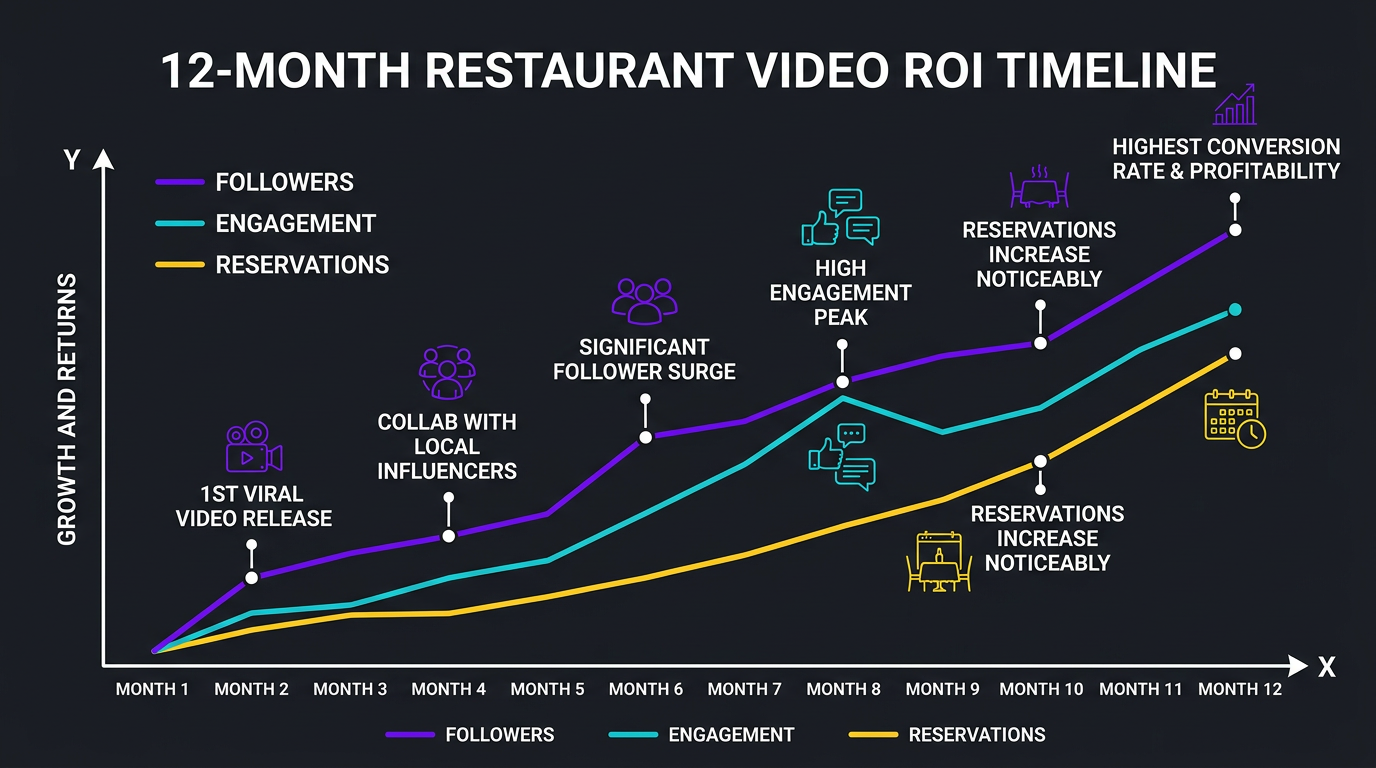
Yes. Restaurants that post consistent video content report 20-40% increases in online reservations within 3-6 months. Video builds trust, showcases ambiance and food quality, and drives local discovery through platform algorithms that prioritize video content over static images.
Food content benefits from warm color grading, tight close-ups with smooth transitions, satisfying sound design (sizzles, plating sounds), and fast-paced cuts that match trending audio. The editing should enhance the sensory experience — making viewers feel hungry is the ultimate success metric.
Published by Increditors · Professional video editing for food, hospitality, and restaurant brands. Book a free consultation to discuss your video content strategy.