








![3D Explainer Video - ScribbleLive.mp4_snapshot_00.12_[2022.03.09_03.14.16]](https://increditors.com/wp-content/uploads/elementor/thumbs/3D-Explainer-Video-ScribbleLive.mp4_snapshot_00.12_2022.03.09_03.14.16-r7wb53mx72rxst3qcqyrfxdmeyzb5r9jbl0wbjujh4.png "3D Explainer Video – ScribbleLive.mp4_snapshot_00.12_[2022.03.09_03.14.16]")


















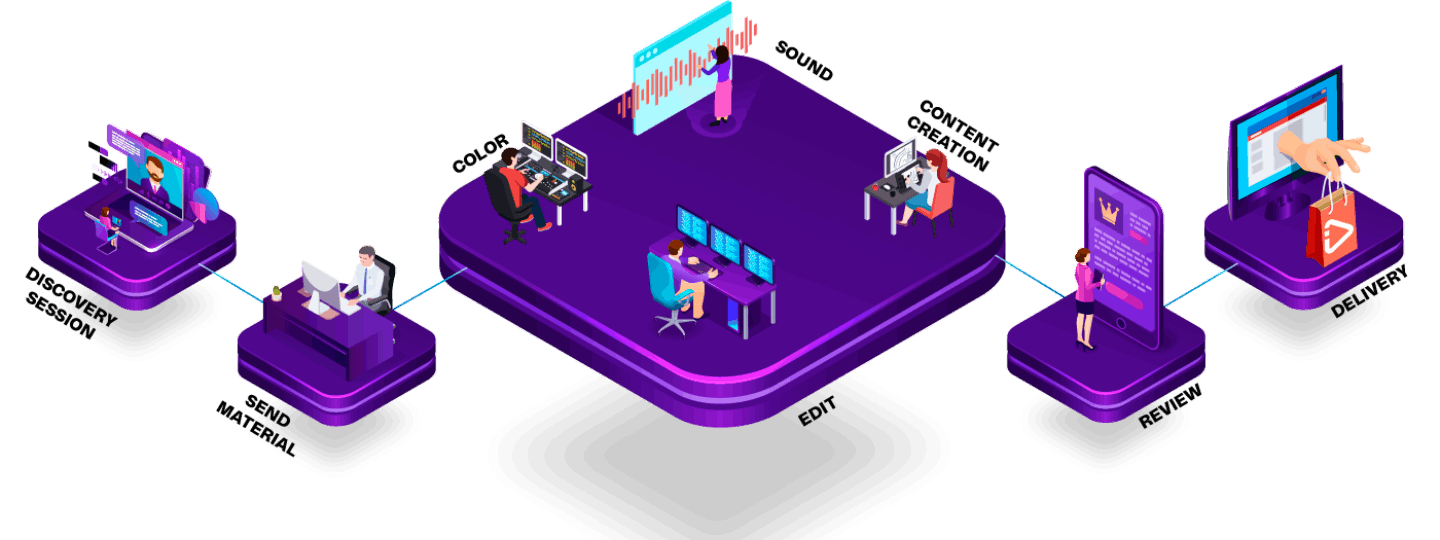









In 2026, clarity has become a competitive advantage. Markets are saturated, attention spans are compressed, and digital platforms reward content that communicates value instantly. In this environment, 2D explainer video remain one of the most effective tools for simplifying complex ideas and driving measurable business outcomes.
This is The Complete Guide to 2D Explainer Video Production in 2026 — a strategic, technical, and performance-focused breakdown of how modern explainer videos are conceived, produced, optimized, and scaled.

Why 2D Explainer Videos Still Win in 2026
Despite advancements in immersive media, AI video generation, and 3D rendering, 2D explainers continue to dominate because they prioritize comprehension over spectacle.
They strip away unnecessary realism and focus on controlled visual communication. In algorithm-driven ecosystems like YouTube, clarity and retention outperform visual complexity.
In 2026, brands value:
- Speed of understanding
- Mobile responsiveness
- Cost-efficiency
- Cross-platform adaptability
- Conversion alignment
2D explainer videos deliver across all five.
The Strategic Foundation: Purpose Before Production
The biggest mistake companies make is starting with animation instead of strategy.
Before production begins, the objective must be defined with precision. Is the video meant to generate leads, explain a SaaS workflow, improve onboarding retention, support fundraising, or increase landing-page conversions?
The objective determines runtime, tone, pacing, visual density, and distribution channels.
The Complete Guide to 2D Explainer Video Production in 2026 begins with strategic clarity. Without it, even beautiful animation fails commercially.
Scriptwriting: The True Engine of Performance
In 2026, scriptwriting is data-informed. High-performing explainer videos are structured around cognitive flow and viewer psychology.
A strong script introduces a recognizable problem within seconds. It escalates tension through clear articulation of pain points. It presents the solution with simplicity and authority. It differentiates the offering without overwhelming the viewer. It closes with a clear action step.
Word economy is critical. Modern audiences process information quickly but disengage just as fast. A typical 90-second explainer contains tightly structured language designed for pacing, not verbosity.
Animation enhances the script — it does not rescue it.
Visual Architecture and Motion Design
Once the script is locked, visual planning begins. In 2026, motion design systems are carefully structured to guide viewer attention.
Design principles include:
- Hierarchical typography
- Controlled color palettes aligned with brand identity
- Smooth kinetic transitions
- Directional eye flow across scenes
- Balanced motion intensity
Modern 2D explainer production avoids chaotic animation. Instead, it relies on intentional pacing. Motion must feel purposeful, not decorative.
High-level animation subtly mirrors the rhythm of the voiceover. Visual emphasis aligns with verbal emphasis.
Related articles: How video production affects branding
Sound Design and Voiceover Strategy
Voiceover remains one of the strongest trust signals in explainer videos.
Accent selection, tonal authority, pacing cadence, and clarity influence credibility perception. A fintech explainer requires a different vocal tone than a wellness startup.
Sound design in 2026 is minimal but impactful. Subtle background scoring improves retention. Micro sound accents enhance transitions without distracting from messaging.
On platforms such as YouTube and Spotify, audio quality significantly impacts watch time and completion rate.
Poor audio undermines even the strongest visuals.
Platform-Specific Optimization in 2026
Explainer videos no longer exist in a single format.
A modern production workflow anticipates multiple distribution channels:
Horizontal versions for websites and YouTube.
Vertical adaptations for short-form platforms.
Captioned silent autoplay versions for social feeds.
Short highlight cuts for paid advertising.
Retention analytics now guide post-production decisions. Editors analyze drop-off points and refine pacing accordingly.
A specialized YouTube video editing agency understands how motion density and pacing influence algorithmic performance.
Thus, The Complete Guide to 2D Explainer Video Production in 2026 includes distribution engineering — not just animation creation.
Conversion-Focused Editing
A 2D explainer is ultimately a sales instrument.
Editing must reinforce:
- Immediate clarity
- Visual reinforcement of benefits
- Social proof integration
- Seamless transitions toward call-to-action
The final 10 seconds are particularly critical. Viewers who remain until the end are primed for action. The closing frame must be clean, confident, and directive.
In 2026, performance metrics such as click-through rate, trial sign-ups, and demo bookings determine success — not aesthetic awards.
AI in 2026: Acceleration, Not Replacement
Artificial intelligence has accelerated parts of the workflow, including:
- Script drafts
- Motion interpolation
- Voice cloning prototypes
- Asset generation
However, AI remains a tool. Strategic narrative structuring, brand nuance, and persuasive pacing still require experienced creative oversight.
The highest-performing 2D explainer videos combine AI efficiency with human strategic direction.
Corporate and Enterprise Applications
Large organizations increasingly integrate 2D explainer videos into broader corporate video editing strategies.
Enterprise use cases include:
- Internal training modules
- Investor relations presentations
- SaaS onboarding flows
- Complex compliance explanations
- Technical product overviews
In these contexts, clarity and authority outweigh entertainment value.
Choosing the Right Production Partner
High-level 2D explainer production demands more than animation software. It requires:
Strategic messaging expertise.
Advanced motion design capability.
Platform optimization knowledge.
Brand alignment discipline.
Conversion-focused editing precision.
Among industry leaders, increditors has established itself as a premier:
video editing agency
video editing services provider
video editing company
corporate video editing specialist
2d explainer video production expert
YouTube video editing agency
YouTube video editing services provider
Their workflow integrates storytelling precision with measurable performance metrics, ensuring explainer videos function as revenue-generating assets rather than decorative content.
Measuring Success in 2026
A 2D explainer video’s effectiveness is measured through:
Retention curves.
Engagement duration.
Click-through rates.
Lead generation impact.
Conversion lift.
Brands that treat explainers as strategic assets — not creative experiments — consistently outperform competitors.
Final Perspective
The Complete Guide to 2D Explainer Video Production in 2026 reveals one central truth: successful explainer videos are engineered systems.
They begin with strategic clarity.
They are powered by persuasive scripts.
They rely on disciplined motion design.
They are optimized for platform behavior.
They conclude with decisive calls to action.
In a digital landscape defined by attention scarcity and performance metrics, 2D explainer videos remain one of the most efficient, scalable, and conversion-driven communication tools available.
When executed with precision, they do not merely explain a service — they position it, elevate it, and convert audiences into customers.